

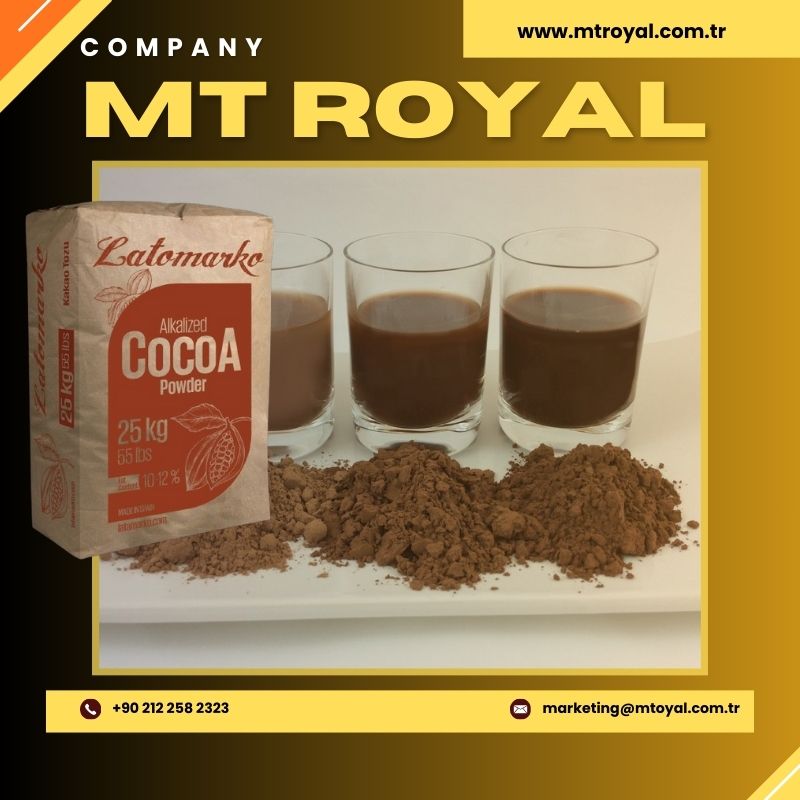
Egypt’s chocolate and confectionery industry has been evolving rapidly, with domestic production expanding to meet both local and regional demand. Central to this growth is cocoa mass (also called cocoa liquor), the essential ingredient derived from roasted and ground cocoa beans. Its quality, consistency, and availability directly influence production efficiency, chocolate flavor, and manufacturing profitability.
For factory owners, production managers, and procurement officers, understanding import trends, sourcing strategies, and supplier selection is critical. In this article, we examine the current cocoa mass import landscape in Egypt, highlight operational considerations for factories, and provide actionable insights for industrial buyers. We also highlight MT Royal as a trusted partner providing competitive brands and mention premium European suppliers like Latamarko to illustrate top-tier options.
Cocoa mass is the pure, ground paste of cocoa beans, containing both cocoa solids and cocoa butter. Unlike cocoa powder or cocoa butter alone, cocoa mass forms the foundation of chocolate, compound coatings, and specialty confectionery products.
Key Industrial Properties:
- Fat content: Influences viscosity, tempering, and mouthfeel.
- Particle size distribution: Determines smoothness and processing behavior.
- Flavor and aroma: Critical for chocolate quality and brand consistency.
- Consistency and purity: Ensures predictable processing in high-speed mixers and enrobing lines.
Factories rely on cocoa mass not just for flavor, but for operational efficiency. Variations in melting profile, viscosity, or particle size can disrupt production schedules and increase waste.
latamarko alkalized cocoa powder lm60
cocoa powder for chocolate production-Best price
Food industry raw materials – list of products
Types of Gelatin from Turkish Manufacturer
The Best Supplier of Alkalized Cocoa Powder in Türkiye
Import Trends in Egypt: What Factories Need to Know
Egypt imports the majority of its cocoa mass due to limited domestic cocoa cultivation. Understanding the import landscape is essential for procurement strategy:
- Regional Sources: West African countries like Ivory Coast and Ghana dominate global cocoa exports, supplying large volumes of cocoa mass.
- European Premium Suppliers: European manufacturers, particularly Spanish brands like Latamarko, are valued for consistent quality, precise particle size, and superior melting characteristics.
- Volume and Seasonality: Cocoa production is cyclical; factories must plan for shipping delays, customs clearance, and seasonal price fluctuations.
- Regulatory Requirements: Egyptian import regulations mandate traceability, Certificates of Analysis (COA), and compliance with food safety standards.
In our experience supplying manufacturing facilities, planning for lead times and securing reliable suppliers is critical to maintain uninterrupted production.

Why Supplier Choice Matters for Egyptian Factories
The impact of supplier quality extends beyond cost:
1. Operational Efficiency
Consistent cocoa mass ensures predictable behavior in tempering machines, molding lines, and coating equipment. Inconsistent imports can lead to uneven melting, slower production cycles, and increased scrap.
2. Product Quality and Consistency
For consumer-facing products, texture, snap, and flavor consistency are non-negotiable. Premium suppliers like Latamarko offer precise particle distribution and stable cocoa butter content, minimizing variability in end products.
3. Supply Chain Reliability
Delays or batch inconsistencies disrupt production schedules. MT Royal provides a portfolio of trusted brands and flexible logistics solutions, helping factories maintain production continuity even during peak demand.
4. Compliance and Documentation
Egyptian factories require COAs, HACCP certification, and traceable import documentation to meet national and export standards. Reliable suppliers ensure that all compliance requirements are met seamlessly.
Industrial Specifications That Impact Production
When importing cocoa mass, factories should assess the following specifications:
| Specification | Importance | Industrial Insight |
|---|---|---|
| Cocoa butter content | 50–55% typical | Determines viscosity and tempering behavior |
| Particle size | Fine, uniform | Critical for smooth chocolate texture |
| Moisture | <0.5% recommended | Reduces microbial risk and caking |
| Color | Deep brown | Impacts visual quality in chocolate |
| Free fatty acids | Low | Ensures stability and prevents off-flavors |
Factories that monitor these parameters can reduce production disruptions, minimize waste, and maintain consistent product quality. Premium European brands, such as Latamarko, are known for rigorous batch testing to maintain these standards.
Step-by-Step Guide to Evaluating Cocoa Mass Suppliers
- Define Production Requirements
Determine desired viscosity, flavor profile, and compatibility with existing production lines. - Request Technical Samples
Test batches under real production conditions to assess performance in mixers, tempering machines, and enrobing lines. - Evaluate Documentation
Confirm COAs, HACCP compliance, and traceability before placing bulk orders. - Assess Logistics and Delivery Reliability
Check lead times, shipping reliability, and supplier responsiveness to urgent orders. - Score Suppliers Objectively
Use weighted criteria: quality, consistency, delivery reliability, and total cost of ownership.
At MT Royal, we support Egyptian manufacturers by supplying verified cocoa mass, offering technical guidance, and coordinating logistics to ensure smooth, predictable production.
Common Pitfalls in Cocoa Mass Procurement
- “Price is the only consideration” — Low-cost imports may compromise consistency, increasing operational costs.
- “All cocoa mass behaves the same” — Minor differences in cocoa butter content or particle size can disrupt processing.
- “Documentation is optional” — Missing COAs or traceability records can halt production or exports.
Awareness of these pitfalls allows factories to make strategic procurement decisions.
Industrial Tips and Best Practices
- Maintain a dual-supplier strategy to reduce risk during supply shortages.
- Conduct pilot production tests before approving new cocoa mass batches.
- Track supplier performance using scorecards to monitor consistency.
- Share production forecasts with suppliers to secure timely deliveries.
- Prioritize suppliers who offer technical support, including troubleshooting and process optimization.
Real-Life Industrial Examples
- Chocolate bar manufacturer in Cairo: Improved tempering efficiency and reduced scrap by switching to cocoa mass with consistent particle distribution from MT Royal.
- Premium chocolate artisan line: Reduced mixing time and improved texture by incorporating Latamarko cocoa mass, known for precise European quality standards.
These examples demonstrate how supplier quality directly affects production efficiency, product quality, and profitability.

Frequently Asked Questions
Q: How does cocoa butter content affect industrial chocolate production?
A: Higher cocoa butter content improves fluidity, smoothness, and tempering behavior.
Q: Are European suppliers worth the premium?
A: Premium brands like Latamarko offer consistent quality, stable melting profiles, and minimal batch variation, which can reduce production downtime.
Q: What documentation should I require?
A: COAs, HACCP certifications, and traceability documents are essential for compliance and quality assurance.
Q: Can import trends affect pricing?
A: Yes. Seasonal fluctuations, global cocoa crop yield, and shipping costs can influence cocoa mass pricing in Egypt.
Strategic Insights for Egyptian Factories
Cocoa mass import trends highlight the importance of planning, supplier reliability, and quality monitoring. Factories that prioritize premium suppliers, flexible logistics, and technical support gain measurable advantages in:
- Production efficiency and throughput
- Consistent product quality
- Risk mitigation and compliance
- Operational cost management
At MT Royal, we supply a comprehensive range of cocoa mass brands at competitive prices, combining reliability, technical support, and regulatory compliance. Partnering with experienced suppliers allows Egyptian factories to focus on production, innovation, and market growth without supply interruptions.
Ask yourself: Does your current supplier enable your production lines to operate smoothly and consistently, or do you spend time managing variability and unforeseen issues? The answer will shape your operational success and competitive advantage.



 import trends in Egypt)
No comment