


In today’s highly competitive food manufacturing sector, the success of your confectionery products depends not only on creativity and flavor but also on the quality and functionality of the raw ingredients. For factories producing chocolates, candies, baked goods, or functional treats, sourcing the right confectionery ingredient solutions is critical for product consistency, scalability, and market success.
At MT Royal, we have extensive experience collaborating with manufacturers across the confectionery industry, helping them access reliable, high-quality ingredients that support large-scale production. Through these partnerships, we have observed that the right ingredient solutions are not just about meeting nutritional or flavor standards—they are also about ensuring process efficiency, regulatory compliance, and operational reliability. This article provides a comprehensive exploration of confectionery ingredient solutions, guiding industrial buyers, procurement teams, and factory managers toward informed and strategic sourcing decisions.
Understanding Confectionery Ingredient Solutions
Definition and Industrial Scope
Confectionery ingredient solutions encompass all raw materials and functional components used in the production of sweets, chocolates, biscuits, and other dessert-oriented products. These include, but are not limited to:
- Sweeteners: sugars, sugar substitutes, syrups
- Cocoa and chocolate powders
- Emulsifiers and stabilizers
- Fats and oils, including cocoa butter and vegetable-based alternatives
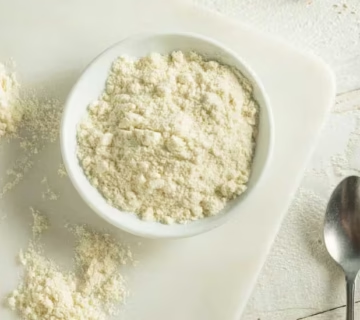
- Dairy-based proteins such as whey and milk powders
- Flavorings, inclusions, and texturizers
Each ingredient plays a role in determining the product’s texture, taste, appearance, and shelf life. For industrial manufacturers, selecting ingredients that are functionally compatible with production processes is as important as their sensory characteristics.
Why Ingredient Quality Matters
High-quality confectionery ingredient solutions ensure:
- Uniformity across production batches
- Optimal process efficiency, minimizing downtime due to ingredient inconsistency
- Compliance with food safety and labeling regulations
- Consumer satisfaction through consistent flavor, texture, and appearance
In large-scale manufacturing, even minor variations in ingredients can lead to significant quality deviations, increased wastage, and higher operational costs.
LATAMARKO LM60 – Premium Spanish-Origin Cocoa Powder
latamarko alkalized cocoa powder lm60
cocoa powder for chocolate production-Best price
Food industry raw materials – list of products
Types of Gelatin from Turkish Manufacturer

Common Mistakes in Sourcing Confectionery Ingredients
Sourcing ingredients for industrial confectionery production is complex, and even experienced teams can make costly mistakes:
- Prioritizing cost over functionality: Low-cost ingredients may lack solubility, stability, or emulsifying properties.
- Ignoring supplier traceability: Without verified production records and certifications, batch-to-batch consistency cannot be guaranteed.
- Neglecting process compatibility: Ingredients not suited to high-temperature, high-shear, or continuous processes can cause production bottlenecks.
- Underestimating storage requirements: Moisture-sensitive sugars or heat-sensitive cocoa derivatives require specific handling to maintain quality.
In our collaboration with multiple factories, we have seen that meticulous verification of supplier capabilities, technical documentation, and ingredient testing ensures reliable production outcomes and reduces operational risk.
Types of Confectionery Ingredients and Their Industrial Applications
Sweeteners
Sweeteners provide the primary taste profile in confectionery products. Industrial considerations include:
- Granulated sugar: Traditional sweetener with excellent crystallization properties; widely used in candies, chocolate, and baked goods.
- High-fructose corn syrup (HFCS) and glucose syrups: Provide sweetness, texture, and moisture control; ideal for gummies and soft candies.
- Sugar alcohols and alternative sweeteners: Used in sugar-free or reduced-calorie products; may require process adjustments due to hygroscopic properties.
Cocoa and Chocolate Powders
Cocoa and chocolate powders impact flavor, color, and functionality. Key industrial considerations:
- Fat content: Determines mouthfeel and melting properties
- Particle size: Affects texture and solubility in beverages or chocolate coatings
- Alkalization or Dutch processing: Modifies acidity and color, affecting final product appearance and taste
Emulsifiers and Stabilizers
Emulsifiers, such as lecithin, and stabilizers, like carrageenan or pectin, are critical for:
- Ensuring uniform mixing of fats and water-based components
- Enhancing shelf life by preventing separation
- Improving texture and mouthfeel in chocolate, ganache, and fillings
Fats and Oils
Fats provide structure, texture, and stability:
- Cocoa butter: Premium fat with melting characteristics critical for chocolate applications
- Vegetable oils: Cost-effective alternatives or blends for certain industrial applications
- Hydrogenated or interesterified fats: Used for specific texture requirements in coatings or baked goods
Dairy Proteins
Dairy-derived proteins, including whey and milk powders, contribute to:
- Protein enrichment in functional confections
- Flavor development through Maillard reactions
- Emulsion stabilization and water-binding properties
Industrial Considerations for Large-Scale Production
Functional Performance
When selecting confectionery ingredient solutions, manufacturers must assess functional parameters:
- Solubility and dispersibility
- Heat and shear stability
- Moisture absorption and hygroscopicity
- Flavor retention during processing
Failure to consider these properties can lead to inconsistent products, operational delays, and increased wastage.
Storage and Handling
Proper storage is critical to maintaining ingredient quality:
- Sugar and powders: Protect from humidity and caking
- Cocoa and chocolate: Maintain cool, dry storage to prevent fat bloom
- Emulsifiers and stabilizers: Avoid exposure to high temperatures and moisture
Efficient inventory management, including FIFO practices and controlled warehouse environments, ensures consistent quality in production lines.
Supply Chain Reliability
Large-scale manufacturers need dependable sourcing to prevent production interruptions:
- Assess supplier production capacity for recurring bulk orders
- Plan logistics and shipping for temperature-sensitive ingredients
- Establish contingency plans for supply fluctuations
MT Royal assists factories in streamlining supply chains, providing reliable sourcing networks and logistical support to ensure uninterrupted ingredient availability.
Comparing Ingredient Solutions
| Ingredient Type | Functional Role | Industrial Advantage | Best Use |
|---|---|---|---|
| Granulated sugar | Sweetening & structure | Crystallization & texture control | Hard candies, baked goods |
| Glucose syrup | Moisture & texture | Prevents crystallization, enhances chewiness | Gummies, soft confections |
| Cocoa powder | Flavor & color | Fat content & solubility control | Chocolate coatings, fillings |
| Lecithin | Emulsifier | Uniform mixing & extended shelf life | Chocolate, pralines |
| Whey protein | Protein enrichment | Emulsion stability, nutritional fortification | Functional bars, protein chocolates |
This comparative approach helps procurement teams select the most suitable solutions for specific product lines while balancing cost, functionality, and nutritional goals.

Emerging Trends in Confectionery Ingredients
The confectionery industry is evolving rapidly due to consumer demand, sustainability goals, and technological innovation:
- Clean-label ingredients: Consumers seek minimally processed sugars, natural emulsifiers, and non-GMO components.
- Functional enrichment: Inclusion of proteins, fibers, vitamins, and minerals in confections to meet nutritional claims.
- Plant-based alternatives: Cocoa butter substitutes, pea protein, and almond powders for vegan confectionery.
- Sustainability and ethical sourcing: Demand for responsibly sourced cocoa, palm oil alternatives, and energy-efficient ingredient production.
Factories integrating these trends gain a competitive edge by delivering innovative, compliant, and consumer-preferred products.
Frequently Asked Questions from Manufacturers
How can I ensure the consistency of confectionery ingredients?
Request Certificates of Analysis (COA) from suppliers, perform in-house functional tests, and implement batch tracking systems.
Which ingredients are most sensitive to processing conditions?
Cocoa, chocolate, and emulsifiers are heat- and shear-sensitive; storage and process monitoring are critical.
Are alternative sweeteners suitable for large-scale confectionery production?
Yes, but formulation adjustments may be required to address hygroscopicity, sweetness intensity, and crystallization behavior.
How can I choose a reliable supplier?
Evaluate certifications (ISO, HACCP, FSSC 22000), production traceability, and technical documentation. MT Royal provides guidance in sourcing verified and compliant suppliers.
How MT Royal Supports Industrial Confectionery Procurement
At MT Royal, we connect factories with trusted suppliers offering premium confectionery ingredient solutions for large-scale industrial production. Our services include:
- Supplier verification and quality assurance
- Technical guidance on ingredient functionality and storage
- Bulk supply logistics and contingency planning
- Support for compliance with international food safety standards
In our collaboration with multiple factories, we have observed that using our sourcing network reduces production delays, ensures consistent quality, and enhances operational efficiency. Factories benefit not only from high-quality ingredients but also from strategic insights that optimize production processes and product outcomes.
Strategic Takeaways for Manufacturers
Selecting and sourcing confectionery ingredient solutions is more than a procurement task—it is a strategic operation that impacts product quality, production efficiency, and consumer satisfaction. Key considerations include:
- Evaluate ingredient functionality, solubility, and process compatibility
- Verify supplier reliability, certifications, and traceability
- Plan storage, handling, and inventory management carefully
- Integrate ingredients with product development and market positioning goals
Thoughtful sourcing, combined with supplier verification and technical oversight, ensures that your factory produces high-quality, consistent, and innovative confectionery products capable of meeting modern market demands.
Confectionery ingredients are not just raw materials—they are strategic assets. By investing in reliable, functional, and compliant ingredient solutions, manufacturers can optimize production, reduce operational risks, and create products that delight consumers and meet industry standards.



No comment