

If your production relies on high-performance humectants, stabilizers, or bulk sweetening agents, choosing the right Crystalline Sorbitol Wholesale Exporter can quietly determine the success or failure of your manufacturing consistency. Procurement decisions for sorbitol often look straightforward on paper—compare prices, confirm specifications, place orders—but experienced factory managers know that real-world outcomes depend on supplier reliability, particle consistency, moisture control, and logistics precision.
This is why many manufacturers prefer sourcing through established distributors such as MT Royal, where multiple international brands, competitive pricing structures, and dependable export logistics reduce operational uncertainty before it reaches the production floor. When your ingredient supply is stable, your manufacturing process becomes predictable. And predictability is one of the most valuable assets any factory can have.
Crystalline sorbitol is not merely a sugar substitute; it is a functional polyol with wide industrial relevance across pharmaceuticals, food processing, nutraceuticals, cosmetics, and chemical manufacturing. Understanding how to select the right exporter, evaluate quality parameters, and optimize usage can significantly improve product performance and operational efficiency.
Shandong Luwei Sorbitol Supplier
What Is Crystalline Sorbitol? Industrial Definition and Core Properties
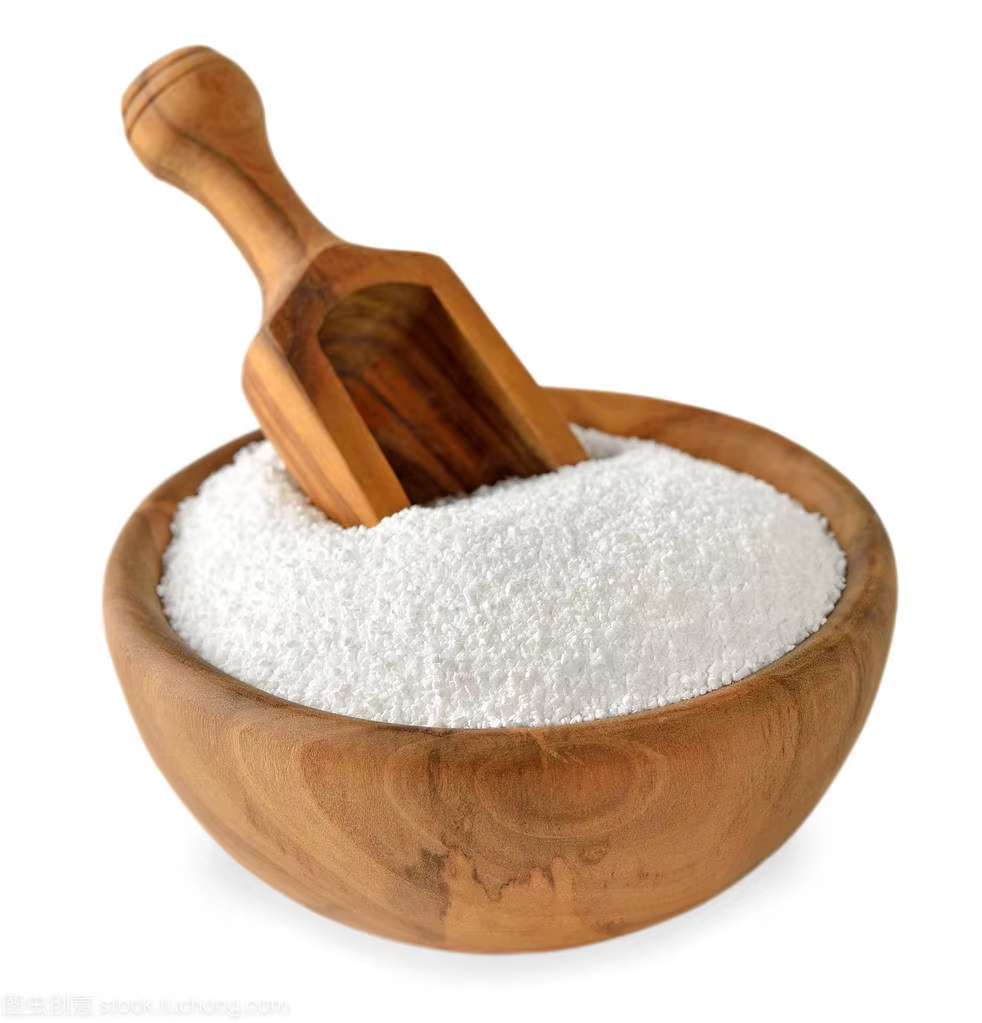
Crystalline sorbitol is a sugar alcohol derived primarily from glucose through catalytic hydrogenation, followed by crystallization and drying processes. Chemically classified as a polyol (C₆H₁₄O₆), sorbitol contains multiple hydroxyl groups that contribute to its hygroscopicity, sweetness profile, and compatibility with numerous formulations.
Unlike liquid sorbitol solutions, crystalline sorbitol offers advantages in dry formulations, tablet compression processes, powdered foods, and applications requiring precise solid dosing.
Key functional properties include:
- Moderate sweetness (approximately 60% of sucrose)
- Non-cariogenic characteristics suitable for oral care and sugar-free foods
- High stability under thermal processing conditions
- Excellent compressibility for pharmaceutical tablets
- Moisture retention capabilities in food systems
- Compatibility with active pharmaceutical ingredients
- Low glycemic impact compared to traditional sugars
These characteristics explain why global demand for crystalline sorbitol continues to grow across multiple industrial sectors.
Why Manufacturers Prefer Crystalline Sorbitol Over Other Polyols
Factory procurement teams often evaluate sorbitol alongside other polyols such as xylitol, maltitol, or mannitol. Crystalline sorbitol occupies a unique position because it balances cost efficiency with functional versatility.
From an industrial perspective, sorbitol offers:
- Reliable supply chain availability due to large-scale production capacity
- Cost advantages compared to premium polyols
- Broad regulatory acceptance in food and pharmaceutical sectors
- Flexibility across multiple formulations
- Strong safety profile supported by decades of use
In our collaboration with various factories, we have seen that sorbitol frequently becomes the “workhorse polyol” in manufacturing environments—less glamorous than specialty ingredients but indispensable for production continuity.
Industrial Grades and Specifications: What Buyers Must Evaluate
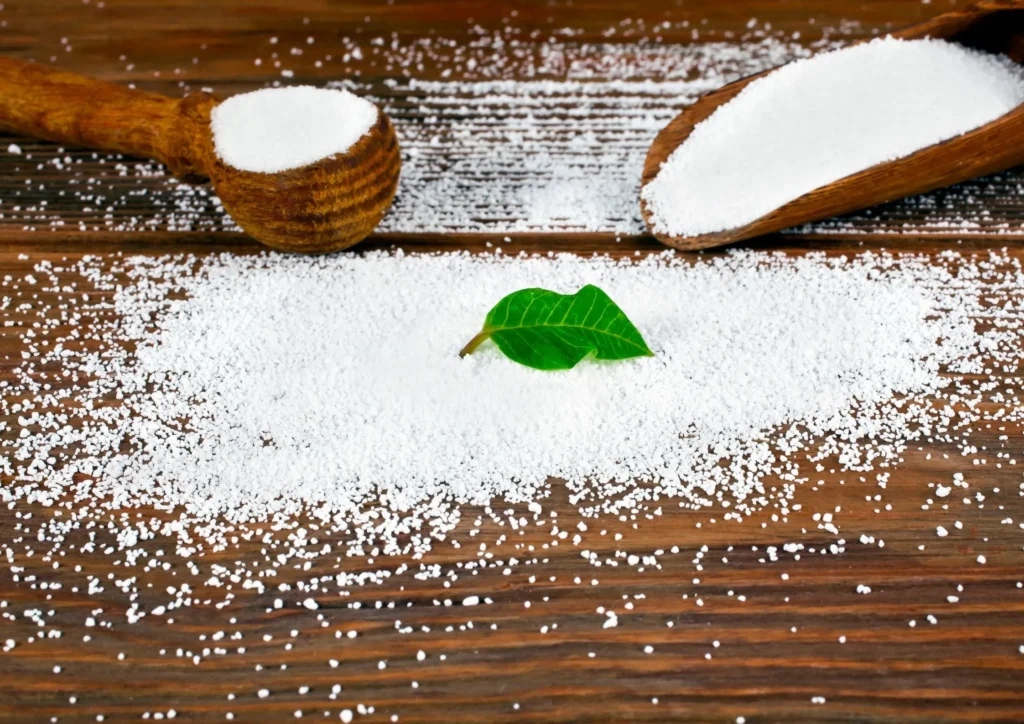
Selecting a Crystalline Sorbitol Wholesale Exporter requires careful evaluation of technical specifications. Even minor deviations in particle size distribution or moisture content can influence processing efficiency.
Below is a typical specification overview manufacturers should review:
| Parameter | Typical Range | Industrial Significance |
|---|---|---|
| Assay (Sorbitol Content) | ≥ 98% | Determines purity and sweetness consistency |
| Moisture Content | ≤ 1.5% | Impacts stability and flowability |
| Particle Size Distribution | Controlled | Affects mixing and compression |
| Bulk Density | Defined range | Influences packaging and dosing |
| pH Value | Neutral range | Compatibility with formulations |
| Heavy Metals | Low limits | Safety compliance |
| Microbial Limits | Regulated | Food and pharma suitability |
Reliable exporters provide Certificates of Analysis for every batch and maintain traceability throughout the supply chain.
Major Industrial Applications of Crystalline Sorbitol
Pharmaceutical Industry
Pharmaceutical manufacturers rely heavily on crystalline sorbitol as:
- Tablet diluent and binder
- Chewable tablet sweetener
- Excipient for oral dosage forms
- Stabilizer for sensitive compounds
- Powder carrier for active ingredients
Its compressibility and non-reactive nature make it particularly valuable in direct compression tablet manufacturing.
Food and Beverage Processing
In food applications, crystalline sorbitol functions as:
- Sugar substitute in diabetic-friendly foods
- Moisture stabilizer in baked goods
- Sweetener in confectionery and chewing gum
- Texture modifier in powdered drink mixes
- Anti-crystallization agent
Its ability to retain moisture without promoting microbial growth enhances shelf life.
Personal Care and Oral Hygiene
In cosmetics and oral care manufacturing, sorbitol is used for:
- Toothpaste formulations
- Powdered cosmetics
- Moisturizing agents
- Stabilizers in dry blends
Non-cariogenic properties make it especially valuable for oral care products.
Industrial and Chemical Applications
Beyond consumer products, crystalline sorbitol is utilized in:
- Surfactant production
- Resin manufacturing
- Polyurethane chemistry
- Fermentation media
- Textile processing
Its multifunctional chemistry supports diverse industrial processes.
Advantages of Working with a Professional Crystalline Sorbitol Wholesale Exporter
A reliable exporter does more than supply material. It supports your operational stability and risk management.
Key advantages include:
- Access to multiple manufacturing brands, reducing supply risk and allowing price optimization according to market conditions.
- Consistent quality verification processes that ensure each shipment meets industrial specifications before delivery.
- Flexible packaging options tailored to factory consumption patterns, from small bags to bulk containers.
- Export logistics expertise that minimizes delays, customs issues, and transportation damage.
- Technical support for documentation and regulatory compliance across international markets.
We often observe that factories partnering with experienced exporters face fewer production interruptions and lower total procurement risk.
Common Mistakes in Industrial Sorbitol Sourcing
Even experienced procurement teams occasionally encounter avoidable problems when sourcing crystalline sorbitol.
One frequent mistake is focusing exclusively on price per kilogram without evaluating total operational cost. Lower-priced material with inconsistent particle size may cause mixing inefficiencies, production downtime, or formulation failures.
Another common error involves insufficient supplier qualification. Without proper audits or documentation verification, factories expose themselves to contamination risks or regulatory non-compliance.
Storage planning is also frequently overlooked. Sorbitol is hygroscopic, meaning it absorbs moisture from the environment. Improper storage conditions can lead to clumping and reduced flowability.
Finally, some manufacturers switch suppliers without performing validation trials, which can introduce unexpected process variability.
Packaging Options and Bulk Logistics Considerations
Choosing the correct packaging format depends on your production scale and handling systems.
| Packaging Format | Typical Size | Best For |
|---|---|---|
| Multi-layer paper bags | 25 kg | Flexible usage and moderate volumes |
| Jumbo bags (FIBC) | 500–1000 kg | High-volume factories |
| Bulk containers | Custom | Continuous production facilities |
Packaging integrity is crucial because moisture exposure can compromise product quality. Exporters must ensure proper sealing and protective liners.
Crystalline vs Liquid Sorbitol: Practical Comparison for Manufacturers
Both forms of sorbitol have advantages depending on the application.
Crystalline sorbitol is often preferred when:
- Dry formulations are required
- Tablet compression is involved
- Transportation cost efficiency is critical
- Long-term storage stability is important
- Precise solid dosing is needed
Liquid sorbitol may be better for:
- Syrups and liquid formulations
- Immediate dissolution processes
- Automated pumping systems
- Applications requiring viscosity modification
Choosing the right form depends on manufacturing requirements rather than price alone.
Specialized Industrial Tips for Large-Scale Production
Moisture Control in Storage
Maintaining humidity-controlled storage environments prevents caking and preserves flowability.
Powder Handling Optimization
Using vibratory feeders or screw conveyors improves dosing consistency in automated systems.
Particle Size Selection
Different particle sizes influence compressibility and dissolution rates. Testing multiple grades may improve product performance.
Blending Techniques
Pre-mixing sorbitol with minor ingredients before final blending can enhance homogeneity.
Quality Monitoring
Regular testing of incoming batches ensures consistency and identifies deviations early.
In our experience, small adjustments in powder handling systems can significantly improve production efficiency and reduce waste.
Regulatory and Certification Considerations
Depending on your industry, documentation requirements may include:
- Food safety certifications
- Pharmaceutical compliance standards
- Halal or kosher certification
- Non-GMO declarations
- ISO quality management documentation
- Allergen statements
- Country of origin certificates
Reliable exporters maintain updated documentation to support international regulatory requirements.
Market Trends Influencing Crystalline Sorbitol Demand
Global demand for crystalline sorbitol continues to rise due to several factors:
- Growth of sugar-free and reduced-calorie food products
- Expansion of pharmaceutical manufacturing worldwide
- Increased oral care product consumption
- Rising health awareness regarding sugar intake
- Development of functional foods and nutraceuticals
- Advancements in bio-based chemical production
Manufacturers that secure stable sourcing relationships are better positioned to benefit from these trends.
Frequently Asked Questions from Factory Managers
How should crystalline sorbitol be stored?
Store in a cool, dry environment with humidity control and sealed packaging to prevent moisture absorption.
What is the typical shelf life?
Usually two to three years under proper storage conditions.
Can crystalline sorbitol replace sugar completely?
In many formulations, yes, but sweetness intensity differences may require formulation adjustments.
Does particle size matter?
Yes. Particle size affects flowability, compressibility, and dissolution rates.
How do I verify supplier quality?
Request samples, review documentation, perform internal testing, and evaluate supplier track record.
Why Distributor Partnerships Add Strategic Value
Direct sourcing from manufacturers may appear cost-effective initially, but distributors provide flexibility and risk mitigation.
We advise factories to consider total operational impact rather than unit price alone. Reliable delivery schedules, alternative sourcing options, and documentation support often create greater long-term value.
Suppliers offering multiple brands allow procurement teams to adapt to market changes without disrupting production.
Strategic Perspective for Long-Term Manufacturing Success
Reliable ingredient sourcing is one of the most underestimated competitive advantages in industrial production. When your crystalline sorbitol supply remains consistent, your formulation stability, production efficiency, and customer satisfaction improve simultaneously.
Choosing the right Crystalline Sorbitol Wholesale Exporter is therefore not just a procurement decision—it is a strategic investment in operational reliability. Factories that build strong supplier relationships gain resilience against market volatility, regulatory challenges, and production disruptions. Over time, that resilience becomes a measurable competitive advantage that extends far beyond raw material purchasing.



No comment