


In today’s competitive chocolate industry, the demand for innovative, high-quality chocolate flavors is growing rapidly. Manufacturers are no longer constrained by standard cocoa butter; instead, they are exploring customized cocoa butter equivalents (CBEs) to craft unique, scalable chocolate products. These specialized alternatives offer flexibility in flavor, texture, melting behavior, and cost efficiency—critical factors for factory owners, production managers, and procurement officers aiming to differentiate their products without compromising quality.
At MT Royal, we’ve observed firsthand how factories benefit from tailored CBEs, achieving consistency and creative freedom while maintaining efficient production. Moreover, premium brands like Latamarko have set the benchmark for reliability and precision in high-quality cocoa alternatives, providing manufacturers with confidence in every batch.
Understanding Cocoa Butter Equivalents (CBEs)
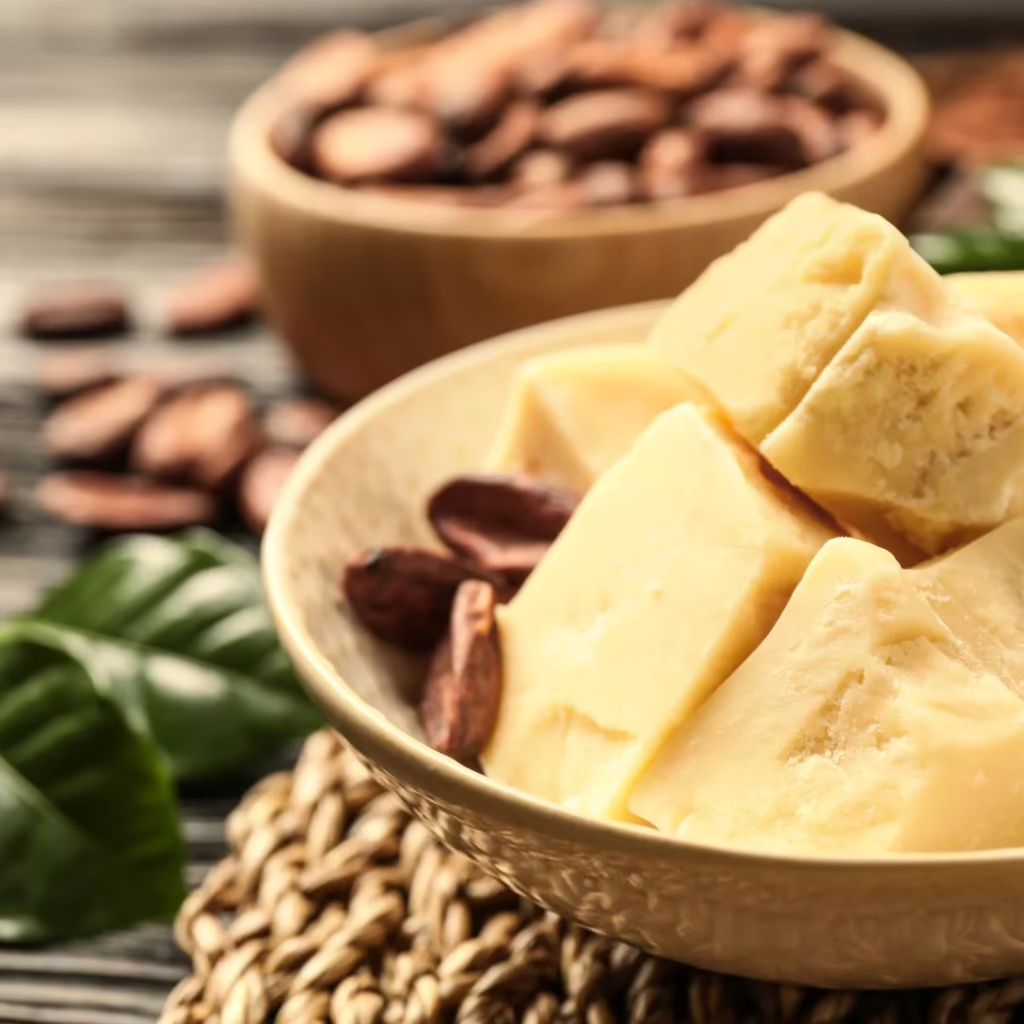
Cocoa butter equivalents are specially formulated fats that mimic the physical and sensory properties of natural cocoa butter but with enhanced functional characteristics. They typically consist of vegetable fats such as palm kernel oil, shea stearin, or illipe fat, blended to replicate the melting point, snap, and mouthfeel of real cocoa butter. CBEs are particularly attractive for chocolate makers seeking:
- Flavor flexibility: CBEs can reduce the natural cocoa butter’s flavor impact, allowing chocolatiers to highlight novel notes or inclusions.
- Texture control: Manufacturers can tailor hardness, creaminess, and melting behavior for different product lines.
- Cost efficiency: By substituting a portion of cocoa butter with CBEs, factories can optimize raw material costs without affecting quality.
In our experience supplying manufacturing facilities, CBEs also offer superior storage stability and less susceptibility to fat bloom, which is essential for large-scale production and long-distance distribution.
Advantages for Chocolate Manufacturers
When properly integrated, customized CBEs provide numerous advantages to industrial chocolate producers:
1. Product Innovation
CBEs allow factories to experiment with new flavors, textures, and inclusions. For example, a dark chocolate bar infused with fruit notes may require a more neutral fat profile to let the flavor shine without interference from strong cocoa butter taste. Customized CBEs make this achievable at scale.
2. Enhanced Production Flexibility
Large-scale chocolate manufacturing demands fats that are consistent and predictable in their melting points and crystallization behaviors. CBEs can be engineered to:
- Reduce processing time
- Improve mold release
- Maintain consistent viscosity during tempering
We’ve seen factory managers benefit from using CBEs that stabilize production flow, especially in multi-product lines.
3. Sustainability and Ethical Sourcing
Premium CBEs can be sourced from sustainable, non-deforestation-certified fats, providing chocolatiers with an eco-conscious alternative. Brands like Latamarko offer traceable, high-quality CBEs that align with ethical sourcing standards, allowing manufacturers to market environmentally responsible products.
Common Misconceptions About CBEs
Despite the clear advantages, some manufacturers hesitate due to misconceptions:
- “CBEs compromise taste.”
Modern formulations replicate cocoa butter’s flavor while offering customization. Careful blending ensures that unique chocolate profiles remain authentic and appealing. - “CBEs are only cost-cutting tools.”
While CBEs can reduce raw material costs, their primary value lies in functional versatility and innovation potential. - “CBEs are incompatible with premium chocolates.”
On the contrary, high-end CBEs like those from Latamarko are designed for gourmet applications, maintaining texture and mouthfeel comparable to natural cocoa butter.
Selecting the Right Customized CBE
Choosing the right CBE requires consideration of multiple factors:
| Factor | Key Considerations |
|---|---|
| Melting Profile | Align with the chocolate type (dark, milk, white) and climatic storage conditions. |
| Compatibility | Must blend seamlessly with existing cocoa mass and sugar components. |
| Texture & Snap | Evaluate the desired hardness, snap, and creaminess for finished products. |
| Allergen & Dietary Compliance | Consider vegan, kosher, or allergen-friendly requirements. |
| Supplier Reliability | Choose suppliers like MT Royal that provide traceable, high-quality CBEs from brands like Latamarko. |
Step-by-step guidance: First, define your target chocolate profile. Second, identify functional requirements such as melt behavior or tempering properties. Finally, collaborate with a trusted supplier to trial different formulations.
Industrial Insights & Real-Life Examples
Imagine a factory producing seasonal chocolate with exotic inclusions like spices or fruits. Using natural cocoa butter exclusively can limit flavor expression and tempering precision. By substituting 20–30% of cocoa butter with a customized CBE, the factory can achieve:
- Enhanced flavor clarity
- Consistent texture across batches
- Reduced production losses due to tempering issues
Another scenario: mass-produced chocolate bars in tropical climates often suffer from fat bloom and softening. CBEs formulated for higher melting points mitigate these issues, ensuring shelf-stable quality.
Production & Supply Chain Considerations
Large-scale factories need to integrate CBEs with minimal disruption:
- Storage: CBEs often have longer shelf life and require less temperature-sensitive storage than pure cocoa butter.
- Mixing & Tempering: Carefully monitor CBE ratios to prevent viscosity changes.
- Bulk Sourcing: Partnering with MT Royal ensures access to multiple brands, including Latamarko, at competitive prices.
- Regulatory Compliance: Verify labeling and fat composition for different markets.
Frequently Asked Questions (FAQ)
Q1: Can CBEs replace 100% of cocoa butter?
A1: While technically possible, most manufacturers replace 20–50% to retain authentic chocolate mouthfeel.
Q2: Are CBEs suitable for artisanal chocolate?
A2: Yes, premium CBEs like Latamarko are formulated for both industrial and artisanal applications.
Q3: Do CBEs affect shelf life?
A3: They often improve stability, reduce fat bloom, and extend shelf life when blended correctly.
Q4: Can CBEs support sustainable sourcing claims?
A4: Yes, many CBEs are derived from certified sustainable fats, enabling ethical product marketing.
Conclusion
Customized cocoa butter equivalents are no longer just substitutes—they are tools for innovation. They allow chocolate manufacturers to craft unique flavors, textures, and sustainable products while optimizing production efficiency. By strategically selecting and integrating CBEs, factories can achieve consistent quality, reduce losses, and expand creative possibilities.
At MT Royal, we supply a wide range of CBEs suitable for diverse chocolate applications, including premium options from Latamarko, ensuring that your production meets both quality and market demands. The right CBE formulation empowers your chocolate products to stand out on shelves, delight consumers, and maintain operational excellence.
Ask yourself: Are you ready to explore the transformative potential of customized cocoa butter equivalents in your chocolate production line?
Food industry raw materials – list of products
Telegram channel of MT Royal company


No comment