

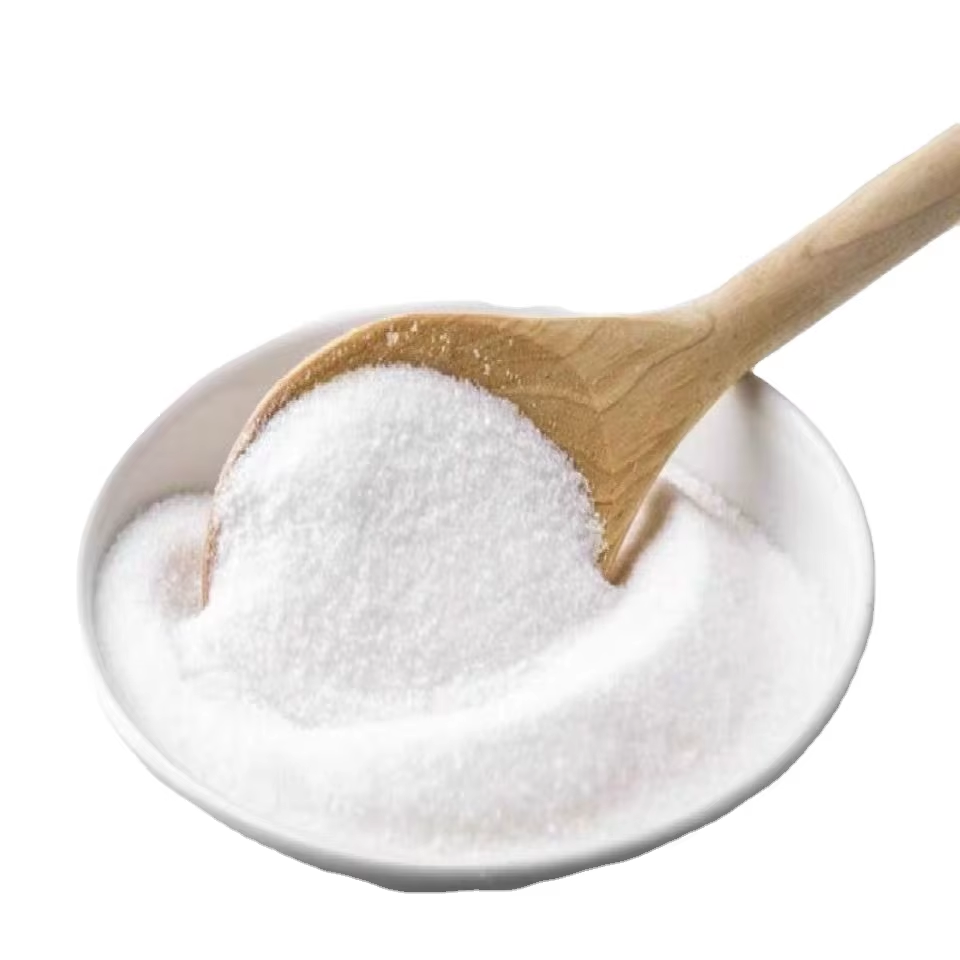
In the Palestinian confectionery sector, the choice of sweeteners can make or break the final product. Dextrose, also known as glucose, has emerged as a critical ingredient for achieving the desired sweetness, texture, and stability in sweets, candies, and bakery products. For manufacturers aiming to produce high-quality confections that appeal to both local tastes and export markets, understanding the role, sourcing, and industrial applications of dextrose is crucial.
At MT Royal, we have worked closely with Palestinian confectionery producers and observed that strategic use of dextrose not only improves product quality but also enhances consistency, shelf life, and production efficiency. Our expertise allows us to guide manufacturers on formulation optimization and supply chain management to ensure reliable, high-quality dextrose delivery.
This article provides a detailed, practical, and industrial perspective on using dextrose in Palestinian confectionery, covering technical applications, common mistakes, sourcing strategies, regulatory compliance, and best practices for large-scale production.
latamarko alkalized cocoa powder lm60
cocoa powder for chocolate production-Best price
Food industry raw materials – list of products
Understanding Dextrose: Definition and Industrial Importance
Dextrose is a monosaccharide (simple sugar) derived from starch sources such as corn, wheat, or potatoes. Unlike sucrose, dextrose has a lower sweetness level but offers specific functional advantages in confectionery:
- Sweetness balance: Provides mild, clean sweetness that complements other ingredients.
- Texture and crystallization control: Enhances chewiness in candies and prevents undesired sugar crystallization.
- Fermentation substrate: Supports yeast activity in bakery products.
- Moisture retention: Improves shelf life by controlling water activity in sweets.
For Palestinian confectionery makers, dextrose is particularly valuable in candies, marshmallows, toffees, jellies, and specialty baked goods. It allows producers to control sweetness, texture, and stability in diverse formulations.
Industrial Applications of Dextrose in Confectionery
1) Hard and Soft Candy Production
Dextrose modifies crystallization and texture, ensuring uniform hardness in hard candies and soft chewiness in gummy candies. Correct ratios prevent crystallization defects, a common issue in Palestinian small-scale and industrial candy production.
2) Bakery Products
In pastries, cakes, and traditional Palestinian sweets, dextrose contributes to even browning, tender crumb structure, and consistent fermentation. It acts as a sugar substrate for yeast, supporting predictable rising patterns in doughs.
3) Functional Sweets
Dextrose is ideal for sugar-free or reduced-calorie confections when blended with polyols or alternative sweeteners. This combination maintains sweetness while reducing caloric load, a growing trend in Palestinian consumer preferences.
4) Nutritional and Energy Products
Its rapid absorption makes dextrose a preferred ingredient in energy bars and fortified candies. Manufacturers producing health-focused sweets can leverage dextrose for energy content without compromising texture or taste.
Common Mistakes in Using Dextrose
Even experienced manufacturers can face challenges when integrating dextrose:
- Overuse: Excess dextrose may result in overly sweet products that mask other flavors.
- Underuse: Insufficient dextrose can lead to grainy textures, weak sweetness, and poor shelf stability.
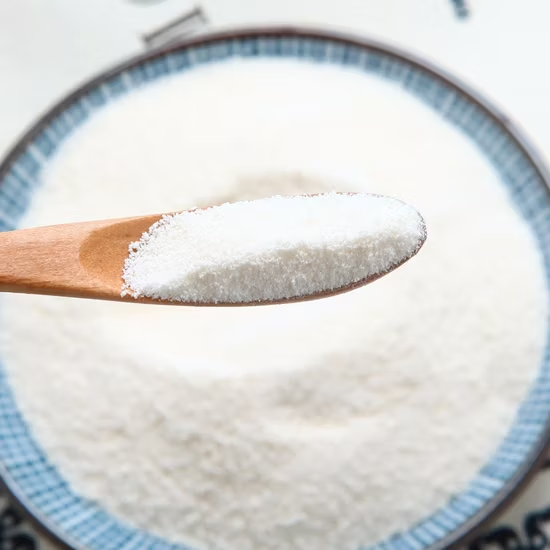
- Ignoring moisture control: Dextrose is hygroscopic; improper storage leads to clumping and inconsistent quality.
- Supplier inconsistency: Variations in purity, particle size, or moisture content can affect candy crystallization and dough performance.
MT Royal has supported many Palestinian confectionery producers in avoiding these pitfalls by providing consistent, high-quality dextrose and technical guidance on formulation adjustments.
Sourcing Dextrose: Considerations for Palestinian Manufacturers
Reliable sourcing is key to maintaining quality in high-volume production:
1) Purity and Grade
Food-grade dextrose should be ≥99.5% pure, free of heavy metals, and compliant with HACCP, ISO, and Halal standards. Powdered or granulated forms must meet specifications suitable for candies, bakery items, and specialty sweets.
2) Packaging and Logistics
Bulk dextrose is typically supplied in poly-lined bags or food-grade drums to protect against moisture. Warehouses must maintain humidity below 60% and temperatures under 25°C to prevent clumping or caking.
3) Supplier Reliability
Partnering with a supplier like MT Royal ensures consistent supply, certified quality, and technical support. We assist manufacturers in planning bulk procurement and maintaining supply continuity, which is crucial for uninterrupted production schedules.
4) Cost and Volume Planning
Dextrose pricing can fluctuate due to global starch market trends. Efficient volume planning and long-term agreements allow Palestinian confectionery manufacturers to manage costs while ensuring ingredient availability.
Technical Considerations for Confectionery Production
1) Particle Size and Solubility
Dextrose granule size affects dissolution rate and texture. Fine powders dissolve quickly in syrups, whereas coarser particles may be used for coating or texture enhancement in certain candies.
2) Crystallization Control
Dextrose interferes with sucrose crystallization, which is critical in creating smooth textures in caramels and fudge. Understanding the solubility, water activity, and thermal behavior of dextrose ensures desired product consistency.
3) Formulation Blends
Dextrose is often blended with other sweeteners (sucrose, fructose, polyols) to achieve target sweetness and functional properties. MT Royal provides guidance on blending ratios to maintain taste balance, texture, and shelf stability.
4) Interaction with Other Ingredients
- Proteins and gelatin: Dextrose influences gel strength and chewiness in gummy candies.
- Acids and flavorings: Proper balance prevents off-flavors and maintains desired pH.
- Fats: Interactions with cocoa butter or vegetable fats in chocolates affect sweetness perception and texture.
Scaling Up Production: Tips for Manufacturers
1) Quality Assurance
Regular testing of dextrose batches for purity, moisture content, particle size, and microbial load prevents formulation inconsistencies and ensures uniform product quality.
2) Storage Best Practices
Dextrose’s hygroscopic nature necessitates careful storage. Maintain low humidity, proper ventilation, and sealed packaging to prevent caking and degradation.
3) Automation and Dosing Systems
High-volume production benefits from automated dosing to ensure consistent sweetness and texture across batches. Inline dissolvers and precise feeding systems minimize human error and improve efficiency.
4) Contingency Planning
Maintaining safety stock and establishing multiple certified suppliers reduces risk of ingredient shortages, ensuring continuous production of confectionery products.
Frequently Asked Questions (FAQ)
Q: How does dextrose affect candy crystallization?
A: Dextrose disrupts sucrose crystallization, producing smooth textures in caramels, fudge, and gummies. Proper ratio and dissolution are key.
Q: Can dextrose be combined with alternative sweeteners?
A: Yes, blends with polyols or stevia maintain sweetness and texture while reducing caloric content.
Q: How should dextrose be stored in humid climates?
A: Use sealed, moisture-proof packaging in cool, dry storage areas to prevent clumping.
Q: Is dextrose suitable for Halal-certified confectionery?
A: Yes, provided the production process is Halal-compliant and free from cross-contamination.
Q: What are common mistakes in dextrose usage?
A: Over- or under-dosing, ignoring moisture control, and sourcing inconsistent quality are typical pitfalls.
Conclusion
Dextrose is more than a sweetener; it is a functional ingredient that enhances taste, texture, and shelf life in Palestinian confectionery. Its versatility allows manufacturers to create a wide range of products, from traditional sweets to modern energy bars, while maintaining consistent quality and consumer appeal.
By partnering with MT Royal, confectionery producers gain access to high-quality, food-grade, and Halal-compliant dextrose, along with technical guidance to optimize formulations. Strategic dextrose use ensures your sweets are delicious, consistent, and market-ready, giving your brand a competitive advantage in local and regional markets.

No comment