


In Egypt’s confectionery and sweets industry, success is no longer determined solely by traditional recipes or brand legacy. Today’s manufacturers operate in an environment shaped by volatile raw material prices, demanding consumers, export regulations, and relentless competition. In this landscape, the role of functional ingredients has expanded far beyond sweetness alone. Among them, dextrose has emerged as a cornerstone ingredient for factories aiming to balance cost efficiency, product consistency, and scalable production.
At MT Royal, we have worked closely with confectionery producers across Egypt and the wider MENA region, and one reality is clear: when dextrose is selected, sourced, and applied correctly, it becomes a silent driver of product stability, texture control, and processing reliability. This article explores how dextrose functions within Egyptian confectionery formulations, why it matters at an industrial level, and how manufacturers can leverage it as a strategic asset rather than a commodity input.
Dextrose, chemically known as D-glucose, is a monosaccharide derived primarily from starch sources such as corn. Unlike sucrose, which must first be broken down during digestion or processing, dextrose is readily available as a reducing sugar, making it highly reactive in food systems.
In confectionery manufacturing, this chemical simplicity translates into functional versatility. Dextrose contributes not only sweetness but also bulk, fermentation control, browning behavior, and moisture regulation. Its relatively lower sweetness intensity compared to sucrose allows formulators to fine-tune flavor profiles without overwhelming the palate, particularly important in Egyptian sweets where balance between sweetness, aroma, and texture is critical.
From an industrial standpoint, dextrose is valued for its predictable behavior. It dissolves rapidly, performs consistently across batches, and integrates smoothly into both liquid and dry systems. These characteristics make it especially suitable for large-scale production environments where process deviations can translate into significant losses.
The Role of Dextrose in Egyptian Confectionery Traditions
Egypt’s confectionery sector is unique in its coexistence of deeply rooted traditional sweets and modern mass-produced products. From soft candies and jellies to biscuits, wafers, and chocolate-coated snacks, dextrose plays different roles depending on the application.
In traditional sweet formulations, dextrose is often used to control crystallization. By interfering with sucrose crystal formation, it helps achieve smoother textures in products such as fudges, fondants, and filled sweets. This function is particularly valuable in warm climates like Egypt’s, where uncontrolled crystallization can accelerate quality deterioration.
In industrial confectionery lines, dextrose is widely used to support process stability. It improves flow properties in syrups, enhances chewiness in gummies, and contributes to uniform color development during baking. Manufacturers exporting to Gulf or African markets often rely on dextrose to maintain product consistency across different storage and transport conditions.
Dextrose vs. Other Sweeteners in Confectionery Applications
While dextrose is not the only carbohydrate available to Egyptian manufacturers, its comparative advantages become evident when evaluated against alternatives.
Sucrose remains the most familiar sweetener, but its tendency to crystallize aggressively can create texture defects if not carefully managed. Fructose offers higher sweetness but presents challenges related to hygroscopicity and flavor dominance. Maltodextrins provide bulk but lack sweetness and browning capacity.
Dextrose occupies a functional middle ground. It offers moderate sweetness, controlled hygroscopicity, and strong reducing properties that support Maillard reactions. This makes it especially valuable in baked confectionery items where color, aroma, and surface appearance influence consumer perception.
From a cost perspective, dextrose often provides a favorable balance between price stability and functional performance, particularly when sourced through reliable industrial suppliers with established logistics networks.
Industrial Advantages of Using Dextrose in Large-Scale Production
For confectionery factories operating at scale, ingredient selection must align with operational realities. Dextrose offers several advantages that directly impact production efficiency.
First, its high solubility reduces mixing time and energy consumption. This is particularly beneficial in syrup preparation, where rapid dissolution minimizes processing bottlenecks. Second, dextrose supports batch-to-batch consistency, a critical factor for brands supplying national retail chains.
Third, dextrose contributes to shelf-life management. By binding water and reducing water activity, it helps slow microbial growth and texture degradation. In Egypt’s climate, where temperature and humidity fluctuations are common, this functionality becomes a key quality control lever.
We have seen in our collaborations that manufacturers who treat dextrose as a functional component rather than a simple sweetener achieve more predictable production outcomes and fewer reformulation issues over time.
Common Mistakes in Industrial Dextrose Procurement
Despite its advantages, dextrose is frequently mismanaged at the procurement stage. One common mistake is focusing solely on price per metric ton without evaluating specification consistency. Variations in particle size, moisture content, or dextrose equivalent (DE) can significantly affect performance in confectionery systems.
Another recurring issue is insufficient documentation. For manufacturers serving export markets, incomplete certificates of analysis or unclear origin documentation can create compliance risks. This is especially relevant when products are destined for markets with strict labeling or food safety requirements.
Storage is another overlooked factor. Dextrose is hygroscopic, and improper warehousing conditions can lead to caking or flow problems. Procurement teams that fail to align storage protocols with ingredient characteristics often encounter avoidable operational disruptions.
At MT Royal, we emphasize that sourcing decisions should integrate technical, logistical, and regulatory considerations, not just unit cost.
Quality Specifications That Matter to Confectionery Producers
Not all dextrose grades are created equal. For confectionery applications, several quality parameters deserve close attention.
Purity levels influence flavor neutrality and color development. High-purity dextrose minimizes off-notes and ensures predictable browning reactions. Moisture content affects shelf stability and handling, particularly in powdered formats used in dry blends.
Particle size distribution impacts flowability and dissolution speed. Fine powders dissolve quickly but may dust excessively, while coarser granules offer better handling but require longer mixing times. Selecting the appropriate format depends on the specific production process.
Manufacturers supplying premium confectionery segments or export markets often require tighter specification tolerances. Working with suppliers who understand these nuances reduces the risk of downstream quality issues.
Dextrose in Gummies, Chewy Candies, and Jellies
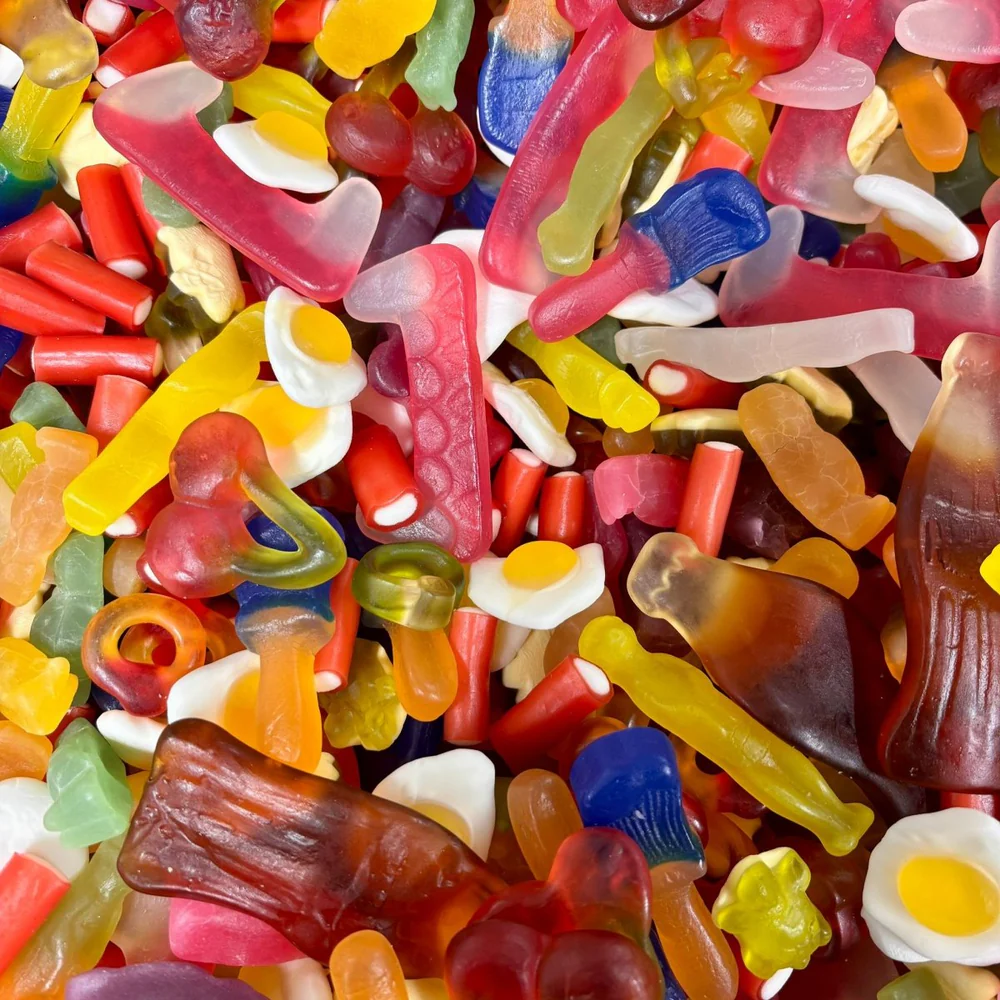
One of the most prominent applications of dextrose in Egyptian confectionery is in gummy and jelly products. Here, dextrose plays a multifaceted role.
It contributes to chewiness by interacting with gelling agents such as gelatin or pectin. It also influences sweetness perception, allowing formulators to reduce overall sugar load without compromising taste. Additionally, dextrose supports color stability by participating in controlled browning reactions that enhance visual appeal.
In high-speed gummy lines, consistent syrup viscosity is essential. Dextrose helps maintain predictable rheological behavior, reducing downtime caused by flow irregularities or setting inconsistencies.
Baking and Biscuit Applications: Beyond Sweetness
In baked confectionery products, dextrose serves as a functional enhancer rather than a primary sweetener. Its reducing sugar nature accelerates Maillard reactions, contributing to desirable crust color and roasted flavor notes.
For biscuit and wafer manufacturers in Egypt, this can mean shorter baking times or lower oven temperatures, both of which translate into energy savings. Dextrose also supports moisture retention, helping products maintain crispness or softness depending on formulation goals.
Manufacturers targeting export markets often rely on dextrose to achieve uniform appearance across batches, a key factor in meeting retailer specifications.
Cost Control and Supply Chain Stability
Egyptian confectionery manufacturers operate in a region exposed to global commodity price fluctuations. Corn-based derivatives such as dextrose are influenced by international agricultural markets, freight costs, and currency movements.
Strategic sourcing becomes essential. Long-term supplier relationships, transparent pricing structures, and flexible logistics arrangements can help mitigate volatility. We have observed that manufacturers who engage in proactive supply planning experience fewer production interruptions and better cost predictability.
MT Royal works with multiple producers and brands, enabling access to diversified supply sources and competitive pricing models tailored to industrial buyers.
Regulatory and Labeling Considerations in Egypt
Compliance with Egyptian food regulations is a non-negotiable aspect of confectionery production. Dextrose must meet national food safety standards and labeling requirements, particularly when products are exported.
Clear documentation regarding origin, processing method, and allergen status supports regulatory approval and builds trust with downstream partners. Manufacturers should also consider halal compliance where applicable, as this influences market access both domestically and regionally.
Working with suppliers who understand local and international regulatory frameworks reduces administrative burden and compliance risk.
Frequently Asked Questions from Factory Managers and Buyers
Many procurement and production managers raise similar questions when evaluating dextrose for confectionery use.
One common question concerns substitution ratios. Dextrose cannot always replace sucrose on a one-to-one basis due to differences in sweetness and functional behavior. Reformulation trials are often necessary to achieve desired outcomes.
Another frequent concern involves shelf life. While dextrose can enhance moisture control, excessive use may increase hygroscopicity. Balancing formulation components is key.
Managers also ask about logistics. Bulk packaging options, lead times, and minimum order quantities all influence procurement decisions, especially for medium-scale factories.
Strategic Insights for Scaling Confectionery Production
As Egyptian confectionery manufacturers scale operations, ingredient strategy becomes increasingly important. Dextrose offers scalability advantages due to its consistent performance and wide availability.
Factories expanding into new product categories often find dextrose useful as a formulation anchor, providing a reliable baseline from which to adjust sweetness, texture, and appearance. This reduces development time and accelerates time-to-market.
We have seen that manufacturers who integrate technical knowledge with strategic sourcing outperform competitors who treat ingredients as interchangeable commodities.
The MT Royal Perspective: Experience from the Supply Side
From our perspective as a supplier working closely with industrial clients, the most successful confectionery manufacturers share a common trait: they view ingredients as partners in production, not just inputs.
We have seen factories reduce waste, improve consistency, and simplify formulations by optimizing dextrose usage. We have also observed that transparent communication between supplier and manufacturer leads to better outcomes, particularly during market disruptions.
MT Royal’s role is to support this process by providing reliable supply, technical clarity, and competitive access to multiple dextrose brands suited to different applications.
A Forward-Looking View of Dextrose in Egypt’s Sweets Industry
Egypt’s confectionery market continues to evolve, driven by urbanization, changing consumer preferences, and export ambitions. Dextrose will remain a central component of this evolution due to its versatility and functional reliability.
Manufacturers who invest in understanding how dextrose interacts with their specific processes will be better positioned to innovate and compete. Those who align ingredient strategy with long-term supply partnerships will gain resilience in an increasingly complex market.
The future belongs to producers who combine technical insight with strategic procurement, turning familiar ingredients into competitive advantages rather than cost centers.

No comment