


In many food and beverage factories, glucose syrup never appears on the front label, yet it quietly determines whether a product holds its texture, maintains shelf life, or fails under pressure. For manufacturers operating in or supplying the Afghan market, choosing the right Glucose Syrup Supplier for Afghanistan is not a routine procurement task—it is a foundational production decision. The difference between a dependable supplier and an inconsistent one often shows up not in the warehouse, but on the production line, in customer feedback, and ultimately in profitability.
This is where experienced partners like MT Royal enter the picture. Afghan manufacturers today are not simply looking for a sweetener; they are looking for stability, predictability, and access to glucose syrup grades that perform consistently at scale. When supply chains are complex and margins are tight, working with a supplier that understands both the chemistry of glucose syrup and the realities of regional logistics becomes a strategic advantage rather than a convenience.
latamarko alkalized cocoa powder lm60
cocoa powder for chocolate production-Best price
Food industry raw materials – list of products
Types of Gelatin from Turkish Manufacturer
Alkalized Cocoa Powder Supplier
What Is Glucose Syrup? Core Concepts Every Manufacturer Should Understand
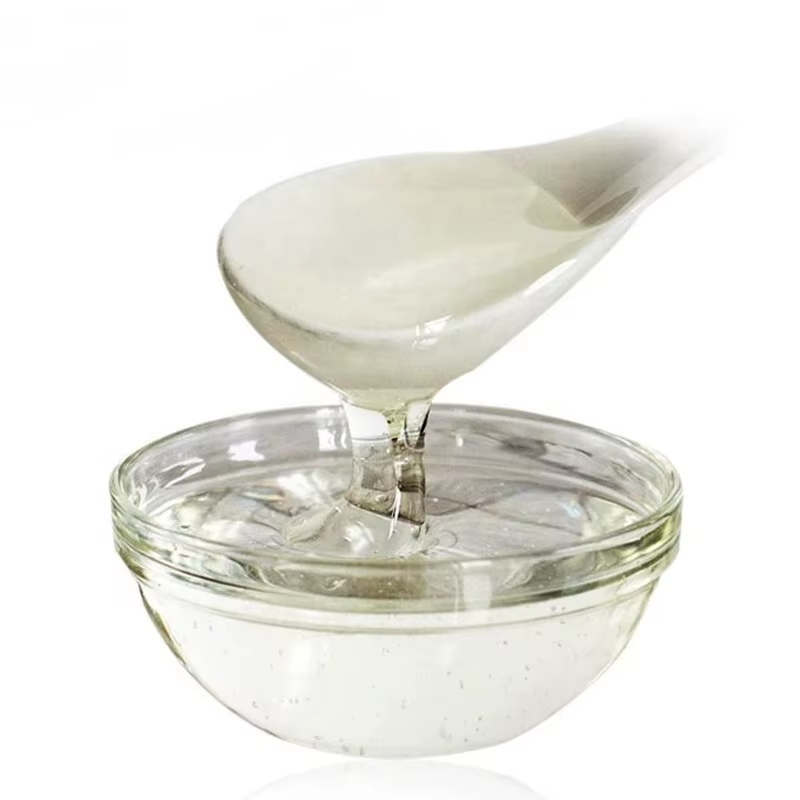
Glucose syrup is a refined carbohydrate solution produced through the hydrolysis of starch, most commonly derived from corn, wheat, or tapioca. While it is often grouped with sugars, its industrial role is far more nuanced.
Composition and Functional Properties
From an industrial perspective, glucose syrup is defined by several critical parameters:
- Dextrose Equivalent (DE): Indicates the degree of starch hydrolysis and directly affects sweetness, viscosity, and fermentability.
- Viscosity and Flow Behavior: Influences pumping, mixing, and filling operations.
- Hygroscopicity: Determines moisture retention, which is crucial for shelf life.
- Crystallization Control: Essential in confectionery and bakery applications.
A professional Glucose Syrup Supplier for Afghanistan understands how these parameters translate into real production outcomes, not just laboratory specifications.
Why Glucose Syrup Is Widely Used in Afghan Manufacturing
Afghan manufacturers rely on glucose syrup because it delivers multiple benefits simultaneously:
- Functional performance beyond sweetness
- Improved texture and mouthfeel
- Greater formulation flexibility
- Cost efficiency compared to refined sugars
- Enhanced shelf stability in challenging climates
These advantages explain why glucose syrup has become a core ingredient across confectionery, bakery, beverage, and dairy production in Afghanistan.

The Afghan Market Reality: Why Supplier Choice Matters More Than Ever
Industrial sourcing in Afghanistan is shaped by factors that are often underestimated by external suppliers. Logistics complexity, border dependencies, and fluctuating availability can quickly turn ingredient sourcing into a production risk.
Supply Continuity and Logistics Constraints
For glucose syrup, disruptions are particularly costly. A delayed shipment can halt multiple product lines simultaneously.
A reliable Glucose Syrup Supplier for Afghanistan must demonstrate:
- Proven export experience to the region
- Realistic lead times and shipment planning
- Familiarity with regional customs procedures
- Backup sourcing strategies
We have seen in cooperation with different factories that suppliers without regional experience often promise aggressive delivery schedules that cannot be sustained, creating unnecessary operational stress.
Price Sensitivity Versus Total Cost
Afghan manufacturers operate in price-sensitive markets, but focusing solely on unit cost can be misleading. Inconsistent glucose syrup quality often leads to:
- Higher dosage requirements
- Increased product rejection
- Reformulation costs
- Production downtime
MT Royal addresses this challenge by offering glucose syrup from multiple established brands, allowing factories to balance cost, performance, and availability rather than compromising on one dimension.
Types of Glucose Syrup Used in Industrial Production
Not all glucose syrups behave the same way. Understanding the differences is essential for selecting both the right product and the right supplier.
Low DE Glucose Syrup
Typically used in:
- Hard candy and chewing gum
- Certain bakery applications
- Products requiring strong crystallization control
Low DE syrups offer lower sweetness and higher viscosity, making them ideal for structural stability.
Medium DE Glucose Syrup
Common applications include:
- Biscuits and cookies
- Traditional sweets
- Dairy desserts
This category provides a balance between sweetness, body, and moisture retention, making it popular among Afghan manufacturers.
High DE Glucose Syrup
Used primarily in:
- Beverages and syrups
- Ice cream and frozen desserts
- Fermentation-based products
High DE syrups deliver higher sweetness and fermentability but require precise handling to avoid formulation instability.
A knowledgeable Glucose Syrup Supplier for Afghanistan helps manufacturers select the correct DE range based on process conditions and end-product goals.
Key Functional Roles of Glucose Syrup in Manufacturing
Glucose syrup is valued not just for sweetness, but for the way it supports complex formulations.
Sweetness Modulation
Unlike sucrose, glucose syrup allows precise control over sweetness intensity, enabling manufacturers to fine-tune flavor profiles.
Texture and Mouthfeel Enhancement
In many products, glucose syrup contributes body and smoothness, improving consumer perception without additional ingredients.
Shelf Life Extension
By controlling moisture migration and reducing crystallization, glucose syrup helps maintain product quality during storage and distribution.
Process Stability
From mixing to thermal processing, glucose syrup behaves predictably when sourced from a consistent supplier, reducing batch variability.
Common Industrial Mistakes When Sourcing Glucose Syrup
Even experienced procurement teams can make costly errors when sourcing this ingredient.
Treating Glucose Syrup as a Commodity
Assuming that all glucose syrups are interchangeable ignores differences in:
- Processing methods
- Filtration and purification levels
- Batch-to-batch consistency
This mistake often leads to formulation instability.
Ignoring Technical Support
Suppliers who only sell product without technical insight cannot assist when issues arise during scale-up or reformulation.
Overlooking Documentation and Traceability
Missing or inconsistent Certificates of Analysis (COA) and batch traceability can delay audits and complicate quality control.
A professional Glucose Syrup Supplier for Afghanistan anticipates these needs rather than reacting to them.
Industrial Applications of Glucose Syrup in Afghanistan
Confectionery and Traditional Sweets
In candies, toffees, and regional sweets, glucose syrup:
- Prevents unwanted sugar crystallization
- Improves chewiness and gloss
- Enhances shelf stability
Bakery and Biscuit Production
In baked goods, glucose syrup:
- Retains moisture
- Improves browning reactions
- Extends freshness
Beverage and Syrup Manufacturing
Used to:
- Control sweetness profiles
- Improve mouthfeel
- Support stable formulations
Dairy and Frozen Desserts
In ice cream and dairy-based products:
- Reduces ice crystal formation
- Enhances smooth texture
- Balances sweetness
A reliable Glucose Syrup Supplier for Afghanistan understands these application-specific demands and supplies accordingly.
Quality Parameters That Matter in Glucose Syrup Supply
Consistency Across Batches
Even minor variations in glucose syrup can cause noticeable differences at scale. Consistency is often more valuable than marginal cost savings.
Color and Flavor Neutrality
High-quality glucose syrup should not introduce off-colors or flavors, especially in delicate formulations.
Regulatory and Food Safety Compliance
Proper documentation, including COA and compliance with international standards, is essential for both local distribution and export-oriented factories.
MT Royal as a Trusted Glucose Syrup Supplier for Afghanistan
MT Royal approaches glucose syrup supply from an industrial partnership perspective rather than a transactional one.
Access to Multiple Trusted Brands
By offering glucose syrup from several established producers, MT Royal provides flexibility in pricing, availability, and technical specifications.
Practical Technical Insight
We work closely with manufacturers to understand their production challenges. In practice, we have seen that aligning ingredient selection with processing conditions reduces waste and improves consistency.
Regional Experience That Reduces Risk
Supplying Afghanistan requires realistic logistics planning. MT Royal’s experience helps factories avoid disruptions that often stem from overly optimistic sourcing strategies.
Industrial Best Practices for Using Glucose Syrup at Scale
Optimize Dosage Through Trials
Using more glucose syrup than necessary increases cost without improving performance. Controlled trials help identify optimal usage levels.
Standardize Storage and Handling
Glucose syrup requires:
- Controlled storage temperatures
- Proper agitation before use
- Hygienic transfer systems
Align Procurement With Production Forecasts
Factories that coordinate forecasts with their Glucose Syrup Supplier for Afghanistan experience fewer shortages and more stable pricing.
Frequently Asked Questions from Factory Managers and Buyers
Is glucose syrup interchangeable between suppliers?
Not always. Even syrups with identical DE values can perform differently depending on processing methods.
How critical is DE value selection?
Extremely critical. DE affects sweetness, viscosity, fermentability, and shelf life.
Can glucose syrup replace sugar entirely?
In some formulations yes, but partial replacement often delivers better functional balance.
What packaging formats are most suitable?
Drums, IBCs, and bulk options are common, depending on factory scale and handling infrastructure.
Glucose Syrup and the Future of Afghan Manufacturing
As Afghan manufacturing continues to mature, the role of functional ingredients like glucose syrup will only grow. Markets demand consistency, efficiency, and competitive pricing—all of which depend on stable sourcing.
Choosing the right Glucose Syrup Supplier for Afghanistan is ultimately about risk management and long-term performance. When suppliers understand your production environment, regulatory needs, and commercial pressures, they become contributors to operational stability rather than sources of uncertainty.
MT Royal’s role in this ecosystem is defined by reliability, flexibility, and technical understanding. By connecting Afghan manufacturers with dependable glucose syrup solutions from trusted global brands, MT Royal supports smoother production, stronger products, and greater confidence in scaling for the future.



No comment