

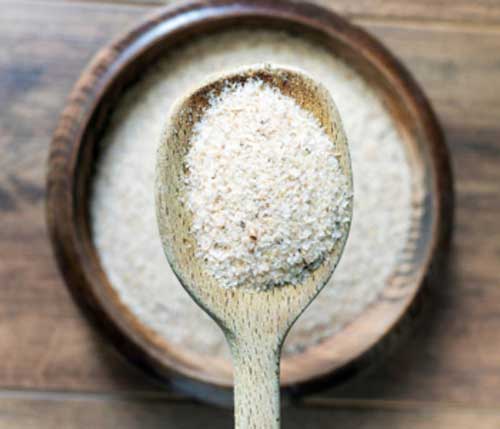
Baking without gluten presents unique challenges. Gluten provides structure, elasticity, and moisture retention, and its absence can result in baked goods that are crumbly, dry, or lack volume. Guar gum for bakery emerges as an essential ingredient that compensates for these deficiencies. By integrating guar gum into your formulations, your bakery can deliver products that satisfy both texture and shelf-life expectations. MT Royal, with years of experience in supplying industrial-grade food ingredients, offers guar gum that ensures reliability, consistency, and cost-effectiveness for bakery operations of any scale.
Guar gum is a natural polysaccharide extracted from the seeds of the guar plant (Cyamopsis tetragonoloba). Its primary characteristic is its high water-binding capacity, which makes it a highly effective thickening, stabilizing, and gelling agent. In bakery applications, guar gum acts as a gluten substitute, providing structure and elasticity to dough and batter. Key functional properties include:
- Water Retention: Prevents dryness and enhances moisture content in gluten-free products.
- Viscosity Control: Contributes to a uniform dough consistency, improving handling and shaping.
- Stabilization: Reduces syneresis in fillings and custards used in baked goods.
- Shelf-Life Extension: Maintains freshness by slowing moisture loss and staling.
Incorporating guar gum strategically allows bakery products to mimic the characteristics of traditional wheat-based goods while maintaining the benefits of gluten-free formulations.
Common Challenges in Gluten-Free Baking
Bakery manufacturers often encounter specific challenges when creating gluten-free products:
- Texture Issues: Without gluten, doughs tend to be crumbly and lack elasticity.
- Volume Deficiency: Breads and cakes may fail to rise properly, resulting in dense products.
- Moisture Retention: Gluten-free baked goods dry out faster due to inadequate water-binding.
- Ingredient Compatibility: Achieving consistent results requires harmonizing starches, flours, and hydrocolloids.
We at MT Royal have observed that selecting the right guar gum for bakery applications and optimizing its concentration is critical to overcoming these issues effectively.
Selecting the Right Guar Gum for Bakery Applications
Not all guar gums are created equal. For bakery use, low to medium-viscosity guar gum is preferred, ensuring smooth mixing and preventing excessive thickening. Consider the following when selecting guar gum:
- Viscosity Grade: Impacts dough handling and batter pourability.
- Solubility: High solubility reduces clumping and ensures uniform distribution.
- Purity: Food-grade, gluten-free certified guar gum avoids contamination risks.
- Functionality: Some formulations may require combinations with other hydrocolloids for optimal performance.
At MT Royal, our guar gum is carefully processed and tested to meet industrial bakery requirements, offering consistent performance batch after batch.
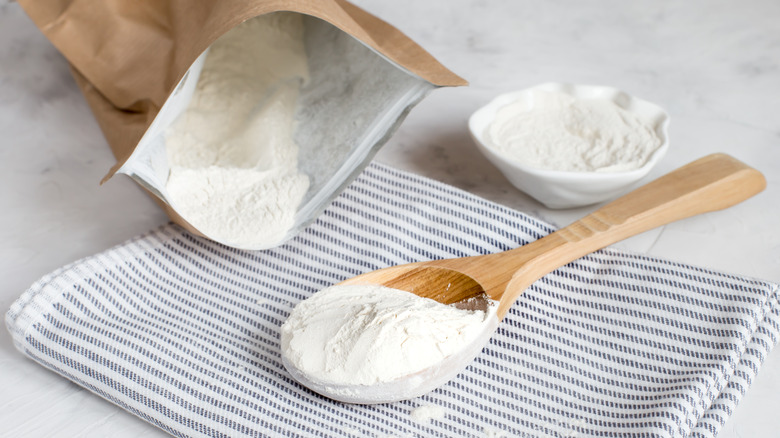
Practical Applications in Gluten-Free Breads
Gluten-free breads are among the most challenging products to produce. The inclusion of guar gum can dramatically improve quality:
- Structure and Elasticity: Guar gum binds water and forms a gel matrix, providing dough cohesion.
- Volume Enhancement: Improves gas retention during proofing and baking.
- Crumb Softness: Enhances mouthfeel, making bread more enjoyable.
- Shelf-Life: Maintains moisture, delaying staling and hardening.
Through trials with various gluten-free flours, we have seen that a precise dosage of guar gum—typically 0.5%–1% of flour weight—achieves optimal results without affecting flavor.
Cakes and Muffins: Achieving Tenderness and Moisture
Gluten-free cakes and muffins often suffer from dryness and poor volume. Guar gum acts as a stabilizer and moisture binder:
- Improved Batter Stability: Prevents ingredient separation during mixing.
- Enhanced Rise: Supports gas bubbles for better aeration.
- Moist Texture: Retains water, creating a soft, tender crumb.
By combining guar gum with starches like rice or potato, bakery manufacturers can produce cakes with superior texture and prolonged freshness.
Cookies and Biscuits: Crispness Without Crumbling
For cookies and biscuits, guar gum can:
- Prevent Crumbling: Maintains structural integrity during baking and handling.
- Control Spread: Regulates dough viscosity for consistent shapes.
- Enhance Mouthfeel: Contributes subtle chewiness without sacrificing crispness.
Our experience at MT Royal shows that adjusting guar gum levels depending on fat content and flour type can yield consistently high-quality results.
Specialty Applications: Pastries, Fillings, and Toppings
Guar gum is not limited to doughs; it is equally valuable in fillings, frostings, and glazes:
- Creamy Custards and Ganaches: Stabilizes emulsions and prevents separation.
- Fruit Fillings: Retains water and prevents leakage during baking.
- Icing and Frostings: Enhances viscosity and spreadability without affecting flavor.
These functional benefits enable bakeries to expand their product range while maintaining consistent quality.
Industrial Considerations for Large-Scale Production
Scaling up gluten-free bakery production requires attention to processing details:
- Mixing Equipment: Ensure guar gum disperses evenly in industrial mixers.
- Hydration Time: Allow sufficient time for full water absorption.
- Compatibility with Other Ingredients: Hydrocolloids, starches, and proteins must work synergistically.
- Quality Control: Regular testing of viscosity and solubility ensures consistent batch quality.
At MT Royal, we support industrial clients by providing technical guidance on optimizing guar gum usage for large-scale bakery operations.
Common Mistakes in Industrial Guar Gum Usage
- Overuse: Excessive guar gum can lead to overly dense or gummy products.
- Underuse: Insufficient amounts result in poor structure and rapid staling.
- Inadequate Hydration: Poor dispersion causes clumping and uneven texture.
- Ignoring Interactions: Not accounting for interactions with starches and fats can compromise quality.
Proper understanding of these factors is essential to leverage guar gum effectively in gluten-free bakery applications.
Frequently Asked Questions from Bakery Managers
Q1: Can guar gum replace all gluten in a recipe?
A: Guar gum works synergistically with other hydrocolloids and starches to mimic gluten properties but does not replace gluten entirely.
Q2: What dosage is optimal for bread?
A: Typically 0.5%–1% of flour weight, adjusted based on flour type and desired texture.
Q3: Does guar gum affect flavor?
A: High-quality guar gum from MT Royal is neutral in taste, ensuring no off-flavors in baked goods.
Q4: Is it safe for all consumers?
A: Our guar gum is food-grade, gluten-free, and complies with international safety standards.
Conclusion
The rise in gluten-free consumption has made innovative hydrocolloids like guar gum indispensable in modern bakery formulations. By selecting the right guar gum for bakery, manufacturers can:
- Achieve superior dough structure and elasticity.
- Improve volume and crumb softness.
- Maintain moisture and extend shelf-life.
- Expand product offerings with stable fillings and frostings.
We at MT Royal have partnered with numerous bakery producers, observing firsthand how high-quality guar gum transforms products and enhances operational efficiency. By integrating our guar gum into your bakery formulations, you can meet consumer expectations while optimizing production consistency and profitability.

No comment