

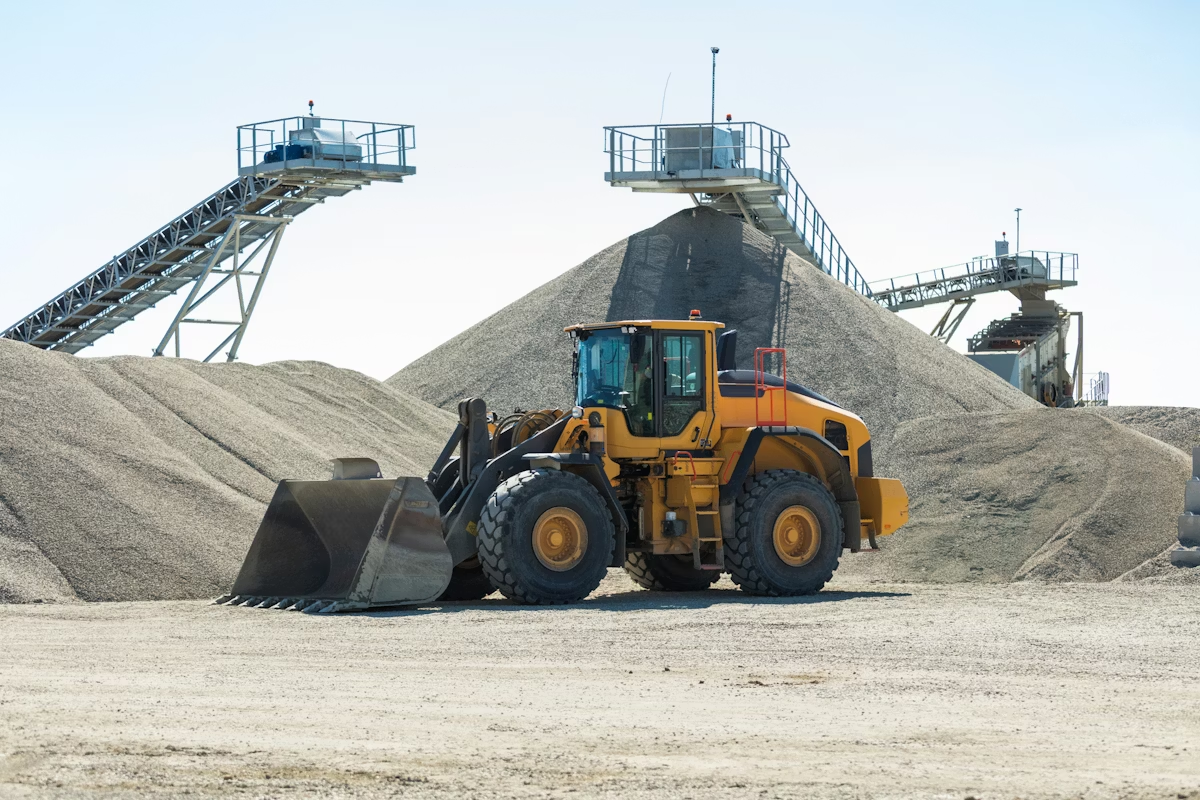
In today’s US aggregate industry, production capacity is no longer just a competitive advantage—it is a requirement for survival. Infrastructure spending, urban expansion, renewable energy projects, and highway rehabilitation are pushing demand for aggregates to levels that many legacy plants were never designed to handle. When operators and decision-makers search for High-capacity crushing plants for US aggregate industry, they are not looking for generic equipment. They are looking for systems that can scale, perform reliably under pressure, and protect margins in an increasingly cost-sensitive market.
This is where MT Royal naturally enters the conversation. Not as a loud brand promising miracles, but as a practical supply partner that understands how high-capacity crushing plants are designed, sourced, and operated in real-world conditions. We have worked with producers who learned—sometimes the hard way—that capacity without control is just organized chaos. This article is written for quarry owners, plant managers, engineers, and procurement leaders who want depth, clarity, and strategic insight before committing to high-capacity crushing solutions.
What Defines a High-Capacity Crushing Plant?
A high-capacity crushing plant is not defined by a single oversized crusher or a headline tonnage figure. It is defined by how consistently the plant can process large volumes of material while maintaining product quality, uptime, and manageable operating costs.
In the context of the US aggregate industry, high-capacity typically means:
- Throughputs exceeding several hundred tons per hour
- Continuous multi-shift operation
- Multiple finished products meeting ASTM and state DOT specifications
- Integration with modern screening, conveying, and automation systems
The mistake many producers make is assuming that capacity is purely a function of crusher size. In reality, capacity is an ecosystem outcome. Feed preparation, crusher selection, screen efficiency, material handling, and maintenance strategy all contribute to whether a plant truly performs at scale.
This is why discussions around High-capacity crushing plants for US aggregate industry increasingly focus on system design rather than individual machines.
Why Capacity Pressure Is Rising in the US Aggregate Market
Several structural trends are reshaping demand in the United States.
First, public infrastructure investment has increased steadily, with federal and state funding targeting highways, bridges, rail, and utilities. These projects require massive volumes of consistent aggregates delivered on tight schedules.
Second, urbanization and logistics expansion have driven demand for concrete, asphalt, and base materials closer to population centers, often with stricter environmental and zoning constraints.
Third, consolidation within the aggregate industry has pushed producers to maximize output from fewer sites. Where once multiple small quarries served a region, now fewer, larger operations carry the load.
Under these conditions, high-capacity crushing plants are no longer optional upgrades. They are strategic assets.
Core Components of High-Capacity Crushing Plants
Understanding the anatomy of a high-capacity plant is essential before evaluating suppliers or technologies.
Primary Crushing Systems
Primary crushers must handle large, variable feed sizes without choking or excessive wear. Jaw crushers and gyratory crushers dominate this stage, with selection driven by feed size, rock hardness, and desired throughput.
Secondary and Tertiary Crushing
This is where production control is refined. Cone crushers and, in some applications, impact crushers shape the material, control gradation, and prepare it for screening. In high-capacity plants, multiple secondary or tertiary units often operate in parallel to balance load and improve redundancy.
Screening and Classification
Screens are often underestimated, yet they frequently define the plant’s true capacity. Inefficient screening creates recirculation, overloads crushers, and increases wear.
Material Handling and Conveying
At high tonnages, conveyors become production arteries. Poorly designed transfer points or undersized belts can throttle an otherwise powerful plant.
Automation and Monitoring
Modern high-capacity crushing plants rely on automation to maintain stability. Load sensors, level controls, and centralized monitoring reduce human error and improve consistency.
Common Mistakes When Scaling Crushing Capacity
Scaling up production introduces risks that are not always obvious at the planning stage.
Oversizing Individual Crushers
Bigger is not always better. A single massive crusher creates a single point of failure. Distributed capacity often provides better uptime.
Ignoring Material Variability
Many plants are designed for average conditions, not worst-case scenarios. Harder rock or higher fines content can quickly overwhelm systems.
Underestimating Maintenance at Scale
Wear rates increase exponentially with tonnage. Without proper planning, maintenance can erase capacity gains.
Focusing on Equipment Cost Instead of System Cost
Initial equipment price is only a fraction of total ownership cost. Energy, wear parts, labor, and downtime dominate long-term economics.
We have seen projects where capacity targets were technically achievable but commercially unsustainable due to these oversights.
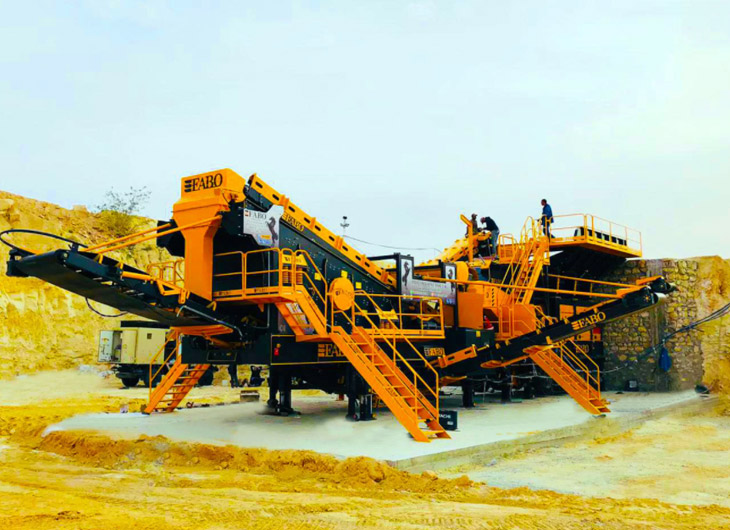
Comparing Crushing Technologies for High-Capacity Plants
Different technologies excel under different conditions. Understanding these trade-offs is critical.
Jaw Crushers
Highly reliable and simple, jaw crushers are excellent for primary crushing. However, their reduction ratio is limited, requiring efficient downstream processing.
Gyratory Crushers
Designed for extreme capacities, gyratory crushers offer continuous crushing and high throughput causing less stress on downstream equipment. They are capital-intensive but unmatched in large-scale primary applications.
Cone Crushers
Cone crushers form the backbone of most high-capacity aggregate plants. They offer controlled reduction, good particle shape, and scalability through parallel installations.
Impact Crushers
In softer rock or recycled materials, impact crushers can deliver high reduction. In hard, abrasive rock, wear costs often limit their role.
High-capacity crushing plants for US aggregate industry typically rely on a combination of these technologies rather than a single solution.
Designing for Throughput Without Sacrificing Quality
One of the greatest challenges in high-capacity plants is maintaining product quality while pushing tonnage.
Particle shape, gradation, and cleanliness directly affect concrete strength and asphalt performance. Crushing too aggressively can increase fines, while insufficient reduction creates oversize problems.
Successful plants manage this balance through:
- Optimized crusher chamber designs
- Proper choke feeding
- Accurate screen sizing
- Controlled recirculation loads
This is where experience matters. Paper designs often look perfect until real rock hits steel.
The Role of MT Royal in High-Capacity Plant Projects
MT Royal operates as a supply partner and technical advisor rather than a single-brand vendor. This distinction is especially valuable in high-capacity projects, where flexibility and system-level thinking matter.
We work with multiple manufacturers and engineering teams to source crushers, screens, and auxiliary equipment that align with project goals. More importantly, we help producers evaluate how components interact under high load.
We have seen that plants perform best when equipment selection is guided by operational reality rather than marketing specifications. This philosophy underpins MT Royal’s involvement in high-capacity crushing plants for US aggregate industry.
Operational Strategies That Unlock Real Capacity
Hardware alone does not deliver capacity. Operational discipline turns installed horsepower into saleable tons.
Feed Management
Consistent feed size and distribution stabilize crushing forces and reduce wear.
Preventive Maintenance
At high tonnages, reactive maintenance is a losing strategy. Predictive monitoring and scheduled component replacement protect uptime.
Operator Training
Well-trained operators detect problems before alarms do. Their judgment is often the first line of defense against production losses.
Data-Driven Optimization
Modern plants generate vast amounts of data. Using it effectively separates average operations from exceptional ones.
We have observed that plants embracing these strategies often outperform design capacity without increasing stress on equipment.
Supply Chain Considerations in Large-Scale Projects
High-capacity crushing plants require long-term thinking not only in design, but also in supply chain planning.
Lead times for large crushers and custom components can be significant. Wear part availability, logistics reliability, and supplier responsiveness all influence operational continuity.
MT Royal’s value in this context lies in coordinating sourcing from proven manufacturers while maintaining cost competitiveness. By diversifying supply options, risk is reduced without compromising performance.
Environmental and Regulatory Factors
In the US, high-capacity plants operate under increasing environmental scrutiny.
Dust control, noise reduction, energy efficiency, and water management are no longer optional considerations. Modern crushing plants integrate suppression systems, enclosed transfer points, and energy-efficient drives to meet regulatory expectations.
Designing these elements into the plant from the beginning is far more effective than retrofitting later.
Frequently Asked Questions from US Aggregate Producers
What tonnage qualifies as high-capacity?
There is no fixed threshold, but plants processing several hundred tons per hour continuously are generally considered high-capacity.
Is it better to use fewer large crushers or more smaller ones?
Multiple units often provide better redundancy and flexibility.
How important is automation at high capacity?
Critical. Automation stabilizes production and protects equipment.
Can existing plants be upgraded to high-capacity?
Yes, but upgrades must be evaluated holistically to avoid new bottlenecks.
Why High-Capacity Plants Are a Strategic Decision
Building or upgrading a high-capacity crushing plant is not just a technical project. It is a strategic commitment that shapes cost structure, market reach, and operational resilience for years.
The most successful producers treat capacity as a system attribute, not a single metric. They invest in design, operations, and partnerships that support sustainable performance.
High-capacity crushing plants for US aggregate industry are no longer about pushing machines harder. They are about building systems that work smarter under pressure.
At MT Royal, the focus has always been on helping producers make decisions that still feel right long after the plant is commissioned. When capacity, quality, and reliability align, production becomes predictable—and that predictability is the true competitive edge.

No comment