


High-performance baking starts long before the dough enters the mixer. It begins at the procurement stage, where every ingredient—especially your leavening agents—defines the quality, spread, texture, and volume of the final product. High Purity Ammonium Bicarbonate for Baking has remained one of the most reliable and cost-efficient leavening agents for large-scale bakery operations. Yet, choosing the right grade, managing supply challenges, and aligning the ingredient with modern production requirements is more complex than it seems.
Many production managers we’ve worked with underestimate how dramatically purity level, particle size, and moisture sensitivity can influence their workflow. And that’s exactly where sourcing from an experienced distributor matters. At MT Royal, we’ve seen how selecting the correct ammonium bicarbonate—both chemically stable and high-purity—can streamline production, reduce batch failures, and enhance final product consistency across thousands of kilograms of output.
This article aims to give your team everything needed to make a confident, well-informed procurement decision. Whether your plant produces biscuits, crackers, wafers, confectionery items, or snacks, this guide provides a deep understanding of how high-purity ammonium bicarbonate functions, the science behind it, common industrial mistakes, and the best practices for scaling your production with stability.
What Is High Purity Ammonium Bicarbonate for Baking?
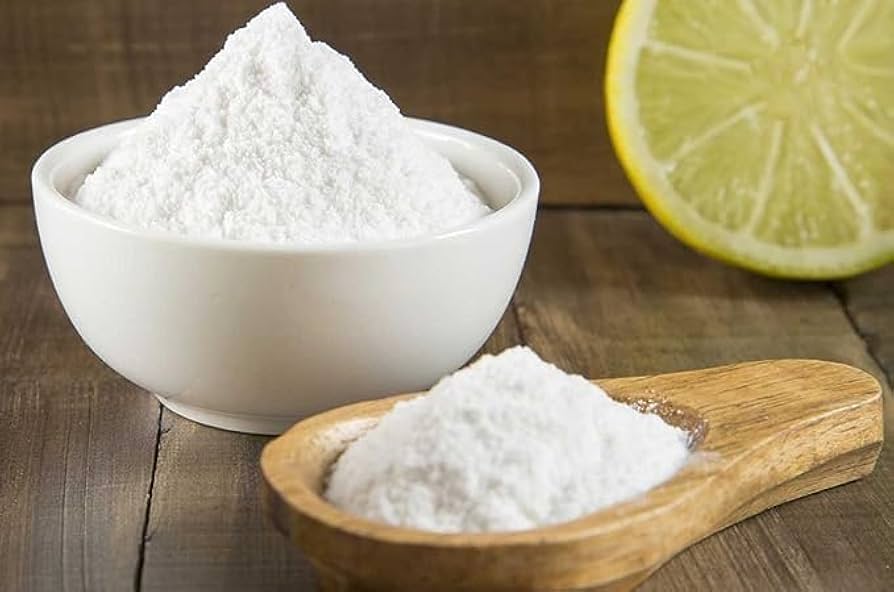
High Purity Ammonium Bicarbonate (ABC) is a powerful single-acting leavening agent widely used in the bakery sector. Unlike baking powder or baking soda, ammonium bicarbonate completely decomposes during heating and leaves no alkaline residue—an advantage for products that require crispness and low moisture.
Chemically, it breaks down into:
- Carbon dioxide (provides leavening),
- Water vapor,
- Ammonia gas (which fully evaporates under proper baking temperatures).
The result: a product with precise pore structure, great texture, and optimal volume.
Manufacturers prefer the high-purity grade because it ensures:
- Predictable CO₂ release behavior
- Improved dough aeration
- Higher consistency across large batches
- Lower risk of off-flavors
In industrial baking, unpredictability is expensive. A single deviation in ingredient quality can affect thousands of units, and this is why high-purity ABC has become essential, especially for wafer sheets, biscuits, crackers, and some confectionery lines.
Why Purity Matters More Than Ever in Industrial Baking
A decade ago, many factories would purchase lower-grade ammonium bicarbonate because it was cheaper. Today, with tighter quality control standards, automated lines, and customer expectations for uniformity, the landscape has changed.
Three main reasons explain why purity level is now a decisive factor:
1. Uniform Decomposition During Baking
Low-purity material decomposes unevenly, which creates:
- Irregular bubbling
- Non-uniform pore structure
- Bitter or ammoniacal aftertaste
High-purity ABC decomposes cleanly and consistently, ensuring repeatable product quality.
2. Better Compatibility with Automated Lines
Modern continuous baking ovens demand predictable behavior.
High-purity ABC:
- Releases gas at stable temperatures
- Supports thin-sheet baking like wafers
- Enhances crispness without excessive expansion
We’ve observed this firsthand in consultations with several large bakery plants that switched to higher grade supplies and saw immediate improvements in line stability.
3. Reduced Odor and Off-Notes
Inferior ammonium bicarbonate often retains traces of contaminants that produce persistent odors. High-purity grades avoid these issues entirely and help factories meet stringent food safety audits.
Common Mistakes Factories Make When Procuring Ammonium Bicarbonate
Over the years, we’ve seen procurement mistakes repeat themselves across different production facilities. Here are some of the most frequent pitfalls—and a brief explanation for each.
• Choosing non-food-grade materials
Some suppliers offer technical-grade ABC at attractive prices. However, this grade is not designed for human consumption and contains impurities unsafe for food processing.
• Ignoring particle size
Particle size determines how quickly ABC dissolves and releases gas. Inconsistent size leads to unpredictable dough behavior.
• Buying from suppliers with poor moisture control
Ammonium bicarbonate is highly moisture-sensitive. Exposure to humidity reduces potency and causes clumping, leading to uneven dosing.
• Inadequate storage planning
Bulk quantities stored in unsuitable warehouses lose quality quickly. Controlled humidity and proper sealing are essential.
• Not testing small batches before full adoption
Even within high-purity grades, slight compositional differences can influence your specific recipe or production line.
Avoiding these issues can save significant downtime on the factory floor.

Key Factors to Consider When Choosing High Purity Ammonium Bicarbonate
Below is a structured list of selection criteria manufacturers should evaluate—each with a short, practical explanation.
• Purity Level
Higher purity ensures cleaner decomposition, fewer residues, and better flavor stability.
• Particle Size Distribution
Uniform particles ensure consistent gas release, critical for automated baking lines.
• Moisture Content
Low moisture protects against clumping, potency loss, and inconsistent blending in dry mixes.
• Packaging Format
Sealed, multilayer industrial bags preserve stability during transportation and storage.
• Supplier Reliability
Consistent quality batch after batch prevents formulation drift in large-scale operations.
• Food Safety Certifications
Certifications such as HACCP, ISO, or FSSC demonstrate adherence to international standards.
• Traceability
Essential for auditing, recall preparedness, and quality assurance.
• Shelf Life
Longer stability reduces waste and supports better inventory planning.
• Price vs. Quality Balance
The cheapest option rarely performs well in industrial settings. Evaluate cost efficiency, not just price.
• Availability of Technical Support
A supplier capable of offering guidance reduces trial-and-error during production optimization.
These criteria ensure that your procurement decision aligns both with technical and operational needs.
Advantages of Using High Purity Ammonium Bicarbonate in Baking
Industrial bakeries choose high-purity ABC for specific reasons. Here are the most important advantages, each supported with a short explanation.
• Clean, Complete Decomposition
Leaves no alkaline residue, preventing bitterness or discoloration.
• Enhanced Crispiness
Ideal for low-moisture baked goods requiring snap, crunch, or brittleness.
• Faster Gas Release
Supports rapid expansion in thin-sheet products like wafers.
• Uniform Texture
Helps maintain consistent internal structure across large batches.
• Cost-Effective Leavening
Provides strong leavening power per kilogram, reducing production costs.
• No Need for Acidic Ingredients
Simplifies formulation and prevents unwanted flavor interactions.
• Suitable for High-Speed Lines
Stable behavior under continuous, rapid baking conditions.
• Long Shelf Stability
High-purity grades maintain potency longer, reducing waste.
• Improved Quality Control
Predictable reactivity simplifies batch consistency checks.
• Versatility in Industrial Applications
Performs well in a wide range of bakery and snack products.
These benefits make ABC a foundational ingredient in modern industrial bakeries.
Why Many Manufacturers Prefer MT Royal as Their Supplier
While the market has many suppliers, not all understand the complexities of industrial baking. MT Royal specializes in ingredients tailored for large-scale production, offering reliable access to multiple global brands of ammonium bicarbonate—each vetted for food safety, purity, and consistency.
We’ve assisted numerous factories optimizing their recipes by choosing the right grade of ABC. In several cases, switching to a higher-purity supply cut their defect rates by up to half. We’ve also seen how stable sourcing helps purchasing teams avoid disruptions caused by seasonal humidity or inconsistent imports.
Our approach is always consultative rather than promotional, focusing on understanding the specific needs of your line—whether you run conventional tunnel ovens, rotary ovens, continuous wafer systems, or hybrid baking technologies.
Best Practices for Industrial Storage and Handling
Improper storage can significantly reduce the efficiency of ammonium bicarbonate. Below are practical guidelines for maintaining quality in a factory environment.
• Store in Dry, Cool Areas
Moisture destroys potency and creates clumps that interfere with dosing.
• Keep Packaging Sealed
Opened bags should be resealed immediately using airtight containers.
• Use FIFO (First In, First Out)
Ensures freshness and reduces the chance of using aged, degraded material.
• Avoid Direct Sunlight
High temperatures accelerate pre-decomposition.
• Monitor Warehouse Humidity
An optimal range prevents moisture absorption and extends shelf life.
• Train Staff on Handling
Dosing errors often come from misunderstanding ingredient concentration.
Integrating these practices into your facility’s SOP improves product consistency and reduces waste.
Frequently Asked Questions from Production Managers
Is ammonium bicarbonate safe for all baked goods?
It is ideal for low-moisture products like biscuits, crackers, and wafers. It is not recommended for high-moisture cakes because ammonia may not fully evaporate.
Does ammonium bicarbonate change the flavor?
High-purity grades eliminate off-notes when baked at proper temperatures.
Can it replace baking soda or baking powder?
In many dry, crisp applications, yes—but not in products requiring slow or dual-acting leavening.
Is storage temperature important?
Very. Heat accelerates decomposition. Cool, dry storage is essential.
Why does particle size matter?
It impacts dissolution, reactivity, and gas release timing—critical for automated lines.
These questions reflect common concerns among industrial buyers, and addressing them helps ensure correct usage.
The Impact of High-Purity ABC on Large-Scale Production Efficiency
An often-overlooked aspect of ingredient selection is how it affects operational efficiency. A stable, predictable leavening agent reduces:
- Trial batches
- Line interruptions
- Quality control rejection rates
- Cleaning and downtime caused by inconsistent expansion
On high-volume lines producing millions of units per month, these improvements translate into substantial savings. We’ve repeatedly noticed that facilities investing in better leavening agents achieve tighter control over product specifications, improving customer satisfaction and reducing batch variability.
A Final Insight for Industrial Decision-Makers
Every manufacturing line has its nuances—heat distribution, hydration levels, formulation complexity, and even seasonal variations. What remains constant is the need for a dependable, high-purity leavening agent that performs flawlessly every single day.
High Purity Ammonium Bicarbonate for Baking is more than a commodity. It is a functional ingredient that carries direct influence over texture, stability, and the reputation of your brand. When sourced from experienced suppliers and integrated correctly into your formulation, it becomes a strategic asset for your production line.
Factories that treat ingredient selection as part of their quality strategy—not merely a procurement task—tend to outperform competitors in consistency, scalability, and customer trust. High-purity ABC fits perfectly into that philosophy, offering reliability, precision, and outstanding performance across multiple bakery applications.

No comment