

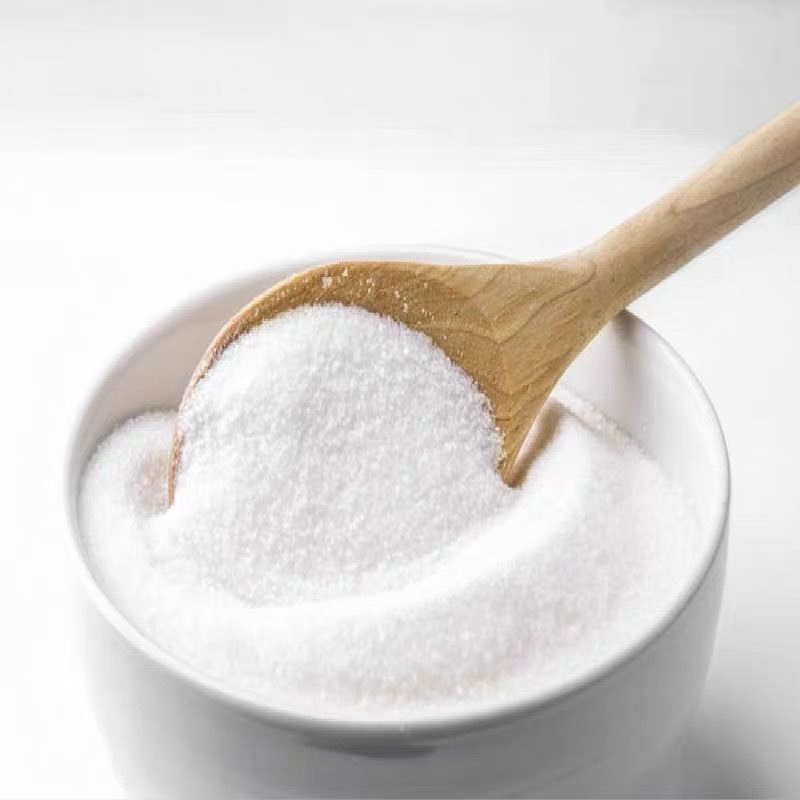
In industrial manufacturing, the raw materials you choose don’t just affect cost—they shape product quality, production stability, and regulatory compliance. Among the foundational carbohydrates that modern factories rely on, High Purity Dextrose Bulk holds a distinguished position. Whether your operation produces bakery goods, beverages, pharmaceuticals, nutraceuticals, or fermentation products, securing a steady supply of high‑quality dextrose can be the difference between smooth production runs and costly setbacks. From consistent sweetness and predictable solubility to precise fermentability and formulation flexibility, this ingredient underpins countless industrial processes.
If your factory is reevaluating supply chains, optimizing formulations, or scaling up production, partnering with a supplier who understands the demands of high‑volume manufacturing is essential. MT Royal has extensive experience supporting manufacturers with reliable access to high‑purity dextrose across grades and applications. In our collaboration with various factories, we have seen that facilities with robust supply strategies for key ingredients like dextrose achieve measurable gains in efficiency, quality control, and market competitiveness.
This detailed industrial guide explores every dimension of High Purity Dextrose Bulk—from foundational science and industrial functionality to sourcing best practices, common pitfalls, technical tips, and answers to the questions factory managers ask most often.
Bulk dextrose supply for Palestine’s sweets and snacks industry
Understanding High Purity Dextrose Bulk: Definitions and Fundamental Concepts
What Is High Purity Dextrose?
At its core, dextrose is a simple sugar—chemically identical to glucose—that serves as a primary source of energy and a versatile functional ingredient. When refined to high‑purity standards, dextrose becomes suitable for demanding industrial environments that require predictable performance. High Purity Dextrose Bulk refers to large‑volume, refined glucose intended for use in food, beverage, pharmaceutical, and industrial applications where specifications around purity, solubility, moisture content, and granule uniformity are tightly controlled.
Why Purity Matters
In industrial contexts, trace impurities can influence:
- Fermentation outcomes: Even small amounts of residual sugars or contaminants alter microbial metabolism.
- Product taste and texture: In food and beverages, off‑flavors or inconsistent sweetness undermine product quality.
- Stability: In pharmaceuticals or nutraceuticals, formulation stability hinges on predictable excipient behavior.
- Regulatory compliance: Many markets require analytical documentation to substantiate purity claims.
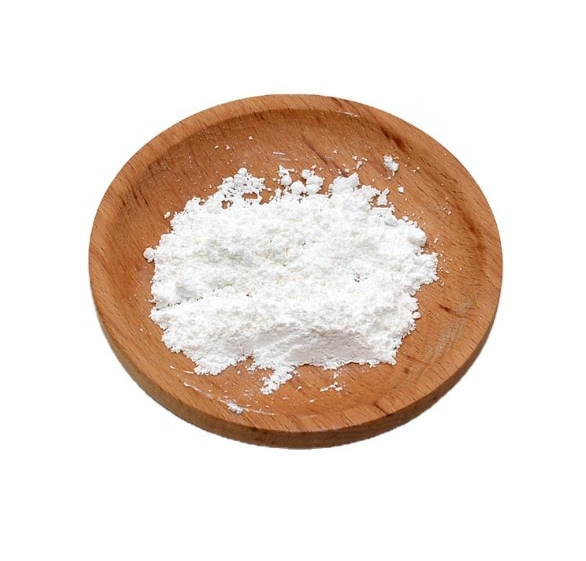
High‑purity dextrose typically exceeds 99.5% glucose content, with controlled moisture, minimal ash content, and low levels of residual non‑sugars, ensuring that it behaves consistently across applications.
Industrial Properties That Drive Demand
Several attributes make high‑purity dextrose indispensable in manufacturing:
- Rapid solubility: Critical for liquid formulations and high‑speed production lines.
- Fermentable substrate: Ideal for yeast and microbial processes in brewing, baking, and biotechnology.
- Neutral sweetness: Provides energy and flavor balance without dominating other taste profiles.
- Thermal stability: Withstands a wide range of processing temperatures.
- Predictable crystallization: Supports textural outcomes in confectionery and bakery.
These properties underscore why dextrose is a mainstay in industrial formulations.
Industrial Applications: Where High Purity Dextrose Bulk Adds Value
Food and Beverage Manufacturing
In food and beverage sectors, dextrose is more than a sweetener. Its role includes:
- Brewing and fermentation: Supplying a rapidly fermentable sugar that supports consistent alcohol production.
- Bakery products: Enhancing crust coloration through Maillard reactions, improving texture, and balancing sweetness.
- Confectionery: Providing controlled crystallization in sugar work to achieve desired textures.
- Beverage formulations: Quick solubility supports high‑throughput mixing without undissolved residues.
Facilities that handle multiple product lines often require dextrose profile consistency to maintain sensory uniformity across batches.
Pharmaceutical and Nutraceutical Use
In pharmaceutical manufacturing, high‑purity dextrose may serve as:
- Excipient or bulking agent: In tablets, capsules, and syrups.
- Carrier for active ingredients: Ensuring even distribution during formulation.
- Energy source in parenteral solutions: Where purity and predictability are paramount for patient safety.
Nutraceuticals leverage dextrose for rapid energy delivery in sports nutrition powders, energy gels, and functional beverages. In these applications, solubility and taste neutrality are critical quality attributes.
Industrial Processing and Fermentation
Beyond food and pharma, dextrose functions as a carbon source in industrial fermentation for:
- Organic acid production
- Enzyme manufacturing
- Biotech cultures
Here, high purity ensures that metabolic pathways proceed predictably and that by‑products remain within acceptable ranges.
Common Mistakes in Industrial Sourcing
Even experienced procurement teams can misstep when sourcing bulk dextrose. Understanding these common pitfalls helps avoid production disruptions and quality inconsistencies.
Mistake 1: Prioritizing Price Over Specification
While cost per kilogram is important, focusing solely on price can obscure critical specification differences. Lower‑priced lots may carry higher moisture or broader particle size distributions, leading to:
- Poor dissolution behavior
- Variable fermentation efficiency
- Clumping or caking in storage
- Quality deviations in finished products
Evaluating total cost of ownership—including performance impacts—is essential for strategic sourcing.
Mistake 2: Inadequate Documentation
Suppliers should provide certificates of analysis (CoAs) detailing:
- Assay/purity levels
- Moisture content
- Ash and impurity profiles
- Particle size distribution
Without these, your quality assurance team lacks the evidence needed for audits or compliance records.
Mistake 3: Neglecting Storage and Handling Plans
Dextrose, like other sugars, is hygroscopic. Improper storage conditions—excess humidity, fluctuating temperatures, poor packaging—can compromise bulk stocks before they reach production lines. Investing in appropriate warehousing conditions is as important as ingredient quality itself.
Mistake 4: Ignoring Supplier Reliability and Logistics Capabilities
Global supply chains are complex. Working with a supplier who provides clear lead times, robust logistics plans, contingency stock, and documentation support improves production planning and risk management.
Industrial Comparisons: High Purity Dextrose Bulk vs. Alternatives
Understanding how high‑purity dextrose compares with other carbohydrate sources helps manufacturers make informed formulation decisions.
Functional Feature Comparison
| Attribute | High Purity Dextrose | Sucrose | Corn Syrup Solids | Maltodextrin |
|---|---|---|---|---|
| Sweetness | Mild | High | Moderate | Low |
| Solubility | Very High | Moderate | High | Moderate |
| Fermentability | Excellent | Moderate | High | Moderate |
| Predictable Browning | Yes | Yes | Variable | Limited |
| Flowability (Bulk Handling) | Excellent | Good | Good | Variable |
| Regulatory Clarity | High | High | Moderate | High |
This table helps frame why high‑purity dextrose often sits at the nexus of performance and versatility in industrial formulations.
Specialized Industrial Tips for Large‑Scale Production
Large production runs amplify both the benefits and challenges of ingredient performance. The following actionable insights come from frontline industrial experience.
Tip 1: Optimize Particle Size for Application
Particle size influences:
- Solubility rate
- Dosing accuracy in automated feeders
- Flow behavior in silos and hoppers
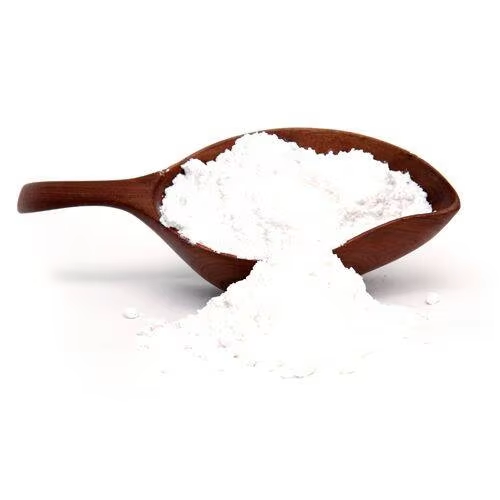
Smaller particles dissolve quickly but may require dust control measures. Larger particles flow better but dissolve more slowly in certain systems. Balance these factors based on your process flow and equipment design.
Tip 2: Monitor Moisture During Storage
Moisture not only drives clumping but also affects fermentation kinetics and tablet formulation in pharma. Regularly track relative humidity in storage areas and implement desiccated enclosures when needed to maintain product integrity.
Tip 3: Integrate In‑Line Quality Monitoring
Where possible, incorporate in‑line analytical tools (like refractive index sensors or conductivity probes) in blending or dissolution tanks. These systems provide real‑time feedback on concentration, allowing early adjustments that prevent waste and off‑spec batches.
Tip 4: Calibrate Automated Dosing Systems
Automated dosing systems improve efficiency but require calibration for bulk density and flow properties of high‑purity dextrose. Collaborate with equipment specialists to align settings with your specific batch sizes and handling characteristics.
Tip 5: Pilot Test New Lots
Even when working with a trusted supplier, conduct pilot tests when introducing new supply lots—especially after long storage or seasonal changes. Pilot runs help detect subtle performance shifts before they impact full production.
Frequently Asked Questions from Manufacturing and Procurement Teams
What Are the Critical Quality Specifications for High Purity Dextrose Bulk?
Typical parameters include:
- Purity (usually >99.5%)
- Moisture content
- Ash and impurity levels
- Particle size distribution
- Microbiological criteria (for food and pharma)
Reviewing these metrics helps you align supplier quality with application requirements.
How Should High Purity Dextrose Be Stored?
Ideal conditions include:
- Relative humidity <60%
- Cool, stable temperatures
- Airtight or moisture‑barrier packaging
- Regular inventory rotation
These practices preserve flow properties and prevent clumping.
Can High Purity Dextrose Bulk Be Used in Both Food and Pharmaceutical Products?
Yes—provided it meets the regulatory standards specific to each application. Food applications typically leverage food‑grade certifications, while pharmaceutical uses may require additional quality documentation and compliance with pharmacopeial standards.
Is High Purity Dextrose Suitable for Fermentation Processes?
Absolutely. Its rapid solubility and predictable glucose content support consistent fermentation kinetics. However, even fermentation processes benefit from pilot runs to fine‑tune substrate concentrations and metabolic outcomes.
What Are Typical Industrial Usage Levels?
Usage varies by application:
- Bakery and confectionery: minor to moderate percentages for sweetness and browning
- Beverages: small percentages for sweetness and mouthfeel
- Fermentation: primary carbon source, potentially substantial portion of substrate mass
- Pharmaceuticals: excipient levels tailored to formulation needs
Align usage with sensory, functional, and regulatory targets.
Emerging Trends and Strategic Industry Insights
Growing Demand for Clean‑Label Carbohydrates
Consumer trends toward transparency and simplicity are pushing manufacturers to evaluate not only functionality but also origin and processing of carbohydrate sources. High‑purity dextrose derived from traceable starch origins aligns well with clean‑label movements.
Sustainability and Ethical Sourcing
Raw material sourcing—especially corn or other starch crops—is increasingly evaluated through sustainability lenses. Manufacturers are favoring suppliers who demonstrate responsible agricultural practices, reduced environmental impact, and transparent supply chains. These factors contribute to long‑term resilience and brand trust.
Regulatory Evolution
Globally, regulation of food additives and pharmaceutical excipients continues to evolve. Staying ahead of changes—especially regarding GMO labeling, allergen disclosure, and international harmonization—requires proactive engagement with suppliers who provide comprehensive documentation and compliance support.
Advancements in Analytical Monitoring
Industrial adoption of real‑time monitoring systems—whether spectroscopy, refractometry, or automated quality checks—permits tighter process control and rapid response to variability. These technologies are becoming part of standard best practices in high‑volume production environments.
Strategic Considerations for Procurement Teams
Selecting a High Purity Dextrose Bulk supplier involves multiple dimensions beyond price negotiation:
- Consistency: Verified by analytical transparency and stable performance history
- Supply Reliability: Predictable lead times and logistical support
- Documentation: Certificates of analysis, traceability, and regulatory support
- Technical Collaboration: Supplier willingness to support formulation and processing questions
- Risk Management: Contingency planning and diversified supply options
MT Royal partners with multiple trusted manufacturers and exporters to provide dextrose supplies that meet these strategic criteria. Our experience with global factories informs how we support quality teams, procurement professionals, and production planners.
Reflection for Manufacturers and Leaders
Choosing the right High Purity Dextrose Bulk is both a tactical and strategic decision. Beyond price, it requires attention to technical performance, regulatory visibility, supply continuity, and process integration. Manufacturers who invest in ingredient quality and build partner relationships grounded in transparency and technical support gain operational advantages that resonate across quality audits, production runs, and customer satisfaction.
When your factory’s formulations depend on predictable ingredient behavior, dextrose is not just a commodity—it is a performance driver. Aligning procurement strategy with industrial foresight and trusted supply partners lays the groundwork for consistent product excellence and business resilience.



No comment