


If your factory in Nigeria is seeking reliable supply of raw materials from Türkiye, this guide is for you. Sourcing from Türkiye offers access to competitive-priced inputs, high manufacturing standards, and a gateway to new supply chains. When you partner with a trusted supplier such as MT Royal, you benefit from tested logistic channels, consistent quality, and even expert support for documentation and compliance. In the conversation that follows, we will walk you, step by step, through everything your procurement or production team needs to know — from basic definitions to advanced industrial-scale tips — so that you can import with confidence, avoid common errors, and scale your operations smoothly.
Türkiye (Turkey) sits at the crossroads between Europe and Asia, and over recent years it has strengthened its manufacturing and export capacities significantly. For Nigerian companies, there are compelling reasons to consider raw-material imports from Türkiye:
- Competitive pricing relative to some Asian or Western sources, especially when transportation costs to Nigeria are favourable.
- Strong manufacturing base for chemicals, plastics, textiles, metals and components — meaning the raw materials you need may be available under one supply umbrella.
- Trade volume between Nigeria and Türkiye has shown growth: according to TradingEconomics, Nigeria’s imports from Türkiye in 2024 reached USD 394.15 million.
- Established logistics routes between Türkiye and Nigerian ports (Lagos, Apapa, Tincan) along with services that specialise in Turkish-to-Nigeria transport.
When you combine these factors and align with a reliable partner like MT Royal — who offers competitive bulk supply, direct sourcing from Türkiye, and full documentation support — you create a strong foundation for long-term raw material supply. We at MT Royal have observed manufacturing lines in Nigeria that improved operational consistency simply by standardising on Turkish imports for critical inputs.
Definition and Key Concepts
What we mean by “raw materials from Türkiye”
For the purpose of this guide, “raw materials” refers to industrial or manufacturing-grade inputs such as polymers, chemicals, metals, textiles, packaging substrates, components, and semi-finished goods that serve as feedstock for your production lines in Nigeria. They are not always finished consumer goods, but upstream supplies that enable your factory operations.
Why import rather than local sourcing
While Nigeria has strong potential for domestic raw-material production, many plants face constraints in scale, quality consistency or cost effectiveness. Importing from Türkiye can fill the gap, especially when your quality specification, volume or supply-chain demands cannot be reliably met locally.
Key terms you will encounter
- FOB (Free On Board): Price level from Turkish supplier including loading onto vessel.
- CIF (Cost, Insurance, Freight): Price that includes transportation to Nigerian port plus insurance — critical for accurate landed cost evaluation.
- COO (Certificate of Origin): Document verifying the origin of goods — required for customs clearance, and sometimes for preferential tariff treatment.
- Import duty & tariffs: Nigeria’s customs regulations require correct HTS (Harmonised Tariff Schedule) code classification, duties, and payment of Form M/PAAR (as applicable).
- Lead-time: From placing order in Türkiye to arrival at your Nigerian factory — often 4–8 weeks depending on shipment mode.
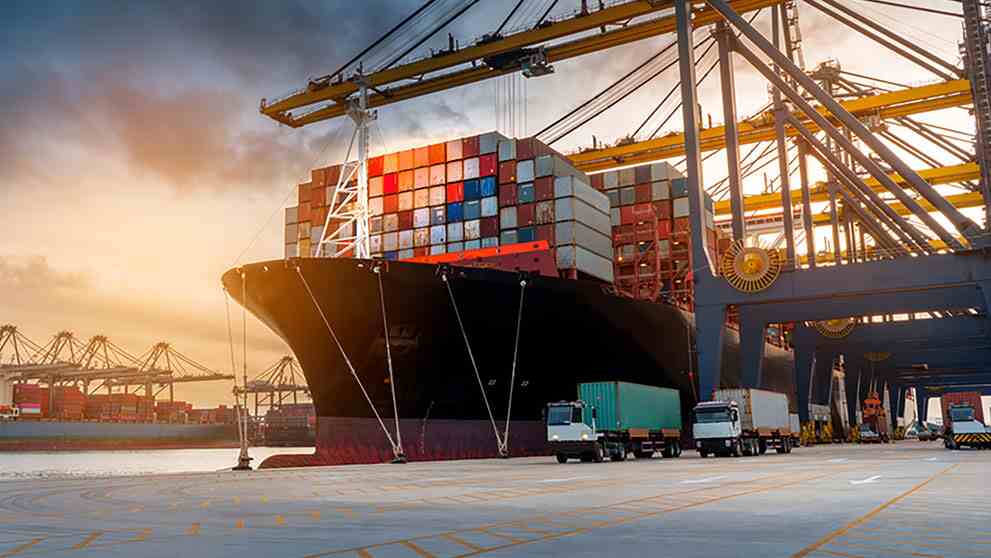
Step-by-Step Guide: From Identification to Factory Arrival
Step 1: Identify Your Requirement & Specification
Begin by defining precisely what raw material your production line needs: grade, specification, tolerance, packaging, minimum order quantity (MOQ), quality certificate parameters, shelf-life, and required documentation.
For example, if you run a plastic-film extrusion facility, you might require “HDPE resin grade A123″ with melt flow index X.X, pellet size 3 mm, packaged in 25 kg bags, minimum lot 20 metric tonnes.
Create a specification sheet and include it in your enquiry to the Turkish supplier.
Step 2: Find Reliable Turkish Suppliers
Rather than browsing at random, approach this methodically:
- Use Turkish export directories or trade fairs to identify manufacturers.
- Verify supplier credentials: ISO 9001, product-specific certificates, export licence.
- Request product samples and technical data sheets (TDS).
- Inspect or ask for audit/inspection reports if possible — we at MT Royal have seen factories where sample batch helped uncover inconsistent quality nullifying the order.
- Negotiate on pricing, lead time, packaging, incoterms (FOB or CIF), and payment terms.
Step 3: Confirm Payment, Contracts & Terms
Once you select the supplier:
- Agree on a contract specifying product, specification, quantity, price, shipment date, incoterm, payment (e.g., 30% advance, 70% on shipment).
- Ensure Turkish side provides Invoice, Packing List, COO and Quality Certificates.
- On your side in Nigeria, ensure your bank has approved the foreign-currency payment, you have obtained Form M (if required), you have arranged for forex based on Nigerian Frontier’s guidance, and you clarify import duty/tariff structures.
Step 4: Logistics and Transportation – Türkiye to Nigeria
Logistics is where many issues arise. Consider:
- Whether you ship by sea (20 ft or 40 ft container) or air (for urgent/low-volume). Sea freight from Türkiye to Nigeria often takes 17-21 days.
- Which Turkish port you will load from (Istanbul, Izmir, Mersin etc).
- Who handles export customs in Türkiye (supplier may manage or you engage freight forwarder).
- Who handles freight forwarding and Nigerian import clearance (We at MT Royal recommend engaging a local Nigerian customs broker early).
- Insurance – CIF incoterms require supplier to insure shipment; always review insurance certificate.
- Monitoring shipment and tracking from departure to arrival.
Step 5: Nigerian Customs Clearance & Inland Logistics
On arrival at Nigerian port:
- Submit all required documents: Invoice, Packing List, COO, Bill of Lading/Airway Bill, Quality Certificate, Form M/PAAR (if applicable).
- Pay duties, VAT, port handling fees, fob to door haulage.
- Unload containers, inspect goods, move to factory or warehouse.
- Perform incoming quality control (IQC) on raw materials: check quantity, weights, quality spec compliance.
- Move product into production once cleared.
Step 6: Quality Control and Production Use
Once the material reaches your factory:
- Compare the actual lot against specification: grade, batch number, defects, moisture content, packaging integrity.
- Retain sample for future reference.
- Adjust your production line if switching from local to Turkish supply (calibrate hopper, conveyor, processing parameters).
- Monitor first production runs for yield, downtime, scrap – if unusual results occur, investigate raw material change implications.
Step 7: Review, Feedback and Continuous Improvement
After the batch has been consumed:
- Conduct feedback session: supplier reliability, lead time adherence, quality consistency, packaging performance.
- Document any deviations and inform supplier for corrective action.
- Evaluate landed cost vs local sourcing and track savings or target achievement.
- Plan for future orders, possibly locking long-term contract to secure favourable price and supply.
Common Mistakes and How to Avoid Them
- Mistake: Buying on price alone and neglecting specification. Result: raw material doesn’t meet production tolerance, causing rejects.
Solution: Emphasise specification sheet and sample testing. - Mistake: Underestimating total landed cost (product + freight + duties + inland haulage).
Solution: Develop landed cost model before purchase. - Mistake: Not verifying Turkish supplier’s export credentials or missing certifications.
Solution: Independently verify ISO certification, ask for audit reports or references. - Mistake: Poor packaging leading to damage or moisture ingress en route.
Solution: Specify export-grade packaging (e.g., sealed multi-ply bags or lined containers) and inspect at arrival. - Mistake: Neglecting Nigerian import regulations (Form M, PAAR, product standards).
Solution: Engage Nigerian customs broker early and keep documentation in order. - Mistake: Failing to adjust production line when raw material changes – leading to downtime.
Solution: Plan first batch trial and recalibrate processes.
Tips for Industrial-Scale Imports (High Volume Manufacturers)
If your factory plans to import significant volumes from Türkiye (say > 100 metric tonnes annually) then:
- Negotiate long-term supply contracts with Turkish manufacturers for stability of price and supply.
- Lock in freight rates and shipping schedules ahead—bulk shipments may allow favourable rates per ton.
- Use just-in-time inventory strategies to reduce warehousing costs, but ensure buffer stock for supply chain shocks.
- Standardise packaging dimensions to optimise container utilisation and freight cost: e.g., 20 ft holds ~24–28 tons depending on material.
- Integrate your ERP system to record landed cost line-items: material cost, freight cost, duties, warehouse cost – giving full visibility of cost-per-unit.
- Create internal KPIs: supplier lead-time adherence, rejection rate, cost-per-unit landed, downtime due to supply issues. Tracking these helps improve supply-chain reliability.
Frequently Asked Questions by Nigerian Procurement Managers
Q1. How much duty do I pay when importing raw materials from Türkiye?
Duty depends on HS code of material, origin certificate, and Nigeria’s tariff schedule. Use Nigeria Customs Service tariff tables and ensure your COO from Türkiye reflects “Turkiye” origin correctly.
Q2. Can I import via air instead of sea?
Yes, especially for urgent or small-volume orders. Air freight from Turkish airports to Lagos usually takes 3-5 days.
However, cost per kg will be higher—so best for time-sensitive materials or prototypes.
Q3. How do I ensure the Turkish material meets my specification?
Request supplier sample, TDS, certificate of analysis (COA). On arrival, conduct first-lot testing before full production.
Q4. What packaging standards should I insist on?
Export-grade packaging: strong sealed bags, protected from moisture, labelled with product code/lot, and pallets strapped for container shipping.
Q5. What logistic pitfalls do Nigerian importers face from Türkiye?
Typical issues: container delays at Lagos ports, incorrect paperwork delaying clearance, moisture damage in transit, currency/forex volatility affecting landed cost.
Why Engage MT Royal as Your Partner
We at MT Royal have worked with Nigerian manufacturers and African clients importing raw materials from Türkiye. Our offering centres on:
- Direct linkages to Turkish producers of raw materials—no intermediaries, enabling competitive pricing.
- Thorough documentation support: COA, TDS, export licence, freight tracking.
- Integrated value chain: we coordinate shipment from Turkey, oversee export customs clearance, and partner with Nigerian clearing agents to smooth your import process.
- Consistency: our clients benefit from repeatable supply, quality stability, and supply-chain transparency.
When you work with MT Royal, you gain more than a supplier—you gain a supply partner familiar with both Türkiye and Nigeria contexts, enabling you to focus on production rather than supply headaches.
Final Thoughts
For Nigerian companies, importing raw materials from Türkiye is not just a procurement exercise—it can become a strategic lever for cost reduction, production quality improvement, and supply-chain resilience. By following the structured steps above, avoiding common errors, scaling thoughtfully, and leveraging a partner like MT Royal, your factory can secure reliable, high-quality materials aligned with global standards.
The key is clarity: know your specification, choose a verified supplier, understand the full landed cost, ensure you meet Nigerian import requirements, manage logistics carefully, and monitor outcomes consistently. When all these align, you turn raw-material sourcing into a competitive edge rather than a recurring risk.
This isn’t simply an import transaction—it’s a foundation for manufacturing growth, supply-chain stability, and production excellence.




No comment