

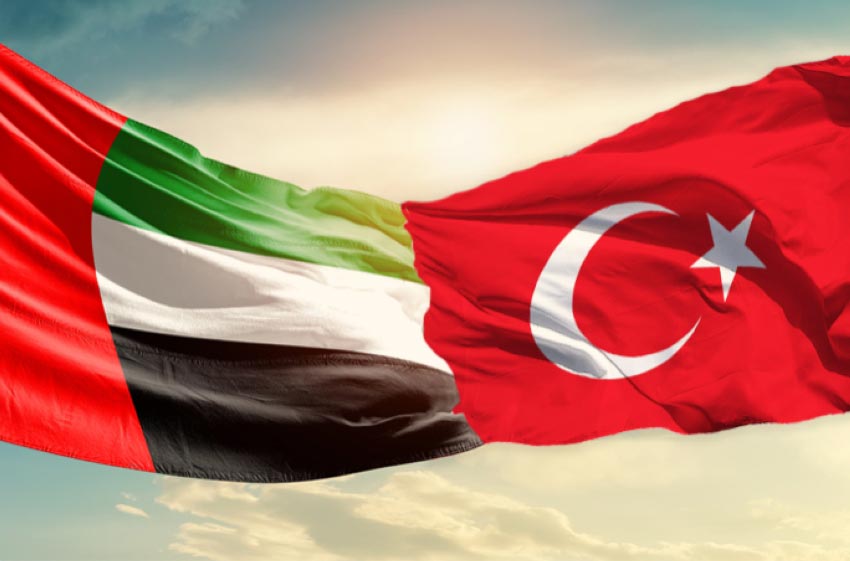
For food manufacturers in the UAE, sourcing raw materials is no longer just a purchasing activity—it is a strategic function that directly affects product quality, regulatory compliance, cost control, and brand reputation. As global supply chains become more volatile and buyers move away from single-origin dependency, Türkiye has emerged as one of the most attractive and reliable sourcing destinations for food raw materials.
What many UAE companies quickly realize, however, is that importing food raw materials from Türkiye is not simply a matter of placing an order and arranging shipment. It requires market understanding, regulatory awareness, supplier qualification, and disciplined logistics planning. This is where working with an experienced, market-oriented partner such as MT Royal becomes a decisive advantage.
This article is written specifically for UAE-based food manufacturers, processors, and procurement managers who want a clear, realistic, and professional roadmap. It explains how UAE companies can import food raw materials from Türkiye, what mistakes to avoid, how to scale sourcing efficiently, and how to turn cross-border trade into a stable competitive advantage rather than a recurring risk.
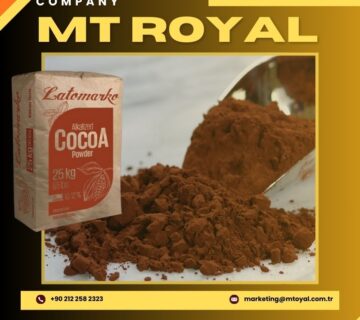
latamarko alkalized cocoa powder lm60
Food industry raw materials – list of products
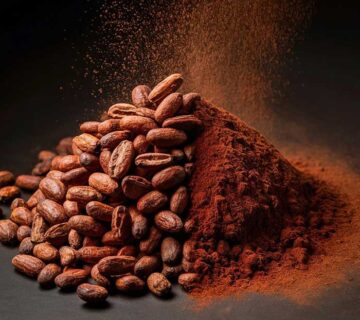
Cocoa Powder Exporter from Türkiye
Alkalized Cocoa Powder Supplier
Why Türkiye Has Become a Key Sourcing Hub for UAE Food Companies
Türkiye occupies a unique position in the global food supply chain. It combines strong agricultural output, a mature food-processing industry, and close logistical proximity to the UAE. For UAE companies, this means access to a wide range of food raw materials without the long lead times and uncertainty associated with distant markets.
Beyond geography, Turkish suppliers benefit from decades of experience exporting to demanding regions such as the EU and the Middle East. This has shaped a production culture that emphasizes traceability, certification, and consistency—qualities that UAE regulators and large food producers increasingly require.
From starches and sweeteners to cocoa derivatives, emulsifiers, vegetable oils, proteins, and specialty ingredients, Türkiye offers depth, diversity, and scale. When managed correctly, it can become one of the most stable pillars in a UAE company’s sourcing strategy.
Understanding the Basics of Importing Food Raw Materials into the UAE
Before examining Türkiye specifically, it is important to understand how food raw material imports into the UAE function at a structural level. The UAE operates under strict food safety and documentation standards, enforced primarily by local authorities such as Dubai Municipality and Abu Dhabi Agriculture and Food Safety Authority.
For any imported food raw material, the UAE importer is responsible for product registration, conformity with Gulf standards, and ensuring that labeling, composition, and safety documentation are complete and accurate. This responsibility cannot be transferred to the foreign supplier.
When sourcing from Türkiye, UAE companies must therefore think beyond price and availability. They must ensure that Turkish suppliers can consistently meet UAE compliance requirements—not just once, but batch after batch.
Why Türkiye Fits UAE Regulatory and Quality Expectations
One of the main reasons Turkish food raw materials integrate well into the UAE market is alignment in regulatory philosophy. Turkish manufacturers are accustomed to exporting under EU food safety frameworks, which are often stricter than GCC requirements.
This regulatory maturity translates into several practical advantages. Documentation such as Certificates of Analysis, origin certificates, allergen declarations, and traceability records are typically well-prepared. Production facilities are familiar with audits and quality inspections. For UAE companies, this reduces friction during product registration and border clearance.
That said, alignment does not mean automation. Even high-quality Turkish suppliers require coordination and verification to ensure full compatibility with UAE-specific regulations.
Common Mistakes UAE Companies Make When Importing from Türkiye
Despite Türkiye’s advantages, many UAE companies encounter avoidable problems during their first sourcing cycles. These issues rarely stem from product quality alone. More often, they result from gaps in process, communication, or planning.
One common mistake is assuming that a Turkish supplier who exports to Europe will automatically meet UAE requirements. Regulatory overlap exists, but there are important differences in labeling language, ingredient restrictions, and registration procedures.
Another frequent error is underestimating logistics complexity. Short distance does not guarantee simple logistics. Port congestion, documentation discrepancies, or poorly coordinated inland transport can quickly disrupt production schedules.
We have seen cases where UAE factories faced production delays not because Turkish suppliers failed, but because the import process was not structured professionally from the beginning. These situations are costly—and preventable.
The Role of a Professional Sourcing Partner
This is where companies like MT Royal play a critical role. Rather than acting as a simple intermediary, MT Royal operates as a sourcing and coordination partner that understands both Turkish production realities and UAE regulatory expectations.
MT Royal works with multiple Turkish manufacturers across different food raw material categories. This multi-source approach reduces dependency risks and allows UAE buyers to scale volumes without compromising continuity.
More importantly, MT Royal focuses on qualification before transaction. Suppliers are evaluated not only on price and capacity, but also on documentation quality, consistency history, and responsiveness. For UAE companies, this translates into smoother imports and fewer surprises.
We have seen that UAE manufacturers who treat sourcing as a partnership rather than a transaction achieve far better long-term outcomes.
Logistics Between Türkiye and the UAE: What Really Matters
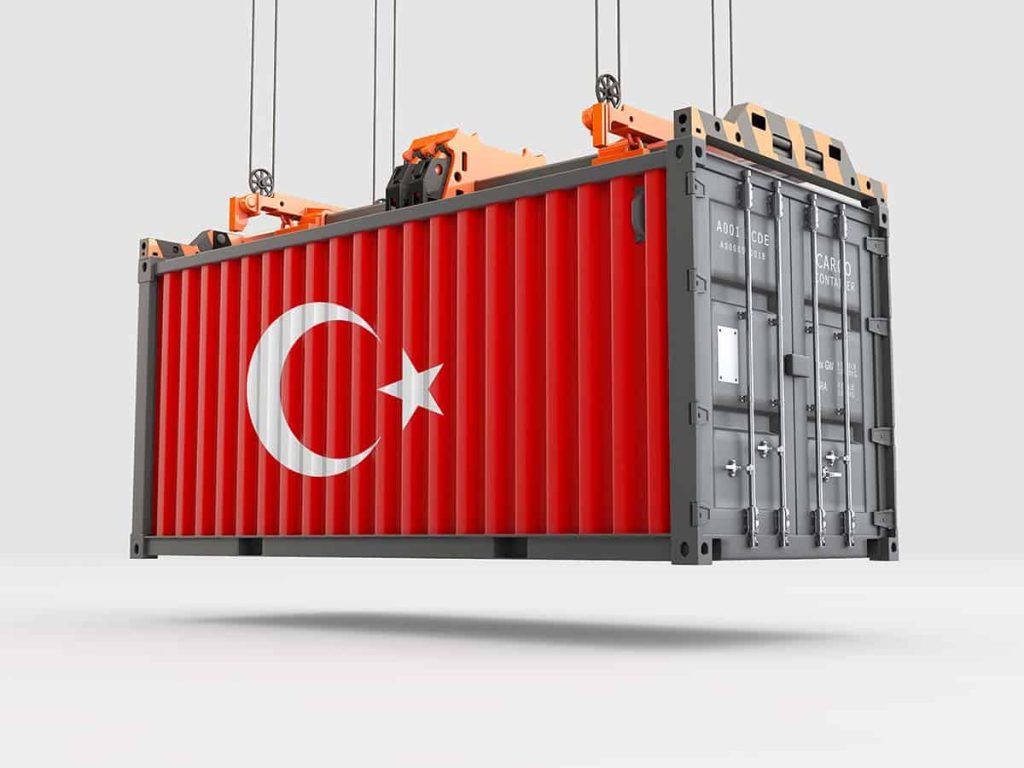
Logistics is often underestimated in Türkiye–UAE trade because transit times are relatively short. In reality, efficiency depends on planning rather than distance.
Food raw materials require careful handling, especially when temperature sensitivity, moisture exposure, or contamination risks are involved. Packaging standards, container selection, and shipment timing all influence final product integrity.
Professional importers coordinate logistics based on production schedules, not just shipping availability. MT Royal, for example, aligns dispatch planning with customer demand cycles in the UAE, reducing storage pressure and inventory risk.
This level of coordination becomes especially important as volumes grow and production schedules tighten.
Scaling Import Volumes Without Increasing Risk
Many UAE food companies begin importing from Türkiye with small trial orders. This is sensible. Problems arise when companies attempt to scale without adjusting their sourcing structure.
At higher volumes, issues such as batch consistency, lead-time predictability, and pricing stability become critical. Relying on a single supplier or informal agreements increases exposure to disruption.
A structured sourcing model—supported by a partner like MT Royal—allows companies to scale gradually while maintaining control. Multi-supplier strategies, clear specifications, and forecast-based ordering reduce volatility.
We have seen factories improve production efficiency simply by stabilizing their raw material supply chain, without changing formulations or equipment.
Comparing Direct Sourcing vs. Partner-Led Sourcing
(One of the few sections where a brief comparison adds clarity)
Some UAE companies consider sourcing directly from Turkish manufacturers without a coordinating partner. While this can work in limited cases, it often introduces hidden risks.
Direct sourcing requires internal expertise in supplier vetting, compliance management, logistics coordination, and dispute resolution. Partner-led sourcing shifts much of this operational burden to an experienced intermediary.
MT Royal’s model allows UAE companies to retain strategic control while reducing operational complexity. This balance is particularly valuable for manufacturers focused on growth rather than supply-chain firefighting.
Cost Optimization Without Compromising Quality
One of the strongest motivations for sourcing from Türkiye is cost efficiency. However, sustainable cost savings come from stability, not aggressive price negotiation.
When sourcing is unstable, hidden costs emerge in the form of delays, rejected shipments, reformulation, or emergency purchases. These costs often exceed initial price savings.
MT Royal helps UAE companies optimize cost structures by focusing on total landed cost rather than unit price alone. Predictable pricing, reduced rework, and smoother operations create measurable financial benefits over time.
Industry Trends Strengthening Türkiye–UAE Food Trade
Several trends are reinforcing the strategic importance of Türkiye for UAE food manufacturers. Regional supply-chain diversification has become a priority, especially after recent global disruptions. Türkiye offers geographic and operational proximity without sacrificing scale.
At the same time, demand for clean-label, traceable, and function-specific food ingredients is increasing. Turkish manufacturers are investing heavily in modern processing technologies to meet these expectations.
UAE companies that align with these trends position themselves ahead of competitors who rely on outdated sourcing models.
Questions UAE Procurement Managers Frequently Ask
How long does it take to start importing food raw materials from Türkiye?
With proper preparation, initial shipments can begin within a few months. Long-term stability develops with consistent execution.
Is Türkiye suitable for both bulk and specialty ingredients?
Yes. Türkiye offers both commodity-scale production and specialized food ingredients.
Do we need local representation in Türkiye?
While not mandatory, working with a professional partner significantly reduces risk and complexity.
Can MT Royal support multiple product categories?
Yes. MT Royal’s sourcing model is designed to support diverse food raw material portfolios.
Building a Supply Chain That Supports Growth
Importing food raw materials is not an isolated activity. It directly affects production planning, quality control, and market competitiveness. UAE companies that approach Türkiye strategically—rather than opportunistically—gain a durable advantage.
We have seen manufacturers transform their operations by stabilizing raw material inputs. We have also seen how inconsistent sourcing erodes margins and confidence. The difference lies in structure, discipline, and partnership.
MT Royal positions itself as a trusted partner for UAE companies looking to import food raw materials from Türkiye with confidence. Not by overselling, but by executing consistently and transparently.
A Strategic Decision with Long-Term Impact
Choosing how to import food raw materials from Türkiye is a decision that shapes more than your supply chain. It shapes your production resilience, regulatory confidence, and growth trajectory.
Türkiye offers UAE companies a rare combination of proximity, quality, and scale. When paired with a knowledgeable sourcing partner like MT Royal, it becomes a foundation rather than a risk.
For manufacturers who value predictability over improvisation, and partnerships over transactions, this approach does more than move goods—it builds confidence where it matters most.

No comment