

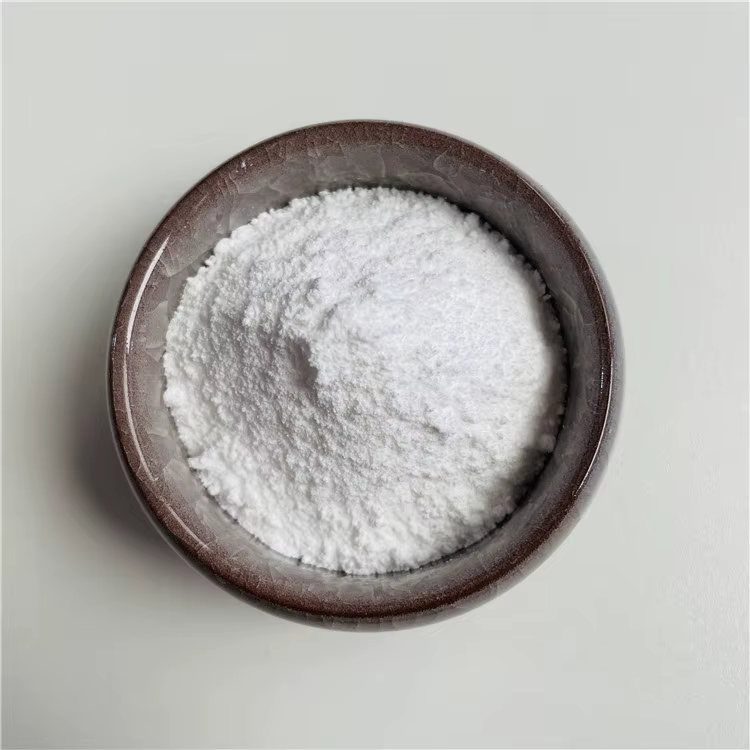
In modern food manufacturing, success rarely depends on one dramatic ingredient. More often, it depends on small, functional components that quietly keep texture stable, shelf life predictable, and production lines efficient. Mono- and diglycerides food grade are exactly that kind of ingredient. They don’t shout for attention on a label, but without them, many large-scale food processes would struggle to deliver consistent results.
When procurement teams and production managers search for Mono- and Diglycerides Food Grade – Bulk Supplier, they are not simply looking for an emulsifier. They are looking for reliability, technical consistency, regulatory safety, and a supplier who understands how these ingredients behave in real industrial environments. This is where experienced distributors such as MT Royal enter the picture—not as aggressive sellers, but as partners who understand what happens after the ingredient reaches your warehouse.
From our work with food factories across different categories, we have seen that sourcing mono- and diglycerides correctly can reduce formulation instability, minimize batch rejection, and improve line efficiency. This article is written to fully address that reality. It is not a surface-level overview; it is a deep, practical resource designed for manufacturers who operate at scale and make sourcing decisions with long-term consequences in mind.
latamarko alkalized cocoa powder lm60
cocoa powder for chocolate production-Best price
Food industry raw materials – list of products
Types of Gelatin from Turkish Manufacturer
Alkalized Cocoa Powder Bulk Supplier
What Are Mono- and Diglycerides? Core Concepts for Industrial Buyers
Mono- and diglycerides are fatty acid esters derived from glycerol. In food-grade applications, they are primarily used as emulsifiers, stabilizers, and texture enhancers. Chemically speaking, they sit between fats and water, allowing ingredients that normally separate to coexist peacefully—much like a skilled mediator in a tense negotiation.
Why They Matter in Food Manufacturing
In industrial food production, mono- and diglycerides perform several critical functions:
- Improve emulsification between oil and water phases
- Enhance dough strength and crumb structure in bakery products
- Stabilize air incorporation in whipped and aerated foods
- Extend shelf life by slowing staling and moisture migration
- Improve mouthfeel and texture consistency
These effects are not cosmetic. They directly influence yield, waste levels, and consumer perception of quality.
Food Grade vs. Industrial Grade
For manufacturers, it is essential to distinguish food-grade mono- and diglycerides from industrial or technical grades. Food-grade materials comply with strict purity, safety, and regulatory standards. Sourcing from a reputable bulk supplier ensures compliance with international food safety frameworks and avoids costly regulatory issues.
Why Bulk Sourcing Is a Strategic Decision
Buying mono- and diglycerides in bulk is not just about volume discounts. At industrial scale, bulk sourcing reshapes how factories manage cost, consistency, and supply risk.
Cost Control Beyond Price per Kilogram
Bulk purchasing allows manufacturers to:
- Secure long-term pricing agreements
- Reduce packaging and handling costs
- Avoid frequent requalification of suppliers
- Stabilize formulation costs over time
We have seen factories significantly reduce reformulation work simply by standardizing their mono- and diglycerides supply through a trusted bulk supplier.
Consistency Across Production Batches
Mono- and diglycerides can vary in fatty acid profile, melting point, and performance. Bulk sourcing from a consistent supplier minimizes variability and protects product quality.
Industrial Applications of Mono- and Diglycerides Food Grade
Bakery and Baked Goods
In bakery manufacturing, mono- and diglycerides are widely used to improve dough handling, volume, and crumb softness. They help bread stay fresher for longer—a small functional role with a big commercial impact.
Dairy and Dairy Alternatives
These emulsifiers stabilize fat dispersion in products such as creamers, ice cream, and plant-based dairy alternatives. Smooth texture and resistance to phase separation are critical here.
Margarine and Spreads
Mono- and diglycerides contribute to stable emulsions and consistent spreadability, even under temperature fluctuations during transport and storage.
Confectionery and Chocolate Applications
In confectionery, they improve flow properties, reduce stickiness, and enhance mouthfeel. For chocolate and coatings, controlled emulsification is essential to avoid bloom and texture defects.
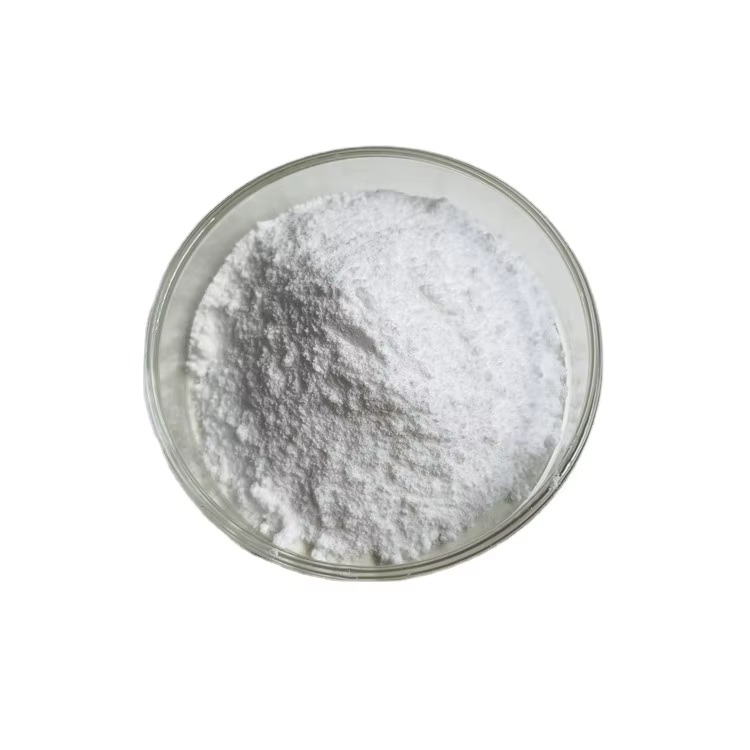
Mono- vs. Diglycerides: Understanding the Difference
Although often discussed together, mono- and diglycerides have distinct functional roles.
Mono-glycerides
- Stronger emulsifying power
- Often used where stable oil-water emulsions are critical
- Common in bakery and dairy formulations
Di-glycerides
- Contribute to texture and fat structuring
- Often present as part of a mono- and diglyceride blend
Most food-grade products used in manufacturing are blends, optimized to balance performance and cost.
Common Mistakes in Industrial Sourcing
Even experienced procurement teams can make avoidable errors when sourcing mono- and diglycerides food grade in bulk.
Choosing Based on Price Alone
Lower-priced material may have inconsistent fatty acid profiles, leading to unpredictable performance and higher waste.
Ignoring Technical Specifications
Melting point, HLB value, and fatty acid composition all matter. Without aligning specs to application, performance issues are almost guaranteed.
Overlooking Regulatory Compliance
Food-grade certification, allergen status, and documentation are not optional. A reliable bulk supplier ensures these requirements are met consistently.
We have observed that manufacturers who treat emulsifier sourcing as a technical decision—not a commodity purchase—experience fewer quality issues downstream.
What Defines a Reliable Bulk Supplier?
When evaluating a Mono- and Diglycerides Food Grade – Bulk Supplier, manufacturers should look beyond availability.
Key Criteria for Evaluation
A dependable supplier should offer:
- Consistent quality across shipments
- Clear technical data and documentation
- Multiple sourcing options to reduce risk
- Competitive pricing aligned with market conditions
- Strong logistics and inventory management
MT Royal operates with these criteria in mind, supplying food-grade mono- and diglycerides from reputable producers while maintaining flexibility for different industrial needs.
Quality Parameters That Matter at Scale
Fatty Acid Profile
The source oil (palm, soybean, or others) affects functionality. Consistency here is critical for predictable performance.
Melting Point and Physical Form
Flake, powder, or bead form can influence handling and dispersion. Bulk suppliers should offer options aligned with your process.
Microbiological and Safety Standards
Food-grade mono- and diglycerides must meet strict safety thresholds. Proper testing and documentation are essential.
Market Trends Influencing Mono- and Diglycerides Supply
Several trends are shaping the global emulsifier market:
- Growing demand for processed and convenience foods
- Expansion of plant-based and vegan formulations
- Increased scrutiny on ingredient sourcing and labeling
- Volatility in vegetable oil markets
These trends reinforce the importance of working with a supplier who understands both global supply dynamics and local manufacturing realities.
Practical Tips for Factory Managers and Buyers
Standardize Where Possible
Using a consistent mono- and diglyceride specification across product lines simplifies quality control and training.
Involve Technical Teams Early
Procurement decisions should include R&D and production input to avoid performance mismatches.
Plan for the Long Term
Short-term savings can lead to long-term costs. Reliable bulk supply supports stable production planning.
We have seen that factories who integrate their supplier into planning discussions reduce emergency sourcing and improve operational confidence.
Frequently Asked Questions from Industrial Buyers
Are mono- and diglycerides suitable for clean-label products?
They are widely accepted, though labeling regulations vary by market. Consultation with regulatory teams is advised.
Can they replace other emulsifiers?
In many applications, yes—but performance should be validated through trials.
What is the typical shelf life?
When stored properly, food-grade mono- and diglycerides typically offer a shelf life of 12–24 months.
Can bulk supply be customized?
Leading suppliers like MT Royal can offer flexibility depending on volume, application, and technical requirements.
Why Manufacturers Choose MT Royal
MT Royal is positioned as a trusted bulk supplier of food-grade mono- and diglycerides for industrial manufacturers. Rather than pushing a single solution, the company focuses on matching the right product to the right application, with transparent pricing and dependable supply.
We believe sourcing should reduce uncertainty, not create it. That philosophy guides how we work with manufacturers—through clear specifications, open communication, and a long-term view of partnership rather than transaction.



No comment