


In the dynamic food manufacturing landscape of Afghanistan, sourcing high-quality monosodium glutamate (MSG) is crucial for maintaining flavor consistency, production efficiency, and regulatory compliance. MSG, widely recognized as a flavor enhancer, is pivotal for food processors, seasoning manufacturers, and culinary product developers seeking to deliver an optimal taste experience.
For Afghan manufacturers and distributors, partnering with a reliable MSG supplier can make the difference between substandard batches and premium products that delight consumers. MT Royal, with extensive experience in supplying global food-grade chemicals, provides Afghan businesses access to premium MSG with consistent quality, competitive pricing, and expert technical guidance. This guide is designed to help you navigate the complexities of sourcing MSG, avoid common pitfalls, and ensure a robust supply chain that supports long-term growth.
Understanding Monosodium Glutamate (MSG)
Definition and Chemical Profile
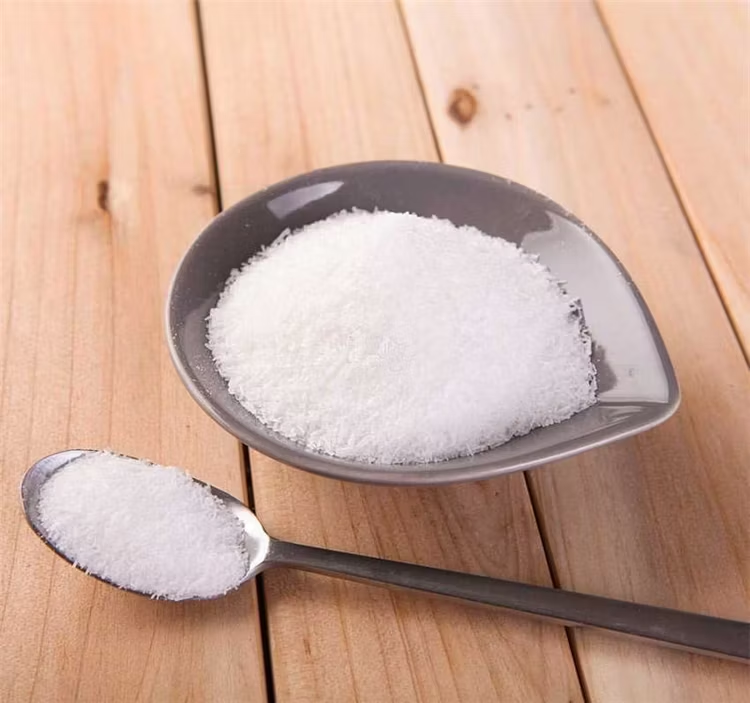
Monosodium glutamate (MSG) is the sodium salt of glutamic acid, a naturally occurring amino acid. Its primary function is to enhance the umami taste in food, which is recognized as the fifth basic taste alongside sweet, salty, sour, and bitter. MSG is highly soluble in water, stable under normal storage conditions, and widely used across food and beverage, processed meat, snack, and seasoning industries.
Applications Across Industries
- Food Industry: MSG is extensively used in soups, sauces, instant noodles, and processed foods.
- Snack and Confectionery: Enhances savory flavors in chips, crackers, and savory snacks.
- Restaurant and Catering: Provides consistent flavor profiles in prepared foods and catering operations.
- Industrial Food Production: Plays a crucial role in cost-effective flavor enhancement at large-scale production facilities.
Common Challenges in MSG Sourcing
Quality Variability
One of the most frequent issues Afghan manufacturers face is inconsistent MSG quality. Variations in purity, moisture content, and particle size can impact flavor release, solubility, and product stability.
Supply Chain Risks
Global events, import restrictions, and logistical challenges may disrupt MSG supply. Relying on multiple verified suppliers, such as MT Royal, helps mitigate these risks.
Regulatory Compliance
Ensuring MSG meets local and international food safety standards is critical. Certified suppliers provide quality assurance and documentation for compliance audits.
Selecting the Right MSG Supplier in Afghanistan
Key Considerations
- Purity and Grade: Food-grade MSG should have a purity level of 99% or higher.
- Consistency: Evaluate suppliers for batch-to-batch consistency.
- Technical Support: A supplier should provide storage, handling, and application guidance.
- Pricing and Terms: Competitive pricing without compromising quality is essential for profitability.
Why MT Royal Stands Out
We at MT Royal have collaborated with manufacturers across Afghanistan to ensure reliable MSG supply, offering high-quality product, timely logistics, and comprehensive technical support. By choosing MT Royal, you reduce operational risks and secure consistent flavor performance in your products.
Industrial Tips for Large-Scale MSG Production
Proper storage of MSG is essential to maintain its quality, functionality, and shelf life. MSG is highly hygroscopic, which means it readily absorbs moisture from the environment, leading to clumping, reduced solubility, and uneven flavor distribution. For large-scale production, it should be stored in a cool, dry environment with controlled humidity, ideally below 60%, and away from direct sunlight or heat sources. Temperature fluctuations should be minimized, as excessive heat or moisture can degrade the product. Using palletized storage with moisture barriers and placing bulk MSG bags off the floor helps prevent contamination and preserves quality. Following a first-in-first-out (FIFO) system ensures older stock is used before newer deliveries, minimizing waste and maintaining consistent product performance.
Handling Practices
Efficient handling of MSG in industrial settings is crucial to prevent contamination and preserve product integrity. All transfers should be conducted using airtight containers or sealed pneumatic systems to avoid exposure to air, dust, or foreign particles. Workers should adhere to strict hygiene protocols, including wearing gloves, masks, and protective clothing to prevent contamination. Minimizing manual handling through automated conveying systems reduces the risk of product loss and ensures consistency. Regular cleaning of storage bins, hoppers, and mixing equipment is recommended to remove residual moisture or particles that could compromise the next batch.
Process Optimization
Maximizing MSG’s effectiveness requires careful attention to dissolution and blending techniques. For liquid applications, MSG should be fully dissolved in water or other carriers before incorporation into formulations to ensure uniform flavor distribution. Avoid overheating during dissolution, as it may cause degradation or precipitation. In dry mixes, maintaining consistent particle size is critical to ensure even dispersion throughout the product, preventing areas of over- or under-flavoring. Industrial mixers with adjustable speed controls allow for precise blending according to batch size and formulation requirements. Regular calibration of equipment and monitoring of process parameters are essential to consistently achieve high-quality outputs.
Inventory Management
Robust inventory management is vital for large-scale MSG operations to prevent production interruptions and control costs. Accurate forecasting based on production schedules and market demand helps maintain optimal stock levels, preventing overstocking, which can compromise product quality, or understocking, which may disrupt production. Implementing a real-time inventory tracking system with batch traceability and reorder alerts improves efficiency and reduces operational risk. Planning for safety stock or contingency inventory is recommended to manage potential supplier delays or logistical challenges. Partnering with a reliable supplier like MT Royal ensures consistent supply, timely deliveries, and support for smooth production operations, even during periods of market fluctuation.
latamarko alkalized cocoa powder lm60
cocoa powder for chocolate production-Best price
Food industry raw materials – list of products
Types of Gelatin from Turkish Manufacturer
Alkalized Cocoa Powder Bulk Supplier
Frequently Asked Questions by Afghan Manufacturers
How much MSG is safe to use in food products?
Recommended usage typically ranges from 0.1% to 0.8% of the finished product, depending on the type of food and taste profile.
Can MSG be combined with natural flavorings?
Yes. MSG complements natural flavors, enhancing umami while allowing the primary ingredient taste to shine.
How to verify supplier authenticity and quality?
Request certificates of analysis, food safety compliance documentation, and, if possible, sample testing before committing to bulk orders.
Is there a difference between imported and local MSG?
Imported MSG often offers higher consistency and documented certifications, while local production may vary. Strategic sourcing from trusted suppliers balances cost and quality.
Optimizing Your MSG Supply Chain in Afghanistan
- Diversify Suppliers: Reduce dependency on a single source.
- Engage a Strategic Partner: Collaborate with MT Royal for technical advice and reliable delivery.
- Leverage Bulk Purchasing: Secure better pricing and maintain buffer stocks.
- Invest in Quality Assurance: Periodically test MSG batches to ensure standards are met.
Conclusion
Monosodium glutamate (MSG) is an essential ingredient that shapes the taste, consistency, and market acceptance of food products in Afghanistan. Choosing the right supplier is not merely a procurement decision—it is a strategic move that affects quality, efficiency, and profitability. MT Royal offers Afghan manufacturers access to high-quality MSG, backed by expert guidance and a reliable supply chain. By making informed choices regarding supplier selection, storage, and application, businesses can ensure product consistency, minimize operational risks, and achieve sustainable growth. In today’s competitive market, partnering with a trusted MSG supplier is a cornerstone of success, enabling manufacturers to delight consumers with superior flavor experiences while maintaining a robust and cost-effective production system.


 supplier in Afghanistan)
No comment