

On a specification sheet, the difference between natural cocoa powder and alkalized cocoa powder can look almost trivial. A few pH values, a color range, a processing note. But on a production line running at full capacity, that difference can mean the gap between smooth, predictable output and weeks of troubleshooting, reformulation, and quality complaints.
For factory owners, production managers, and procurement professionals, the choice between natural and alkalized cocoa powder is not academic. It affects how your products bake, mix, disperse, taste, and even how consistently they look on the shelf. Yet this decision is still one of the most misunderstood areas in industrial cocoa sourcing.
This article is written for manufacturers who want clarity—not marketing noise. We’ll break down the real, production-level differences between natural and alkalized cocoa powder, explore where each one performs best, and highlight the hidden risks that often catch factories off guard. Along the way, we’ll share practical insights drawn from real manufacturing environments, not textbook definitions.
Alkalized Cocoa Powder Supplier
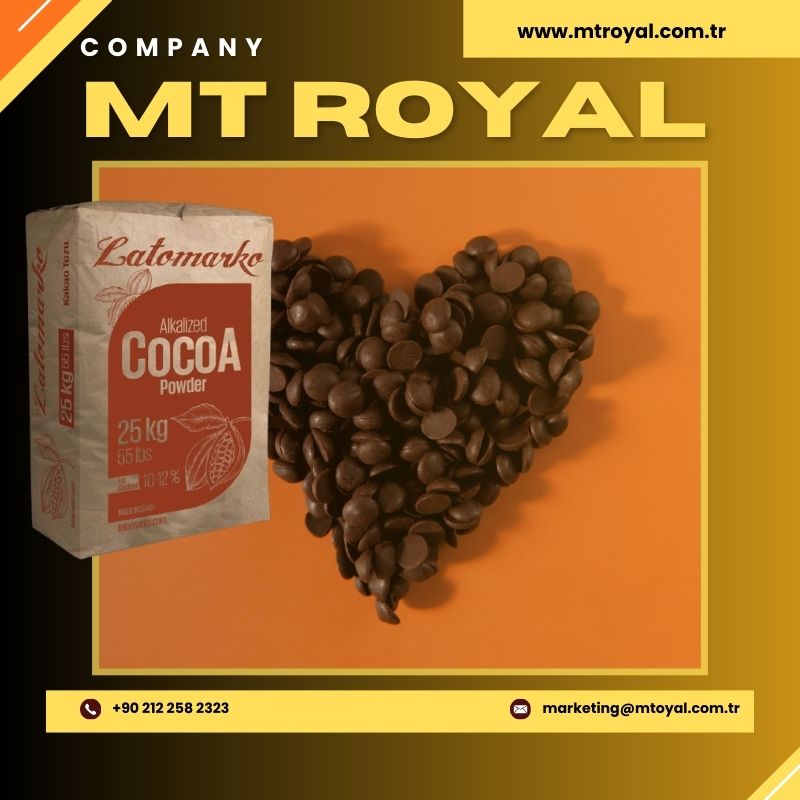
latamarko alkalized cocoa powder lm60
Food industry raw materials – list of products
Cocoa Powder Basics: Where the Difference Begins
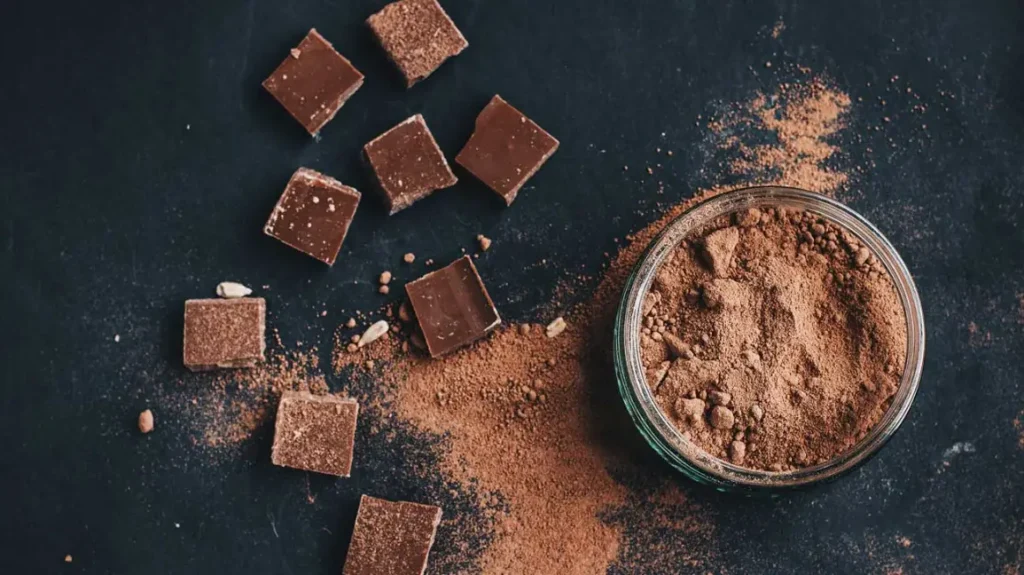
Both natural and alkalized cocoa powders originate from the same raw material: cocoa beans. After fermentation, drying, roasting, and grinding, cocoa liquor is pressed to remove part of its cocoa butter. What remains becomes cocoa powder.
The divergence happens after that point.
Natural cocoa powder is produced without any chemical treatment. It retains its natural acidity, lighter brown color, and sharp cocoa flavor. Alkalized cocoa powder—also known as Dutch-processed cocoa—is treated with alkaline agents to neutralize acidity, darken color, and soften flavor.
That single processing decision changes how cocoa powder behaves throughout your entire production process.
pH: The Quiet Variable That Shapes Everything
One of the most critical differences between natural and alkalized cocoa powder is pH.
Natural cocoa powder typically has a pH between 5.0 and 5.8, making it distinctly acidic. Alkalized cocoa powder can range anywhere from pH 6.8 to over 8.0, depending on the degree of alkalization.
In industrial production, this difference is anything but subtle.
Why pH Matters on the Factory Floor
In bakery applications, pH directly influences leavening reactions. Natural cocoa powder reacts with baking soda to produce carbon dioxide, affecting volume, crumb structure, and texture. Alkalized cocoa powder, having little to no acidity, requires different leavening systems entirely.
In beverage and dairy applications, pH affects dispersion, stability, and flavor perception. An unexpected pH shift can lead to sedimentation, protein instability, or off-notes that only appear after distribution.
This is why manufacturers who treat cocoa powder as interchangeable often end up paying the price later.

Flavor Profile: Sharp Precision vs Rounded Smoothness
From a sensory standpoint, natural and alkalized cocoa powders deliver fundamentally different flavor experiences.
Natural cocoa powder offers a bright, sharp, and sometimes slightly bitter cocoa note. It’s often described as more “authentic” or “intense,” especially in products with lower sugar levels.
Alkalized cocoa powder, by contrast, delivers a smoother, milder, and more rounded chocolate flavor. The alkalization process reduces bitterness and acidity, making it easier to work with in sweet, indulgent formulations.
From a manufacturing perspective, flavor profile influences not only consumer perception but also formulation complexity. Natural cocoa often requires tighter control over sugar balance and masking agents, while alkalized cocoa offers more forgiveness.
Color Development: More Than Just Appearance
Color is one of the first quality attributes consumers notice—and one of the most common sources of internal quality disputes.
Natural cocoa powder produces lighter brown shades that can shift during baking or heating. Alkalized cocoa powders offer deeper, more uniform reds and dark browns, especially at higher alkalization levels.
In large-scale production, color consistency matters for branding, customer expectations, and quality audits. Even small variations between batches can trigger rejections, especially for private-label or export products.
This is where supplier control becomes critical. In our experience supplying manufacturing facilities, inconsistent cocoa powder color is one of the earliest warning signs of deeper quality control issues.
Dispersion and Process Behavior at Scale
Laboratory tests rarely tell the full story. Cocoa powder performance changes dramatically when scaled up.
Natural cocoa powder, due to its acidity and particle characteristics, can be more challenging to disperse in liquids—especially in high-speed beverage lines or fat-based systems.
Alkalized cocoa powder generally disperses more easily and uniformly, reducing mixing time and energy consumption. Over long production runs, these small efficiencies translate into measurable operational savings.
Manufacturers often discover this difference only after switching cocoa types without adjusting process parameters.
Choosing the Right Cocoa Powder for Specific Applications
There is no universal “better” option. The right choice depends entirely on how and where the cocoa powder is used.
Bakery Products
Natural cocoa powder is often preferred in cakes, muffins, and cookies where it interacts directly with baking soda. Its acidity plays a functional role in leavening, not just flavor.
Alkalized cocoa powder works well in formulations designed around baking powder or alternative leavening systems, especially when darker color is desired.
Beverages and Dairy Applications
Alkalized cocoa powder is generally easier to work with in beverages, offering better solubility, smoother mouthfeel, and improved stability.
Natural cocoa can still be used successfully, but it demands tighter control over processing conditions and formulation balance.
Chocolate-Flavored Compounds and Fillings
In fat-based systems, alkalized cocoa powder often delivers more predictable results, particularly in terms of color and dispersion.
Natural cocoa powder may be chosen for premium or clean-label products where sharper cocoa notes are part of the product identity.
Common Procurement Mistakes Manufacturers Make
Despite years of experience, many industrial buyers repeat the same mistakes when sourcing cocoa powder.
Assuming Natural and Alkalized Cocoa Are Interchangeable
Switching between cocoa types without reformulation almost always leads to quality issues. The chemistry simply does not allow for direct substitution.
Focusing on Price Per Ton Instead of Cost Per Unit
A lower-cost cocoa powder that causes higher waste, longer mixing times, or additional quality checks often ends up costing more overall.
Underestimating Batch-to-Batch Variation
Even within the same cocoa type, processing differences between suppliers can create significant performance gaps.
Supplier Quality: Where Theory Meets Reality
The real differentiator between cocoa powders is not the category—it’s the supplier.
A reliable supplier understands not just how cocoa powder is made, but how it behaves in real manufacturing environments. They control roasting profiles, alkalization parameters, milling consistency, and storage conditions with industrial precision.
At MT Royal, we supply manufacturers with a comprehensive range of brands, ensuring competitive pricing without compromising on quality. More importantly, we understand that cocoa powder selection must align with production realities, not just marketing claims.
Standard vs Premium Cocoa Powders: When Quality Tiers Matter
Not every product requires premium cocoa powder. But when it does, the difference is immediately visible on the production line.
Premium cocoa powders typically offer tighter control over pH, particle size, color strength, and flavor consistency. This reduces the need for constant formulation tweaks and quality interventions.
European manufacturers—particularly those with long-standing processing expertise—are often referenced when consistency is critical. Spanish producers like Latamarko have earned recognition among industrial buyers for their disciplined approach to cocoa processing, delivering predictable performance across demanding applications.
Again, this isn’t about prestige. It’s about reducing operational risk.
A Real Manufacturing Scenario: When Cocoa Choice Goes Wrong
A large biscuit manufacturer once replaced alkalized cocoa powder with a natural alternative to reduce costs. On paper, the switch looked harmless.
Within weeks, product color lightened, spread increased, and customer complaints followed. The root cause was not a single failure—but a chain reaction triggered by pH differences and unadjusted formulations.
The savings disappeared quickly, replaced by rework, reformulation, and damaged customer trust.
Practical Guidance for Factory Managers and Procurement Teams
If you’re deciding between natural and alkalized cocoa powder—or re-evaluating your current choice—start with your process, not your supplier.
Map where cocoa powder interacts with heat, moisture, and leavening. Test under real production conditions, not lab simulations. And ask suppliers how their cocoa powders behave in applications similar to yours.
We’ve seen factory managers benefit most when cocoa sourcing decisions are made collaboratively between procurement, R&D, and production—not in isolation.
Frequently Asked Questions from Industrial Buyers
Can I replace alkalized cocoa with natural cocoa directly?
No. Differences in pH and functionality require formulation adjustments.
Is darker cocoa powder always better quality?
No. Color reflects processing method, not inherent quality.
Which cocoa powder is better for clean-label products?
Natural cocoa powder often aligns better with clean-label positioning.
Does supplier origin matter more than processing control?
Processing control and consistency matter far more than origin alone.
A Final Thought for Manufacturing Decision-Makers
The difference between natural and alkalized cocoa powder is not just chemical—it’s operational. It shows up in how smoothly your lines run, how stable your products are, and how often your team has to stop and fix problems.
Choosing the right cocoa powder—and the right supplier—is less about tradition or habit and more about understanding how ingredients behave under real production pressure.
The next time you evaluate cocoa powder options, ask yourself: Is this choice helping my factory run more predictably—or just looking good on paper?



No comment