

For factories and industrial manufacturers, sourcing reliable emulsifiers is crucial to achieving product stability, texture, and shelf life. Among these, Polysorbate 80 (E433) is one of the most versatile and widely used surfactants in food, pharmaceuticals, and cosmetics. Selecting the right Polysorbate 80 E433 Supplier is therefore not just a procurement decision—it is a strategic choice that impacts production efficiency, product quality, and regulatory compliance.
At MT Royal, we have partnered with numerous manufacturers across Europe and beyond, delivering high-quality Polysorbate 80 (E433) from certified sources. In our collaboration with various factories, we have seen how a dependable supplier ensures batch consistency, technical support, and smooth integration into production lines. With growing demand for functional emulsifiers, understanding Polysorbate 80 and sourcing it strategically has become increasingly important for industrial operations.
This guide provides a comprehensive overview for manufacturers and procurement teams, including technical definitions, sourcing pitfalls, industrial application tips, and emerging trends in the market.
Understanding Polysorbate 80 (E433): Definitions and Applications
Polysorbate 80, also referred to as E433 in food-grade applications, is a non-ionic surfactant derived from sorbitol and oleic acid. Its primary function is as an emulsifier, helping oil and water phases combine into stable mixtures.
Key Properties of Polysorbate 80
- Hydrophilic-Lipophilic Balance (HLB): Approximately 15, making it highly effective in oil-in-water emulsions.
- Solubility: Readily soluble in water, alcohol, and glycerin; partially soluble in oils.
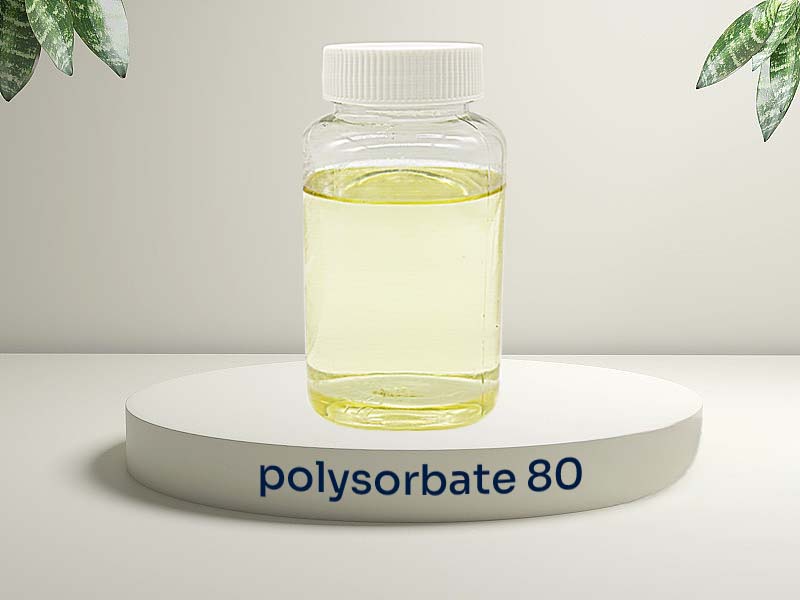
- Appearance: A clear to slightly yellow viscous liquid with low odor.
- Functionality: Stabilizes emulsions, improves texture, enhances solubility, and prevents phase separation.
Industrial Applications
- Food Industry: Used in baked goods, sauces, dressings, ice creams, and beverages to stabilize emulsions and improve texture.
- Pharmaceuticals: Facilitates drug solubilization, stabilizes suspensions, and is used in injectable formulations.
- Cosmetics and Personal Care: Found in creams, lotions, shampoos, and makeup products as an emulsifier and solubilizer.
- Technical Applications: Serves as a dispersing agent in industrial coatings and cleaning solutions.
Why Choosing the Right Supplier Matters
Selecting the proper Polysorbate 80 E433 Supplier affects product quality, regulatory compliance, and production efficiency. Consistent batch characteristics, accurate specifications, and proper documentation are critical, particularly in large-scale manufacturing environments.
Common Mistakes in Industrial Sourcing
Even experienced procurement teams can encounter challenges when sourcing Polysorbate 80 (E433). Awareness of common pitfalls prevents costly disruptions and quality issues.
Overlooking Certifications
Polysorbate 80 used in food or pharmaceuticals must comply with international and local standards, such as USP, EP, or FCC. Procuring uncertified or substandard emulsifiers can lead to regulatory sanctions, recalls, or failed audits. MT Royal ensures all supplied products meet relevant food and pharmaceutical certifications.
Ignoring Functional Specifications
Polysorbate 80 from different suppliers may vary in HLB, acid value, saponification value, and viscosity. Using emulsifiers outside specified parameters can cause instability in emulsions, sedimentation in suspensions, or inconsistent texture in foods and cosmetics.
Prioritizing Cost Over Reliability
Low-cost suppliers may offer inconsistent quality or delayed shipments. Factories that focus on reliability, batch consistency, and technical support experience fewer production stoppages and reduce waste.
Overlooking Storage Requirements
Polysorbate 80 is hygroscopic and can degrade under prolonged exposure to heat or moisture. Incorrect storage affects its emulsifying efficiency, impacting product stability. MT Royal provides storage recommendations to maintain functionality.
Neglecting Supply Chain Stability
Global logistics challenges, including shipping delays and raw material shortages, can disrupt production. A reliable supplier maintains buffer stock and diversified sourcing to mitigate risks.
Industrial Procurement Tips for Manufacturers
Sourcing Polysorbate 80 (E433) strategically requires technical insight and operational planning. Consider the following guidance:
Match Emulsifier Specifications to Application
- Food Emulsions: Ensure compliance with FCC or food-grade specifications, check HLB value, and validate solubility characteristics.
- Pharmaceutical Formulations: USP or EP-certified Polysorbate 80 with documented endotoxin levels is essential.
- Cosmetic Formulations: Stability testing under various temperatures ensures proper emulsification in creams and lotions.
Conduct Supplier Verification
Request Certificates of Analysis (CoA), safety data sheets (SDS), and regulatory compliance documentation. MT Royal provides comprehensive technical support and documentation to facilitate audits and regulatory compliance.
Optimize Storage and Handling
- Temperature Control: Store between 15–25°C to prevent degradation.
- Moisture Protection: Use sealed containers to prevent water absorption.
- Shelf Life Management: Monitor expiration dates and rotate stock using FIFO principles.
Forecast Consumption Accurately
Industrial usage of Polysorbate 80 depends on batch sizes, formulation complexity, and seasonal production cycles. Accurate forecasts prevent shortages, minimize excess inventory, and reduce storage costs.
Comparisons and Practical Guidelines for Manufacturers
Evaluating suppliers requires careful consideration of multiple factors:
| Criteria | Importance | MT Royal Approach |
|---|---|---|
| Certifications | Regulatory compliance | USP, EP, FCC, and food-grade certificates |
| Batch Consistency | Emulsion stability | Traceable batch analysis and quality control |
| Technical Support | Process optimization | Expert guidance on dosage, HLB, and solubility |
| Supply Reliability | Uninterrupted production | Buffer stock and diversified sourcing channels |
| Pricing & Terms | Cost-effectiveness | Competitive pricing and flexible logistics |
Key Technical Metrics
- HLB Value: Determines emulsifier efficiency in oil-in-water versus water-in-oil systems.
- Viscosity: Affects dosing, mixing, and homogeneity in formulations.
- Acid and Saponification Values: Indicate purity and functional performance.
- Solubility: Ensures proper integration into intended media.
- Microbial Limits: Especially critical for food and pharmaceutical applications.
Specialized Tips for Large-Scale Production
Large-scale manufacturers face unique challenges when incorporating Polysorbate 80 into industrial processes:
- Batch Consistency: Minor variations in HLB or viscosity can destabilize large-scale emulsions. MT Royal ensures uniformity across all batches.
- Process Integration: Consider solubilization rates, temperature tolerance, and compatibility with other emulsifiers or stabilizers.
- Storage Management: Use temperature-controlled tanks, sealed containers, and proper labeling to avoid degradation or cross-contamination.
- Regulatory Compliance: Maintain detailed batch records, CoA, SDS, and storage logs to facilitate audits and certification.
Dosage and Formulation Tips
- Typical usage ranges from 0.1% to 1% depending on the application.
- Test small-scale batches before full-scale implementation.
- Adjust HLB or combine with other emulsifiers for optimal stability in multi-phase systems.
Emerging Trends in Polysorbate 80 (E433) Sourcing
The market for industrial emulsifiers reflects evolving consumer preferences, regulatory standards, and technological advancements:
- Clean Label and Natural Emulsifiers: Increasing interest in natural alternatives to synthetic surfactants.
- Sustainable Sourcing: Traceable production and renewable raw materials are becoming standard expectations.
- Functional Customization: Suppliers offer tailored HLB ranges, viscosities, and solubility profiles for specific industrial applications.
- Digital Supply Chain Solutions: Real-time tracking, batch traceability, and predictive inventory management improve procurement efficiency.
- Cross-Industry Applications: Expansion beyond food and pharmaceuticals into technical and cosmetic emulsions drives demand.

Frequently Asked Questions from Procurement Teams
How do I select the right Polysorbate 80 for my application?
Consider HLB, viscosity, and solubility characteristics. Food applications require FCC or food-grade certification, pharmaceuticals need USP/EP compliance, and cosmetics require stability across temperature ranges.
What certifications are essential?
USP, EP, FCC, and food-grade compliance depending on the industry. MT Royal provides full documentation for audit and regulatory purposes.
How should I store Polysorbate 80 to maintain functionality?
Store in sealed containers, away from moisture, at 15–25°C, and avoid prolonged exposure to sunlight or heat. Rotate stock using FIFO practices.
Can a single supplier meet multiple industrial requirements?
Yes. MT Royal offers multiple grades and brands, covering food, pharmaceutical, cosmetic, and technical applications while maintaining consistent quality.
How do I verify batch consistency?
Request Certificates of Analysis, conduct pilot testing, and maintain supplier audits. Key parameters include HLB, viscosity, acid value, and solubility.
Practical Strategies for B2B Procurement
Industrial procurement goes beyond price:
- Flexible Contracts: Adjustable order quantities and delivery schedules accommodate production fluctuations.
- Pilot Testing: Small-scale validation ensures functional performance before full-scale production.
- Collaborative Supplier Relationships: Engage suppliers for formulation support, process optimization, and troubleshooting.
- Market Intelligence: Monitor raw material availability, pricing trends, and regulatory updates to anticipate procurement challenges.
MT Royal: Trusted Polysorbate 80 (E433) Supplier
In our experience working with factories, reliable sourcing is about more than product supply—it is about partnership, expertise, and operational efficiency. MT Royal delivers certified Polysorbate 80 (E433) with consistent batch quality, technical support, and flexible logistics.
By combining certified compliance, traceability, and consultative guidance, MT Royal enables manufacturers to maintain production continuity, optimize formulations, and ensure regulatory adherence. Whether for food, pharmaceuticals, cosmetics, or industrial applications, partnering with a trusted Polysorbate 80 E433 Supplier safeguards both quality and efficiency.
Final Thoughts
Sourcing Polysorbate 80 (E433) is a strategic decision with far-reaching impacts on product stability, texture, and compliance. By focusing on certified suppliers, technical specifications, supply reliability, and storage best practices, your factory can convert raw material procurement into a competitive advantage.
MT Royal exemplifies the trusted partner that combines product quality, regulatory expertise, and logistical reliability. Partnering with a dependable Polysorbate 80 E433 Supplier ensures your factory maintains operational efficiency, meets regulatory standards, and produces high-quality products consistently.
LATAMARKO LM60 – Premium Spanish-Origin Cocoa Powder
latamarko alkalized cocoa powder lm60
cocoa powder for chocolate production-Best price
Food industry raw materials – list of products
Types of Gelatin from Turkish Manufacturer
Food Raw Material Supplier in Germany for the Food Industry


No comment