

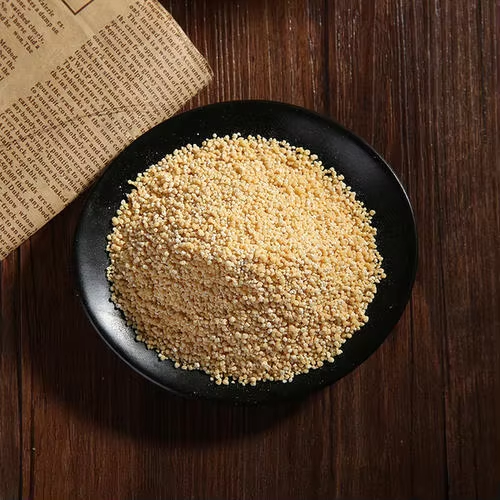
For factories operating in competitive production environments, choosing the right Soy lecithin supplier in Iraq is not simply a purchasing decision—it is a strategic investment in process efficiency, product consistency, and long-term profitability. Whether you manufacture chocolate, baked goods, pharmaceuticals, animal feed, or industrial formulations, lecithin directly affects viscosity, stability, and production yield. Companies that collaborate with experienced suppliers such as MT Royal often gain access to multiple international brands, stable supply chains, and technical support that can significantly improve operational outcomes across facilities in Iraq.
Many production managers only realize the importance of lecithin when something goes wrong: a chocolate batch becomes too thick, powder mixes fail to disperse, or emulsions separate during storage. In reality, lecithin sits quietly behind the scenes as one of the most influential functional ingredients in industrial manufacturing. This article provides a deep, practical, and technically grounded exploration of sourcing soy lecithin in Iraq, helping you make smarter procurement decisions while avoiding costly mistakes.
Understanding Soy Lecithin: Definition and Industrial Fundamentals
Soy lecithin is a natural mixture of phospholipids extracted from soybean oil during the degumming process. It is widely used as an emulsifier, dispersing agent, wetting agent, release agent, and viscosity modifier across numerous industries.
The key functional phospholipids in soy lecithin include:
- Phosphatidylcholine
- Phosphatidylethanolamine
- Phosphatidylinositol
- Phosphatidic acid
These compounds possess amphiphilic properties, meaning they interact with both water and fat molecules. This dual affinity makes lecithin essential for stabilizing emulsions and improving ingredient compatibility.
From an industrial perspective, lecithin is less about chemistry and more about control. It allows manufacturers to manipulate texture, flow behavior, and stability without expensive formulation changes.
Why Soy Lecithin Remains the Industry Standard
Despite the growth of sunflower lecithin and other alternatives, soy lecithin continues to dominate global markets due to:
- Cost efficiency
- High phospholipid concentration
- Consistent supply availability
- Established performance data
- Versatility across industries
- Scalability for large manufacturing volumes
For high-volume production environments, the economic advantage alone often justifies its continued preference.
Major Industrial Applications of Soy Lecithin
A reliable Soy lecithin supplier in Iraq typically supports multiple industrial sectors, each with specific technical demands.
Food and Beverage Manufacturing
Soy lecithin plays a critical role in:
- Chocolate viscosity reduction
- Bakery dough conditioning
- Instant beverage dispersion
- Margarine and spreads emulsification
- Dairy powder reconstitution
- Snack seasoning adhesion
Chocolate manufacturers, for example, use lecithin to reduce cocoa butter requirements, which can significantly lower raw material costs while maintaining desirable flow characteristics.
Pharmaceutical and Nutraceutical Industries
In pharmaceutical production, lecithin contributes to:
- Liposomal drug delivery systems
- Capsule lubrication
- Nutritional supplements
- Parenteral emulsions
- Softgel formulations
Its biocompatibility and functional versatility make it highly valuable in medical applications.
Animal Feed Industry
Feed manufacturers rely on lecithin to:
- Improve fat digestion in livestock
- Enhance pellet quality
- Increase energy absorption
- Reduce feed dust
- Improve nutrient bioavailability
This segment often represents substantial volume demand in emerging industrial markets.
Cosmetics and Personal Care
Soy lecithin is also widely used in:
- Skin creams and lotions
- Hair conditioners
- Lip balms
- Natural cosmetic formulations
Its moisturizing and emulsifying properties contribute to product stability and skin feel.
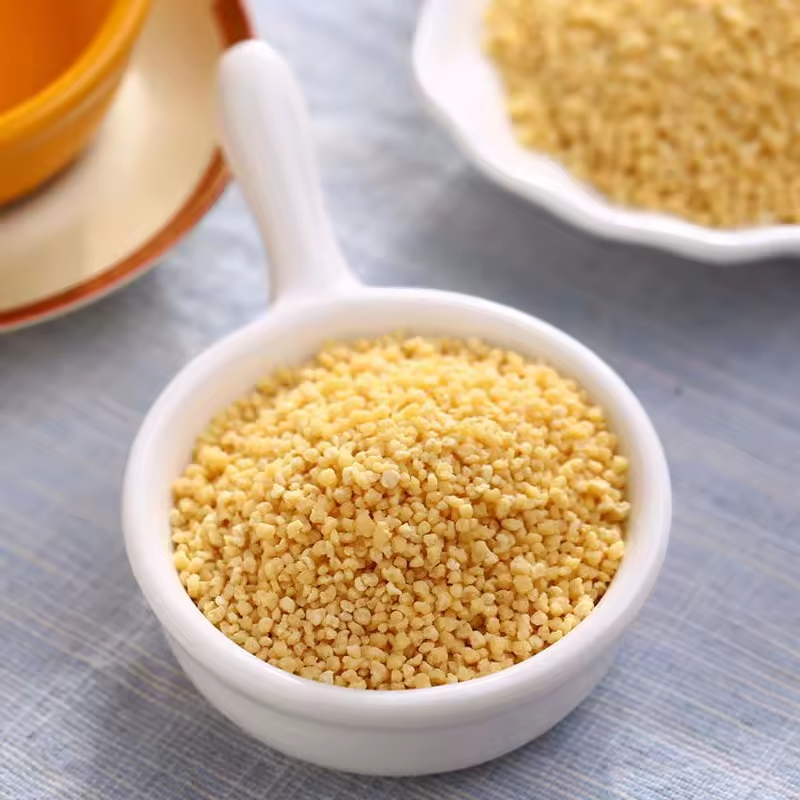
Key Factors When Choosing a Soy Lecithin Supplier in Iraq
Industrial procurement requires a multidimensional evaluation approach. The cheapest supplier is rarely the best choice when production risks are considered.
Product Specifications and Quality Consistency
Critical parameters include:
- Phospholipid content
- Acetone insoluble value
- Moisture percentage
- Viscosity range
- Peroxide value
- Acid value
- Insoluble impurities
Inconsistent quality can disrupt manufacturing processes, particularly in sensitive applications such as confectionery and pharmaceuticals.
Supply Chain Reliability and Logistics
Factories cannot afford raw material shortages. Supplier evaluation should include:
- Import experience into Iraq
- Inventory availability
- Lead time stability
- Packaging durability
- Documentation accuracy
- Customs clearance expertise
We have seen production lines stop entirely because of delayed emulsifier shipments—an expensive reminder that logistics reliability matters as much as product quality.
Technical Support and Industry Knowledge
Suppliers with technical expertise provide significant value by helping manufacturers:
- Optimize dosage levels
- Improve dispersion efficiency
- Solve emulsification challenges
- Reduce ingredient costs
- Enhance product texture
This consultative approach often creates long-term partnerships rather than transactional relationships.
Multiple Brand Access
Suppliers offering several global brands provide operational flexibility. If one manufacturer experiences supply disruptions, alternatives remain available without interrupting production.
Common Mistakes When Sourcing Soy Lecithin
Even experienced procurement teams sometimes overlook important details.
Focusing Only on Price per Kilogram
Lower pricing may indicate lower phospholipid concentration, requiring higher usage rates. The true cost per functional unit is what matters.
Ignoring Functional Testing
Specification sheets cannot replace plant trials. Processing conditions such as shear rate, temperature, and mixing sequence affect performance.
Poor Storage Practices
Soy lecithin is sensitive to:
- Oxygen exposure
- Heat
- Moisture
- Light
Improper storage can cause oxidation and loss of functionality.
Choosing Suppliers Without Regional Experience
Suppliers unfamiliar with Iraqi import requirements may cause delays, documentation errors, or regulatory complications.
Liquid vs Powdered Soy Lecithin: Practical Comparison for Manufacturers
Selecting the correct form depends on production requirements.
Liquid Lecithin Advantages:
- Higher phospholipid concentration
- Lower cost per functional performance
- Faster integration in fat-based systems
- Ideal for chocolate and margarine
Powdered Lecithin Advantages:
- Easier handling and dosing
- Better for dry mixes and instant powders
- Longer shelf life
- Reduced mess in production environments
Choosing the appropriate form can improve both operational efficiency and cost control.
Advanced Industrial Tips for Large-Scale Production
Optimize Mixing Sequence
Adding lecithin to the fat phase before emulsification often produces better results than late-stage addition.
Monitor Shear Conditions
Moderate shear improves dispersion, but excessive shear can degrade phospholipid structure.
Temperature Control Matters
High temperatures accelerate oxidation and reduce functionality. Controlled processing conditions improve performance.
Dosage Optimization Can Reduce Costs
Small percentage adjustments across large production volumes create significant annual savings.
In our experience working with industrial clients, we have observed cost reductions of up to 12–18 percent simply by optimizing lecithin dosage and mixing parameters.
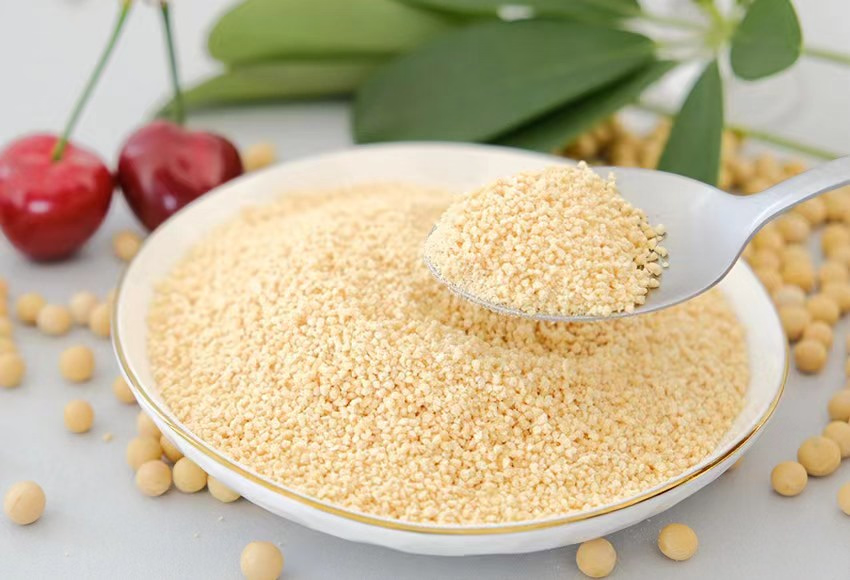
Market Trends Influencing Soy Lecithin Demand in Iraq
The Iraqi manufacturing sector is evolving rapidly, creating new opportunities and challenges for ingredient sourcing.
Key growth drivers include:
- Expansion of domestic food production
- Increased pharmaceutical manufacturing
- Growth of processed food consumption
- Industrial modernization initiatives
- Rising demand for functional ingredients
Manufacturers seeking export opportunities also rely on consistent ingredient quality to meet international standards.
Quality Assurance and Testing Protocols for Factories
Implementing structured quality control protects production stability.
Recommended tests include:
- Acetone insoluble measurement
- Moisture analysis
- Microbiological testing (for food use)
- Sensory evaluation
- Functional performance trials
Routine testing ensures compliance with specifications and reduces risk of production failures.
Sustainability and Regulatory Considerations
Modern manufacturers must consider regulatory and sustainability factors when selecting suppliers.
Important aspects include:
- GMO labeling requirements
- Food safety certifications
- Halal compliance where applicable
- Traceability documentation
- Environmental sourcing practices
Suppliers with transparent documentation reduce compliance risks for manufacturers.
Frequently Asked Questions from Factory Managers and Procurement Teams
What is the typical shelf life of soy lecithin?
Most products have a shelf life between 12 and 24 months when stored in cool, dry conditions away from light and oxygen.
Can soy lecithin reduce production costs?
Yes. By improving flow properties and emulsification efficiency, lecithin can reduce fat usage, improve yield, and decrease waste.
How much lecithin should be used?
Usage typically ranges from 0.1 percent to 1 percent depending on the application.
Does lecithin affect flavor?
High-quality lecithin has minimal flavor impact. Poor-quality material may introduce off-notes.
Is powdered lecithin better than liquid?
Neither is universally better. Selection depends on application requirements and production systems.
What industries use the largest volumes?
Food manufacturing and animal feed sectors usually represent the highest consumption volumes.
The Strategic Importance of Supplier Partnerships
Selecting a Soy lecithin supplier in Iraq should be viewed as a strategic partnership rather than a transactional purchase. Reliable suppliers contribute to:
- Stable production output
- Consistent product quality
- Reduced operational risk
- Technical problem-solving
- Cost optimization opportunities
We believe that long-term collaboration between manufacturers and knowledgeable suppliers creates measurable competitive advantages in industrial markets.
A Final Thought for Industrial Decision Makers
Factories operate like finely tuned machines where small components influence the entire system. Soy lecithin may represent a minor percentage of your formulation, yet its impact on efficiency, texture, stability, and profitability is substantial. Choosing the right supplier with reliable logistics, consistent quality, and technical expertise transforms lecithin from a simple additive into a powerful production tool.
Manufacturers who approach sourcing decisions strategically often discover that the right partnership eliminates recurring production challenges before they even appear. In competitive markets, that level of operational confidence is not just beneficial—it is essential.
LATAMARKO LM60 – Premium Spanish-Origin Cocoa Powder
latamarko alkalized cocoa powder lm60
cocoa powder for chocolate production-Best price
Food industry raw materials – list of products
Types of Gelatin from Turkish Manufacturer
Alkalized Cocoa Powder Price: Complete Buyer Guide for 2026



No comment