

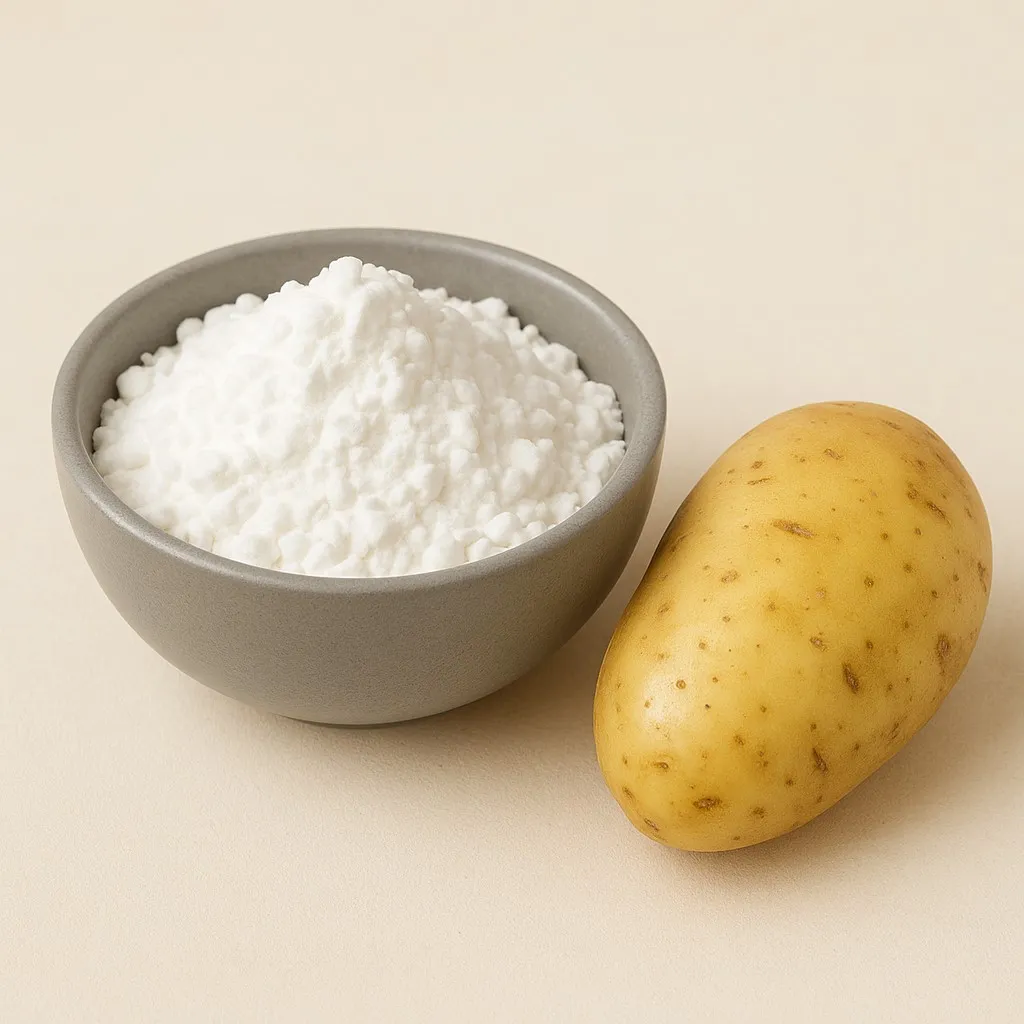
In large-scale food and industrial production, stability is not a luxury—it is a prerequisite. When texture fluctuates, when viscosity drifts from batch to batch, or when heat and shear break down your formulation, the root cause often traces back to a single, underestimated decision: the choice of Stabilizer Potato Starch Supplier.
Manufacturers who work with MT Royal typically reach us after facing these exact challenges. They are not looking for “just another starch.” They are looking for predictability, technical support, and a supplier who understands how potato starch behaves inside real production lines—not in theory, but under pressure, heat, and scale.
This article is written for factories, processors, and procurement managers who want more than surface-level information. It is designed to fully satisfy search intent around Stabilizer Potato Starch Supplier, while providing depth, insight, and practical value that goes beyond standard industry content.
Understanding Stabilizer Potato Starch: More Than a Thickener
Potato starch is often described simply as a thickening or binding agent, but in industrial reality, stabilizer-grade potato starch plays a far more complex role. Its molecular structure—characterized by large granules and a high amylopectin content—gives it exceptional water-binding capacity, clean viscosity development, and superior freeze–thaw stability compared to many other starches.
When sourced and processed correctly, potato starch acts as:
- A viscosity stabilizer under thermal processing
- A texture enhancer with a neutral sensory profile
- A yield improver through effective water retention
- A structural stabilizer in emulsified and gel-based systems
However, none of these benefits are guaranteed by default. They depend heavily on raw material origin, processing method, modification level (if any), and quality control consistency—all factors that are directly controlled by your stabilizer potato starch supplier.
Why the Supplier Matters More Than the Specification Sheet
Many procurement teams rely on technical data sheets to compare suppliers. Moisture percentage, viscosity range, pH, ash content—on paper, several suppliers may look identical. In practice, they rarely are.
We have seen factories struggle with production instability even though their incoming material “met spec.” The issue was not the starch itself, but the lack of process understanding and batch-to-batch control at the supplier level.
A professional Stabilizer Potato Starch Supplier does more than ship product. They ensure:
- Consistent botanical source and crop selection
- Controlled gelatinization behavior
- Stable viscosity development across production runs
- Reliable performance under shear, acid, and thermal stress
- Traceability and documentation suitable for industrial audits
Without these elements, even high-quality starch can become a liability instead of an asset.
Common Mistakes in Industrial Sourcing of Potato Starch
One of the most frequent errors manufacturers make is treating potato starch as a commodity rather than a functional ingredient. This mindset leads to several costly mistakes.
Prioritizing Price Over Performance
A lower price per ton may look attractive on a spreadsheet, but if that starch requires higher dosage, causes line slowdowns, or leads to inconsistent end-product quality, the real cost escalates quickly. Yield loss, rework, and customer complaints are far more expensive than a marginal difference in raw material price.
Ignoring Application-Specific Requirements
Not all stabilizer potato starches behave the same way in sauces, dairy analogs, processed meats, or bakery fillings. A supplier who cannot discuss your specific application in detail is unlikely to deliver optimal performance.
Overlooking Supply Chain Reliability
Production planning depends on predictability. Delayed shipments, inconsistent packaging, or sudden formulation changes at the supplier level can disrupt your entire operation. A dependable stabilizer potato starch supplier understands industrial timelines and plans accordingly.
Potato Starch vs. Other Stabilizers: A Practical Comparison
From a formulation standpoint, potato starch often competes with corn starch, tapioca starch, and various hydrocolloids. Each has its place, but potato starch offers unique advantages when stability and clean texture are critical.
Compared to corn starch, potato starch generally provides higher peak viscosity and a cleaner mouthfeel. Against tapioca starch, it often shows better performance in high-temperature processing and stronger water-binding capacity. Unlike some hydrocolloids, potato starch integrates easily into existing formulations without requiring extensive reformulation.
For manufacturers aiming to balance performance, cost-in-use, and processing simplicity, working with a knowledgeable Stabilizer Potato Starch Supplier can unlock these advantages without unnecessary complexity.
Industrial Performance Under Real Processing Conditions
Laboratory tests are useful, but real value emerges on the production floor. In continuous processing systems, potato starch must withstand:
- High shear mixing
- Rapid heating and cooling cycles
- pH variations
- Mechanical stress during pumping and filling
We have observed that starches sourced from suppliers with limited industrial focus often fail under these conditions, even if they perform well in bench tests. In contrast, suppliers like MT Royal work closely with manufacturers to match starch characteristics to actual processing parameters.
In multiple factory collaborations, we have seen how the right stabilizer potato starch reduced viscosity drift, improved batch uniformity, and allowed for tighter process control—results that directly impact profitability.
Key Criteria for Evaluating a Stabilizer Potato Starch Supplier
If your factory is reassessing its sourcing strategy, consider evaluating suppliers against the following criteria:
Technical Expertise
Can the supplier discuss gelatinization curves, shear stability, and interaction with proteins or fats? Or do they rely solely on generic documentation?
Consistency and Traceability
Is each batch traceable? Are crop variations managed proactively? Consistency is not accidental—it is engineered.
Application Support
A strong supplier understands that no two production lines are identical. Application-level guidance is a sign of true partnership.
Multi-Brand Access and Competitive Pricing
A supplier who can source from multiple producers offers flexibility and pricing leverage without compromising quality. This is where MT Royal’s sourcing model provides tangible value.
Trends Shaping the Global Potato Starch Market
The demand for stabilizer potato starch continues to grow, driven by clean-label trends, plant-based product development, and the need for efficient texturizing solutions. At the same time, raw material volatility and regional crop fluctuations are putting pressure on supply chains.
Forward-thinking manufacturers are responding by strengthening relationships with reliable suppliers rather than chasing spot-market deals. A strategic Stabilizer Potato Starch Supplier becomes a buffer against market instability, helping factories maintain continuity even when conditions fluctuate.
Frequently Asked Questions from Procurement and Production Managers
Is native potato starch sufficient, or should we consider modified grades?
This depends entirely on your application. Native starch works well in many systems, but modified variants can offer improved stability under extreme conditions.
How does potato starch affect freeze–thaw stability?
High-quality potato starch typically performs well in freeze–thaw cycles, especially when sourced from controlled production processes.
Can switching suppliers really impact yield?
Absolutely. Water-binding efficiency and dosage optimization directly influence yield and cost-in-use.
What documentation should we expect from a professional supplier?
Specifications, COA, traceability data, and compliance documents suitable for audits and regulatory requirements.
MT Royal’s Role as a Trusted Stabilizer Potato Starch Supplier
MT Royal is not positioned as a brand pushing a single product. Instead, we operate as a sourcing and consulting partner for manufacturers who value performance and transparency. By working with multiple reputable producers, we provide factories with access to stabilizer potato starch options that align with their technical and commercial goals.
We have seen firsthand how the right supplier relationship transforms production stability. We have worked with factories that reduced formulation complexity simply by switching to a more consistent starch source. And we continue to support manufacturers who view ingredients not as costs, but as strategic tools.
When Stability Becomes a Competitive Advantage
In industrial manufacturing, consistency builds reputation. Customers may never know which stabilizer you use, but they will notice when texture changes, when quality slips, or when delivery schedules fail. Choosing the right Stabilizer Potato Starch Supplier is one of those behind-the-scenes decisions that quietly shapes your brand’s reliability.
If your factory is scaling, diversifying its product range, or simply aiming for tighter control, it may be time to look beyond specifications and rethink how you source one of your most critical functional ingredients.
Because in the end, stability is not just a formulation outcome—it is a supply chain decision.



No comment