

In the competitive landscape of modern manufacturing, the choice of stabilizers can make or break the consistency, texture, and overall quality of your products. Sodium alginate E401 has emerged as one of the most versatile and reliable hydrocolloids in industrial applications. Selecting a Stabilizer Sodium Alginate E401 Bulk supplier is not merely a transaction; it is a strategic decision that impacts production efficiency, formulation stability, and ultimately the success of your end products.
Factories seeking high-quality sodium alginate often partner with experienced distributors such as MT Royal, which offer multiple brands, competitive pricing, and technical guidance. In industrial operations where consistency and reliability are critical, such partnerships are invaluable. Whether your facility manufactures beverages, dairy alternatives, confectionery, or pharmaceutical formulations, understanding the technical, functional, and operational aspects of sodium alginate is essential to achieving optimal results.
This guide explores sodium alginate’s properties, industrial applications, sourcing strategies, processing insights, and emerging trends, providing actionable expertise for procurement managers, production engineers, and R&D teams.
Understanding Sodium Alginate E401: Chemistry and Industrial Significance
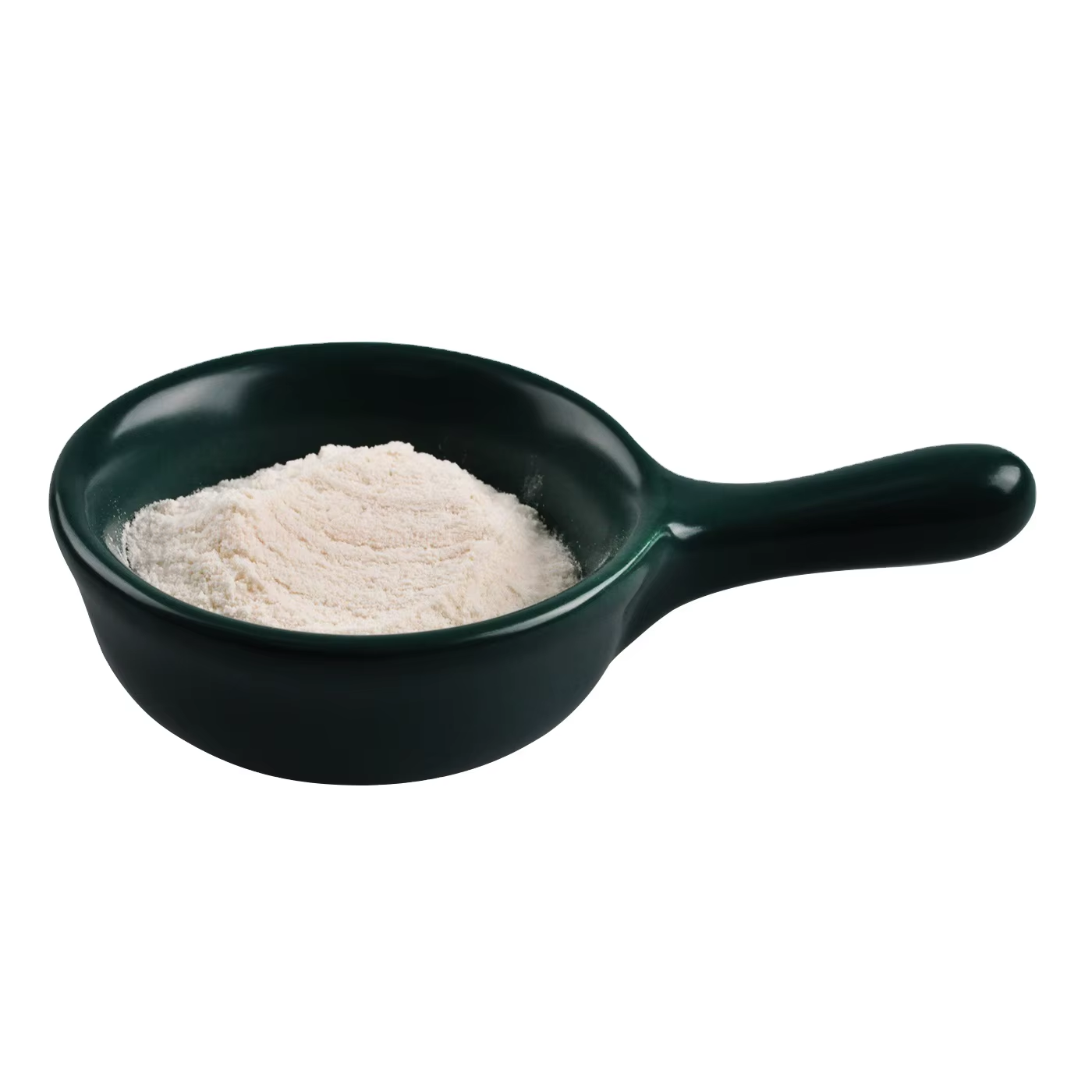
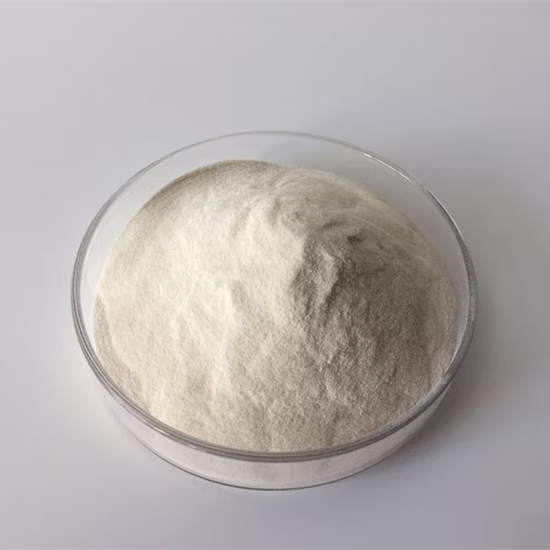
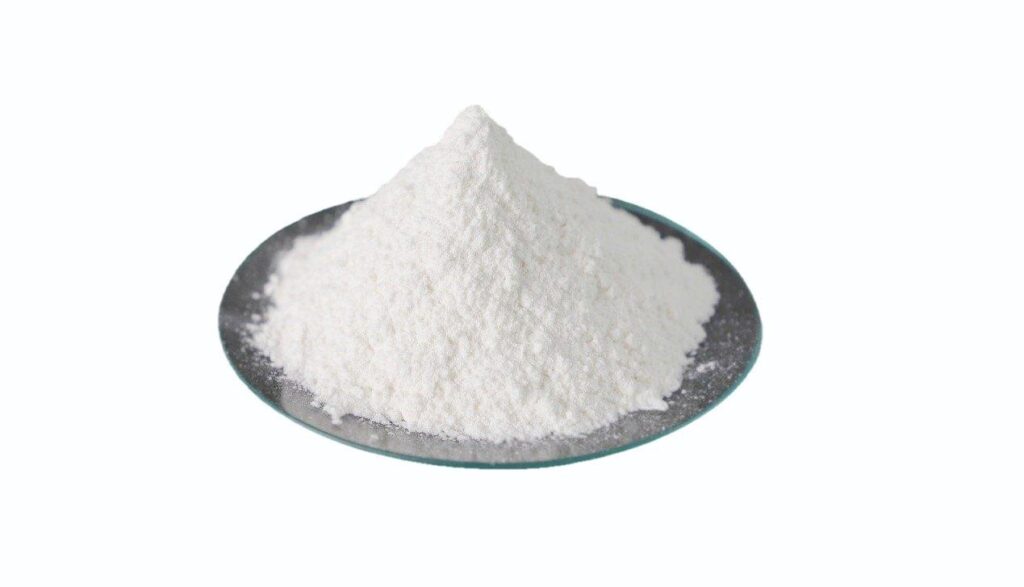
Sodium alginate, designated as E401 in the food additive code system, is a natural polysaccharide extracted primarily from brown seaweed. Chemically, it is the sodium salt of alginic acid and consists of linear chains of mannuronic acid (M) and guluronic acid (G) units. This structure allows sodium alginate to form stable gels in the presence of divalent cations such as calcium, giving it its renowned thickening, gelling, and stabilizing properties.
Key Functional Properties
- High water-binding capacity: Sodium alginate can retain several times its weight in water, which stabilizes viscosity and prevents syneresis in sauces, gels, and beverages.
- Gel formation: Its ability to form elastic gels with calcium ions makes it invaluable for structured foods and encapsulation technologies.
- Viscosity control: Different grades allow manufacturers to fine-tune flow and mouthfeel, from thin beverages to thick sauces.
- Thermal and pH stability: It withstands pasteurization, UHT processing, and a broad range of pH conditions, supporting large-scale industrial operations.
- Emulsion stabilization: Sodium alginate helps maintain uniform dispersion of oil droplets in beverages, dairy alternatives, and dressings.
A high-quality Stabilizer Sodium Alginate E401 Bulk supplier provides detailed specifications for viscosity, gel strength, and molecular weight, enabling precise formulation and process control.
Industrial Advantages of Sodium Alginate in Manufacturing
Sodium alginate offers several operational benefits that make it a preferred stabilizer in industrial applications:
- Efficiency at low dosages: Achieves functional performance at minimal concentrations, reducing ingredient costs.
- Process resilience: Performs consistently under heating, cooling, and mechanical processing.
- Extended shelf life: Stabilizes water distribution and prevents phase separation, ensuring product quality over time.
- Versatility: Compatible with other hydrocolloids and functional ingredients, allowing tailored textures and formulations.
- Consumer appeal: Derived from natural sources, it supports clean-label initiatives in functional foods and beverages.
In our collaboration with various factories, we have seen that using reliable sodium alginate in bulk improves batch-to-batch consistency, reduces downtime, and minimizes formulation adjustments during scale-up.
Common Industrial Applications
Sodium alginate’s functionality spans multiple industries, each with unique requirements:
Beverages
Used in fiber-enriched drinks, fruit juices, and protein beverages, sodium alginate stabilizes suspended solids, prevents sedimentation, and maintains drinkable viscosity without altering taste. Its solubility and neutral flavor make it ideal for high-quality liquid products.
Dairy and Plant-Based Alternatives
In milk, yogurt, and plant-based systems, sodium alginate enhances creaminess, prevents whey separation, and improves protein dispersion. It allows for smooth textures and consistent mouthfeel, critical in high-volume production.
Confectionery
In jellies, gummies, and other gelled products, sodium alginate creates elastic, thermally stable gels. Its interaction with calcium ions enables controlled gelation, high clarity, and precise firmness.
Sauces, Dressings, and Culinary Products
Sodium alginate helps maintain viscosity, stabilize emulsions, and provide freeze-thaw stability in sauces, gravies, and ready-to-eat meals. Its functionality reduces phase separation, enhancing visual appeal and consistency.
Pharmaceutical and Nutraceutical Systems
Sodium alginate is used in controlled-release tablets, oral suspensions, and fiber supplements. Its gel-forming ability supports dosage accuracy, release modulation, and improved handling characteristics.
Common Sourcing Mistakes and How to Avoid Them
Selecting a Stabilizer Sodium Alginate E401 Bulk supplier requires careful evaluation. Industrial mistakes include:
- Prioritizing price over quality: Low-cost options may compromise molecular consistency, viscosity, or gel strength.
- Neglecting batch-to-batch uniformity: Variations in molecular weight or calcium sensitivity can disrupt production.
- Skipping pilot-scale trials: Each formulation behaves differently; testing prevents costly production failures.
- Overlooking storage and logistics: Improper handling can increase moisture content, reduce flowability, and impair stability.
- Ignoring technical support: Suppliers with poor documentation or no formulation guidance can create operational risks.
We have seen factories achieve significant cost and efficiency improvements simply by sourcing from reputable suppliers offering technical support and certified product quality.
Technical Evaluation Criteria
When evaluating a Stabilizer Sodium Alginate E401 Bulk supplier, consider these parameters:
- Viscosity grade: Determines flow, texture, and mixing behavior.
- Gel strength and calcium sensitivity: Essential for controlled gelling and structural consistency.
- Hydration rate and solubility: Faster dissolution reduces mixing time and energy usage.
- Molecular weight distribution: Influences viscosity, gelation, and emulsion stabilization.
- Particle size and flowability: Ensures smooth handling and reduces dust generation.
- Microbiological stability: Critical for regulatory compliance and shelf life assurance.
Factories analyzing these factors achieve more predictable outcomes and reduce variability in high-volume production environments.
Industrial Processing Tips
Even premium sodium alginate requires proper handling to maximize performance:
- Pre-blending: Mix with dry ingredients to prevent lump formation during hydration.
- Temperature control: Moderate heating accelerates hydration; excessive shear should be avoided to preserve gel integrity.
- Cation management: Calcium levels must be controlled to ensure consistent gel formation.
- Sequential ingredient addition: Adding oils or flavors after alginate hydration improves emulsion stability.
- Storage conditions: Keep in dry, sealed containers to preserve flow properties and shelf life.
Our experience shows that these operational optimizations often yield greater improvements than changing suppliers alone.
Emerging Trends in Industrial Sodium Alginate Use
- Clean-label and plant-based products: Consumer demand for natural ingredients continues to rise.
- Functional foods and nutraceuticals: Sodium alginate contributes soluble fiber and texture control.
- Sugar reduction initiatives: Supports texture maintenance in low-sugar or reduced-calorie formulations.
- Global market expansion: Growing applications in pharmaceuticals, beverages, and confectionery drive demand.
Analysts project a 4–6% annual growth in the hydrocolloid market, with sodium alginate among the fastest-growing segments due to its versatility and natural origin.
Advantages of Working with Multi-Brand Bulk Suppliers
Partnering with suppliers that provide multiple brands offers several operational and strategic advantages:
- Pricing flexibility: Different grades allow cost optimization.
- Supply continuity: Alternative sources reduce production interruptions.
- Formulation customization: Allows selection of grades for specific product types.
- Technical support: Experts guide dosage, hydration, and compatibility.
MT Royal supports manufacturers with diverse product lines and guidance, ensuring operational reliability and strategic flexibility.
Frequently Asked Questions
- What is the typical dosage range?
0.2%–1.0% for beverages; higher for gels or confectionery. - Is sodium alginate suitable for acidic products?
Yes, it tolerates a wide pH range. - Can it replace other hydrocolloids?
Often yes, especially in gelling and emulsion applications. - Shelf life?
Generally 24 months under dry storage conditions. - Heat stability?
Yes, suitable for pasteurization and UHT processes.
Strategic Value of Choosing the Right Supplier
Stabilizers represent a small fraction of ingredient costs but a significant influence on quality, stability, and process efficiency. Selecting a knowledgeable Stabilizer Sodium Alginate E401 Bulk supplier transforms routine procurement into a strategic advantage.
Factories prioritizing technical compatibility, reliable supply, and long-term partnership value often experience reduced batch variability, cost efficiency, and improved competitiveness. The right supplier is more than a vendor—they are a key contributor to operational reliability and formulation innovation.
We have consistently observed that manufacturers leveraging trusted suppliers like MT Royal not only stabilize their production processes but also gain flexibility to innovate and scale efficiently, turning a single ingredient choice into a long-term strategic benefit.
LATAMARKO LM60 – Premium Spanish-Origin Cocoa Powder
latamarko alkalized cocoa powder lm60
cocoa powder for chocolate production-Best price
Food industry raw materials – list of products
Types of Gelatin from Turkish Manufacturer
Alkalized Cocoa Powder Price: Complete Buyer Guide for 2026



No comment