

In industrial production, few ingredients appear as simple as starch—yet few have such a profound impact on texture, stability, processing efficiency, and ultimately profitability. Stabilizer Tapioca Starch Wholesale is one of those ingredients that rarely gets the spotlight, but quietly determines whether a production line runs smoothly or becomes a daily troubleshooting exercise.
For manufacturers producing sauces, dairy products, ready meals, frozen foods, beverages, meat analogues, or processed foods at scale, tapioca starch is no longer just a thickener. It is a functional stabilizer, a texture architect, and a cost-management tool. When sourced and applied correctly, it delivers clean flavor, excellent process tolerance, and consistent results across large production volumes.
At MT Royal, through ongoing cooperation with factories in different sectors, we have seen how wholesale access to the right stabilizer tapioca starch transforms production predictability. This article is designed to answer every serious question you may have—from technical fundamentals and sourcing mistakes to industrial-scale optimization—so your purchasing and formulation decisions are based on clarity, not assumptions.
What Is Stabilizer Tapioca Starch?
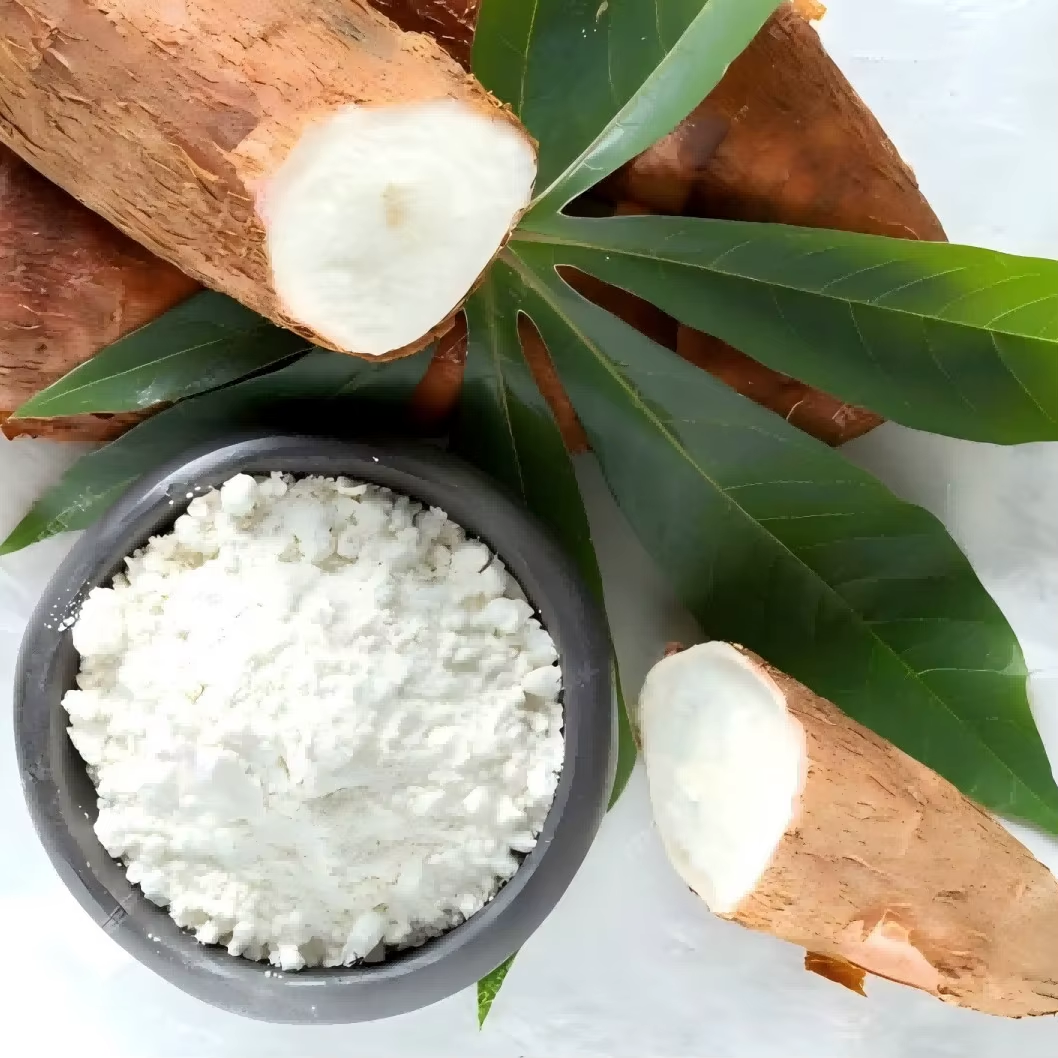
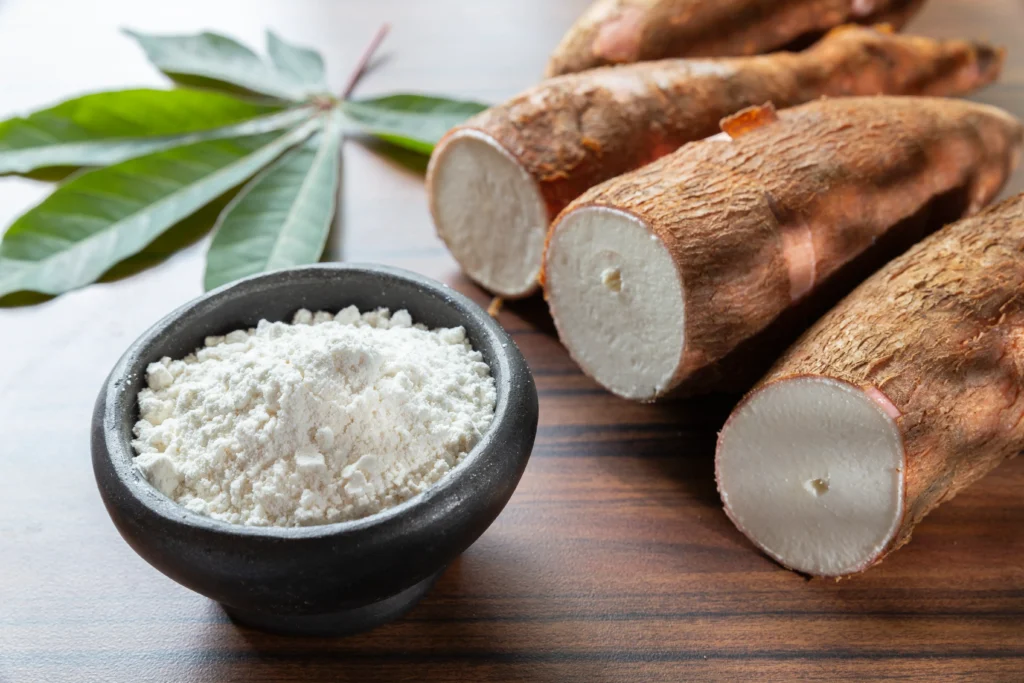
Tapioca starch is extracted from the cassava root and is known for its neutral taste, high purity, and smooth texture profile. When used as a stabilizer, tapioca starch plays a broader role than basic thickening. It contributes to:
- Viscosity control
- Texture uniformity
- Water binding
- Freeze–thaw stability
- Reduction of syneresis
- Improved mouthfeel
In wholesale industrial applications, stabilizer tapioca starch is often native, modified, or pre-gelatinized, depending on the performance required. Its clean sensory profile makes it particularly valuable in formulations where flavor clarity matters.
Why Tapioca Starch Has Gained Industrial Preference
Over the past decade, tapioca starch has steadily replaced other starch sources in many formulations. This shift is driven by both technical and commercial realities.
Neutral Flavor and Clean Texture
Unlike some cereal-based starches, tapioca starch does not introduce grainy notes or aftertaste. This makes it ideal for delicate products such as dairy desserts, sauces, and beverages.
Excellent Freeze–Thaw Stability
Tapioca starch performs exceptionally well in frozen and chilled products, maintaining structure after repeated freeze–thaw cycles.
High Clarity and Smoothness
In sauces, fruit preparations, and fillings, tapioca starch provides a glossy, smooth appearance that consumers associate with quality.
Supply Scalability
Cassava-based starch production has expanded significantly in Southeast Asia and South America, supporting reliable wholesale supply for industrial buyers.
Stabilizer Tapioca Starch Wholesale vs Other Starch Sources
Manufacturers often compare tapioca starch with corn, potato, or wheat starch. Each has its place, but the differences matter at scale.
Tapioca vs Corn Starch
Corn starch is cost-effective but less stable under acidic or freeze–thaw conditions. Tapioca starch offers better clarity and elasticity, particularly in sauces and frozen foods.
Tapioca vs Potato Starch
Potato starch provides high viscosity but can be sensitive to shear. Tapioca starch offers more balanced performance in high-speed production lines.
Tapioca vs Wheat Starch
Wheat starch introduces allergen and gluten considerations. Tapioca starch avoids these concerns and simplifies labeling in many markets.
For manufacturers prioritizing stability and versatility, tapioca starch often becomes the preferred backbone stabilizer.
Key Applications of Stabilizer Tapioca Starch in Industry
Sauces and Dressings
Tapioca starch provides consistent viscosity, resistance to phase separation, and a clean mouthfeel even after thermal processing.
Dairy and Dairy Alternatives
In yogurts, creams, and plant-based alternatives, tapioca starch helps maintain structure without masking flavor.
Frozen and Ready Meals
Its freeze–thaw resilience prevents water release and texture breakdown during long storage.
Processed Meats and Meat Analogues
Tapioca starch improves binding, juiciness, and slice integrity without dominating the formulation.
Bakery Fillings and Desserts
Clarity, gloss, and smooth texture make it ideal for fruit fillings and custards.
Industrial Benefits of Buying Tapioca Starch Wholesale
Purchasing stabilizer tapioca starch wholesale is not just about unit price—it is about operational efficiency.
Consistent Batch Performance
Wholesale supply ensures uniform quality across production cycles, reducing variability.
Cost Optimization
Bulk sourcing lowers per-unit cost and simplifies inventory planning.
Formulation Stability
Once validated, wholesale-grade starch reduces the need for frequent reformulation.
Production Efficiency
Predictable hydration and viscosity behavior improve line speed and filling accuracy.
We have seen factories significantly reduce rework simply by standardizing their starch supply.
Common Mistakes in Wholesale Tapioca Starch Sourcing
Despite its importance, tapioca starch is often treated as a commodity. This leads to avoidable issues.
Choosing Based on Price Alone
Low-cost starches may vary in moisture, granule size, or gelatinization behavior.
Ignoring Application-Specific Performance
Not all tapioca starches perform equally in acidic, high-shear, or frozen systems.
Overlooking Supplier Transparency
Inconsistent documentation or unclear origin creates long-term supply risks.
At MT Royal, we have learned that reliable performance starts with supplier accountability, not just specifications.
Modified vs Native Tapioca Starch in Stabilizer Systems
Native Tapioca Starch
Suitable for simple systems with mild processing conditions. Offers clean texture but limited tolerance.
Modified Tapioca Starch
Designed for demanding environments involving heat, shear, acidity, or freeze–thaw cycles. Often essential in industrial-scale production.
Selecting between native and modified versions depends entirely on your process, not on ingredient trends.
Industrial-Scale Production Considerations
When using stabilizer tapioca starch at scale, small variables matter.
Hydration Control
Incorrect dispersion can cause lumping or uneven viscosity.
Shear Exposure
High-speed mixers and pumps require starches with sufficient shear resistance.
Thermal Processing
Gelatinization temperature must align with your heating profile.
Storage Conditions
Humidity and temperature affect starch stability and flowability.
Factories that address these factors upfront avoid costly production interruptions later.
Supply Chain Trends Affecting Tapioca Starch Wholesale
Global tapioca starch supply is influenced by:
- Cassava harvest variability
- Export regulations in producing countries
- Freight cost fluctuations
- Growing demand from clean-label and plant-based markets
Manufacturers with diversified sourcing partners are better positioned to manage these risks.
Frequently Asked Questions from Procurement and Production Teams
Is tapioca starch suitable for clean-label products?
In many markets, yes, especially native or minimally modified grades.
Can tapioca starch replace gums entirely?
In some formulations, it can significantly reduce gum usage, though full replacement depends on texture targets.
Does tapioca starch affect flavor release?
High-quality grades are neutral and support clean flavor perception.
How stable is wholesale starch across batches?
Stability depends on supplier controls and quality management.
Why Reliable Wholesale Supply Matters More Than Ever
Inconsistent starch supply leads to formulation drift, production delays, and increased QA costs. Choosing a wholesale partner with technical understanding simplifies long-term planning.
At MT Royal, we work with multiple international producers and brands, allowing manufacturers to source stabilizer tapioca starch that aligns with their exact processing and performance needs. We have seen how the right sourcing strategy quietly improves operational stability across entire production lines.
Tapioca Starch as a Strategic Ingredient, Not a Commodity
Treating stabilizer tapioca starch as a strategic ingredient changes how decisions are made. Instead of reacting to problems, manufacturers build systems that prevent them. Texture remains consistent. Waste decreases. Production becomes predictable.
In an environment where margins are tight and expectations are high, Stabilizer Tapioca Starch Wholesale is not just an ingredient choice—it is a strategic decision that supports efficiency, quality, and long-term competitiveness.


No comment