

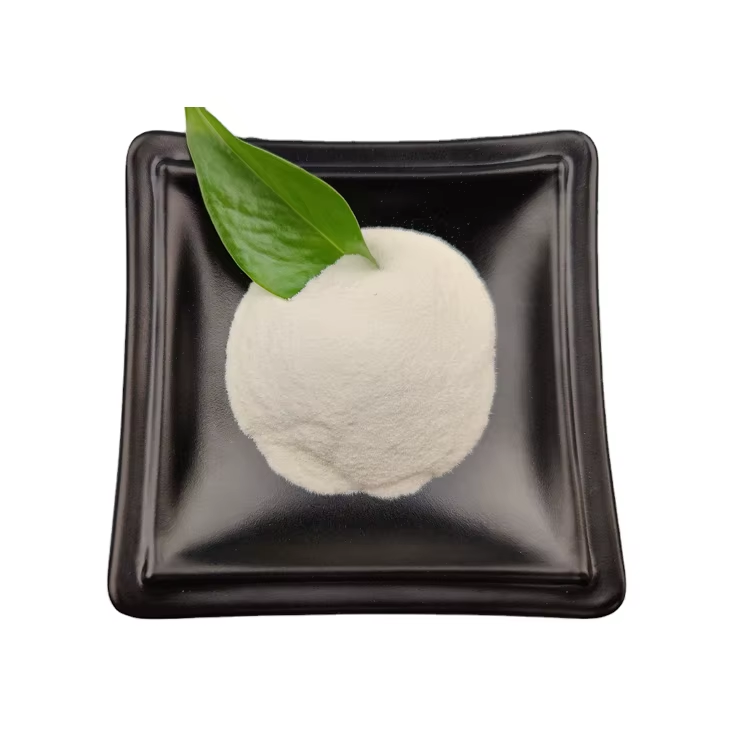
If your production line depends on texture stability, viscosity control, and consistent product performance, choosing the right Stabilizer Xanthan Gum E415 Supplier is not just a procurement task — it is a strategic operational decision. Manufacturers across food, beverage, pharmaceutical, and personal care sectors rely on xanthan gum daily, yet many underestimate how dramatically supplier quality can influence processing efficiency, product shelf life, and final consumer perception.
Factories that partner with experienced suppliers such as MT Royal often discover that sourcing stability is as important as formulation stability. A reliable supplier does more than ship bags of powder; they provide technical consistency, documentation accuracy, and supply chain predictability — all of which translate directly into fewer production interruptions and stronger margins.
Understanding how to evaluate suppliers, identify quality indicators, and optimize industrial usage can help you transform xanthan gum from a commodity ingredient into a competitive advantage.
Understanding Xanthan Gum E415: Functional and Industrial Fundamentals
Xanthan gum (E415) is a high-molecular-weight polysaccharide produced through fermentation, typically using the bacterium Xanthomonas campestris. It is widely recognized as one of the most versatile hydrocolloids in industrial formulation due to its exceptional rheological properties.
From a functional standpoint, xanthan gum delivers several key characteristics:
• High viscosity at low concentrations
• Excellent shear-thinning behavior
• Stability across wide temperature and pH ranges
• Suspension capability for particles and emulsions
• Freeze-thaw stability
• Compatibility with salts and enzymes
These features explain why food stabilizers suppliers consistently see strong global demand for E415 across multiple sectors.
Why Manufacturers Prefer Xanthan Gum Over Alternative Stabilizers
While there are many hydrocolloids available — including guar gum, carrageenan, locust bean gum, and modified starches — xanthan gum offers a unique combination of process tolerance and reliability.
For example:
• It maintains viscosity in acidic beverages where starches may fail.
• It performs well in high-salt sauces where other gums collapse.
• It provides stable suspension in dairy drinks and plant-based beverages.
• It prevents phase separation in dressings and emulsions.
This level of versatility reduces formulation complexity and inventory costs, which is why many procurement managers prioritize securing a dependable Stabilizer Xanthan Gum E415 Supplier rather than switching between multiple alternatives.
Industrial Applications Across Key Sectors
Food and Beverage Manufacturing
The food industry represents the largest consumer of xanthan gum globally. Applications include:
• Sauces and dressings
• Dairy products and yogurt
• Ice cream and frozen desserts
• Gluten-free bakery products
• Beverage stabilization
• Meat processing
• Instant soups and seasonings
In our collaboration with various factories, we have seen that even minor variations in xanthan gum particle size distribution can significantly impact hydration speed and viscosity development, affecting production timing and mixing energy consumption.
Pharmaceutical and Nutraceutical Applications
Pharmaceutical-grade xanthan gum is used as a binder, suspending agent, and controlled-release matrix component. The ability to maintain stable viscosity over time makes it suitable for syrups and oral suspensions.
Personal Care and Cosmetic Manufacturing
Cosmetic formulators use xanthan gum for:
• Cream stabilization
• Gel formation
• Emulsion thickening
• Suspension of active particles
Consistency between batches is particularly critical in this sector, reinforcing the importance of supplier reliability.
Oil and Gas and Industrial Uses
Beyond food applications, xanthan gum plays a role in drilling fluids, coatings, and industrial suspensions. Here, rheological precision becomes even more critical due to operational safety implications.
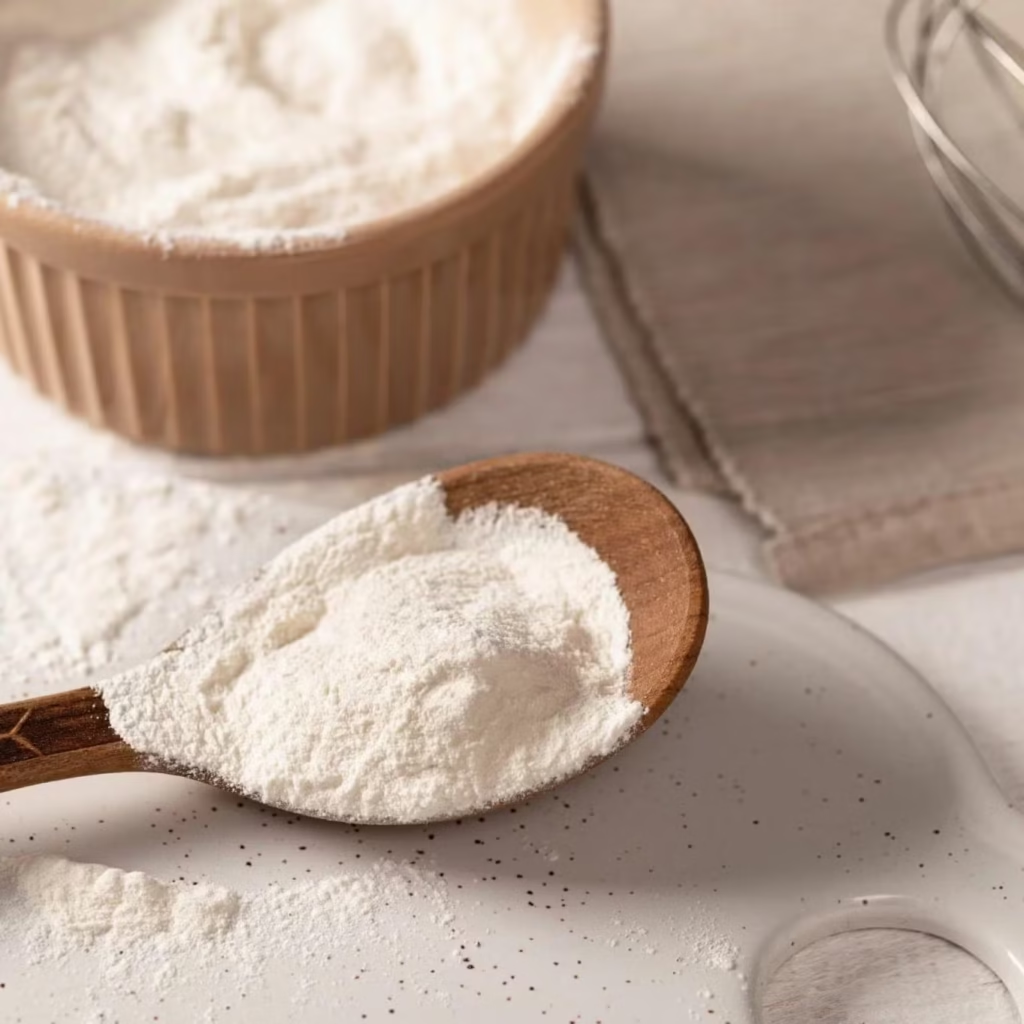
Key Quality Parameters When Choosing a Stabilizer Xanthan Gum E415 Supplier
Not all xanthan gum is created equal. Industrial buyers should evaluate multiple technical factors before committing to a supplier.
Viscosity Profile and Rheology
Viscosity performance under defined shear conditions determines processing behavior. Suppliers should provide detailed rheological curves rather than only single-point viscosity values.
Particle Size and Hydration Speed
Fine particle grades hydrate quickly but may form clumps without proper dispersion systems. Coarser grades hydrate slower but improve handling in large-scale mixing.
Choosing the right grade depends on your equipment configuration.
Microbiological Specifications
Food safety standards require strict microbial limits. Reliable suppliers provide Certificates of Analysis (COA) for each batch with clear microbiological data.
Purity and Ash Content
Impurities can affect color, taste, and functional performance. High ash levels may indicate inconsistent fermentation or purification processes.
pH Stability and Salt Tolerance
Industrial formulations often involve extreme conditions. Suppliers should demonstrate stability data across relevant pH and ionic environments.
Regulatory Compliance and Certifications
Important certifications include:
• ISO standards
• HACCP compliance
• Halal and Kosher certification
• Non-GMO verification
• Food safety system certification (FSSC 22000)
A trustworthy Stabilizer Xanthan Gum E415 Supplier maintains updated documentation ready for audits.
Common Mistakes Manufacturers Make When Sourcing Xanthan Gum
Even experienced procurement teams sometimes fall into avoidable traps.
Choosing Based Only on Price
Lower prices often mask hidden costs such as:
• Higher usage rates due to weaker viscosity
• Processing delays from hydration issues
• Increased quality complaints
• Production downtime
A slightly higher-priced but higher-performance product may reduce overall cost per unit output.
Ignoring Batch-to-Batch Consistency
Factories require predictable behavior. Variability forces operators to adjust recipes and processing parameters, increasing risk.
Overlooking Technical Support
Suppliers who provide formulation advice and troubleshooting assistance create long-term operational value.
We have observed that manufacturers who engage suppliers early during product development reduce scale-up challenges significantly.
Failing to Validate Supply Chain Stability
Global disruptions, logistics delays, and geopolitical factors can impact ingredient availability. A supplier with diversified sourcing and inventory planning reduces risk.
Comparing Xanthan Gum with Other Hydrocolloids in Industrial Formulations
When evaluating stabilizer systems, manufacturers often compare xanthan gum with alternatives.
Xanthan Gum vs Guar Gum:
• Xanthan provides better temperature stability
• Guar offers higher viscosity in neutral systems
• Xanthan tolerates shear better during processing
Xanthan Gum vs Modified Starch:
• Xanthan performs better in acidic conditions
• Starches provide bulk and mouthfeel
• Xanthan requires lower dosage levels
Xanthan Gum vs Carrageenan:
• Carrageenan forms gels with proteins
• Xanthan provides viscosity without gel rigidity
• Xanthan remains stable in freeze-thaw cycles
Understanding these differences helps you optimize formulations rather than relying on trial and error.
Specialized Industrial Tips for Large-Scale Production
Proper Dispersion Techniques
One of the biggest operational challenges with xanthan gum is clumping during hydration.
Best practices include:
• Pre-blending with dry ingredients
• Using high-shear mixers
• Gradual powder addition under agitation
• Oil dispersion methods for certain systems
Temperature Management During Hydration
Xanthan gum hydrates effectively in both hot and cold systems, but temperature affects hydration speed. Moderate heating can accelerate dispersion without damaging structure.
Order of Ingredient Addition
Adding xanthan gum before salt or sugar often improves hydration efficiency.
Storage Conditions
Humidity exposure can cause lump formation and reduced functionality. Industrial storage should maintain controlled temperature and moisture levels.
Dosage Optimization
Typical usage ranges:
• Sauces: 0.2–0.5%
• Beverages: 0.05–0.15%
• Bakery: 0.3–1%
• Dairy: 0.1–0.4%
Optimizing dosage reduces cost while maintaining performance.
Emerging Trends in Xanthan Gum Supply and Demand
The global hydrocolloids market continues to expand due to several macro trends:
Growth of Plant-Based Foods
Plant-based dairy and meat alternatives rely heavily on stabilizers to mimic traditional textures. Xanthan gum plays a critical role in these formulations.
Clean Label Movement
Consumers increasingly prefer recognizable ingredients. Xanthan gum, derived from fermentation, fits clean-label positioning better than many synthetic stabilizers.
Convenience and Ready-to-Eat Products
Processed food demand continues to rise globally, increasing stabilizer consumption.
Regional Manufacturing Expansion
Developing markets are building local production facilities, increasing demand for reliable suppliers capable of consistent exports.
Sustainability and Fermentation Innovation
Biotechnology improvements are enhancing production efficiency, reducing environmental impact and cost.
How to Evaluate a Reliable Stabilizer Xanthan Gum E415 Supplier
A strategic evaluation framework includes:
Technical capability
Documentation transparency
Production capacity
Logistics reliability
Quality control systems
Customer support responsiveness
Suppliers offering multiple grades and brands provide flexibility for manufacturers facing changing formulation requirements.
Companies like MT Royal often act as sourcing partners rather than simple distributors, connecting manufacturers with suitable grades based on application needs.
Frequently Asked Questions from Factory Managers
How do I know if my xanthan gum quality is inconsistent?
Signs include:
• Changes in viscosity at the same dosage
• Longer hydration times
• Texture variation between batches
• Increased sedimentation or phase separation
Regular rheological testing can confirm issues.
Can xanthan gum replace multiple stabilizers?
In many cases, yes. Xanthan gum’s multifunctional properties allow formulation simplification, reducing inventory complexity.
What is the typical shelf life?
Most industrial xanthan gum has a shelf life of 24–36 months when stored properly.
Does particle size affect performance?
Absolutely. Particle size influences hydration rate, mixing behavior, and final viscosity development.
Is higher viscosity always better?
Not necessarily. The optimal grade depends on your process and desired texture. Over-viscosity can create pumping challenges.
The Strategic Value of Supplier Partnerships
Procurement decisions influence more than cost — they affect operational efficiency, brand reputation, and product innovation potential.
We have seen manufacturers significantly reduce production variability after switching to consistent suppliers with strong quality control systems.
A dependable Stabilizer Xanthan Gum E415 Supplier becomes part of your production ecosystem, contributing to process stability, troubleshooting, and innovation support.
Cost Considerations Beyond Price per Kilogram
True cost analysis should include:
• Usage efficiency
• Production downtime risk
• Quality rejection rates
• Logistics reliability
• Technical support value
When evaluated holistically, supplier quality often outweighs small price differences.
Future Outlook: Xanthan Gum in Advanced Food Engineering
Food science continues evolving toward precision texture engineering. Xanthan gum will remain essential due to its predictable rheological behavior and compatibility with emerging ingredients such as plant proteins and alternative fats.
Advanced applications include:
• 3D food printing matrices
• High-protein beverage stabilization
• Functional nutrition products
• Reduced-fat formulations
• Encapsulation systems
Manufacturers investing in supplier relationships today position themselves better for tomorrow’s innovations.
A Perspective Worth Considering
Factories operate like living organisms — every component must function reliably for the system to thrive. Ingredients such as xanthan gum may seem small in proportion, yet they influence the entire product experience, from mixing tanks to consumer satisfaction.
Selecting the right Stabilizer Xanthan Gum E415 Supplier is ultimately about risk reduction, process control, and long-term performance. When your stabilizer performs consistently, your production line breathes easier, your operators work with confidence, and your customers experience the quality you intended to deliver.
LATAMARKO LM60 – Premium Spanish-Origin Cocoa Powder
latamarko alkalized cocoa powder lm60
cocoa powder for chocolate production-Best price
Food industry raw materials – list of products
Types of Gelatin from Turkish Manufacturer
Alkalized Cocoa Powder Price: Complete Buyer Guide for 2026



No comment