

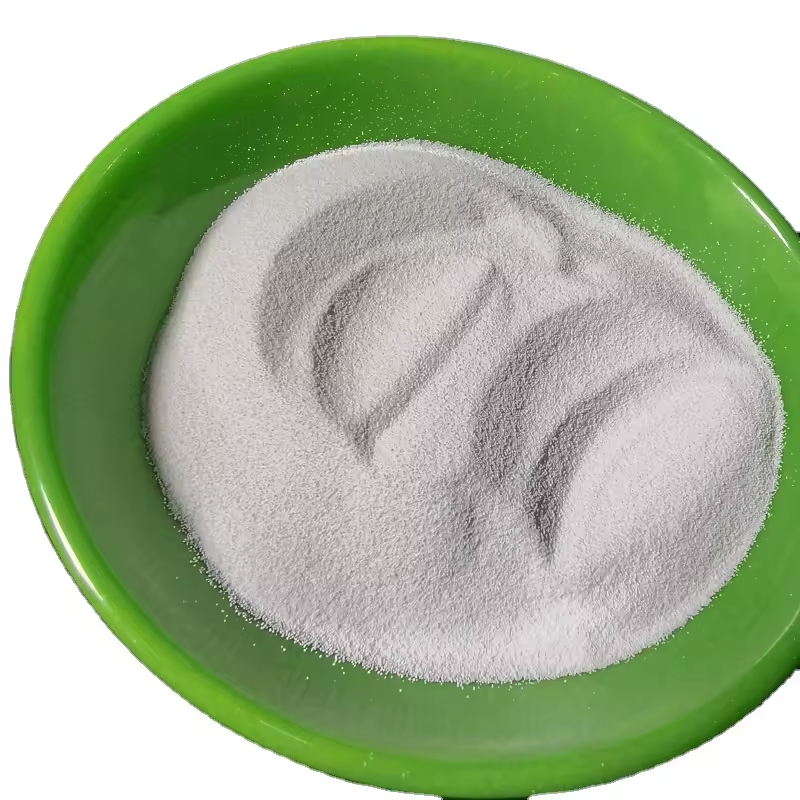
When your production line depends on stable emulsions, consistent texture, and predictable processing behavior, the emulsifier you choose becomes far more than just another ingredient on a specification sheet. Selecting the right Sucrose Esters of Fatty Acids E473 Supplier can directly influence product quality, process efficiency, and even long-term manufacturing costs. For food manufacturers, beverage producers, confectionery factories, and dairy processors, sourcing high-quality E473 from a technically competent supplier is a strategic decision rather than a routine purchase.
Many industrial buyers today choose partners such as MT Royal because access to multiple brands, competitive pricing structures, and technical support significantly reduces procurement risk. A supplier that understands formulation challenges, scale-up considerations, and regulatory compliance can help your factory maintain consistency even under demanding production schedules.
This comprehensive guide explores sucrose esters in depth — from chemistry and functionality to sourcing strategies, industrial optimization, common mistakes, and emerging trends — providing actionable insights for procurement teams, R&D specialists, and production managers.
Understanding Sucrose Esters of Fatty Acids (E473): Definitions and Functional Chemistry
Sucrose esters of fatty acids (E473) are non-ionic emulsifiers produced through the esterification of sucrose with fatty acids derived from vegetable oils such as palm, coconut, or soybean oil. The resulting molecules possess both hydrophilic (water-loving) and lipophilic (fat-loving) regions, enabling them to stabilize emulsions effectively.
One of the defining characteristics of E473 is its wide Hydrophilic-Lipophilic Balance (HLB) range. This versatility allows manufacturers to select specific grades tailored to particular applications, whether stabilizing oil-in-water emulsions, improving aeration in whipped products, or enhancing dispersion in powdered formulations.
Because sucrose esters are derived from sugar and fatty acids, they are often considered more label-friendly compared with some synthetic emulsifiers, which supports their growing popularity in clean-label formulations.
Key functional properties include:
• Strong emulsification capacity across various fat systems
• Improved dispersion of powders and fat-based ingredients
• Stabilization of foam and aerated structures
• Texture enhancement and mouthfeel improvement
• Anti-staling effects in bakery products
• Compatibility with other emulsifiers and hydrocolloids
A reliable Sucrose Esters of Fatty Acids E473 Supplier should provide detailed information about HLB values, esterification degree, fatty acid composition, and application recommendations to ensure optimal performance in industrial environments.
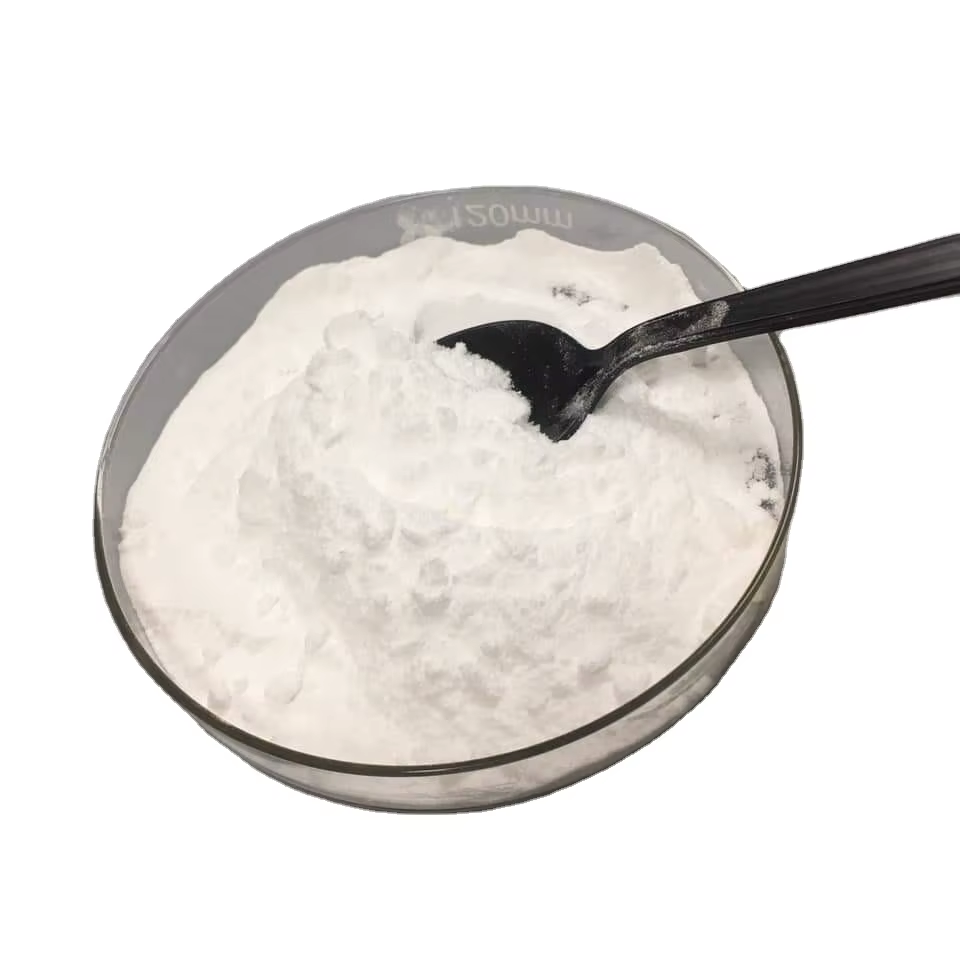
Why Sucrose Esters Are Valuable for Industrial Manufacturing
Industrial food production operates on tight margins and strict quality standards. Ingredients that enhance process efficiency while improving product quality create measurable competitive advantages.
Sucrose esters contribute to manufacturing efficiency in several ways:
They reduce mixing time by improving ingredient dispersion, particularly in systems containing fats or oils. They enhance emulsion stability, minimizing separation during storage or transportation. They also support consistent product structure, reducing batch-to-batch variability.
In our collaboration with various factories, we have seen that switching to optimized sucrose ester grades can reduce formulation costs by lowering the required dosage of other emulsifiers or stabilizers.
Another advantage is their multifunctionality. Instead of using several additives to achieve emulsification, aeration, and stabilization, manufacturers can sometimes rely on a single E473 system, simplifying ingredient inventories and production workflows.
Major Industrial Applications of Sucrose Esters
Dairy and Beverage Systems
In dairy drinks, flavored milk, creamers, and plant-based beverages, sucrose esters improve fat dispersion and prevent phase separation. Their ability to stabilize emulsions under thermal processing conditions makes them particularly useful for UHT and pasteurized products.
Bakery and Confectionery
Sucrose esters enhance dough stability, improve crumb softness, and delay staling in bread and cakes. In confectionery, they help control fat crystallization, improve texture, and stabilize aerated products such as marshmallows or whipped fillings.
Ice Cream and Frozen Desserts
E473 contributes to smooth texture, controlled ice crystal formation, and improved overrun. It also enhances melt resistance and mouthfeel, which are critical quality attributes in frozen products.
Powdered Foods and Instant Products
Because of their dispersing capabilities, sucrose esters help powdered beverages, soups, and nutritional products dissolve quickly and uniformly without clumping.
Nutritional and Functional Foods
In nutraceutical formulations, sucrose esters improve the solubility and bioavailability of fat-soluble vitamins and active compounds, enabling more efficient delivery systems.
Selecting the Right Sucrose Esters of Fatty Acids E473 Supplier
Choosing the right supplier involves evaluating more than just price or availability. Manufacturers must consider technical compatibility, supply reliability, and regulatory compliance.
Important evaluation criteria include:
Product range diversity. Different applications require different HLB values and fatty acid compositions. Suppliers offering multiple grades provide flexibility for formulation optimization.
Quality consistency. Batch-to-batch uniformity is essential for predictable production performance.
Regulatory documentation. Certificates such as ISO, HACCP, and compliance with international food safety standards are critical.
Technical support capabilities. Suppliers who understand industrial processes can help troubleshoot formulation challenges.
Supply chain reliability. Consistent delivery schedules prevent production interruptions.
We often advise manufacturers to conduct pilot trials with at least two grades from a supplier before committing to large-volume purchases. This approach minimizes risk while identifying the most efficient formulation.
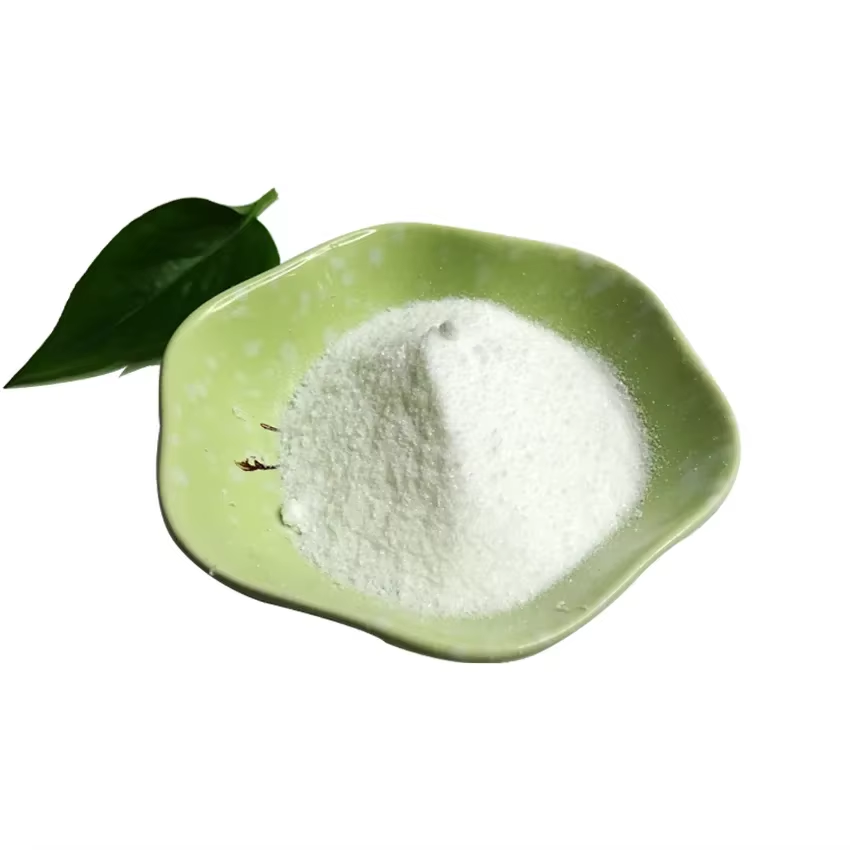
Common Mistakes When Sourcing E473
Even experienced procurement teams occasionally encounter challenges when sourcing emulsifiers.
One frequent mistake is selecting grades based solely on cost per kilogram without considering functional efficiency. A slightly more expensive grade may require lower dosage, resulting in overall cost savings.
Another issue is neglecting compatibility with other formulation components. Emulsifier interactions with proteins, starches, or hydrocolloids can significantly affect performance.
Some manufacturers also overlook storage conditions. Improper humidity or temperature control may reduce flowability or stability, particularly in powdered forms.
Finally, insufficient technical communication with suppliers often leads to formulation inefficiencies. Suppliers with application expertise can provide valuable optimization insights.
Practical Comparison: Why Manufacturers Choose E473
Manufacturers often evaluate sucrose esters against other emulsifiers such as mono- and diglycerides, lecithin, or polysorbates.
Sucrose esters offer several advantages:
They provide higher emulsification efficiency across broader applications. They contribute to cleaner labeling compared with some alternatives. They improve aeration and texture more effectively in certain systems. They demonstrate strong compatibility with dairy proteins and carbohydrates.
However, they may require more precise formulation adjustments due to their powerful functionality, highlighting the importance of working with an experienced Sucrose Esters of Fatty Acids E473 Supplier.
Industrial Processing Tips for Large-Scale Production
Proper handling and processing techniques significantly influence emulsifier performance.
Hydration and dispersion methods are critical. Pre-mixing sucrose esters with other dry ingredients before adding to liquid systems prevents lump formation.
Temperature control also plays an important role. Many grades dissolve more effectively at moderate temperatures, improving dispersion efficiency.
Sequential ingredient addition can enhance emulsion stability. Introducing emulsifiers before fats or oils often improves mixing outcomes.
In our experience supporting industrial clients, small adjustments in mixing order and temperature frequently produce measurable improvements in texture and stability.
Market Trends and Future Outlook
The global emulsifier market continues to expand, driven by demand for processed foods, convenience products, and clean-label ingredients. Sucrose esters are gaining attention due to their plant-derived origin and multifunctional performance.
Emerging trends include:
Increased demand for plant-based and dairy alternative products requiring stable emulsions. Growth in functional beverages and nutritional foods. Expansion of premium bakery and confectionery segments. Rising interest in clean-label emulsifiers.
Manufacturers who adopt advanced emulsifier systems early often gain formulation advantages that competitors struggle to replicate.
Frequently Asked Questions from Factory Managers
What dosage levels are typical for E473?
Dosage usually ranges from 0.1% to 0.5% depending on application, though optimization trials are recommended.
Is E473 suitable for high-temperature processing?
Yes, most grades tolerate pasteurization and UHT conditions effectively.
Can sucrose esters replace multiple emulsifiers?
In many formulations, yes. Their multifunctionality allows consolidation of ingredient systems.
What shelf life should manufacturers expect?
Typically 24 months under proper storage conditions.
Are sucrose esters compatible with hydrocolloids?
Yes, they often work synergistically with stabilizers such as carrageenan or guar gum.
Strategic Value of Partnering with Experienced Suppliers
Although emulsifiers represent a relatively small portion of formulation costs, their impact on product quality and production efficiency is substantial. Choosing a knowledgeable Sucrose Esters of Fatty Acids E473 Supplier transforms procurement into a strategic advantage.
We have seen factories reduce reformulation cycles, improve product stability, and shorten development timelines by collaborating closely with technically capable suppliers. Access to multiple brands and formulation expertise provides flexibility that becomes especially valuable during scaling or market expansion.
Ultimately, the right supplier does more than deliver ingredients. They support innovation, stability, and long-term manufacturing success. When emulsification challenges arise or production targets increase, having a trusted supplier partnership ensures your factory remains resilient, efficient, and competitive.
LATAMARKO LM60 – Premium Spanish-Origin Cocoa Powder
latamarko alkalized cocoa powder lm60
cocoa powder for chocolate production-Best price
Food industry raw materials – list of products
Types of Gelatin from Turkish Manufacturer
Alkalized Cocoa Powder Price: Complete Buyer Guide for 2026




No comment