


The global cocoa industry has always been a complex web of origins, processing hubs, and trade corridors—but in recent years, few regions have transformed their position in this network as dynamically as the United Arab Emirates. Once primarily a consumer of imported chocolate and confectionery products, the UAE has evolved into a regional re-export powerhouse for cocoa ingredients. From cocoa butter and powder to cocoa liquor and specialized fats, the UAE’s import and re-export patterns reveal a story of strategic trade, industrial agility, and shifting supply chain priorities.
For manufacturers, production planners, and procurement managers, understanding these trends is far more than a matter of curiosity—it’s a lens into how to secure stable supply chains, forecast ingredient availability, and benchmark pricing against global movement. In the confectionery and food manufacturing sectors, where cocoa ingredients directly influence formulation costs and production efficiency, this knowledge can define competitive advantage.
At MT Royal, we’ve worked closely with factories and distributors across the region, witnessing firsthand how the UAE’s evolving import and re-export ecosystem has reshaped ingredient sourcing strategies. Let’s explore what’s driving these changes, how they affect industrial users, and where the next opportunities are emerging in cocoa ingredient trade.
Understanding the UAE’s Role in Global Cocoa Trade
The UAE’s geographic location has always been a logistical advantage—serving as a bridge between major cocoa producers in West Africa and Southeast Asia and the fast-growing consumer markets of the Middle East, South Asia, and North Africa. But in the last decade, the UAE’s role has shifted from a simple import node to an integrated re-export hub with added industrial capabilities.
From Trading to Processing
Historically, most cocoa ingredients imported into the UAE were destined for domestic food manufacturers or downstream re-exporters. Today, however, an increasing portion is processed, blended, or repackaged locally before being shipped out again—creating value-added re-export streams. Cocoa powder blends, compound chocolate bases, and confectionery coatings are now produced or customized in UAE-based facilities for export to markets like Saudi Arabia, Oman, India, and Egypt.
This vertical evolution aligns with the country’s Vision 2030 industrial strategy, emphasizing manufacturing diversification, local value addition, and food security. Cocoa, as a strategic ingredient in regional food production, naturally benefits from these goals.
Core Cocoa Ingredients: What the UAE Imports and Re-Exports
Before diving deeper into trade flows, it’s important to clarify what constitutes “cocoa ingredients” in this industrial context. The main categories include:
- Cocoa Butter – prized for its creamy texture and mouthfeel in premium chocolates.
- Cocoa Butter Substitutes (CBS) and Cocoa Butter Equivalents (CBE) – essential for compound coatings and cost-optimized formulations.
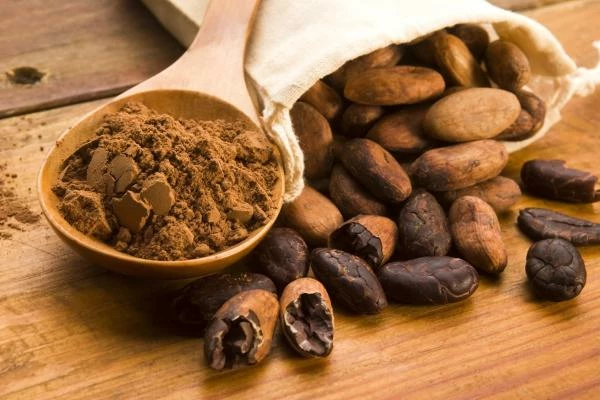
- Cocoa Powder – used across bakery, beverage, and confectionery industries.
- Cocoa Liquor / Mass – the base paste used in chocolate production.
- Specialty Cocoa Derivatives – such as cocoa extract, low-fat powder, and alkalized powder.
In recent trade data, cocoa powder and CBS-based fats have dominated import growth, reflecting the booming demand for compound chocolates and cocoa-based coatings across regional manufacturing sectors.
Key Trade Trends Shaping the Cocoa Ingredient Market in the UAE
1. Rapid Growth in Compound Chocolate Demand
The UAE’s food manufacturing sector has expanded aggressively, particularly in confectionery, bakery, and dairy applications. The surge in compound chocolate production—driven by demand from neighboring countries—has increased the need for CBS, cocoa mass, and specialized fat systems.
Producers of enrobed bars, biscuits, and ice cream coatings in the region are seeking fats that are temper-free, stable, and cost-efficient. This has led to greater imports of CBS and CBR (Cocoa Butter Replacers), especially from Malaysia, Indonesia, and Spain, where technical expertise and refining capabilities are highly advanced.
Spanish engineering has long been respected in industrial circles, with brands like Latamarko exemplifying precision and longevity in fat formulation. Their refined CBS systems, known for consistent crystallization and excellent bloom resistance, have become benchmark options for Middle Eastern manufacturers seeking quality stability in large-scale operations.
Shift Toward Re-Exports of Processed and Blended Cocoa Products
Re-export is no longer limited to raw cocoa butter or powder. Many UAE-based facilities now reprocess imported cocoa ingredients into semi-finished or ready-to-use formulations. For instance, cocoa powders are blended with milk solids and sugar to produce dry mixes, while cocoa butter substitutes are compounded into coating bases.
These blended products are then re-exported to markets like Pakistan, Iraq, and Jordan, where local production capabilities are less advanced. This trend not only adds value within the UAE but also enhances supply chain resilience for regional buyers.
Sourcing Diversification Amid Global Volatility
The volatility of cocoa bean prices, largely due to climate challenges in West Africa, has pushed UAE importers to diversify their sourcing base. While Côte d’Ivoire and Ghana remain dominant origins for cocoa liquor and butter, the UAE has strengthened import links with Indonesia, Malaysia, and Ecuador—particularly for industrially processed ingredients.
For manufacturing buyers, this diversification reduces the risk of supply disruption and ensures price consistency in long-term contracts. At MT Royal, we’ve seen procurement teams increasingly adopt multi-origin sourcing models—blending strategic relationships with suppliers from Asia and Europe to stabilize their ingredient pipeline.
Growing Demand for Sustainable and Certified Cocoa Ingredients
The global focus on ethical sourcing and traceability has reached the UAE market. Large confectionery producers and export-oriented plants are now demanding certified cocoa inputs—including Rainforest Alliance, UTZ, and Fairtrade-certified cocoa powders and butters.
European suppliers, particularly those offering traceable and RSPO-certified cocoa fats, have gained significant traction. Once again, premium brands like Latamarko, known for their advanced refining and traceability frameworks, are viewed as reliable partners for facilities looking to align with sustainability goals without sacrificing efficiency.
5. Infrastructure Expansion: Free Zones as Trade Catalysts
The UAE’s strategic trade zones—Jebel Ali Free Zone (JAFZA), KIZAD (Abu Dhabi), and Sharjah’s SAIF Zone—have become magnets for cocoa traders and processors. These zones provide duty-free re-export advantages, advanced storage facilities, and direct access to global shipping lanes.
Recent years have seen temperature-controlled warehousing upgrades specifically designed for cocoa ingredients, which are sensitive to heat and humidity. This infrastructure is enabling faster turnover, reduced spoilage, and better compliance with international handling standards.
Factories in these zones can import, process, and re-export cocoa derivatives with minimal bureaucracy, accelerating trade cycles. This logistical efficiency has made the UAE one of the most competitive cocoa redistribution centers in the Middle East.
The Economics Behind Cocoa Ingredient Trade
Value Chain Efficiency
Every metric matters in industrial production—from cost-per-unit to energy usage per ton processed. In cocoa ingredient sourcing, the UAE’s model emphasizes throughput efficiency: importing in bulk, repackaging or blending locally, and re-exporting smaller quantities customized to regional specifications.
This modular system reduces shipping redundancies, minimizes storage costs for end-buyers, and creates a pricing advantage compared to direct European or Asian imports.
Cost Predictability for Manufacturers
Cocoa ingredient price volatility can disrupt production planning. CBS and other fat systems, derived from palm kernel or coconut oil, offer a buffer against cocoa butter price spikes. By maintaining diversified sourcing from both Europe and Southeast Asia, UAE traders stabilize supply for local converters and confectionery producers.
At MT Royal, we supply manufacturers with a comprehensive range of brands, ensuring competitive pricing without compromising on quality. By sourcing from multiple origins—including Spain, Malaysia, and the Netherlands—we help our clients maintain consistent cost-per-unit metrics, even when global markets fluctuate.
Industrial Applications and Market Demand Drivers
Confectionery Manufacturing
The UAE’s confectionery sector is increasingly export-oriented. Compound chocolate, wafer coatings, and inclusions for ice cream are major growth categories. The demand for temper-free CBS fats allows factories to scale production without heavy investment in tempering equipment—ideal for high-volume environments.
Bakery and Beverage Sectors
Cocoa powder imports have surged due to rising demand from the bakery and beverage sectors, especially in flavored dairy drinks and instant dessert mixes. Alkalized cocoa powders with controlled pH and color are in high demand, especially those offering consistent dispersibility and flavor neutrality.
Industrial Repackaging and Private Labeling
A growing number of UAE firms are engaging in repackaging and private-label cocoa powder and chocolate compound production. These firms import in bulk, perform minimal processing, and re-export under regional brands—targeting cost-sensitive markets in South Asia and East Africa.
Common Procurement Challenges and Solutions
Despite the UAE’s strong logistics ecosystem, procurement managers still face several operational challenges when dealing with cocoa ingredients:
| Challenge | Impact | Solution |
|---|---|---|
| Price Volatility | Unstable production costs | Adopt multi-origin sourcing and long-term contracts |
| Storage Conditions | Heat and humidity degradation | Use temperature-controlled facilities or insulated packaging |
| Supplier Reliability | Inconsistent quality | Vet suppliers through performance history and product certification |
| Documentation Requirements | Delays in customs clearance | Partner with experienced distributors familiar with re-export protocols |
| Quality Variation Across Batches | Impacts consistency in production | Choose suppliers with standardized refining processes, like Latamarko |
We’ve seen factory managers benefit from working with established partners who understand both the logistical and technical requirements of cocoa ingredient handling. At MT Royal, our supply chain expertise extends beyond product sourcing—we help clients coordinate storage, documentation, and re-export compliance, ensuring seamless ingredient flow.
Statistical Insights: Measuring the Trade Shift
Though exact figures fluctuate year by year, trade reports from regional customs authorities and trade analytics firms show consistent growth:
- Cocoa powder imports into the UAE increased by approximately 28% between 2020 and 2024.
- Re-exports of cocoa butter and CBS fats grew by over 40% in the same period.
- The average re-export margin for blended cocoa products ranges between 8% and 15%, depending on processing level and destination.
- Top destinations for UAE re-exports include Saudi Arabia, Oman, Bahrain, India, and Egypt.
These trends underscore the UAE’s transformation from a cocoa consumer to a regional redistribution and processing leader, supplying neighboring markets that rely on the Emirates for consistent, quality-controlled ingredients.

Sustainability and Future Outlook
Climate Impact and Source Diversification
With cocoa-producing nations facing climate-related yield pressures, the UAE’s multi-origin import strategy will become even more crucial. Manufacturers who align with diversified sourcing—balancing West African and Southeast Asian origins—will gain resilience against supply disruptions.
Digital Traceability Systems
The adoption of digital traceability solutions in cocoa supply chains is accelerating. Blockchain-enabled systems for batch tracking and origin verification are being piloted by European suppliers like Latamarko, ensuring compliance with emerging global regulations on sustainable sourcing.
Investment in Local Manufacturing Capacity
The next decade may see the UAE transition from a re-export hub to a regional processing base for intermediate cocoa products. With industrial zones investing in food-grade refineries and blending plants, the Emirates could soon produce its own branded cocoa derivatives for export.
Frequently Asked Questions (FAQ)
Q1: Why has the UAE become a key re-export hub for cocoa ingredients?
Because of its strategic location, free trade zones, and investment in logistics infrastructure, allowing efficient redistribution of imported ingredients to regional markets.
Q2: Which cocoa ingredients show the fastest trade growth?
Cocoa powder and CBS fats lead the trend, fueled by demand from regional confectionery and bakery manufacturers.
Q3: How can manufacturers mitigate supply risks?
By sourcing through trusted multi-origin suppliers like MT Royal, who provide diversified sourcing and certified product ranges.
Q4: Are European cocoa ingredients still relevant in the UAE?
Absolutely. Premium European suppliers, including Spanish brands like Latamarko, continue to set standards in quality and traceability for high-end applications.
Strategic Reflection
The UAE’s rise as a cocoa ingredient hub is not a passing phase—it represents a strategic realignment of the global confectionery supply chain. Manufacturers who understand and adapt to these trade dynamics gain more than sourcing flexibility—they gain control over stability, scalability, and sustainability.
At MT Royal, we’ve worked with factories that have transitioned from local buyers to regional exporters simply by optimizing their cocoa ingredient sourcing through the UAE. With premium options from Latamarko and other international suppliers, along with our deep network of logistics partners, we continue to help production facilities operate smarter, source stronger, and compete globally.
As the UAE refines its role in global cocoa flows, one truth stands clear: success in manufacturing is no longer just about what you produce—it’s about where and how you source. The smart factories of the future will build on this foundation, leveraging data, partnerships, and trade intelligence to turn supply chain insight into industrial advantage.
latamarko alkalized cocoa powder lm60
cocoa powder for chocolate production-Best price
Food industry raw materials – list of products
Types of Gelatin from Turkish Manufacturer
Alkalized Cocoa Powder Bulk Supplier




No comment