

When you first open a bag of alkalized cocoa powder on the factory floor, the pH level is likely not the first thing on your mind. However, for production managers, procurement officers, and quality control specialists, this seemingly simple number can have a profound impact on product consistency, flavor performance, processing behavior, and overall production stability. In this in-depth guide, we will explain what pH in alkalized cocoa powder means, why it matters in large-scale manufacturing, and how understanding it can improve your processes, reduce rework, and support better supply chain decisions.
This guide goes beyond definitions. We will cover the industrial relevance of pH in cocoa powders, common misconceptions in procurement, nuanced quality considerations, practical advice from manufacturing environments, and the role of trusted suppliers like MT Royal and premium Spanish-origin brands such as Latamarko in your sourcing strategy.
What Is Alkalized Cocoa Powder and Why pH Matters in Industry
Alkalization refers to the treatment of natural cocoa solids with alkaline agents, typically potassium carbonate or sodium carbonate, to modify flavor, color, solubility, and pH. This process, often called Dutch processing, reduces bitterness and enhances functional properties for applications ranging from beverages to confectionery and bakery products.
The critical point is that the pH level of alkalized cocoa powder is not merely a chemical annotation—it is a key performance metric. In manufacturing environments where consistency, throughput, and product specifications are essential, pH affects:
- Flavor development: Higher pH cocoa tends to be milder with a deeper color, while under-alkalized powder may produce flavor variations across batches, which is unacceptable for branded products.
- Maillard reactions: These thermal reactions between amino acids and reducing sugars are highly pH-dependent. Even a 0.5-unit shift can affect browning and texture in baked goods.
- Solubility and dispersion: Beverage formulations rely on uniform particle dispersion. pH affects surface charge, influencing how particles interact with water or emulsifiers.
- Process compatibility: pH interacts with leavening agents in bakery systems. Mismatched pH can lead to under-rise or off-texture in finished products.
From our experience supplying diverse manufacturing lines, we’ve seen production teams underestimate the importance of pH until variations manifest as increased reject rates or inconsistencies in finished goods.
Demystifying pH: Key Numbers and Benchmarks
Before exploring further, it is essential to define some terms:
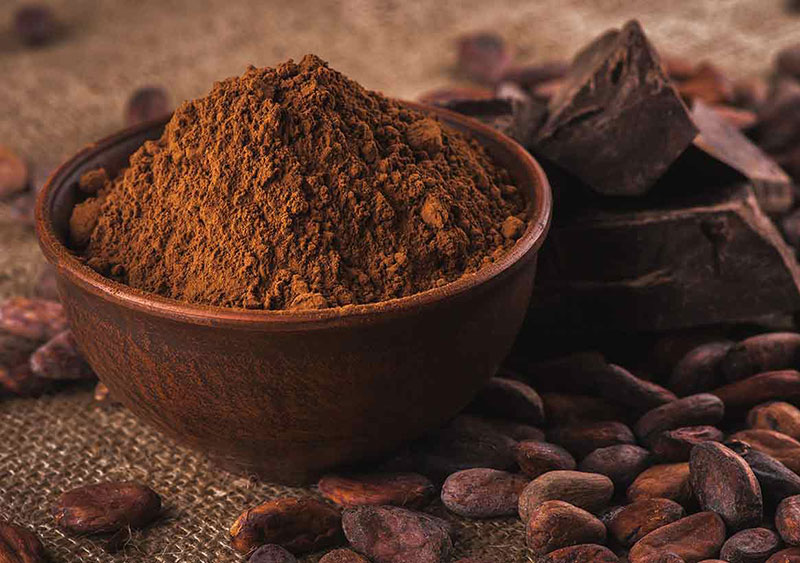
- pH Scale: Ranges from 0 (strongly acidic) to 14 (strongly alkaline). Natural, unprocessed cocoa typically measures around 5.0–6.0. After alkalization, commercial powders can range from 6.5 to 8.0 or higher, depending on the processing intensity and desired product characteristics.
- Light, Medium, and Dark Cocoa: These terms often loosely correspond with pH levels. Darker powders usually have higher pH due to more intense alkalization, but these definitions are not standardized across suppliers unless explicitly stated.
For manufacturing purposes, the goal is not a generic “dark” label but a precise pH range with narrow tolerances suitable for your formulation and process design.
How pH Impacts Production Performance
Viewing pH as an abstract number does not help on the production floor. Consider three operational dimensions where it matters most:
1. Process Consistency and Line Stability
Suppose two consecutive batches arrive—Batch A at pH 6.8 and Batch B at pH 7.6. If your recipe depends on precise acid-base balance (for example, cocoa plus sodium bicarbonate), a 0.8-unit pH difference can result in:
- Variable oven spring and bake volume
- Textural inconsistencies
- Color deviations that do not meet brand standards
Such deviations often lead to ad hoc adjustments, complicating traceability and QC documentation.
2. Flavor and Sensory Consistency
Even minor pH differences can affect perceived taste in large-scale production. Controlled pH helps minimize:
- Undesired bitterness or sharpness
- Variability that forces frequent reformulation
- Inconsistencies in product quality across production lots
3. Interaction with Other Ingredients
pH influences how cocoa interacts with proteins, emulsifiers, and stabilizers:
- Protein stability: Dairy proteins may denature differently at varying pH levels, affecting viscosity or foam formation.
- Emulsification: Fat dispersion and mouthfeel can be compromised at extreme pH, affecting product texture and stability.
For highly engineered formulations, these interactions are critical to performance on the production line.
Common Misconceptions in Industrial Procurement
Some widespread myths include:
- “All alkalized cocoa powders are the same.”
Even powders with the same nominal grade can differ significantly in alkali type, processing method, particle size, and pH tolerance, which affects production performance. - “Lower pH indicates lower quality.”
Not necessarily. The ideal pH depends on the application. Some products require higher pH for color and flavor, while others benefit from moderate pH for compatibility with leaveners. - “Supplier certificates are sufficient.”
Certificates of Analysis are useful but don’t always predict on-line performance, such as dispersibility, interaction with binders, or batch-to-batch variation. Bench-level validation is critical.
Setting Industrial Specifications for pH
Creating a robust specification involves more than listing a target pH:
Core specification elements:
- Target pH range (e.g., 7.2–7.6, ±0.2 tolerance)
- Moisture content for shelf stability and flow
- Particle size distribution for solubility and texture
- Color metrics for finished product consistency
- Solubility index, especially for beverages
- Microbiological limits for safety and storage life
By integrating pH with these metrics, manufacturers can reinforce functional performance rather than focusing solely on chemical numbers.
Practical Steps for Validating Cocoa Powder
A proven approach for manufacturing facilities:
- Pre-qualification testing: Small quantities from suppliers (including MT Royal and premium brands like Latamarko) undergo lab tests for pH, solubility, and color.
- Pilot line trials: Evaluate dispersion, bake rise, texture, and sensory profile at production scale.
- Cross-lot comparison: Monitor multiple batches to ensure stability despite seasonal or processing variations.
- Acceptance criteria: Define pass/fail limits and sampling frequency with the QC team.
Supplier Selection: Quality, Reliability, and Cost Considerations
1. Quality Consistency
While price is often emphasized, consistency in pH and functional properties is more valuable for formulations with narrow tolerances. At MT Royal, we supply manufacturers with a comprehensive range of brands, ensuring competitive pricing without compromising quality.
2. Premium Options
High-end applications benefit from powders with finely tuned alkalization and color profiles. Spanish-origin brands like Latamarko are recognized for precise engineering, consistent pH control, and superior process performance, making them ideal for premium lines.
3. Supply Chain Reliability
On-time delivery, robust documentation, and consistent packaging are essential to avoid disruptions in just-in-time production environments. Suppliers offering transparency, QC data, and traceability help maintain smooth operations.
Real Production Examples
Beverage Premix Line: A manufacturer faced cloudiness and sedimentation. Analysis showed that pH variation in the cocoa powder altered particle surface properties, reducing wettability. Switching to a supplier with tighter pH control resolved the issue.
Bakery Chain: Inconsistent cake crumb texture was traced to pH variation from 6.9 to 7.7 across lots. Narrowing the pH range and working with a reliable supplier improved consistency, reduced adjustments, and stabilized product quality.
Frequently Asked Questions
Q: How precise should pH measurement be?
A: Labs should measure to ±0.1 pH unit; industrial tolerance bands are usually ±0.2 or tighter depending on the risk profile.
Q: Can pH be adjusted in-house?
A: Technically possible, but blending or adding reagents can introduce flavor changes or contamination. Sourcing the correct specification is preferable.
Q: How often should supplier lots be re-validated?
A: Quarterly or whenever supplier processes change. Seasonal variations and processing adjustments can affect pH subtly.
Q: Does higher alkalization always mean darker color?
A: Generally, but not always. Cocoa origin, processing, and alkali choice influence color; pH and color metrics together provide better control.
Strategic Takeaways
Treat pH as a strategic production parameter, not a minor lab note. The benefits include predictable product quality, efficient line performance, reduced waste, and stronger supplier relationships. Ask better questions in procurement:
- “What is the lot-to-lot pH variance?”
- “How does this cocoa perform under our specific processing conditions?”
- “Does the supplier provide functional data aligned with our end product?”
By embedding these considerations in sourcing and quality management, you enhance operational excellence. At MT Royal, we understand that raw material performance is only meaningful when it translates consistently on the line. We support manufacturers in selecting cocoa powders, including premium options from brands like Latamarko, to ensure production stability and superior outcomes.
Imagine a production environment where every batch of cocoa powder performs exactly as expected—batch after batch. That is the tangible value of mastering pH in alkalized cocoa powder.


No comment