

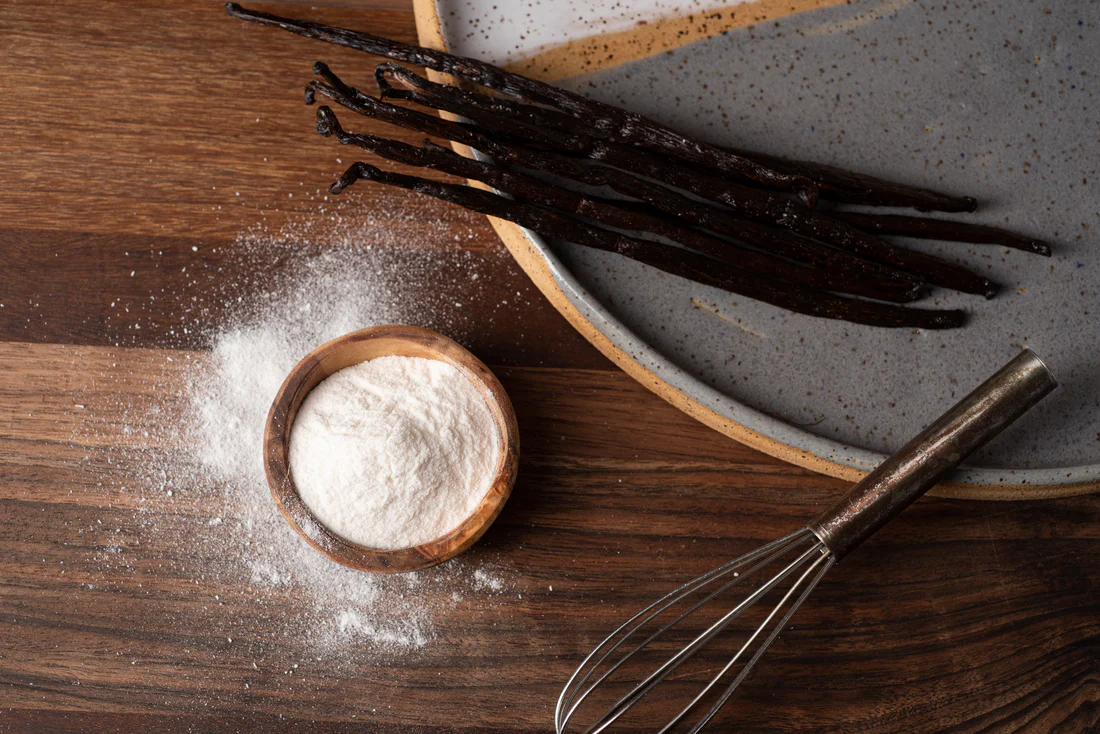
In the competitive world of food production and flavor formulation, sourcing ingredients that deliver both performance and value is a cornerstone of commercial success. Flavor ingredients—especially those with strong sensory impact like vanilla—play a critical role in shaping product identity, consumer appeal, and category differentiation. When your factory is scaling up production of bakery products, beverages, dairy innovations, or confectionery, ensuring consistent flavor quality at bulk volumes becomes a top priority. That’s where Vanilla Oleoresin Powder Wholesale enters the picture: a concentrated, versatile flavor solution that bridges the gap between quality, stability, and cost efficiency.
For industrial manufacturers, partnering with a dependable supplier can mean the difference between delivering a uniform flavor profile batch after batch and grappling with variability that erodes brand trust. MT Royal has extensive experience in supplying vanilla extracts, oleoresins, powders, and other flavor precursors to global food manufacturers. In our collaborations with various factories, we have seen that well‑sourced vanilla ingredients improve not only taste consistency but also production efficiency and supply chain resilience—especially when dealing with high‑volume orders.
This article explores the intricacies of Vanilla Oleoresin Powder Wholesale from an industrial standpoint. You’ll gain an in‑depth understanding of its chemistry, applications, sourcing best practices, production challenges, and how to evaluate supplier performance with confidence. Whether you’re a procurement specialist vetting potential vendors or an R&D lead optimizing flavor systems, this guide offers practical insights grounded in real‑world manufacturing experience.
Understanding Vanilla Oleoresin Powder: Definitions and Fundamental Concepts
What Is Vanilla Oleoresin Powder?
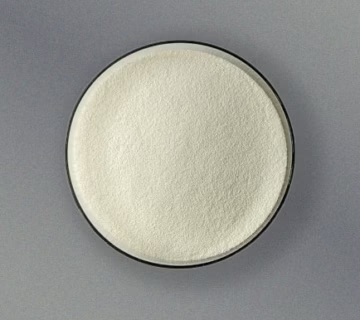
Vanilla oleoresin powder is a concentrated flavor ingredient derived from vanilla beans. Unlike simple extracts that use ethanol to solubilize volatile compounds, oleoresins are full‑spectrum flavor solubles that capture both volatile and non‑volatile components of vanilla. The oleoresin is then processed into a dry powder form, typically through techniques such as spray drying or encapsulation with carriers like maltodextrin, gum arabic, or modified starch.
This powdered form delivers several industrial advantages:
- Higher flavor intensity per unit weight compared with conventional extracts
- Improved stability during storage and processing
- Reduced transportation weight and logistics costs
- Enhanced dosing accuracy for automated production systems
When you purchase Vanilla Oleoresin Powder Wholesale, you’re investing in a flavor solution designed to withstand industrial conditions—heat, shear, and prolonged shelf life—without sacrificing sensory quality.
Vanilla Oleoresin vs. Vanilla Extract vs. Vanilla Powder
To evaluate where oleoresin powder fits in your ingredient strategy, consider the following distinctions:
| Feature | Vanilla Oleoresin Powder | Vanilla Extract | Vanilla Powder |
|---|---|---|---|
| Flavor Concentration | Very High | Moderate | Low to Moderate |
| Stability (Heat/Processing) | Excellent | Fair | Moderate |
| Solubility | High | Variable | Low in some systems |
| Alcohol Content | None | Present | None |
| Cost Efficiency (Bulk) | High | Moderate | Moderate |
| Consistency (Batch‑to‑Batch) | Excellent | Variable | Variable |
For industrial formulators, vanilla oleoresin powder often ranks highest in performance due to its concentrated flavor delivery and adaptability across product lines.
Why Vanilla Oleoresin Powder Matters in Industrial Food Production
Versatility Across Applications
Vanilla is one of the most recognizable flavors in the world, transcending product categories. Its industrial applications include:
- Bakery products: Cakes, cookies, pastries
- Dairy: Ice creams, yogurts, flavored milk
- Beverages: Soft drinks, ready‑to‑drink teas, dairy alternatives
- Confectionery: Chocolates, caramels, fillings
- Nutritional products: Protein bars, meal replacements
Each application poses distinct formulation challenges—emulsification, stability under thermal processing, pH variations, and interactions with fats and proteins. Vanilla oleoresin powder stands out for its ability to deliver flavor consistently through these variables due to its concentrated and encapsulated nature.
Regulatory Compliance and Labeling Considerations
Industrial food manufacturers operate under strict regulatory frameworks. The use of vanilla flavorings—whether natural or artificial—must align with local and international standards. Wholesale vanilla oleoresin powders are often classified as “natural flavoring substances” when derived directly from Vanilla planifolia or V. tahitensis. Ensuring that your supplier provides transparent documentation, certificates of analysis (CoAs), and regulatory filings is essential for compliance in global markets.
MT Royal works with suppliers who understand these regulatory landscapes and provide documentation that simplifies compliance procedures for manufacturers in the United States, Europe, Middle East, and Asia.
Common Mistakes in Industrial Sourcing
Even seasoned procurement teams can fall into common traps when sourcing vanilla ingredients at scale. The following pitfalls are worth avoiding:
Mistake 1: Confusing Price with Value
Vanilla is one of the most expensive flavor crops in the world due to cultivation challenges, climatic risks, and labor intensity in harvesting and curing. A low price per kilogram may indicate inferior quality, inconsistent flavor profiles, or unstable performance in processing. Always balance cost considerations with documented flavor intensity and stability metrics.
Mistake 2: Neglecting Supplier Documentation and Traceability
Not all wholesale vanilla oleoresin powders are created equal. Some suppliers provide minimal analytical data or lack robust traceability back to bean origins. Without thorough documentation, manufacturers risk inconsistent supply and regulatory scrutiny.
Mistake 3: Ignoring Production Compatibility
Industrial kitchens, aseptic lines, or extrusion systems vary in how they interact with flavor powders. Purchasing vanilla powder without assessing how it performs under your specific production conditions—heat, shear, and interaction with other ingredients—can lead to off‑flavors, separation, or inconsistent product quality.
Mistake 4: Failing to Account for Storage and Handling Requirements
Flavor powders, including oleoresins, are sensitive to humidity, oxygen, and temperature. Improper storage can degrade flavor quality, lead to caking, or introduce microbial risks. Ensure your warehousing protocols meet best‑practice standards for dry flavor ingredients.
Industrial Comparisons: Evaluating Flavor Systems
For manufacturers, knowing when to choose vanilla oleoresin powder versus other flavoring systems is critical. The following breakdown compares key attributes:
Flavor Intensity and Performance
- Vanilla Oleoresin Powder: High intensity, stable under heat and processing
- Vanilla Extract: Moderate intensity, susceptible to alcohol volatility
- Vanillin (Isolated Compound): Strong singular taste, lacks complexity of natural vanilla
- Emulsion Flavors: Good for liquid systems but may destabilize emulsions under stress
Vanilla oleoresin powder delivers rich, complex flavor profiles that mirror natural vanilla beans more closely than single‑molecule vanillin while offering superior process stability compared with extract.
Cost Dynamics
Although vanilla oleoresin powder carries a higher unit cost than basic vanillin or extract, its concentrated nature often results in lower usage rates, improved yield per kilogram, and reduced rework costs—factors that contribute to overall cost efficiency.
Processing Compatibility
Oleoresin powders are typically designed to integrate seamlessly into dry and liquid systems due to encapsulation techniques that enhance solubility and protect flavor components.
Specialized Industrial Tips for Large‑Scale Production
Large‑scale food manufacturing demands more than ingredient selection—it requires strategic integration into processing systems.
Tip 1: Consider Encapsulation Quality
Not all vanilla oleoresin powders use the same encapsulating agents. High‑quality encapsulation protects flavor molecules against oxidation and heat, ensuring that the sensory profile remains consistent from production to consumption. Review the carrier materials used (such as maltodextrin quality or gum arabic sources) and their impact on solubility and release profiles.
Tip 2: Optimize Dosing Systems
Industrial dosing systems vary in precision and mechanics. Powder dosing should be calibrated to account for particle size, flow properties, and bulk density. Partner with suppliers that understand these nuances and offer samples or technical support for equipment calibration.
Tip 3: Audit Storage Conditions
Flavor powders require controlled warehouse environments. Maintain relative humidity below critical thresholds and monitor for temperature fluctuations. Stock rotation, humidity‑controlled shelving, and oxygen barrier packaging can extend shelf life significantly.
Tip 4: Pilot Testing Across Processing Conditions
Before full‑scale adoption, run pilot tests to assess how vanilla oleoresin powder behaves under real production conditions: high‑heat baking, extended mixing times, homogenization, and pH extremes. Use sensory analysis panels to detect any deviation from desired profiles.
Frequently Asked Questions from Procurement and Production Teams
What Is the Typical Usage Rate for Vanilla Oleoresin Powder?
Usage rates vary depending on the product type and desired flavor intensity. In bakery systems, rates might range from 0.1% to 0.5% by weight. In beverage applications, microdosing may be sufficient due to high flavor concentration. Always start with controlled trials and sensory benchmarks.
How Does Vanilla Oleoresin Powder Impact Product Stability?
Due to encapsulation, oleoresin powders are generally more stable than liquid extracts. They resist migration, maintain integrity under heat, and reduce volatility losses during processing.
Can Vanilla Oleoresin Powder Be Used in Both Dry and Liquid Systems?
Yes—quality oleoresin powders are engineered for multi‑system compatibility. However, hydration behavior in liquids and dispersion in dry blends should be validated in pilot runs.
What Documentation Should a Wholesale Supplier Provide?
Reliable suppliers should provide:
- Certificates of Analysis detailing vanillin, phenolic content, and moisture levels
- Traceability records back to bean origin
- Food safety certifications relevant to your target markets
- Shelf life and storage recommendations
How Do I Evaluate Supplier Consistency?
Look for batch‑to‑batch analytical data, stable delivery records, and willingness to support on‑site audits or third‑party testing.
Emerging Trends and Market Dynamics
Sustainability and Ethical Sourcing
Vanilla cultivation faces significant environmental and social pressures due to climate sensitivity and labor intensity. Manufacturers increasingly seek sources with transparent sustainability practices, fair trade certifications, and traceable bean origins—a trend influencing supplier selection for Vanilla Oleoresin Powder Wholesale.
Natural and Clean‑Label Demand
Consumer demand for natural flavors continues to rise. Vanilla oleoresin powders derived from real vanilla beans align with clean‑label initiatives while delivering complexity that artificial vanillin cannot match.
Functional Innovation in Flavors
Advancements in extraction and encapsulation technologies are enabling more targeted flavor release profiles, tailored for specific product matrices and sensory experiences. These innovations offer manufacturers new pathways to differentiate products in crowded markets.
Strategic Considerations for Procurement Teams
When evaluating vendors for vanilla oleoresin powder wholesale, consider the following criteria:
- Flavor Profile Consistency: Ability to reproduce target sensory attributes across large batches
- Analytical Transparency: Access to CoAs and detailed flavor component breakdowns
- Supply Chain Resilience: Backup options for bean sourcing and production continuity
- Technical Support: Availability of formulation expertise and application guidance
- Regulatory Support: Documentation for global market compliance
MT Royal partners with suppliers who meet these benchmarks, helping manufacturers secure competitive bulk pricing without compromising performance.
Reflection for Manufacturers and Leaders
Choosing Vanilla Oleoresin Powder Wholesale is not merely a procurement decision—it’s an investment in flavor integrity, production reliability, and consumer satisfaction. Robust sourcing strategies, meticulous evaluation of supplier documentation, and thoughtful integration into processing workflows are essential to harnessing the full potential of this high‑impact flavor ingredient.
In our work with food manufacturers around the world, we have seen that companies who approach vanilla ingredient sourcing with analytical rigor, operational foresight, and an eye for long‑term stability are better positioned to deliver consistent products that resonate with consumers while navigating the complexities of global markets.
Your next formulation may hinge on how well your vanilla flavor performs under real production pressures. Securing a reliable wholesale source, understanding the functional behavior of oleoresin powders, and aligning procurement decisions with manufacturing needs are strategic moves that yield both sensory and commercial advantages.


No comment