

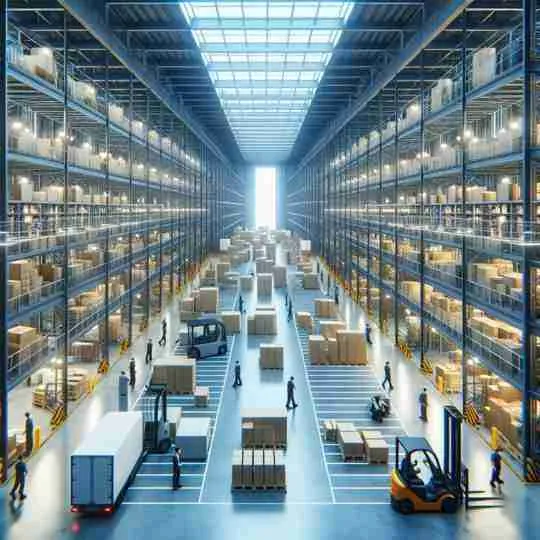
For U.S. manufacturers and industrial buyers sourcing from Türkiye, the journey does not end when goods leave the port. In many cases, the most decisive phase begins after arrival—how efficiently products are stored, handled, and distributed across the U.S. market. Warehousing and distribution are not merely logistical steps; they are strategic levers that influence cash flow, service levels, compliance, and long-term competitiveness.
This is precisely why experienced buyers increasingly work with partners like MT Royal. Beyond sourcing, the ability to design reliable warehousing and distribution solutions in the U.S. determines whether imports from Türkiye become a growth engine or an operational bottleneck. For factories producing at scale, the difference is felt in every production cycle, every delivery window, and every customer relationship.
latamarko alkalized cocoa powder lm60
cocoa powder for chocolate production-Best price
Food industry raw materials – list of products
Types of Gelatin from Turkish Manufacturer
Alkalized Cocoa Powder Supplier
Why Warehousing and Distribution Matter for Imports from Türkiye
Türkiye’s role as a manufacturing hub has expanded rapidly, driven by competitive pricing, flexible production, and proximity to European supply chains. However, once products arrive in the U.S., they must integrate seamlessly into domestic distribution networks that are often unforgiving of inefficiencies.
Warehousing and distribution decisions directly affect:
- Lead times to customers
- Inventory carrying costs
- Customs and regulatory compliance
- Responsiveness to demand fluctuations
For U.S. buyers, the challenge is not simply finding warehouse space, but designing a system that aligns Turkish production cycles with U.S. market realities.
Core Concepts in U.S. Warehousing for Imported Goods
To build an effective strategy, it is essential to understand the foundational models available in the U.S. logistics landscape.
Public Warehousing
Public warehouses offer shared storage and handling services. They are attractive for:
- New importers testing the U.S. market
- Variable or seasonal volumes
- Short-term storage needs
However, shared facilities may limit customization and control, especially for specialized products.
Contract Warehousing
Contract warehousing involves dedicated space and services under a longer-term agreement. This model suits:
- High-volume importers
- Products with specific handling requirements
- Buyers seeking predictable costs
For many manufacturers importing from Türkiye, contract warehousing provides the balance between control and scalability.
Bonded Warehousing
Bonded warehouses allow imported goods to be stored without immediate payment of duties and taxes. This can be particularly valuable when:
- Cash flow management is critical
- Goods are re-exported or distributed gradually
- Classification or compliance issues require resolution
We have seen bonded warehousing play a strategic role for buyers managing large inbound shipments from Türkiye.

Distribution Models for U.S. Imports
Distribution strategy determines how quickly and efficiently goods move from warehouse to end user.
Centralized Distribution
A single, centrally located distribution center simplifies inventory management and reduces overhead. This model works well when:
- Customer base is geographically concentrated
- Demand patterns are predictable
However, centralized distribution may increase transit times for distant markets.
Regional Distribution Networks
Multiple regional warehouses shorten delivery times and improve service levels. This approach is common for:
- National distribution footprints
- Time-sensitive or high-turnover products
The trade-off lies in higher inventory duplication and coordination complexity.
Hybrid Models
Many experienced importers adopt hybrid models—centralized inbound storage with regional forward distribution points. This structure balances efficiency and responsiveness.
Common Mistakes in Warehousing Imports from Türkiye
Even seasoned buyers can stumble when warehousing strategy is treated as an afterthought.
Treating Warehousing as a Cost Center Only
Warehousing decisions based solely on lowest cost often ignore:
- Transit time variability
- Handling quality
- Inventory accuracy
Over time, these hidden costs outweigh initial savings.
Underestimating Volume Growth
Turkish suppliers often offer flexible scaling, which can quickly outgrow warehouse capacity. Failure to plan for growth leads to congestion and service failures.
Misalignment with Customs Clearance
Warehousing choices that ignore port proximity, customs processes, or inspection requirements create delays before goods even reach storage.
We have seen situations where well-priced products lost their advantage due to poorly aligned warehousing decisions.
Strategic Location Selection in the U.S.
Location is one of the most powerful variables in warehousing and distribution.
Port-Proximate Warehousing
Warehouses near major ports such as New York/New Jersey, Savannah, Houston, or Los Angeles reduce drayage costs and speed inbound handling. This is particularly relevant for imports from Türkiye arriving via East Coast and Gulf ports.
Inland Distribution Hubs
Inland hubs offer lower real estate costs and access to major transportation corridors. They are ideal for:
- Long-term storage
- Nationwide distribution
Choosing between port-proximate and inland locations depends on product velocity and customer expectations.
Handling Requirements for Different Product Categories
Imports from Türkiye span a wide range of goods, each with unique warehousing needs.
Food and Food Ingredients
Food products require:
- Temperature control where applicable
- Strict inventory rotation (FIFO/FEFO)
- Traceability and lot control
Compliance with FDA and state-level regulations extends into warehouse operations.
Chemicals and Industrial Inputs
These products may demand:
- Hazardous material handling
- Segregated storage
- Documentation readiness for inspections
Warehousing partners must be equipped to manage regulatory complexity.
Consumer Goods and Packaging Materials
High-volume consumer goods benefit from:
- Efficient pick-and-pack systems
- E-commerce integration
- Returns processing capabilities
The wrong warehouse setup can quickly erode service quality.
Integrating Distribution with Production Planning
For manufacturers sourcing from Türkiye, warehousing is not isolated—it must align with production cycles and shipping schedules.
Inventory Buffering Strategies
Ocean transit times from Türkiye require careful buffering to avoid stockouts without overstocking. Effective strategies consider:
- Production lead times
- Seasonal demand
- Port congestion trends
We have seen factories stabilize operations by synchronizing Turkish production with U.S. inventory buffers.
Forecasting and Data Visibility
Modern warehousing relies on real-time data. Visibility into inventory levels, inbound shipments, and outbound orders enables faster decision-making.
The Role of Third-Party Logistics Providers (3PLs)
3PLs play a central role in U.S. warehousing and distribution for imports.
Benefits of Using 3PLs
- Scalability without capital investment
- Access to established distribution networks
- Integrated transportation and warehousing services
For many buyers, 3PLs offer the flexibility needed to manage imports from Türkiye efficiently.
Risks and Mitigation
Not all 3PLs are equal. Key evaluation criteria include:
- Experience with imported goods
- Compliance capabilities
- Technology platforms
We have seen that thorough vetting of 3PL partners prevents costly disruptions.
How MT Royal Supports Warehousing and Distribution Strategy
At MT Royal, we approach warehousing and distribution as extensions of sourcing strategy, not isolated services. We have worked with U.S. manufacturers who sourced competitively from Türkiye but struggled with post-arrival logistics.
By integrating sourcing insights with warehousing planning, we help clients:
- Align inbound volumes with warehouse capacity
- Select distribution models suited to their market
- Reduce total landed cost rather than just unit price
When we say “we,” it reflects hands-on experience navigating the intersection of Turkish manufacturing and U.S. logistics systems.
Comparing U.S. Distribution Challenges with Other Markets
Compared to other regions, the U.S. presents unique challenges:
- Vast geographic scale
- Fragmented regulatory environment
- High customer expectations for speed
What works in Europe or the Middle East often requires adaptation for the U.S. market. Warehousing strategies must reflect this reality.
Frequently Asked Questions from Operations and Procurement Leaders
Is it better to warehouse imports near the port or inland?
It depends on volume velocity and distribution footprint. Many buyers use a combination of both.
How does bonded warehousing impact cash flow?
By deferring duties, bonded warehouses can significantly improve cash flow for high-value imports.
Can one warehouse handle multiple product categories?
Yes, but only if it has the appropriate certifications and handling capabilities.
How early should warehousing be planned in the sourcing process?
Ideally before production begins. Late-stage planning limits options and increases cost.
Turning Warehousing into a Competitive Advantage
When designed strategically, warehousing and distribution do more than move goods—they create resilience.
Manufacturers who invest in the right infrastructure gain:
- Faster market responsiveness
- Lower disruption risk
- Greater customer confidence
We have seen companies transform logistics from a reactive function into a strategic asset by aligning sourcing, warehousing, and distribution from the outset.
A Long-Term Perspective on Imports from Türkiye
Imports from Türkiye offer significant opportunity, but only when supported by robust U.S.-based warehousing and distribution solutions. The most successful buyers understand that logistics is not the final step—it is the connective tissue between production and market success.
When you design warehousing with intention, integrate distribution with demand, and work with partners who understand both ends of the supply chain, imports from Türkiye become predictable, scalable, and profitable.
MT Royal supports manufacturers who think this way—those who see logistics not as a necessary expense, but as a strategic investment in long-term growth.



No comment