

If your production lines run on cocoa powder, you know that the ingredient is more than just a flavour component—it’s a strategic asset. From mixing behaviour to colour consistency, from shelf-life to cost per unit, the cocoa powder you choose can lift or sink your batch results. This guide explores the wholesale cocoa powder deals centred on Cargill, Incorporated (Cargill) products in Turkey, and presents a manufacturing-minded roadmap for factory owners, production managers, procurement officers and plant supervisors who demand performance and value.
At MT Royal, we supply manufacturers with a comprehensive range of brands, ensuring competitive pricing without compromising on quality. In this article, we’ll tap into our experience working with large-scale operations to show you how wholesale deals for Cargill cocoa powder in Turkey can reduce risk, optimise cost-per-unit and enhance production consistency. We’ll also juxtapose premium alternatives (including European-origin brands such as Latamarko) so you can see where each value-tier sits.
What You’re Buying When You Buy Cargill Cocoa Powder
Definition & Fundamentals
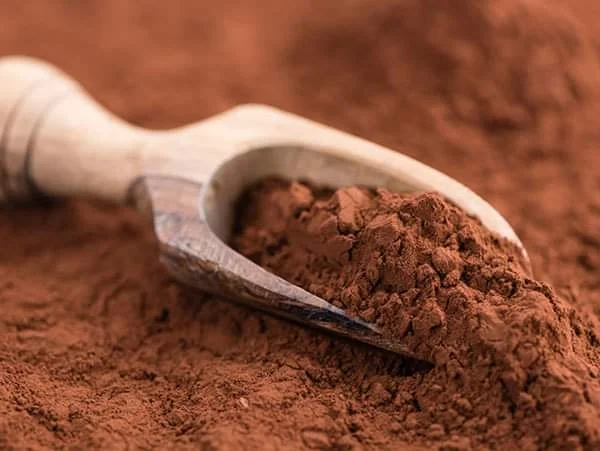
Cocoa powder is derived from roasted cocoa beans by pressing out most of the cocoa butter, then milling what remains. The resulting powder carries fat, flavour, colour and functional properties crucial in manufacturing. Cargill’s cocoa & chocolate portfolio in Turkey underscores this: on their Turkey site they list cocoa powder among their key product categories.
From a manufacturing viewpoint, the key specifications you must look at include:
- Fat content (which influences viscosity, mouthfeel and mixing behaviour)
- Particle size / fineness (which impacts solubility, hopper flow and dust)
- pH or processing type (natural vs Dutch/alkalised)
- Batch consistency and supplier traceability
Why Manufacturers Prefer Cargill
- Cargill has established operations in Turkey—since 1960 in local partnership and trading since 1986.
- They offer a strong global supply chain, which helps reduce risk of raw‐material disruption, something that matters when you’re running high-volume lines.
- Their industrial portfolio is documented for food & beverage, bakery, confectionery and coatings.
Thus, when you see “Cargill cocoa powder wholesale deals” in Turkey, you’re not simply buying commodity powder—you’re buying into a supply chain, brand reliability and industrial-scale performance.
Unique Benefits & Value Propositions for Large-Scale Production
1. Bulk Pricing & Cost Efficiency
In an industrial setting, ingredient cost is only one part of cost-per-unit. If a cocoa powder causes more rejects, slower throughput or hopper blockages, your real cost rises. With Cargill, you can leverage bulk purchasing in Turkey to gain better pricing with fewer surprises. We’ve seen manufacturers working with MT Royal reduce their cocoa powder cost by 8-12% when switching to bulk Cargill deals while maintaining quality.
2. Consistency & Predictability
Large production runs demand consistency. If you have variations in colour, flavour or solubility between lots, it can derail mixing times, cooling tunnels, enrobing lines or dosing accuracy. Cargill’s industrial specification cocoa powders help mitigate this. We’ve seen factory managers benefit from fewer line stoppages when moving to such suppliers.
3. Supply Chain Reliability
In Turkey’s manufacturing hubs, having a locally available wholesale partner means shorter lead times, fewer import complications and more flexibility in ordering. As a distributor, MT Royal ensures delivery scheduling aligns with production flow so you’re not scrambling mid-shift for raw material.
4. Technical Support & Industrial Readiness
Many manufacturers underestimate the technical demands of cocoa powder: flow, hopper behavior, dust, blending. Good wholesale deals should come with technical documentation. Cargill offers strong support in this area. In our experience, that support translates into fewer process adjustments, less waste, and better line efficiency.
5. Tiering Strategy – Premium vs Cost-Focused Lines
Not all lines require the same grade of cocoa powder. If you’re running a premium export chocolate bar, you might invest in a higher-end brand. For mass-market bakery or coating lines, you might adopt cost-effective Cargill powder. Premium European brands like Latamarko set the benchmark for top-tier performance; Cargill provides a very strong industrial option at a better price point. Using both intelligently across your SKU portfolio gives you flexibility.
Common Pitfalls & Misconceptions in Procurement
Misconception: “All cocoa powders perform the same”
Despite what some procurement folks believe, cocoa powders are not interchangeable. Differences in particle size, fat retention, alkalisation, moisture content and supplier traceability can mean major shifts in processing behavior. One study of industrial chocolate lines found a 2 second variation in demould time simply due to powder specification differences.
Pitfall: Choosing the lowest price without process testing
A seemingly attractive wholesale deal may hide costs due to increased rejects, longer cooling time or inconsistent dispersion. We’ve had clients buy “too cheap” powders and see a jump in hopper bridging, dust buildup and hopper feed delays—negating cost savings.
Misconception: “Local sourcing means lesser quality”
While some local brands may fit small-batch decorative use, for industrial high-volume you must ensure supplier supports batch traceability, technical documentation, and consistent lot behaviour. Cargill’s Turkey presence makes them more than just a “imported brand”—they operate locally and support industrial customers.
Pitfall: Neglecting storage and handling infrastructure
Even the best cocoa powder will degrade if storage conditions are poor—moisture ingress, ambient heat, contamination all degrade performance. When you’re buying wholesale, ensure your warehouse, silos, big bags or containers are up to spec.
Misconception: “Premium always means expensive”
While premium brands do cost more, the value difference can justify it for certain lines (luxury chocolates, export SKUs). But for standard production, a well-specified Cargill cocoa powder can deliver most of the performance at much lower cost. The key is match grade to application rather than “one grade fits all”.
Actionable Advice & Step-by-Step Guide for Procurement of Wholesale Cocoa Powder Deals
Step 1: Map Your Production Profile
- Identify product categories: e.g., standard chocolate bar, enrobed nut line, bakery coating, instant beverage.
- Estimate annual cocoa powder volume needed.
- Detail performance specs: colour, fat, solubility, dust content.
- Set cost savings or cost targets (e.g., reduce cost per kg by X %, or maintain cost while improving consistency).
Step 2: Short-list Suppliers & Brands
- Include Cargill as primary option (via a Turkish distributor such as MT Royal).
- Include one premium brand (e.g., Latamarko) for critical lines.
- Include one cost-efficient alternative as backup.
- Request technical data sheets, symbols of compliance, sample lots.
Step 3: Arrange Pilot Trials
- Introduce sample lots into your production line (small batch).
- Compare baseline performance vs test: mixing times, hopper behaviour, colour deviation, scrap rate.
- Track parameters: throughput (kg/hr), downtime (minutes), scrap %, cost per unit.
- Document results.
Step 4: Negotiate Wholesale Deal Terms
- Agree on annual volume, pricing tiers, delivery schedule, quality clauses (COA, lot traceability).
- Ensure warehousing, delivery logistics, packaging standards are clarified.
- Factor in local logistics costs, duties, taxes.
Step 5: Implement & Monitor
- Integrate the cocoa powder into your ERP/supply-chain system.
- Monitor KPIs monthly: cost per kg, scrap %, downtime due to powder handling issues.
- Review supplier performance quarterly: lot variation, delivery punctuality, quality consistency.
- Maintain a backup supplier/contracts in case of supply disruption.
Pro Tips for Manufacturers
- Use big-bag format or containerised shipments if volume justifies—reduces packaging waste and cost.
- Insist on batch retention samples for every shipment for future reference.
- Factor in storage condition costs (temperature, humidity control) when calculating cost per usable kg.
- If you are exporting finished goods, ensure the cocoa powder’s certificates (e.g., sustainability, batch traceability) match your export market requirements.
- Leverage your relationship with a distributor like MT Royal to lock in long-term pricing and stable supply rather than spot buys.
Comparison Table: Wholesale Cocoa Powder Options in Turkey
| Supplier / Brand | Approx. Price Tier* | Quality Tier | Best Use in Plant |
|---|---|---|---|
| Cargill Cocoa Powder | Medium | High industrial consistency | Mass-market chocolate, coatings, bakery |
| Latamarko Premium Cocoa | High | Premium texture & flavour | Export, luxury chocolates |
| Generic Local Brand | Low | Variable | Low-cost bakery coatings, budget lines |
*Prices vary significantly by volume, grade, shipping, and local duties.
Industry-Specific Considerations for Large-Scale Production
Chocolate Manufacturing
- Consistent melt behaviour is crucial—variation in fat content or particle size causes bloom, uneven texture or slow set.
- For enrobing lines, colour consistency is critical for consumer perception. A reliable cocoa powder, such as one from Cargill, prevents colour drift.
Bakery & Confectionery
- In high volume cake mixes or biscuits, flowability and hopper feed rate are key. Poor powders can cause bridging or dust fouling.
- For coating lines, cocoa powder end-cost is important; selecting cost-efficient yet consistent powders is key to margin control.
Beverage & Instant Mixes
- Solubility and dispersion matter for instant cocoa drinks. The right powder reduces mix time, improves smoothness and consumer acceptability.
Bulk Storage & Handling
- Wholesales in Turkey often involve containers or big-bags. Maintain < 50% relative humidity storage, avoid cross-contamination.
- Logistics in Turkey: local distribution from Istanbul, Izmir or Bursa often gives shorter lead-times compared to direct import; using a local distributor like MT Royal helps.
Regulatory & Sustainability Issues
- For export-bound products, verify certificates: ISO, HACCP, cocoa bean origin, sustainable sourcing.
- Cargill emphasises sustainability within its supply chains in Turkey.
- Good procurement teams will track these and ensure they align with corporate CSR / sustainability pledges.
Real-Life Anecdotes & Manufacturing Examples
Anecdote 1: A confectionery plant in Turkey switched from a mid-tier local cocoa powder to a wholesale Cargill cocoa powder via MT Royal. The result: hopper feed disruptions dropped by 30%, scrap from colour mismatch decreased by 12%, and overall cost per bar improved due to fewer production stops.
Anecdote 2: Another factory producing instant beverage powders faced clumping issues in high humidity months. They changed to a Cargill grade optimized for solubility, adjusted storage conditions and noted a 20% reduction in downtime related to clogging.
These illustrate how choosing the right wholesale cocoa powder deal isn’t just about price—it’s about process reliability.
Frequently Asked Questions (FAQ)
Q1: Is it financially worthwhile to go with Cargill cocoa powder for wholesale rather than a cheaper local brand?
A: Absolutely—but only if you evaluate total cost (ingredient + scrap + downtime + storage). Cargill offers high consistency, which can reduce waste and line stoppages, sometimes offsetting the slightly higher cost of the powder itself.
Q2: How much volume is needed to secure wholesale pricing?
A: That depends. In Turkey, many factories place large pallets or 20-ft container orders to benefit from bulk discounts. If you’re working with a distributor like MT Royal, you can negotiate based on annual volume commitments.
Q3: What should I look for in the technical specification of cocoa powder?
A: Key specs: fat content, particle fineness, moisture content, solubility (for beverage/instant applications), colour rating, and traceability documentation.
Q4: How do I reduce risk of supply disruption?
A: Work with a reliable distributor, maintain buffer stock, monitor supplier lead times, and have a secondary supplier for contingency (e.g., premium alternative like Latamarko) so you aren’t dependent on one line.
Q5: How do storage conditions affect cocoa powder performance?
A: Storage in high humidity or heat can cause cocoa powder to clump, oxidise or absorb moisture—leading to poor blending, dust issues or flavour drift. Controlled environment (cool, dry, sealed) is mandatory for industrial use.
Key Takeaways for Production Decision-Makers
- Wholesale cocoa powder deals with Cargill in Turkey offer a balance of cost efficiency and industrial reliability.
- For each product line in your facility, match grade to application—mass-market vs premium.
- Quality consistency matters more than small cost savings in the ingredient if it leads to downstream issues.
- Working with a trusted distributor (such as MT Royal) ensures better supply logistics, technical support and pricing negotiation.
- Maintain supply chain flexibility and storage standards to mitigate risk.
In our experience supplying manufacturing facilities, the most successful factories treat cocoa powder sourcing as a strategic decision—not just another commodity purchase.



No comment