

For bakery and dairy manufacturers, choosing the right starch can influence product texture, processing efficiency, shelf-life performance, and overall production costs. Whether your factory produces industrial bread, cakes, custards, yogurt, processed cheese, or dairy-based desserts, a consistent bulk supply of suitable starch is essential for maintaining product quality at scale. MT Royal offers access to multiple brands at competitive prices, giving procurement teams a practical starting point for comparing ingredient options against their technical and commercial requirements.
However, buying starch in bulk involves more than negotiating a price per metric ton. Different starch sources and processing methods produce different functional properties, and a grade that performs well in a bakery filling may be unsuitable for a high-temperature dairy process. Poor selection can result in weak gels, excessive viscosity, water separation, inconsistent crumb structure, or costly production adjustments.
Understanding starch for bakery and dairy – bulk supply options for food factories helps manufacturers make better purchasing decisions, qualify ingredients correctly, and establish supply arrangements that support long-term operational stability.
What Is Food-Grade Starch, and Why Do Manufacturers Use It?
Starch is a carbohydrate composed primarily of amylose and amylopectin, stored naturally in plants such as corn, wheat, potatoes, and tapioca. In food manufacturing, it is used as a thickener, binder, stabilizer, texturizer, and water-management ingredient.
When starch is heated in the presence of sufficient water, its granules absorb moisture, swell, and undergo gelatinization. This process changes the viscosity and structure of the surrounding mixture. During cooling and storage, the starch may form a gel or undergo structural changes that affect texture over time.
These characteristics make starch valuable in both bakery and dairy production.
In bakery applications, starch can contribute to filling consistency, cake texture, moisture control, and the performance of certain gluten-free formulations. In dairy manufacturing, it can help create the desired thickness and mouthfeel in products such as puddings, sauces, cultured dairy products, and selected processed cheese formulations.
The important point for procurement teams is that starch is not a single standardized functional ingredient. Its behavior depends on the botanical source, processing history, modification, formulation, and production conditions.
Main Types of Starch for Bakery and Dairy Applications
Selecting the right starch begins with understanding the differences between common industrial options.
Native Corn Starch
Corn starch is widely used in food manufacturing because of its availability and versatility. Native corn starch can provide thickening and gel formation in products that undergo appropriate heating conditions.
Common applications include:
- Bakery creams, custards, and pie fillings
- Puddings and dessert bases
- Sauces and dairy-based preparations
- Selected processed foods requiring controlled viscosity
Native corn starch can be economical for straightforward formulations, but it may not provide sufficient stability under repeated heating, strong mechanical shear, or acidic conditions. Manufacturers should evaluate these limitations before choosing it for demanding production environments.
Modified Food Starch
Modified starches are processed to alter specific functional properties. Depending on the modification, they may offer improved resistance to heat, acidity, mechanical shear, or freeze-thaw cycles.
They are particularly useful when conventional starch cannot maintain the required texture throughout manufacturing and distribution.
For example, a bakery filling that is pumped through industrial equipment and baked at elevated temperatures may require a starch designed to withstand those conditions. A chilled dairy dessert intended for extended refrigerated storage may need a different functional profile.
Modified starch does not mean that a product is automatically better. It means that the ingredient has been tailored to provide particular characteristics. The correct choice depends on the application, local food regulations, and the intended product label.
Potato Starch
Potato starch is known for its strong thickening capacity and ability to contribute a smooth texture in suitable formulations. It can be useful in bakery fillings, selected processed foods, and specialized formulations where its functional characteristics are desirable.
Its behavior can differ from corn starch, particularly in viscosity development and sensitivity to processing conditions. Manufacturers should test potato starch in their actual formulation rather than assuming that equal dosages will produce identical results.
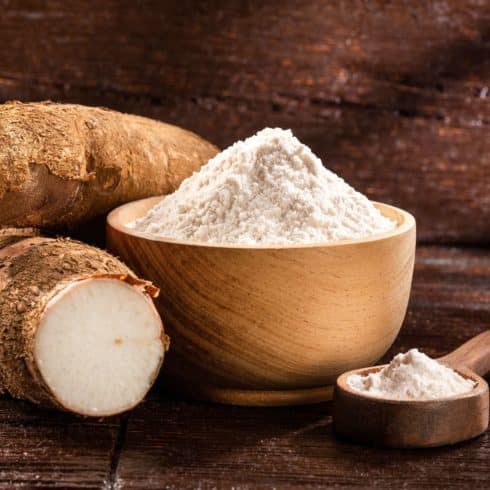
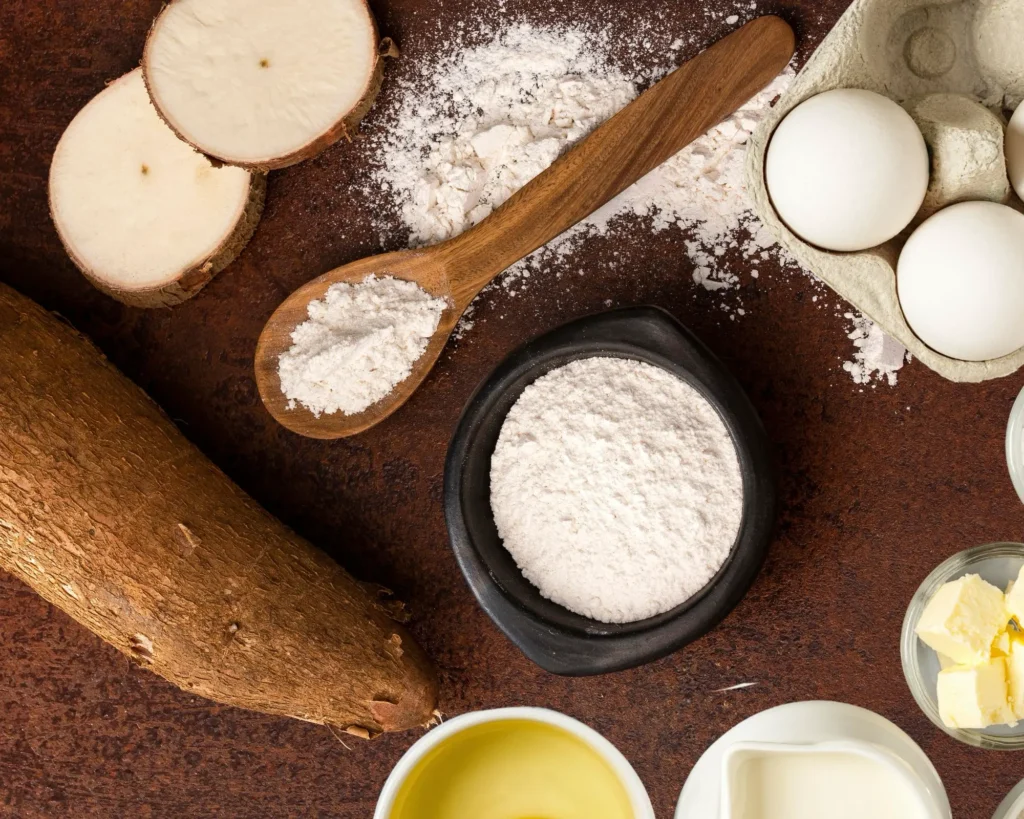
Tapioca Starch
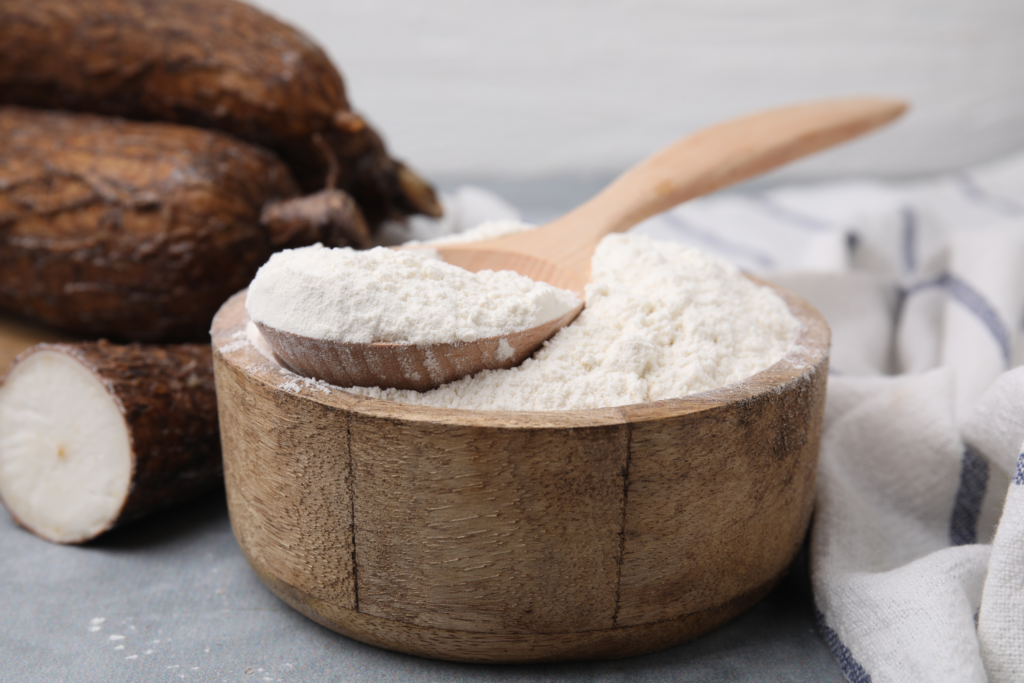
Tapioca starch, derived from cassava, is valued for its relatively neutral flavor and its ability to contribute smooth textures in many food applications. Depending on the grade, it may be suitable for bakery fillings, dessert products, and selected dairy-style preparations.
Its performance varies according to product specification and processing method. For large-scale production, confirm whether the supplied grade is native or modified and verify its performance under the factory’s actual temperature and mixing conditions.
Wheat Starch
Wheat starch may be used in selected bakery applications and other processed foods. It should not be confused with wheat flour: the ingredients have different compositions and functional roles.
Because wheat is a major allergen in many jurisdictions, manufacturers must evaluate allergen declarations, cross-contact controls, and labeling requirements when considering wheat-derived ingredients.
How Starch Improves Bakery Production
Bakery manufacturers need ingredients that perform consistently across mixing, depositing, baking, cooling, packaging, and storage. Starch can support several of these stages when properly selected.
Texture and Structure in Cakes and Bakery Products
Starch influences how moisture is managed and how the structure of a baked product develops. In cakes, the balance between flour proteins, starch, sugar, fat, and water affects tenderness and crumb characteristics.
Specialized starches can also be useful in gluten-free formulations, where the absence of conventional gluten networks makes texture control more challenging. However, starch alone cannot reproduce every function of wheat flour; it must be incorporated into a balanced formulation.
Bakery Creams, Fillings, and Custards
Industrial fillings often require a precise balance between viscosity, pumpability, heat resistance, and stability after cooling.
A filling that is too thin may leak during depositing or baking. One that becomes excessively firm may be difficult to pump, portion, or spread. Starch selection must therefore reflect the complete process rather than the texture of a laboratory sample alone.
For bakery fillings, assess:
- Viscosity at processing and filling temperatures
- Gel strength after cooling
- Resistance to baking conditions
- Water retention during storage
- Compatibility with sugar, fats, acids, and other ingredients
Moisture Management and Shelf-Life Quality
Starch can influence moisture distribution and the rate at which a product’s texture changes during storage. In some bakery systems, starch selection helps reduce undesirable moisture migration between a filling and its surrounding dough or pastry.
Nevertheless, starch cannot independently guarantee an extended shelf life. Microbiological safety, packaging, water activity, storage temperature, and the overall formulation remain critical.
How Starch Supports Dairy Manufacturing
Dairy products are particularly sensitive to texture and water management. Small changes in processing or formulation can affect creaminess, stability, and consumer perception.
Yogurt and Cultured Dairy Products
In certain yogurt and cultured dairy formulations, suitable starch can improve body, viscosity, and resistance to whey separation. The appropriate grade depends on the product’s acidity, heat treatment, fermentation process, and desired texture.
Acid stability is especially important in formulations exposed to lower pH conditions. A starch that thickens effectively in a neutral mixture may behave differently in an acidic dairy product.
Manufacturers should also distinguish between starch functionality and the role of other stabilizers. Proteins, pectin, gelatin, and other hydrocolloids may contribute different effects, and combinations must be evaluated for compatibility.
Puddings, Custards, and Dairy Desserts
Starch is commonly used to establish the characteristic thickness and spoonable texture of many dairy desserts.
For hot-filled products, the starch must develop the required viscosity at the appropriate stage of heating. For chilled products, the final texture after cooling and refrigerated storage is equally important.
An overly firm dessert may indicate excessive thickening, an unsuitable starch grade, or an interaction with other ingredients. A weak structure may reflect insufficient gelatinization, incorrect dosage, or inadequate processing conditions.
Dairy Sauces and Processed Cheese Applications
In selected dairy sauces and processed cheese formulations, starch may help manage viscosity, body, and consistency. The exact function depends on the product category and the full ingredient system.
Heat stability and mechanical processing are important considerations for sauces that undergo pumping, homogenization, or reheating. For processed cheese, starch suitability must be assessed alongside the behavior of dairy proteins, emulsifying salts, fat, and moisture.
Comparing Starch Options for Bulk Procurement
The following comparison provides a starting point for supplier discussions. It is not a substitute for an individual product specification because grades within each starch category can differ substantially.
| Starch type | Potential advantages | Important considerations |
|---|---|---|
| Native corn starch | Broad availability and economical thickening | May be less suitable for demanding heat, shear, or acid conditions |
| Modified starch | Can be designed for specific stability and processing requirements | Confirm modification type, permitted use, labeling, and regulatory status |
| Potato starch | Strong thickening and useful texture characteristics | Processing conditions can significantly influence viscosity |
| Tapioca starch | Neutral flavor and smooth texture in suitable applications | Performance depends on grade, formulation, and process |
| Wheat starch | Useful in selected bakery and food applications | Requires attention to allergen management and labeling |
When comparing bulk offers, confirm the botanical source, native or modified status, technical specification, packaging, shelf life, and delivery terms. A product name by itself does not provide enough information to approve an ingredient for industrial use.
Bulk Supply Options for Food Factories
The most appropriate purchasing arrangement depends on your consumption rate, storage infrastructure, production schedule, and supplier lead times.
Bags and Palletized Deliveries
Smaller and medium-sized factories often purchase starch in bags delivered on pallets. This format can simplify inventory control and allow different grades to be stored separately.
The main considerations are warehouse capacity, manual handling, packaging integrity, and protection from moisture. Damaged bags can create contamination risks and product loss, so receiving procedures should include packaging inspections.
Big Bags for High-Volume Production
Factories with greater consumption may benefit from bulk bags, often called FIBCs, when the product specification and packaging design are suitable.
This format can reduce the number of individual packages handled and may improve material transfer efficiency. However, the factory must have appropriate lifting equipment, discharge systems, and procedures for controlling dust and preventing contamination.
Before purchasing, verify the actual net weight, bag dimensions, discharge configuration, liner requirements, and handling compatibility with your equipment.
Bulk Delivery and Automated Handling
Some high-volume operations use dedicated bulk transport or other automated delivery arrangements. These systems can reduce packaging waste and handling labor, but they require suitable silos, conveying equipment, dust control, and validated cleaning procedures.
Bulk delivery is not automatically the most economical option. The decision should account for unloading time, minimum order quantities, silo capacity, product segregation, and the cost of maintaining hygienic storage conditions.
Choosing Between Spot Purchases and Supply Agreements
Spot purchases may be appropriate when demand is uncertain or the ingredient is used infrequently. Contracted supply can offer greater planning visibility for factories with stable consumption.
A supply agreement should clearly define product specifications, approved manufacturing sources where relevant, order quantities, delivery windows, pricing mechanisms, documentation, and procedures for handling nonconforming material.
MT Royal offers access to multiple brands at competitive prices, making it a potential partner for comparing available starch options and evaluating sourcing arrangements. The most useful purchasing discussion starts with the factory’s application, expected volumes, and delivery requirements rather than a general request for the cheapest starch.
Common Mistakes When Buying Starch in Bulk
Selecting a Grade Based Only on Price
Two starch products may have similar quoted prices but different functional performance. A cheaper grade may require reformulation, additional processing, or a higher dosage to achieve the same result.
Better approach: Compare technical specifications and evaluate total cost per unit of finished product. Include waste, production efficiency, quality control, and supply reliability in the calculation.
Failing to Validate the Ingredient at Production Scale
A laboratory trial cannot reproduce every condition in an industrial mixing tank, continuous cooker, filling line, or baking tunnel.
Better approach: Qualify new products through controlled trials. Record ingredient dosage, hydration conditions, temperature profile, shear exposure, viscosity, and finished-product performance.
Overlooking Acid and Heat Stability
Starch that performs well in one formulation may lose viscosity or behave unpredictably under another process.
Better approach: Identify the most demanding conditions in your production line, including pH, heating duration, mechanical shear, and cooling profile. Specify a grade designed for those conditions when necessary.
Ignoring Storage and Stock Rotation
Starch is generally supplied as a dry ingredient, but unsuitable storage can expose it to moisture, contamination, pests, and packaging damage.
Better approach: Maintain clean, dry storage areas, protect packaging, use appropriate pest-control procedures, and rotate inventory according to batch and shelf-life information. Follow the supplier’s storage recommendations for the actual product.
Treating All Modified Starches as Equivalent
Different modifications are designed to deliver different properties. A starch optimized for freeze-thaw stability may not be the best choice for a high-temperature filling process.
Better approach: Ask the supplier to identify the relevant functional properties and confirm that the proposed grade is suitable for the intended use and market.
Specialized Tips for Large-Scale Starch Processing
Reliable bulk sourcing becomes more effective when it is linked to process control and measurable quality requirements.
Establish Functional Acceptance Criteria
Do not rely exclusively on a generic description such as “food-grade starch.” Define the critical properties that determine success in your factory.
Depending on the application, these may include moisture, viscosity under specified test conditions, pH, particle size, microbiological limits, color, and other compositional characteristics. The exact criteria should reflect the product, applicable regulations, and internal quality standards.
Standardize Hydration and Addition Procedures
Starch functionality depends on how it is dispersed and heated. Adding starch too quickly to a liquid can create lumps, while insufficient hydration or unsuitable heating may prevent the expected viscosity from developing.
Your process instructions should define the addition sequence, agitation requirements, temperature profile, and holding time. Where appropriate, validate premixing or slurry preparation methods.
Monitor Viscosity Under Defined Conditions
Viscosity measurements are only useful when the test conditions are consistent. Temperature, solids concentration, pH, shear rate, and measurement timing can all affect the result.
For critical products, establish a standard laboratory method and compare supplier batches using the same procedure. This helps identify meaningful deviations instead of reacting to measurements that are not directly comparable.
Calculate Safety Stock From Actual Supply Risk
Avoid choosing inventory levels solely by habit. Review consumption variability, supplier lead-time variability, order frequency, shelf life, and the impact of a potential shortage.
A factory using starch every day in a core product may need a different buffer from a plant that uses a specialized grade only occasionally. Reassess inventory targets when demand or supply conditions change.
Track Supplier Performance
Useful procurement indicators include on-time delivery, order completeness, batch acceptance rate, frequency of specification deviations, documentation accuracy, and response time for technical issues.
We recommend reviewing these measures jointly with quality assurance and production teams. A supplier that offers a competitive price but repeatedly creates receiving delays may be increasing costs elsewhere in the operation.
Trends Influencing Industrial Starch Purchasing
Food manufacturers are increasingly evaluating ingredient choices in the context of cleaner product labels, resource efficiency, supply-chain resilience, and changing consumer preferences.
Interest in modified starches designed for particular processing conditions continues to make functional specifications important. Manufacturers are also exploring alternative botanical sources and starch systems suited to gluten-free, plant-based, and specialized food products.
At the same time, sourcing decisions remain exposed to agricultural variability, transport costs, energy prices, and regional supply conditions. Corn, wheat, potato, and cassava supply chains do not respond identically to weather or market changes, so availability and pricing can shift differently across starch categories.
There is no single global price trend or performance advantage that applies to every starch. For this reason, factories should request current quotations, compare like-for-like grades, and evaluate alternative products before urgent substitution becomes necessary.
Frequently Asked Questions About Bulk Starch Supply
Which starch is best for bakery and dairy factories?
There is no universal best option. Native corn starch may suit many standard thickening applications, while modified starches can be more appropriate when a process requires specific heat, acid, shear, or freeze-thaw stability. Potato, tapioca, and wheat starches may also be suitable depending on the formulation. Testing is essential.
Can the same starch be used in bakery and dairy products?
Some grades may be suitable for both categories, but cross-application should not be assumed. Bakery fillings and dairy products can have different pH levels, heating conditions, moisture profiles, and texture requirements. Confirm suitability with the technical specification and application trials.
What should a factory check before ordering starch in bulk?
Confirm the product grade, botanical source, native or modified status, technical data sheet, certificate of analysis, packaging format, shelf life, minimum order quantity, lead time, and delivery conditions. Also verify regulatory and labeling requirements for the intended market.
Is modified starch always better than native starch?
No. Modified starch can provide specific functional advantages, but it may be unnecessary for straightforward applications. Native starch may be suitable and economical when its performance meets the process requirements. The decision should be based on validated functionality and total cost.
How can a manufacturer reduce starch-related production problems?
Standardize ingredient specifications, qualify suppliers, validate new grades at production scale, control hydration and heating conditions, and monitor finished-product quality. Maintaining consistent process parameters helps distinguish ingredient variation from operational issues.
How can MT Royal support bulk starch sourcing?
MT Royal offers access to multiple brands at competitive prices, allowing manufacturers to compare potential options against their application and procurement needs. Buyers should provide their required starch type, intended use, estimated volume, packaging preference, documentation requirements, and delivery destination to support a meaningful evaluation.
Build a More Reliable Starch Supply Strategy
Starch may account for only one line on a factory’s ingredient list, yet its performance can influence texture, process stability, finished-product consistency, and manufacturing efficiency. The right grade helps your production team work with predictable results; the wrong one can turn a routine batch into a costly troubleshooting exercise.
For manufacturers evaluating starch for bakery and dairy – bulk supply options for food factories, the most effective approach is to combine technical qualification with disciplined procurement. Compare specifications, test performance under realistic conditions, plan inventory around actual supply risks, and measure suppliers by their long-term reliability as well as their quoted prices.
MT Royal can help your team explore multiple brands at competitive prices while keeping the focus on application suitability, documentation, and commercial value. When starch selection and bulk purchasing are aligned with production requirements, the result is not simply a better ingredient purchase. It is a more dependable manufacturing process.


No comment