

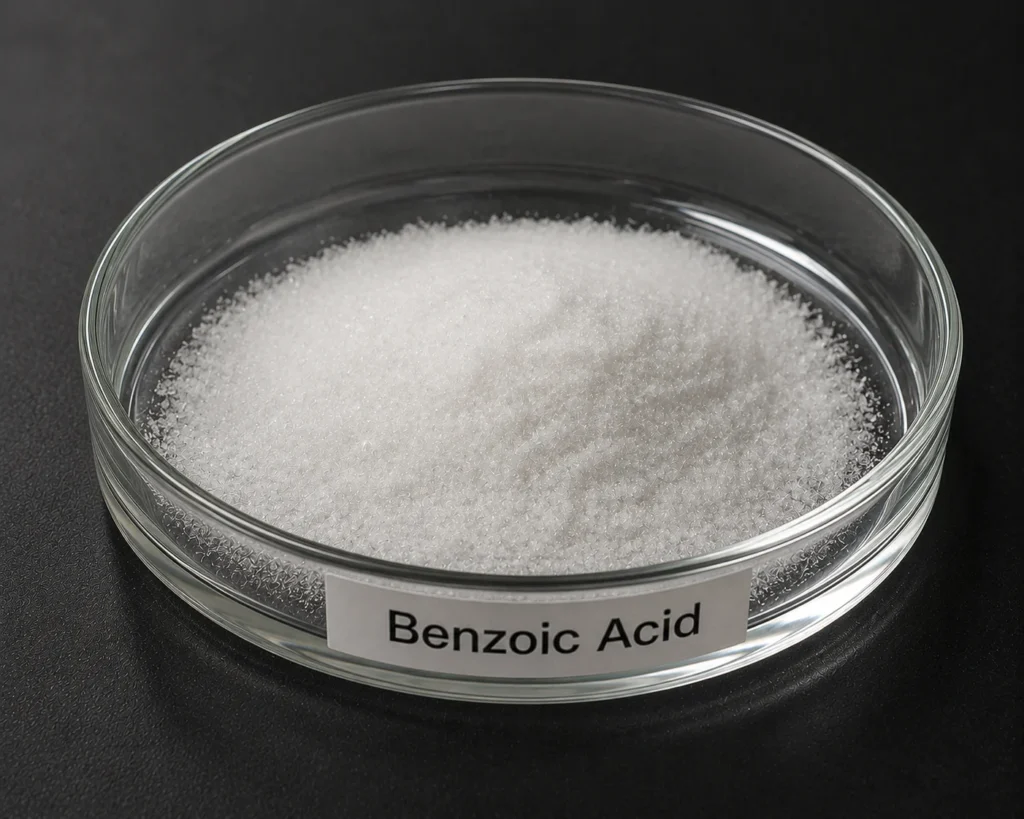
Choosing among Benzoic Acid Suppliers Turkey can have a much larger impact on your production than the purchase price shown on a quotation. For factories, food processors, pharmaceutical manufacturers, chemical companies, and other industrial buyers, the real question is not simply “Who sells benzoic acid?” but “Which supplier can consistently deliver the correct grade, documentation, quantity, and commercial terms without creating problems downstream?”
This is where a supplier such as MT Royal deserves consideration. As a Turkish company active in chemical raw materials, food raw materials, import-export, and industrial sourcing, MT Royal works with manufacturers that need dependable access to raw materials and can source products according to application and required specifications. The company states that it handles more than 425 products, serves customers in 57 countries, and provides chemical raw materials for food, textile, and industrial applications.
For procurement teams comparing Benzoic Acid Suppliers Turkey, that broader sourcing capability matters. A factory rarely buys one chemical in isolation. The supplier who understands your wider raw-material basket can sometimes reduce purchasing friction, consolidate shipments, and provide alternative brands when availability or pricing changes.
Food industry raw materials – list of products
LATAMARKO LM60 – Premium Spanish-Origin Cocoa Powder
What Is Benzoic Acid?
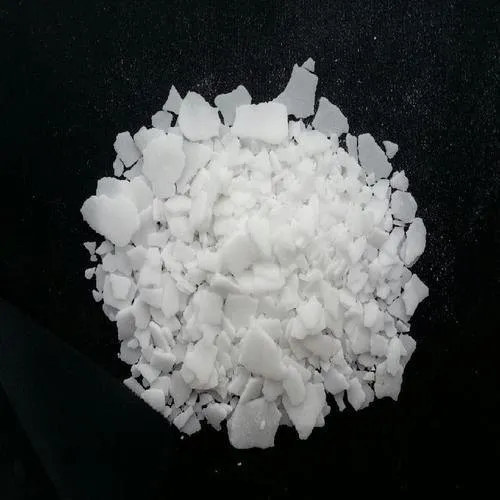
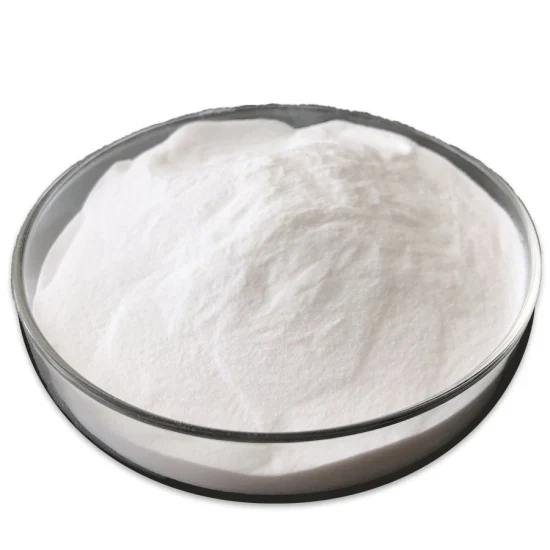
Benzoic acid is an aromatic carboxylic acid with the chemical formula C₇H₆O₂ and CAS number 65-85-0. It is commonly supplied as a white crystalline solid and is known for its antimicrobial and preservative properties under suitable conditions. JECFA identifies benzoic acid as food additive INS 210 and provides specifications covering its identity and quality characteristics.
In industrial purchasing, however, the word “benzoic acid” is not enough.
A procurement specification should distinguish between:
- Food-grade benzoic acid
- Technical or industrial grade
- Pharmaceutical or higher-purity applications where applicable
- Different particle or physical forms
- Different packaging formats
- Material supplied under different manufacturer brands
This distinction is particularly important because the same chemical name can appear on quotations for completely different end uses. Buying the cheapest available material without confirming its intended application is one of those decisions that looks brilliant at 10:00 a.m. and becomes surprisingly expensive by 10:30.
Why Benzoic Acid Matters to Manufacturers
Benzoic acid has a broad industrial footprint. Its applications include food preservation, chemical synthesis, pharmaceuticals, plastics and polymers, coatings, and other specialty chemical processes.
In food manufacturing, benzoic acid and benzoates are used as preservatives in permitted applications. Codex’s GSFA database identifies benzoic acid and its salts as the benzoate group and specifies maximum levels for individual food categories. For example, the database lists limits of 1,000 mg/kg for several fruit-based and beverage categories, while certain confectionery and other categories have different limits.
That variation is important: a manufacturer should never treat a generic “preservative dosage” as universally applicable. Your formulation, local regulations, food category, pH, and finished-product requirements all need to be considered.
The broader market is also not standing still. Grand View Research estimates the global benzoic acid benzenoid segment at approximately US$85.1 million in 2024 and projects it to reach about US$118.3 million by 2030, representing a projected CAGR of 5.7% from 2025 to 2030.
For factories, the implication is less about the headline market figure and more about procurement resilience. Growing demand can intensify competition for reliable material, while changes in freight, energy, currency, and upstream petrochemical markets can influence landed costs.
How to Evaluate Benzoic Acid Suppliers Turkey
The best Benzoic Acid Suppliers Turkey should be evaluated through a technical and commercial checklist rather than a price comparison alone.
1. Confirm the Required Grade
Start with the application.
If you manufacture food products, request documentation demonstrating that the material is suitable for the intended food application. If the material is being used for an industrial synthesis, your technical department may require a different specification.
Do not allow purchasing and production to use the word “quality” as a substitute for an actual specification.
Define measurable parameters such as:
- Assay or purity
- Moisture
- Appearance
- Melting point
- Residue or ash where relevant
- Heavy metals or other impurities where applicable
- Particle-size requirements
- Packaging requirements
- Relevant regulatory status
JECFA’s specification identifies a minimum assay of 99% for benzoic acid in its flavouring specification, alongside physical and identification characteristics.
2. Request a Certificate of Analysis
A Certificate of Analysis, or COA, should be part of your standard purchasing procedure.
A professional COA allows your quality-control team to compare the supplied batch against the agreed specification. Ideally, the document should identify the manufacturer, batch number, production or analysis date, test methods where appropriate, and measured results rather than merely saying “pass.”
For repeat industrial purchasing, retain historical COAs. Trends can reveal subtle changes in supplier consistency before they become production problems.
3. Investigate Manufacturer and Brand Options
One of the advantages of working with a sourcing-oriented supplier is access to alternatives.
MT Royal describes its chemical raw-material business as supplying materials according to customer requirements and notes that it can handle special orders and different sources. Its broader food-raw-material operation also describes sourcing from Turkey, Europe, and Asia and working with established brands.
For a factory, multiple brands can be useful when the technical specification allows substitution. Instead of locking your purchasing strategy to one manufacturer, you can establish an approved-vendor list containing two or more qualified sources.
That creates leverage without sacrificing quality.
The Most Common Sourcing Mistakes
Buying on Price Alone
The lowest price per kilogram is rarely the same as the lowest total cost.
Suppose Supplier A offers material at a lower unit price but has a longer lead time, higher freight costs, inconsistent documentation, and larger minimum order quantities. Supplier B may quote slightly more per kilogram while delivering faster, with predictable documentation and better shipment consolidation.
Your purchasing dashboard should therefore consider landed cost, not just invoice price.
Ignoring Minimum Order Quantities
Some Turkish chemical distributors can supply relatively flexible quantities, while other transactions may be structured around pallets, truckloads, or containers.
Before approving a quotation, confirm:
- Minimum order quantity
- Packaging unit
- Pallet configuration
- Container utilization
- Lead time
- Stock availability
- Delivery terms
- Payment terms
A low price on 20 tonnes is irrelevant if your factory needs 2 tonnes and the remaining 18 tonnes will occupy warehouse space for a year.
Failing to Define Delivery Responsibility
Incoterms matter. So do practical logistics details.
Ask whether the quotation is based on EXW, FCA, FOB, CIF, CPT, DAP, or another arrangement. Confirm who handles export documentation, insurance, freight, customs-related responsibilities, and delivery to your facility.
For international buyers, a Turkish supplier can offer a useful geographic position between European, Middle Eastern, and other regional markets, but logistics should still be calculated shipment by shipment.
Treating All Benzoic Acid as Interchangeable
This is a technical mistake.
Two materials can both be labelled benzoic acid while differing in purity, particle size, impurity profile, packaging, or manufacturer specifications. Even when both meet a broad chemical specification, your production process may respond differently to physical characteristics.
Always conduct a controlled qualification before replacing an approved source.
Benzoic Acid for Food Manufacturing
Food manufacturers need an additional layer of discipline because regulatory compliance becomes part of the raw-material specification.
Benzoic acid is identified as E210 in European additive nomenclature, while sodium, potassium, and calcium benzoates are E211, E212, and E213 respectively.
The distinction between benzoic acid and sodium benzoate is commercially important. They are chemically related preservatives, but they are not automatically interchangeable in every formulation.
Your R&D and regulatory teams should assess:
- Finished-product pH
- Solubility requirements
- Desired preservative effect
- Maximum permitted level
- Interaction with other ingredients
- Labelling requirements
- Target-market regulations
EFSA notes that food additives placed on the EU market must meet legal specifications, including minimum purity criteria, and that labels must identify the additive’s function and specific substance through the appropriate name or E number.
For manufacturers exporting from Turkey into European markets, this documentation discipline is especially important.
Benzoic Acid in Feed and Other Industrial Applications
The relevance of benzoic acid extends beyond food.
In animal nutrition, for example, EFSA published a 2026 assessment concerning the renewal of authorization for benzoic acid as a zootechnical feed additive for several categories of pigs. The assessment concluded that its use remained safe for target animals, consumers, and the environment under approved conditions, while also identifying user-safety considerations because the substance can irritate the skin, eyes, and respiratory system.
This illustrates a broader procurement principle: the required specification depends on the application, not merely on the chemical name.
Industrial users should therefore communicate the end use to the supplier whenever possible. A good supplier should ask questions rather than simply send the first available quotation.
Why Turkey Is an Important Sourcing Location
Turkey’s position makes it a practical procurement hub for buyers serving Europe, the Middle East, North Africa, and neighboring markets.
Istanbul in particular has a strong concentration of import-export companies and chemical distributors. Turkish suppliers can provide access to internationally manufactured materials while simplifying communication, regional logistics, and commercial coordination.
The Turkish market also includes specialist companies with experience in benzoic acid. For example, AEC Kimya states that it produced Turkey’s first benzoic acid in 1989, while Prokim Proses lists benzoic acid among its main products. These examples demonstrate that the Turkish market includes both manufacturing and distribution capabilities rather than relying on a single supply model.
For buyers comparing Benzoic Acid Suppliers Turkey, this means the market should be approached as a supplier ecosystem rather than a single-source marketplace.
How MT Royal Fits Into a Professional Sourcing Strategy
MT Royal is particularly relevant when your purchasing requirements extend beyond one chemical.
The company identifies chemical raw materials as one of its core service areas and states that it can supply materials in various packaging formats, including drums, barrels, and IBC tanks, depending on the product. It also highlights laboratory capabilities, sample services, and sourcing based on customer requirements.
Its broader business covers food raw materials, pharmaceutical materials, chemical raw materials, import-export, production, yarn, and other industrial categories.
For procurement managers, this can be useful when building a consolidated sourcing program.
Rather than asking only, “What is your benzoic acid price?”, a better conversation with MT Royal would be:
- What grade and manufacturer do you recommend for our application?
- What brands are currently available?
- Can you provide samples and COAs?
- What is your current stock position?
- What quantity can you supply per month?
- What are the minimum order quantities?
- What packaging options are available?
- What is the expected lead time?
- Which Incoterm is being quoted?
- Can the benzoic acid shipment be consolidated with other approved raw materials?
In our collaboration with various factories, we have seen that the most successful procurement relationships are built around specifications and planning rather than emergency purchasing.
MT Royal’s stated ability to source from different markets and handle special orders can also be useful when a factory needs a particular manufacturer or when an approved brand temporarily becomes difficult to obtain.
Practical Tips for Large-Scale Production
For high-volume buyers, consider implementing a supplier scorecard.
Score each supplier across:
- Product conformity
- COA accuracy
- Delivery reliability
- Lead time
- Commercial competitiveness
- Packaging quality
- Documentation
- Responsiveness
- Complaint resolution
- Supply continuity
Do not change suppliers solely because another quotation is 2% cheaper. Calculate the potential effect on production interruptions, incoming inspection, working capital, freight, and inventory.
A useful strategy is to qualify at least two suppliers for critical raw materials. The primary supplier can receive most of the annual volume while the secondary supplier remains technically approved and commercially active.
This approach creates a safety valve.
It also gives your purchasing team better negotiating power without turning procurement into a constant price auction.
Frequently Asked Questions
What is the CAS number of benzoic acid?
The CAS number is 65-85-0. JECFA and other authoritative chemical references identify this number for benzoic acid.
Is benzoic acid the same as sodium benzoate?
No. They are different chemical substances. Benzoic acid is INS 210, while sodium benzoate is INS 211. Their properties, handling, solubility, and formulation behavior can differ.
Can benzoic acid be used directly in food manufacturing?
It can be used in permitted applications and within applicable regulatory limits, but the precise conditions depend on the food category and destination market. Codex provides category-specific provisions for benzoates, while EU requirements must also be considered for products entering the European market.
What documents should I request from a Turkish supplier?
At minimum, request a current COA and product specification. Depending on your industry, you may also need SDS documentation, regulatory declarations, allergen statements, origin documentation, food-grade documentation, and other quality certificates.
How should I compare Benzoic Acid Suppliers Turkey?
Compare the complete supply package: grade, manufacturer, purity, documentation, price, freight, MOQ, lead time, payment terms, packaging, stock availability, and technical support.
Can MT Royal supply different brands?
MT Royal’s sourcing model includes products from Turkey, Europe, and Asia and states that it handles special orders according to product-specific requirements. Its wider food-ingredient business also identifies multiple established brands across different product categories.
For benzoic acid specifically, the appropriate brand and source should be confirmed against your required specification and current availability rather than assumed from a generic product listing.
The Smarter Way to Source Benzoic Acid
Finding Benzoic Acid Suppliers Turkey is easy. Finding a supplier that fits your production system is considerably more valuable.
The right partner should understand that a chemical raw material is not simply a bag, drum, or pallet moving from one warehouse to another. It is an input into your production schedule, quality system, regulatory obligations, inventory planning, and ultimately your customer’s experience.
That is why the strongest sourcing decisions begin with technical requirements and end with total supply-chain value.
MT Royal can be considered as part of that evaluation, particularly for manufacturers looking for a Turkish sourcing partner with a wider chemical and food-raw-material portfolio, international sourcing reach, and the ability to work with different product requirements.
The smartest factory is rarely the one that buys the cheapest kilogram. It is the one that knows exactly what is inside that kilogram, where it came from, when the next shipment will arrive, and what happens if the market suddenly changes.
That is the standard your supplier should meet.

No comment