

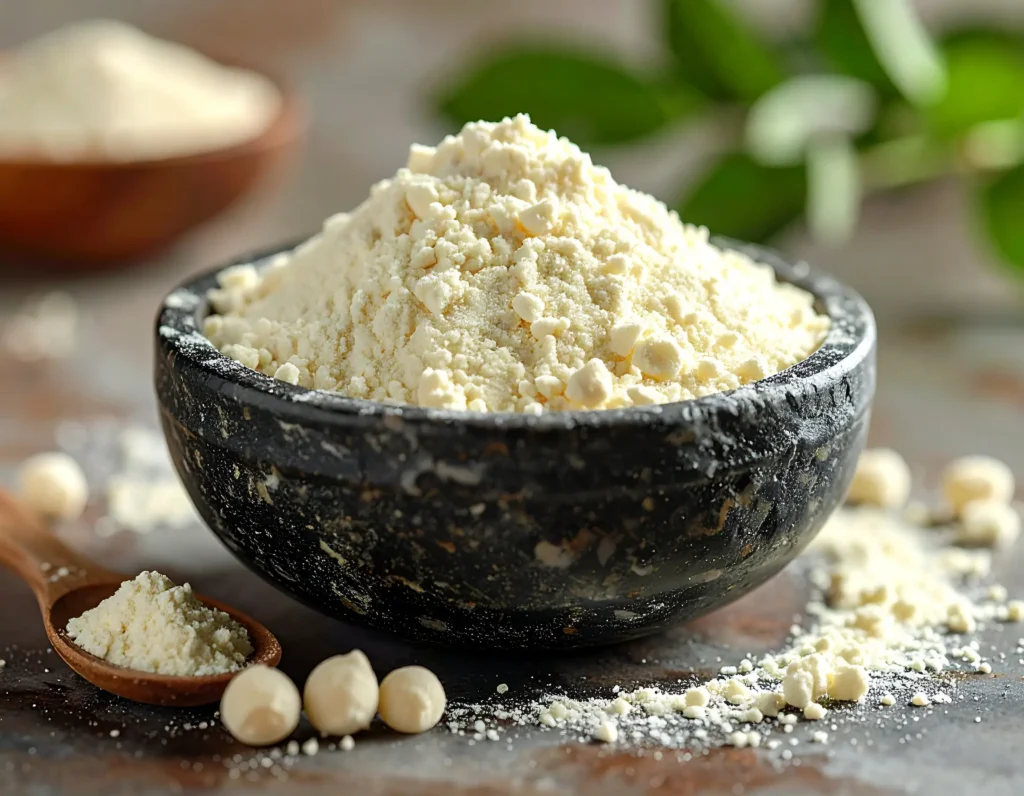
For factories producing gluten-free bread, bakery mixes, sauces, dairy products, beverages, noodles, or functional foods, ingredient selection is rarely just a formulation decision. It is a production decision, a quality decision, and ultimately a margin decision. Guar Gum for Gluten-Free Foods – Functional Fiber and Thickener has become particularly valuable because it can help compensate for the structural role normally provided by gluten while also contributing soluble dietary fiber and viscosity control. For manufacturers looking for dependable food-grade material, consistent specifications, and practical sourcing options, MT Royal is worth considering as a supply partner, particularly because it works with multiple brands and can offer competitive alternatives rather than forcing a factory into a single-source model.
The reason guar gum deserves serious attention is simple: gluten-free formulations have a structural problem. Remove gluten, and dough can lose elasticity, gas retention, moisture management, and cohesion. Guar gum cannot simply “replace gluten,” but its exceptional water-binding and thickening behavior can help rebuild several of the functional properties that gluten-free systems lack.
The commercial opportunity is also substantial. One 2026 market analysis projects the global gluten-free products market to grow from approximately $8.34 billion in 2025 to $11.78 billion by 2030, with a 7.2% CAGR. The same analysis identifies taste, texture, and cost parity as important drivers of product innovation. For manufacturers, that means the technical performance of hydrocolloids is increasingly connected to commercial competitiveness.
Food industry raw materials – list of products
LATAMARKO – Premium Spanish-Origin Cocoa Powder
What Is Guar Gum and Why Is It Important in Gluten-Free Foods?
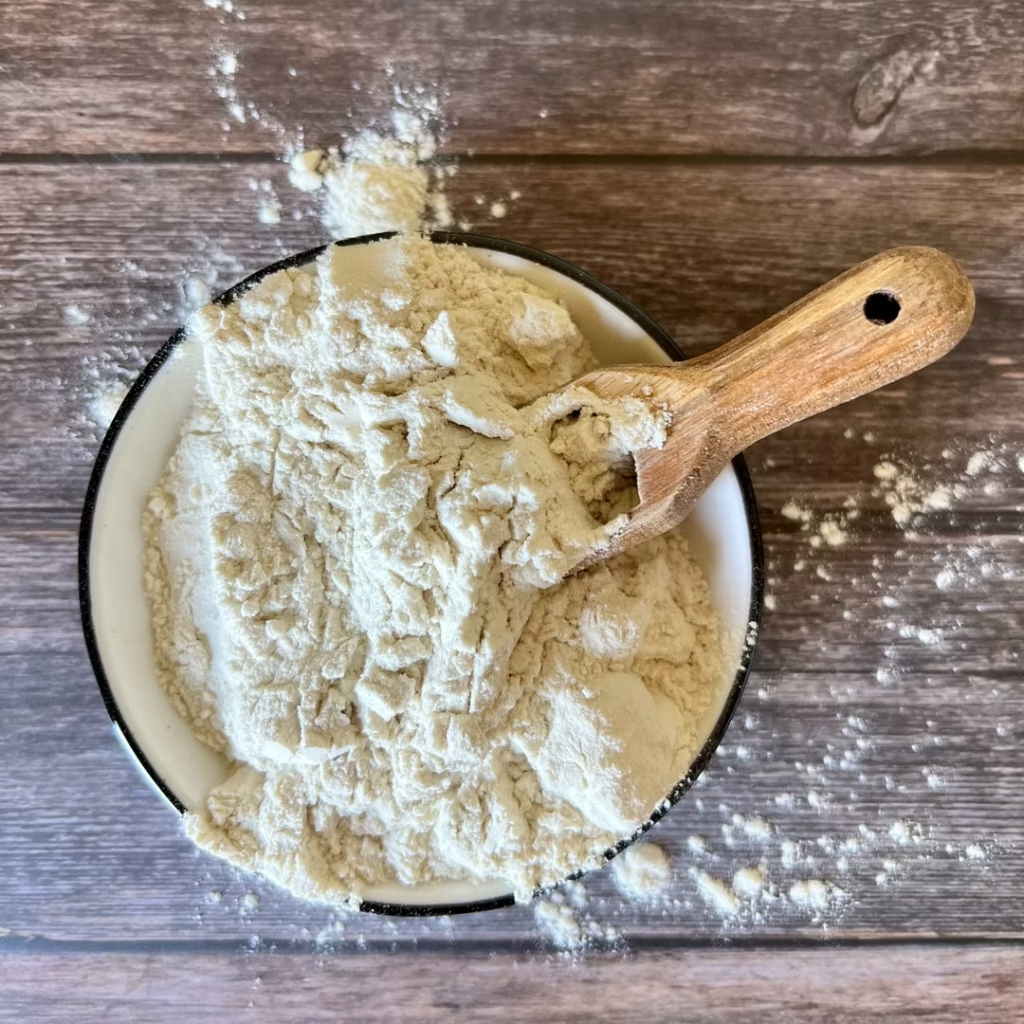
Guar gum is a plant-derived hydrocolloid obtained from the endosperm of guar beans, primarily from Cyamopsis tetragonoloba. Chemically, it is a galactomannan polysaccharide consisting of a mannose backbone with galactose side chains. These hydroxyl-rich molecular structures have a strong affinity for water, allowing guar gum to hydrate and develop substantial viscosity even at relatively low concentrations.
In food manufacturing, guar gum is commonly identified as E412. Its technical functions include:
- Thickening
- Stabilization
- Water binding
- Suspension
- Texture modification
- Emulsion stabilization
- Moisture retention
- Freeze-thaw stabilization
- Improvement of dough handling
- Contribution to soluble dietary fiber
The U.S. FDA lists guar gum among substances used as stabilizers or thickeners, texturizers, formulation aids, and other technical functions, with food regulations referencing 21 CFR 184.1339. FDA also identifies guar gum among isolated, non-digestible carbohydrates that meet its definition of dietary fiber based on demonstrated physiological effects.
This combination is what makes guar gum especially interesting for gluten-free manufacturing: it is not merely a thickener added to make a product feel heavier. It can influence water distribution, rheology, structure, processing behavior, and finished-product texture.
Why Gluten-Free Manufacturing Needs Hydrocolloids
Gluten is an unusually useful protein network. In conventional wheat dough, gluten proteins form an elastic matrix capable of trapping carbon dioxide generated during fermentation. That network contributes to dough extensibility, loaf volume, chewiness, and structural stability.
Gluten-free formulations replace wheat flour with ingredients such as rice flour, corn starch, tapioca starch, potato starch, sorghum, buckwheat, or legume-based flours. These ingredients bring their own functional characteristics, but they do not naturally create the same elastic protein network.
This is where hydrocolloids for gluten-free baking become valuable.
Guar gum interacts strongly with water and increases the viscosity of the continuous phase. In a gluten-free dough or batter, this can help improve cohesion and reduce the tendency of the formulation to behave like a loose slurry. Research reviews report that guar gum can improve the physical properties of baked products, including gluten-free products, while also helping reduce staling.
The important distinction for your R&D team is that guar gum should not be treated as a one-for-one gluten substitute. It is better understood as one component of a gluten-free dough system.
That system may include starches, proteins, fibers, emulsifiers, enzymes, fats, and one or more hydrocolloids. Guar gum is the engineer in the background, not the entire construction crew.
How Guar Gum Works as a Functional Fiber and Thickener
Guar gum performs two important jobs simultaneously.
1. Water binding and viscosity development
When guar gum hydrates, its polymer chains interact with water and create a viscous aqueous system. This behavior is strongly influenced by concentration, molecular weight, particle size, temperature, pH, salts, sugar, and mixing conditions.
For a factory, this matters because the same nominal dosage can behave differently under different processing conditions.
For example, a formulation containing significant sugar may hydrate more slowly because sugar competes with guar gum for available water. Fine particle sizes can hydrate more rapidly, while excessive heat exposure during preparation may reduce final viscosity.
2. Contribution to soluble dietary fiber
Guar gum is also relevant to functional-food formulation because it can contribute to soluble dietary fiber. FDA specifically includes guar gum in its list of isolated non-digestible carbohydrates recognized as dietary fiber.
However, procurement and regulatory teams should avoid assuming that any formulation containing guar gum automatically qualifies for a particular fiber or health claim. The final claim depends on the applicable market regulations, formulation level, analytical method, and labeling requirements.
That distinction can prevent an expensive mistake: buying an ingredient for a marketing claim before confirming that the finished product can legally support the claim.
Applications of Guar Gum in Gluten-Free Food Manufacturing
Gluten-free bread and bakery products
Bread is one of the most technically demanding gluten-free applications.
Guar gum can improve water retention, dough cohesion, crumb structure, and softness. It may also help reduce moisture migration and slow certain aspects of staling. Research has found applications for guar gum in gluten-free rice-based products and other bakery systems.
For industrial bakery lines, the practical objective is not simply maximum viscosity. Excessive gum can create an overly sticky dough, gummy crumb, poor machinability, or an unpleasant mouthfeel.
The optimal dosage therefore depends on:
- Flour and starch composition
- Water absorption
- Dough solids
- Sugar concentration
- Fat level
- Protein content
- Baking temperature
- Mixing intensity
- Desired crumb texture
- Shelf-life target
Gluten-free cakes and muffins
Cakes and muffins require a different rheological profile from bread.
Here, guar gum can support batter stability, moisture retention, and structural integrity. A formulation that is too fluid may produce poor gas retention and uneven cell structure; one that is too viscous may expand poorly.
The goal is controlled viscosity rather than simply “more thickness.”
Gluten-free noodles and pasta
Guar gum can act as a water binder and texture improver in noodle systems. Reviews of food applications report its use in gluten-free noodles and pasta, where hydrocolloids can help compensate for the absence of gluten-based structural networks.
For pasta manufacturers, the key performance indicators include cooking loss, firmness, elasticity, water absorption, and resistance to disintegration.
Sauces, dressings, and ready meals
In sauces and dressings, guar gum is primarily valued for its thickening, suspension, and stabilization characteristics.
It can increase the viscosity of the aqueous phase, helping reduce separation between oil and water. Its cold-water solubility is also useful for products that do not undergo extensive thermal processing.
Dairy and frozen products
Guar gum has applications in yogurt, ice cream, milkshakes, and other dairy systems. It can improve mouthfeel, control syneresis, and contribute to frozen-dessert texture. In ice cream, hydrocolloids can help control ice crystal growth and improve texture during storage.
For gluten-free manufacturers producing dairy-based products, this is relevant because the same ingredient can sometimes support several technical objectives across a broader product portfolio.
Guar Gum vs. Xanthan Gum in Gluten-Free Formulations
One of the most common questions from formulation teams is whether guar gum or xanthan gum is better.
The better question is: Which rheological behavior does your product require?
| Property | Guar Gum | Xanthan Gum |
|---|---|---|
| Primary strength | Thickening and water binding | Strong viscosity and stabilization |
| Hydration | Rapid in suitable conditions | Generally easy to hydrate with proper dispersion |
| Gluten-free bakery | Useful for softness and structure | Useful for elasticity and binding |
| Mouthfeel | Can become sticky at high levels | Can become slimy at excessive levels |
| Cold-water functionality | Excellent | Excellent |
| Typical industrial strategy | Often used alone or in blends | Frequently used alone or in blends |
Guar gum and xanthan gum can also complement one another. Their combination can produce rheological behavior that is difficult to achieve efficiently with either gum alone. Research on gluten-free baked products has reported benefits from combining guar gum and xanthan gum, including effects related to staling and structural properties.
The lesson for manufacturers is important: do not select a hydrocolloid based solely on price per kilogram. Compare cost per functional result.
Common Industrial Sourcing Mistakes
A factory can purchase technically correct guar gum and still experience inconsistent production. Several mistakes appear repeatedly.
Buying solely according to viscosity
“Guar gum, high viscosity” sounds specific, but it is not enough.
You should define the test method, concentration, hydration conditions, temperature, particle size, and specification basis used to measure viscosity.
Two products carrying similar commercial descriptions may perform differently on your production line.
Ignoring particle size
Particle size affects dispersion and hydration rate. Finer grades can hydrate quickly, while larger particles may require more time.
If your plant uses short mixing cycles, particle size becomes a process variable rather than a minor specification.
Testing the gum in water but not in the actual recipe
A gum can perform beautifully in laboratory water and behave very differently in a high-sugar, high-salt, acidic, or starch-rich formulation.
Always validate the ingredient under production-relevant conditions.
Treating “food grade” as the end of the qualification process
Food grade is necessary, but procurement should also examine:
- Certificate of analysis
- Microbiological specifications
- Heavy-metal limits where applicable
- Allergen statement
- GMO status where relevant
- Country of origin
- Halal or Kosher documentation where required
- Gluten-related declarations
- Batch traceability
- Packaging integrity
- Shelf life
- Regulatory documentation
Changing suppliers without a requalification plan
Guar gum is a natural-origin ingredient, but natural origin does not mean unlimited variability is acceptable.
A supplier change should trigger a controlled comparison against the incumbent material, particularly when the gum affects dough viscosity or filling behavior.
Specialized Tips for Large-Scale Gluten-Free Production
Pre-blend the gum
Guar gum can form lumps when introduced directly into water. One practical approach is to disperse it first into a dry carrier such as flour, starch, or another compatible powdered ingredient.
This improves distribution and reduces the risk of “fish eyes” or partially hydrated gum particles.
Control addition order
The sequence of ingredient addition can have a major effect on hydration.
Your process team should evaluate whether guar gum performs better when incorporated into the dry blend before hydration or dispersed under controlled agitation.
Measure rheology, not just final texture
A product can have acceptable viscosity in the laboratory and still cause problems at the depositor, pump, filler, or mixer.
Measure the formulation at several points:
- Immediately after mixing
- After hydration
- Before depositing
- After thermal processing
- After cooling
- During shelf-life testing
This creates a much more useful rheological fingerprint.
Establish a narrow working window
Rather than identifying a single “perfect” dosage, determine a functional range.
For example, your development team might compare several incremental levels and monitor loaf volume, crumb firmness, water activity, processing behavior, sensory texture, and storage stability.
The winning dosage is the point where technical performance and economics intersect.
Watch the gum-starch relationship
In gluten-free products, starch gelatinization and hydrocolloid hydration occur within the same water environment. Increasing guar gum can change water availability and therefore influence starch behavior.
This is one reason why simply increasing gum dosage when a product lacks structure can sometimes make the problem worse.
Why Supplier Consistency Matters More Than the Lowest Price
Suppose one guar gum costs slightly less per kilogram but produces variable viscosity from batch to batch. If your bakery has to compensate by changing water addition, mixing time, or line speed, the apparent ingredient saving can disappear quickly.
The true procurement calculation should include:
Ingredient price + freight + storage + production adjustment + quality losses + downtime + rejected product = effective cost
That is the number procurement managers should compare.
A supplier such as MT Royal can be useful in this context because its portfolio includes more than one brand and its product offering is aimed at bulk industrial buyers. The advantage is not simply having another quotation on your desk; it is having an additional technical and commercial option when your formulation or supply chain requires one.
Frequently Asked Questions About Guar Gum for Gluten-Free Foods
Is guar gum gluten-free?
Guar gum itself is derived from guar beans rather than wheat, rye, or barley. However, factories making certified gluten-free products should verify the supplier’s documentation and their own cross-contact controls rather than relying solely on the ingredient’s botanical origin.
Is guar gum a soluble dietary fiber?
Yes. FDA identifies guar gum among isolated, non-digestible carbohydrates that meet its definition of dietary fiber. The exact labeling treatment and permitted health claims depend on the destination market and final formulation.
How much guar gum should be used in gluten-free bread?
There is no universal dosage. The required level depends on flour composition, starch type, water content, protein, fat, sugar, mixing conditions, and the target texture.
A useful industrial approach is to establish a controlled dosage range during pilot trials rather than copying a generic recipe.
Can guar gum replace xanthan gum?
Sometimes, but not automatically. Guar gum and xanthan gum have different rheological characteristics. Some formulations work best with one, while others benefit from a carefully optimized combination.
Why does guar gum sometimes make gluten-free bread gummy?
Excessive gum concentration, insufficient baking, excessive water, inappropriate starch balance, or poor hydration control can all contribute to a gummy crumb. Increasing guar gum is therefore not a universal solution for weak structure.
Does guar gum work in cold processing?
Yes. Guar gum is known for its ability to hydrate in cold water, which makes it useful in sauces, dressings, beverages, and other cold-processed applications.
What should a factory request from a guar gum supplier?
At minimum, request a technical data sheet, certificate of analysis, viscosity specification and test method, particle-size information, microbiological specifications, regulatory documentation, certifications relevant to your market, packaging details, shelf life, and a representative sample.
The Strategic Role of Guar Gum in the Next Generation of Gluten-Free Foods
The future of gluten-free manufacturing is unlikely to be defined simply by removing wheat. Consumers increasingly expect gluten-free products to compete with conventional foods on softness, elasticity, freshness, flavor, convenience, and price.
That puts greater pressure on formulation science.
Guar Gum for Gluten-Free Foods – Functional Fiber and Thickener sits at an interesting intersection of those demands. It can help manage water, viscosity, texture, stability, and dietary-fiber positioning while fitting into a wide range of food systems. Scientific reviews continue to identify its versatility across bakery, dairy, beverages, sauces, noodles, and other food categories.
But the smartest manufacturers will not treat guar gum as a commodity powder whose only specification is price. They will treat it as a functional processing tool.
That means qualifying the right grade, defining measurable performance criteria, validating it in the real formulation, monitoring batch-to-batch consistency, and maintaining reliable sourcing alternatives. For factories evaluating suppliers, MT Royal can be part of that process by providing access to different guar gum brands, including Ricol E412, with bulk-oriented commercial support.

No comment