

For dairy manufacturers, flavor consistency is not a luxury; it is a production requirement. Whether you are producing cheese, cream, butter, or specialty dairy products, the right enzyme can influence flavor development, processing efficiency, product differentiation, and overall manufacturing economics. If your factory is evaluating Lipase Enzyme for Dairy Processing, working with a supplier such as MT Royal can give your procurement team access to multiple brands and competitive sourcing options, making it easier to compare technical performance rather than selecting an ingredient based solely on price.
Lipase is one of the most strategically important enzymes in dairy technology because it interacts directly with milk fat. By hydrolyzing triglycerides and releasing free fatty acids, lipase contributes to the development of characteristic dairy flavors and aromas. In the right application, this can help manufacturers reproduce traditional flavor profiles, accelerate ripening, or create distinctive sensory characteristics with greater process control.
Yet lipase is also an ingredient that demands technical precision. The enzyme source, activity, dosage, substrate, temperature, pH, and processing time can all influence the final result. A product that performs beautifully in a hard cheese application may be unsuitable for a delicate fresh dairy product. Too little activity may produce an underdeveloped flavor profile; too much can result in excessive sharpness, rancidity, or sensory imbalance.
For industrial manufacturers, the real challenge is therefore not simply finding a lipase. It is finding the right lipase, using it at the right activity level, and sourcing it from a supplier capable of supporting consistent production.
LATAMARKO LM60 – Premium Spanish-Origin Cocoa Powder
latamarko alkalized cocoa powder lm60
cocoa powder for chocolate production-Best price
Food industry raw materials – list of products
Types of Gelatin from Turkish Manufacturer
What Is Lipase Enzyme?
Lipase is a hydrolytic enzyme that catalyzes the breakdown of fats, particularly triglycerides, into glycerol and free fatty acids. In dairy processing, its primary industrial significance comes from its ability to modify milk fat and influence the flavor characteristics of dairy products.
Milk fat contains a complex mixture of fatty acids. When lipase acts on triglycerides, different fatty acids are released at different rates. These compounds can contribute directly or indirectly to aroma and flavor.
Short-chain fatty acids are particularly important in many cheese applications because they can produce strong, recognizable sensory notes. Depending on the type and concentration, these compounds may contribute buttery, creamy, piquant, sharp, or even slightly rancid characteristics.
This is why Lipase Enzyme for Dairy Processing is especially relevant in cheese manufacturing. Cheese flavor is not created by a single ingredient or reaction. It develops through a network of biochemical processes involving milk composition, starter cultures, microorganisms, proteolysis, lipolysis, moisture, salt, temperature, and aging time.
Lipase is one of the tools manufacturers can use to influence this complex system.
How Lipase Works in Dairy Processing
The central function of lipase is lipolysis, the enzymatic hydrolysis of fats.
In simplified terms:
Triglycerides + water → glycerol + free fatty acids
In actual dairy systems, the process is much more complex because milk fat exists in globules surrounded by membranes and interacts with proteins, moisture, salts, and other components.
The effectiveness of lipase therefore depends on how accessible the fat substrate is to the enzyme.
This leads to an important industrial insight: enzyme activity measured under laboratory conditions does not always translate directly into identical performance in a real production environment.
A lipase may show excellent activity in a standardized assay but behave differently in a cheese matrix because of variations in fat distribution, moisture, salt concentration, pH, and temperature.
For manufacturers, this means that enzyme specifications should always be considered alongside application data.
The Role of Lipase in Cheese Manufacturing
Cheese is one of the most important applications for industrial lipase.
During cheese ripening, lipolysis contributes to the development of flavor and aroma. Traditional cheese varieties often have distinctive lipolytic profiles that are influenced by the milk source, microbial ecosystem, processing method, and aging conditions.
The use of commercial lipase can help manufacturers achieve more predictable flavor development.
Flavor Development
The most recognized function of lipase in cheese production is flavor enhancement.
When triglycerides are hydrolyzed, free fatty acids are released. Some of these compounds have strong sensory effects even at relatively low concentrations.
The goal is not necessarily to maximize lipolysis. Instead, the objective is to achieve the desired balance.
For example, a manufacturer producing a mild cheese may require controlled lipolysis to add complexity without creating an aggressive flavor. A producer targeting a traditional sharp or piquant profile may need a stronger enzymatic effect.
The enzyme should therefore be matched to the intended flavor architecture.
Accelerated Flavor Formation
Cheese maturation can require weeks or months, depending on the variety. From a commercial perspective, shortening the time needed to reach a desirable flavor profile can have significant economic implications.
Controlled lipase use may help accelerate certain aspects of flavor development. However, enzyme acceleration does not mean that every aspect of maturation can be compressed equally.
Texture development, proteolysis, moisture migration, microbial activity, and other processes continue to influence the final product.
An enzyme can speed up part of the orchestra, but it does not automatically make the entire symphony finish early.
Flavor Standardization
One of the major challenges in dairy manufacturing is raw material variability.
Milk composition can change according to season, animal nutrition, geographic origin, and processing conditions. These differences may influence the final sensory profile.
Controlled enzyme application can help manufacturers reduce some of the variability in flavor development, particularly when production needs to meet a consistent product specification.
Types of Lipase Used in Dairy Applications
Not all lipases are interchangeable. The enzyme’s origin and biochemical characteristics can significantly influence performance.
Animal-Derived Lipase
Historically, certain dairy products have been produced using lipases derived from animal sources. These enzymes may be associated with traditional cheese production and characteristic flavor profiles.
However, manufacturers must consider regulatory requirements, consumer preferences, religious certifications, labeling obligations, and export-market restrictions.
Microbial Lipase
Microbial lipases are widely used in modern food processing. They can offer consistent production, controlled activity, and suitability for industrial-scale applications.
Depending on the microorganism and production process, microbial enzymes may provide different substrate specificities and activity profiles.
Fungal Lipase
Fungal-derived lipases are used in various food applications and can be selected for their performance characteristics and suitability for controlled flavor development.
Bacterial Lipase
Some bacterial lipases are valued for their specific biochemical properties, including stability under particular processing conditions.
The right selection depends on the intended dairy application, regulatory environment, and desired sensory outcome.
Key Dairy Applications for Lipase Enzyme
The use of Lipase Enzyme for Dairy Processing extends beyond a single product category.
Cheese
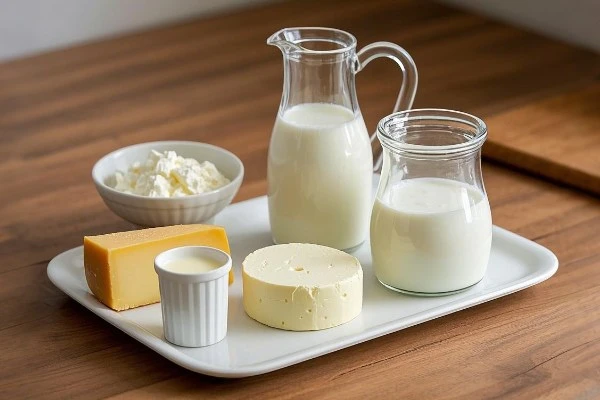
Cheese remains the most important industrial application. Lipase can be used to influence flavor development in products where lipolysis is a defining component of the sensory profile.
Processed Cheese
In processed cheese manufacturing, flavor must often be carefully balanced because the product is designed for consistency and scalability.
Lipase can potentially contribute to flavor complexity, but dosage must be tightly controlled to prevent excessive intensity.
Butter and Cream Products
Lipase may be relevant in selected applications involving dairy fat modification and flavor development. However, these applications require careful control because unwanted lipolysis can quickly produce off-flavors.
Specialty Dairy Products
As consumers seek more distinctive and premium dairy experiences, manufacturers are exploring more specialized flavor profiles. Enzymatic technology can help create differentiated products while maintaining industrial reproducibility.
Lipase vs. Other Dairy Enzymes
Dairy processing uses several enzyme classes, each with a different purpose.
| Enzyme | Primary Function | Common Application |
|---|---|---|
| Lipase | Fat hydrolysis and flavor development | Cheese and dairy flavor systems |
| Chymosin | Milk coagulation | Cheese production |
| Lactase | Lactose hydrolysis | Lactose-free dairy |
| Protease | Protein breakdown | Cheese ripening and texture modification |
| Catalase | Hydrogen peroxide breakdown | Selected dairy processing applications |
Understanding these differences is important when developing an enzyme procurement strategy.
A manufacturer looking to improve cheese flavor should not automatically select a more powerful enzyme simply because its activity specification appears higher. The desired production outcome should determine the enzyme choice.
Factors That Influence Lipase Performance
Several variables can affect the behavior of lipase in a dairy system.
Temperature
Enzymes have an optimal temperature range. Outside this range, activity may decrease or, in some cases, the enzyme may become unstable.
Temperature management is particularly important when enzymes are added before or during processes involving heating or cooling.
pH
Lipase activity can vary considerably with pH. Since dairy products may undergo substantial pH changes during fermentation and ripening, the timing of enzyme addition matters.
Dosage
Dosage is perhaps the most important controllable factor.
Too little lipase may result in insufficient flavor development. Too much may create excessive free fatty acids and an undesirable sensory profile.
The optimal dosage should be established through controlled trials rather than copied directly from another production line.
Substrate Accessibility
The physical structure of milk fat influences enzyme access.
Homogenization, emulsification, fat globule size, and matrix structure can all affect the interaction between enzyme and substrate.
Ripening Time
The longer the enzyme remains active under favorable conditions, the greater its potential impact on lipolysis.
For long-aged cheese, the enzyme strategy may therefore differ significantly from that used for rapid-turnover products.
Common Mistakes When Sourcing Lipase for Dairy Factories
Industrial procurement decisions often fail not because the purchasing team lacks experience but because the wrong comparison criteria are used.
Mistake 1: Comparing Price Per Kilogram Only
A cheaper product is not necessarily more economical.
The appropriate calculation is the total enzyme cost per unit of finished product, taking dosage and activity into account.
A higher-priced enzyme used at a lower dosage may ultimately provide a better economic result.
Mistake 2: Ignoring Activity Units
Activity specifications should be understood in the context of the test method used.
Different analytical methods can produce activity values that are not directly comparable.
Always ask suppliers to clarify the assay conditions and units.
Mistake 3: Buying Without Application Trials
A product may look excellent on paper but behave differently in your specific formulation.
Pilot testing is especially important for dairy enzymes because the final sensory result is influenced by multiple interacting factors.
Mistake 4: Overlooking Regulatory Documentation
For food manufacturers, technical performance is only one side of the equation.
Your supplier should be able to provide relevant documentation covering specifications, certificates of analysis, storage conditions, shelf life, and regulatory compliance.
Mistake 5: Changing Suppliers Without Revalidating the Process
Two products may both be labeled as lipase but have different activity profiles.
Switching suppliers without adjusting dosage or conducting validation trials can create unexpected changes in flavor development.
How to Choose a Reliable Lipase Supplier
Selecting a supplier should be treated as a technical and supply-chain decision.
A strong supplier should ideally provide:
- Multiple brand options
- Clear technical specifications
- Consistent batch quality
- Appropriate packaging
- Reliable delivery schedules
- Technical documentation
- Application guidance
- Competitive pricing
- Traceability
- Regulatory support
MT Royal can be relevant to manufacturers seeking a broader sourcing strategy because it offers access to multiple brands rather than limiting buyers to a single enzyme manufacturer.
This can be particularly useful when procurement teams need to compare performance, price, availability, or technical specifications across different options.
In our experience working with industrial purchasing requirements, the most successful sourcing decisions are rarely based on a single quotation. They involve a structured comparison of technical performance, total cost, supply reliability, and long-term consistency.
Specialized Tips for Large-Scale Dairy Production
Large factories need a more disciplined approach because even minor variations can become significant at scale.
Establish a Master Enzyme Specification
Do not define your requirement only by brand name.
Create a technical specification covering activity, dosage range, source, stability, packaging, and regulatory requirements.
This makes it easier to qualify alternative suppliers without compromising quality.
Use Controlled Dosage Systems
Manual addition may be acceptable for small-scale production, but large factories benefit from automated dosing and verification.
Accurate dosing reduces variability and protects against both under-treatment and over-treatment.
Track Sensory and Analytical Data Together
A sensory panel can identify changes in flavor, but analytical measurements can help explain why those changes occurred.
Monitoring free fatty acid profiles alongside sensory evaluation can provide a more complete picture of enzyme performance.
Validate Every Major Supplier Change
If you change the enzyme brand, do not assume that identical dosage means identical performance.
Run comparative trials under controlled conditions and evaluate the results against your established benchmarks.
Build Supply-Chain Resilience
Enzyme procurement should include contingency planning.
Factors such as international logistics, production interruptions, changes in import requirements, and raw material availability can affect supply.
Maintaining qualified alternatives can protect production continuity.
MT Royal’s multi-brand sourcing model may be useful in this context, especially for manufacturers that want flexibility when evaluating alternative products.
Emerging Trends in Dairy Enzyme Technology
The dairy industry is increasingly moving toward precision processing.
Manufacturers want to achieve specific sensory outcomes with greater consistency and less variation. This is driving interest in enzymes with more predictable activity profiles and application-specific functionality.
Another emerging trend is the demand for cleaner and more transparent ingredient strategies. As consumers pay greater attention to product labels, manufacturers are increasingly evaluating the source, production method, and regulatory status of processing aids and enzymes.
Sustainability is another factor.
More efficient enzyme systems may help manufacturers optimize production processes, reduce waste, or improve resource utilization. While enzymes themselves are used in relatively small quantities, their impact on process efficiency can be much larger than their physical contribution to the formulation.
A further trend is the growing use of data-driven process optimization. Instead of treating enzyme dosage as a fixed recipe number, manufacturers can increasingly consider variables such as milk composition, processing conditions, and desired maturation profile.
This approach can help move dairy production from static recipes toward adaptive manufacturing.
Frequently Asked Questions About Lipase Enzyme for Dairy Processing
What is the primary function of lipase in dairy processing?
Lipase breaks down milk fat triglycerides and releases free fatty acids. These compounds can contribute significantly to flavor and aroma, particularly in cheese production.
Is lipase mainly used for cheese?
Cheese is the most prominent application, but lipase can also have relevance in selected butter, cream, processed dairy, and specialty dairy applications.
Can lipase shorten cheese ripening time?
It may accelerate certain aspects of flavor development, but it does not necessarily replace the complete maturation process. Texture, proteolysis, moisture migration, and microbial activity remain important.
Can too much lipase damage a dairy product?
Yes. Excessive lipolysis can produce overly sharp, rancid, or unbalanced flavors. Dosage optimization is essential.
What is more important: enzyme activity or dosage?
Both matter. Activity determines the enzyme’s functional strength, while dosage determines how much activity is introduced into the production system. They must be evaluated together.
How should a factory compare different lipase brands?
Compare activity using equivalent assay methods, recommended dosage, application data, regulatory status, stability, sensory performance, and total cost of use.
Why should a manufacturer consider multiple brands?
Different brands may offer different activity profiles, availability, pricing structures, or technical characteristics. Access to multiple options can improve sourcing flexibility.
What documentation should suppliers provide?
Depending on the market and application, manufacturers may request technical data sheets, certificates of analysis, specifications, allergen information, storage requirements, shelf-life information, and relevant regulatory documentation.
The Business Case for Better Enzyme Sourcing
In industrial dairy manufacturing, the smallest ingredients can sometimes have the largest influence on product identity.
Lipase is a good example. The enzyme may be added in a relatively small quantity, yet its effect on flavor development can determine whether a cheese tastes flat, balanced, complex, traditional, or aggressively sharp.
That makes enzyme sourcing a strategic decision.
The best Lipase Enzyme for Dairy Processing is not necessarily the product with the highest activity, the lowest price, or the most familiar brand name. It is the product that performs predictably within your specific manufacturing environment and delivers the desired result at an economically sensible dosage.
We have seen that factories often achieve better procurement outcomes when purchasing, quality assurance, R&D, and production teams evaluate enzymes together. Procurement understands cost and availability. R&D understands functionality. Quality teams assess compliance. Production understands what actually happens when the factory is running at full speed on a Monday morning.
All four perspectives matter.
MT Royal can serve as a practical sourcing partner for manufacturers that want to evaluate multiple enzyme brands and competitive purchasing options. The value of this approach is not simply having more products to choose from; it is having greater flexibility to match technical requirements with commercial realities.
For a factory manager, the key question should therefore be simple: what measurable improvement will this enzyme deliver to our product and process?
Once that question becomes central to sourcing decisions, enzyme procurement stops being a routine purchasing exercise and becomes part of your manufacturing strategy.
The dairy industry is built on precision. Milk composition varies, microorganisms evolve, aging takes time, and consumer expectations continue to rise. Lipase cannot solve every production challenge, but when selected and controlled correctly, it can give manufacturers something extremely valuable: greater command over flavor development.
That is the difference between simply adding an enzyme and engineering a better dairy process. The right choice can become almost invisible in the final product—and that is often the mark of excellent industrial formulation. The flavor feels natural, the quality feels consistent, and the process quietly does what it was designed to do.

No comment