

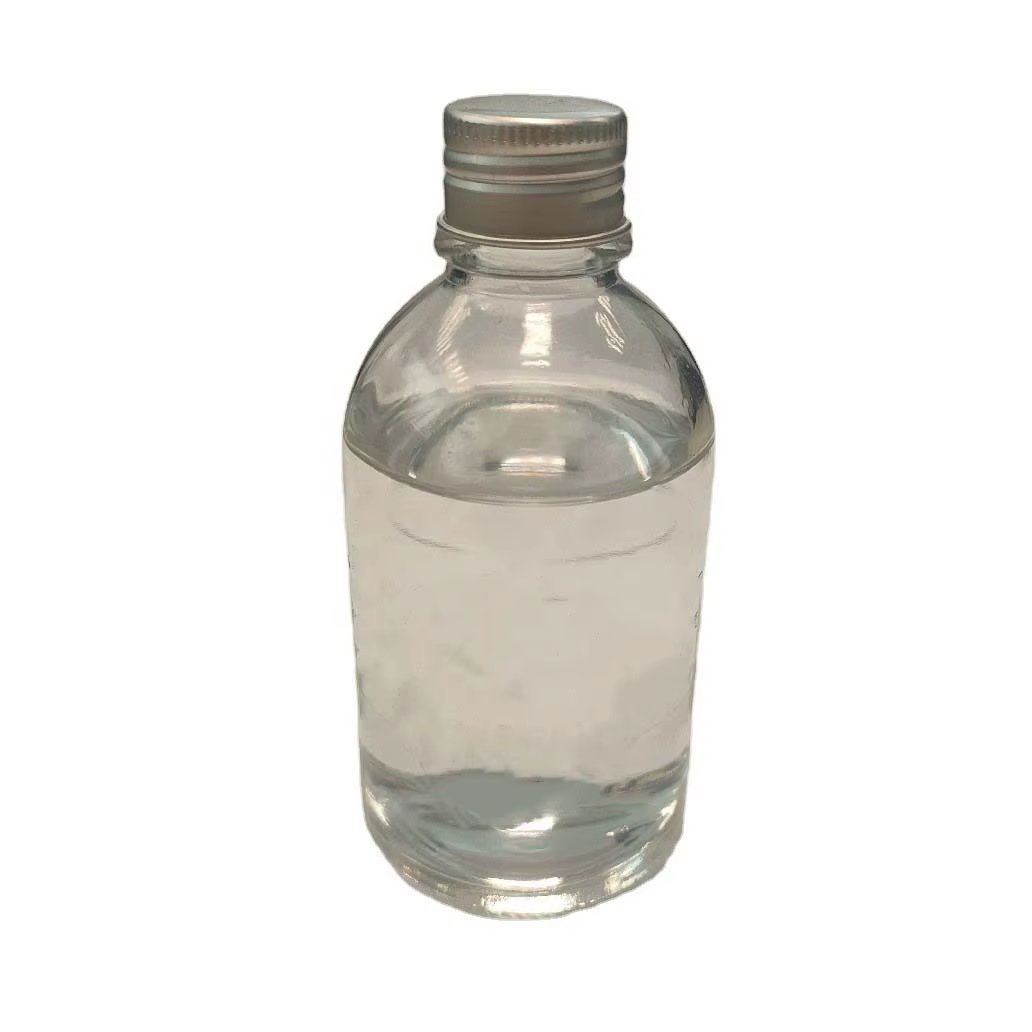
If your factory depends on cost-efficient raw materials without compromising operational performance, choosing the right Crude Glycerin Industrial Grade Exporter can significantly influence both your production economics and process stability. Industrial glycerin markets have evolved rapidly in recent years, driven largely by biodiesel expansion, chemical manufacturing growth, and increased demand for sustainable feedstocks. For procurement teams and production managers, this creates both opportunities and risks. Reliable sourcing can reduce costs and improve margins, while inconsistent quality can disrupt entire production lines.
At MT Royal, we work with manufacturers across multiple sectors who require dependable glycerin supply chains with transparent specifications and competitive pricing. In our collaboration with various factories, we have seen that selecting the right exporter is rarely just about price per ton — it is about purity range, logistical reliability, impurity management, and long-term supply predictability. This article provides a deep, practical understanding of crude glycerin sourcing, industrial applications, technical considerations, and strategic procurement insights to help you make informed decisions.
Understanding Crude Glycerin: Definitions and Industrial Fundamentals
What Is Crude Glycerin?
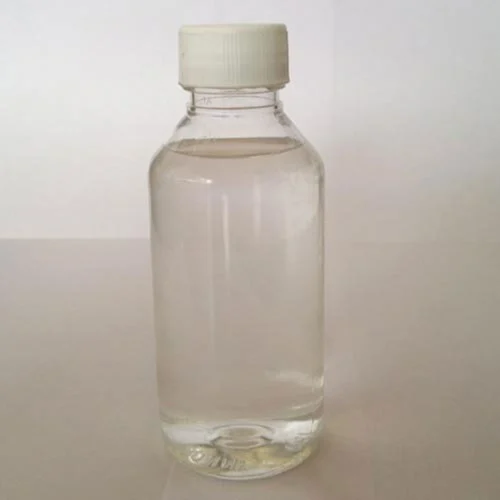
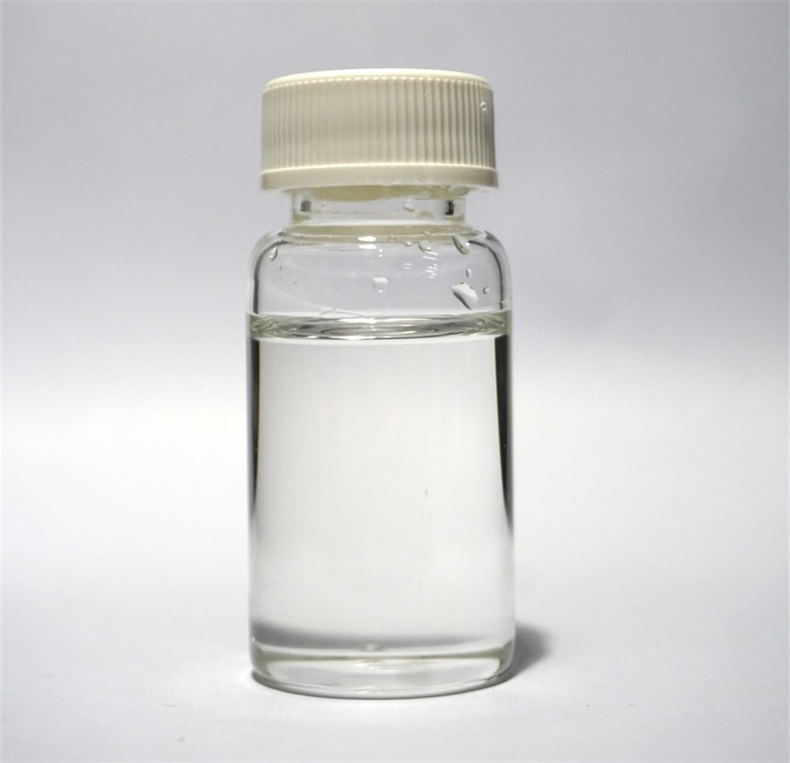
Crude glycerin, sometimes referred to as industrial glycerol, is a by-product generated primarily during biodiesel production through transesterification of vegetable oils or animal fats. Unlike refined glycerin, which undergoes extensive purification to reach pharmaceutical or food grade standards, crude glycerin retains varying levels of impurities such as methanol, salts, water, free fatty acids, and organic residues.
Typical crude glycerin purity ranges from 60% to 90% glycerol, depending on the production method and feedstock. The remaining fraction consists of components that may either require removal for certain applications or provide functional benefits in others.
From an industrial perspective, crude glycerin is not merely an inferior version of refined glycerin. Instead, it is a cost-effective feedstock used in numerous applications where ultra-high purity is unnecessary or where further processing will occur downstream.
Key Industrial Properties
Understanding the chemical and physical characteristics of crude glycerin helps determine suitability for specific processes:
- Hygroscopic behavior and moisture retention capability
- High viscosity dependent on temperature and purity
- Solvent properties for organic compounds
- Combustion potential as a renewable energy source
- Compatibility with chemical conversion pathways
These properties make crude glycerin valuable in industries ranging from animal feed to bio-chemicals and energy production.
Industrial Versus Refined Glycerin
A frequent misconception among buyers is that crude glycerin is simply “low-quality glycerin.” In reality, it is a different category of industrial raw material with its own economic and functional advantages.
Refined glycerin is typically used in:
- Pharmaceuticals
- Food and beverage
- Cosmetics and personal care
Crude glycerin is commonly used in:
- Animal nutrition and feed additives
- Chemical intermediates
- Biogas and combustion energy
- Resins and polymer production
- Industrial fermentation processes
Understanding this distinction allows procurement teams to optimize cost structures without compromising performance.
The Global Market Landscape: Why Exporter Selection Matters
Biodiesel Expansion and Supply Growth
The global expansion of biodiesel production has dramatically increased crude glycerin availability. For every 10 tons of biodiesel produced, roughly one ton of crude glycerin is generated. This has transformed glycerin from a niche chemical into a widely available industrial commodity.
However, increased supply does not automatically translate into reliable sourcing. Quality variability between producers remains significant, and transportation logistics can influence delivered cost more than raw material price.
A knowledgeable Crude Glycerin Industrial Grade Exporter acts as a stabilizing partner, ensuring consistent specifications and dependable delivery schedules.
Regional Export Dynamics
Major exporters are typically located in regions with strong biodiesel industries, including Southeast Asia, Europe, and South America. Exporter reliability depends not only on production capacity but also on logistics infrastructure, regulatory compliance, and documentation accuracy.
Working with an experienced supplier like MT Royal offers access to multiple sourcing origins, enabling flexibility in pricing and supply continuity.
Industrial Applications of Crude Glycerin
Animal Feed and Livestock Nutrition
One of the largest markets for crude glycerin is animal feed. Glycerol provides a highly digestible energy source for livestock, particularly in cattle and swine nutrition. When properly processed and tested, crude glycerin can replace portions of traditional carbohydrate sources.
Key benefits include:
- High energy density
- Improved feed palatability
- Cost-effective alternative to grain-based inputs
- Support for metabolic energy during growth phases
However, strict control of methanol levels is essential to ensure safety.
Bioenergy and Combustion Applications
Crude glycerin can serve as a renewable fuel in industrial boilers and combustion systems. Its energy value, combined with waste-reduction benefits, makes it attractive for facilities seeking sustainable fuel alternatives.
Factories using crude glycerin as fuel often report:
- Reduced fossil fuel dependence
- Lower emissions footprint
- Improved sustainability metrics
Chemical Manufacturing and Industrial Processing
Crude glycerin is used as a feedstock for various chemical conversions, including:
- Propylene glycol production
- Epichlorohydrin synthesis
- Bioplastics intermediates
- Surfactant manufacturing
In these applications, downstream purification often occurs, making initial crude purity less critical than cost efficiency.
Fermentation and Biotechnology
Certain fermentation processes utilize glycerol as a carbon source. Industrial biotechnology sectors leverage crude glycerin to produce:
- Organic acids
- Bio-polymers
- Enzymes
- Biofuels
The economic advantage of crude glycerin over refined sugars can significantly reduce production costs.
Common Mistakes When Choosing a Crude Glycerin Industrial Grade Exporter
Mistake #1: Ignoring Impurity Profiles
Not all crude glycerin is equal. Variations in:
- Methanol content
- Ash levels
- Free fatty acids
- Water content
can dramatically affect performance. Buyers who focus solely on glycerol percentage may encounter process disruptions.
Mistake #2: Overlooking Logistics and Handling Requirements
Crude glycerin viscosity changes with temperature. Improper transport conditions can lead to:
- Pumping difficulties
- Storage complications
- Product stratification
Exporters with industrial logistics experience help prevent these issues.
Mistake #3: Failing to Evaluate Consistency Between Batches
Consistency is often more important than maximum purity. Production lines depend on predictable inputs. Reliable exporters implement quality control protocols that ensure minimal variation between shipments.
Mistake #4: Neglecting Documentation and Compliance
Industrial sectors still require documentation such as:
- Certificates of Analysis
- Safety Data Sheets
- Transport documentation
- Regulatory compliance statements
Incomplete paperwork can delay customs clearance or regulatory approvals.
Comparing Crude Glycerin Grades: What Manufacturers Should Know
Below is a practical comparison for procurement teams:
Purity Range 60–70%
Typical Use: Combustion fuel, low-grade industrial processes
Cost: Lowest
Purity Range 70–85%
Typical Use: Animal feed, fermentation, chemical intermediates
Cost: Moderate
Purity Range 85–90%
Typical Use: Chemical conversion requiring higher consistency
Cost: Higher but still economical compared to refined glycerin
Selecting the correct grade depends on your process tolerance and downstream requirements.
Industrial Tips for Large-Scale Production
Optimize Storage Infrastructure
Crude glycerin storage tanks should include:
- Heating systems to control viscosity
- Agitation or recirculation capability
- Moisture protection
- Corrosion-resistant materials
These factors ensure stable product quality over time.
Implement Incoming Quality Verification
Even with supplier documentation, internal testing improves reliability. Recommended checks include:
- Glycerol content
- Methanol concentration
- Moisture levels
- Density and viscosity
This step reduces operational risk.
Consider Blending Strategies
Some factories blend multiple crude glycerin sources to achieve target specifications at lower cost. This requires analytical capability but can improve margins.
Monitor Process Integration
When introducing crude glycerin into existing processes, monitor:
- Reaction kinetics
- Heat transfer behavior
- Equipment compatibility
Small adjustments often produce significant efficiency gains.
Frequently Asked Questions from Procurement Teams
Is Crude Glycerin Safe for Industrial Use?
Yes, when handled according to industrial safety standards and when impurity levels meet application requirements. Safety depends primarily on methanol concentration and proper storage practices.
How Is Pricing Determined?
Pricing depends on:
- Glycerol purity
- Impurity profile
- Origin and feedstock
- Transportation distance
- Market demand for biodiesel
Long-term contracts often provide price stability.
Can Crude Glycerin Replace Refined Glycerin?
In some industrial processes, yes. However, applications requiring high purity — such as pharmaceuticals or food — still require refined glycerin.
What Logistics Considerations Are Important?
Bulk shipments may use:
- ISO tanks
- Flexitanks
- Tank trucks
Temperature management during transport prevents viscosity issues.
How Do I Choose a Reliable Exporter?
Evaluate:
- Quality consistency
- Documentation accuracy
- Logistics experience
- Supply network diversity
- Technical support availability
Working with suppliers like MT Royal provides access to multiple sources and technical guidance.
Emerging Trends in the Crude Glycerin Industry
Growth of Bio-Based Chemicals
Sustainability initiatives are driving increased demand for renewable feedstocks. Crude glycerin fits perfectly into bio-based chemical value chains, replacing petroleum derivatives.
Circular Economy Integration
Industrial sectors increasingly value waste-derived materials. Using crude glycerin supports circular economy goals and improves ESG reporting metrics.
Advanced Refining Technologies
New purification methods allow conversion of lower-grade glycerin into higher-value products, expanding market potential and stabilizing supply chains.
Digital Supply Chain Monitoring
Modern exporters implement digital tracking for shipments, quality data, and documentation, improving transparency for buyers.
The Strategic Advantage of Working With MT Royal
MT Royal positions itself as more than a supplier. By offering multiple sourcing origins and competitive pricing structures, it helps manufacturers maintain supply continuity and cost efficiency.
We understand that industrial buyers require:
- Reliable specifications
- Predictable logistics
- Responsive communication
- Long-term partnership mindset
In our experience, factories achieve better operational stability when sourcing decisions consider total value rather than just unit price.
Final Thoughts: Turning Industrial By-Products Into Strategic Assets
Crude glycerin represents one of the most compelling examples of industrial synergy — a by-product transformed into a versatile raw material powering multiple sectors. Choosing the right Crude Glycerin Industrial Grade Exporter determines whether that potential translates into real operational advantages for your factory.
The difference between inconsistent supply and strategic sourcing can affect production costs, efficiency, and even competitive positioning in your market. Manufacturers who approach glycerin procurement with technical insight and partnership mindset often unlock significant value that extends far beyond the raw material itself.
When you evaluate suppliers, consider not just what you are buying today, but how that relationship will support your growth tomorrow. Reliable sourcing, consistent quality, and collaborative expertise transform crude glycerin from a commodity into a cornerstone of industrial success.


No comment