

For Mongolian manufacturers and industrial buyers, sourcing raw materials from Türkiye can open a gateway to high-quality, cost-effective, and regulation-compliant supply — materials that meet European and global standards, while remaining competitively priced. If you manage or own a factory in Mongolia, and aim to improve material sourcing, accelerate production, or diversify suppliers, this guide will walk you through exactly how to import from Türkiye, with all details, potential pitfalls, and strategic considerations.
Having worked with numerous producers across Asia and Europe, we at MT Royal have witnessed how importing from Turkish mills or refiners — when done right — reduces procurement risks, ensures consistency, and improves profitability. In what follows, you’ll gain a clear roadmap: from defining your needs, through documentation and customs compliance, to logistics and eventual use in your plant.
Why Türkiye Matters for Mongolian Importers: Strategic Value and Opportunity
Before diving into the “how,” it is vital to understand why Türkiye is a source worth considering for a Mongolian company.
Strategic Blend of Quality, Cost and Accessible Manufacturing
Türkiye combines manufacturing capabilities that adhere to high standards with relatively competitive costs. Many Turkish suppliers produce raw materials — oils, chemicals, food & cosmetic ingredients, specialty fats, oleochemicals, emulsifiers — which match international specifications but come at a lower landed cost compared to Western Europe or other high-cost regions. For Mongolian factories, that balance between price and quality is especially valuable.
Moreover, despite geographic distance, Türkiye has developed a robust export infrastructure, experienced customs and trade procedures, and exporters accustomed to international trade — making the import process from Türkiye manageable and scalable.
Regulatory Compliance and Export-Standard Documentation
Turkish export is governed by a well-defined “Export Regime,” which includes clear rules on documentation, product safety, origin certification, and quality compliance.
For a Mongolian importer, receiving properly documented materials simplifies customs clearance, valuation, and compliance with Mongolian import laws.
Trade Regime & Duty Considerations in Mongolia
Mongolia has a relatively liberal import regime. Under its customs law, most goods can be imported without special licensing, provided the importer is registered with tax authorities and the state registry.
Customs duties generally apply ad valorem on CIF (cost, insurance, freight) value, but many categories — especially industrial raw materials — are subject to a standard 5% duty under the MFN (most‑favored‑nation) tariff.
This predictable and modest tariff environment means that, with proper planning, importing from Türkiye often remains cost-effective after duty and logistics.
Demand Growth Indicates Real Need for Raw Materials
Recent data shows Mongolia’s import of goods and raw materials has surged, indicating a growing appetite among Mongolian manufacturers for diversified supplies — making now a strategic moment to explore sourcing relationships beyond traditional suppliers.
What Types of Turkish Raw Materials Are Especially Relevant for Mongolian Companies
Depending on your industry — food, cosmetics, chemicals, manufacturing, packaging, etc. — different categories of Turkish-exported raw materials may suit your needs. Among the most common and in-demand:
- Oils & fats: palm derivatives, specialty fats, cocoa-butter replacements — relevant for food, confectionery, cosmetics.
- Oleochemicals & surfactants: used in personal-care, detergent, chemical manufacturing.
- Food additives, stabilizers, emulsifiers: vital for processed food, beverages, nutritional products.
- Chemical intermediates / industrial raw materials: solvent-based or fatty-acid based inputs for manufacturing.
- Cosmetic raw materials, natural oils, botanical extracts: for skincare, cosmetic, or personal‑care production lines.
By partnering with a multi‑supplier intermediary like MT Royal, you can source a broad portfolio under one roof — reducing the complexity of dealing with multiple Turkish suppliers and ensuring consistency in documentation, quality, and supply chain management.
Step‑by-Step: How Mongolian Companies Can Import from Türkiye
Here’s a detailed, structured walkthrough tailored for Mongolian procurement teams or factory owners. Follow these steps to minimize risk and maximize efficiency:
Step 1: Define Your Raw Material Requirements Clearly
Begin with a detailed internal specification sheet. Include:
- Material grade (food-grade, cosmetic grade, industrial grade, etc.) and purity level
- Technical parameters (e.g., melting point, viscosity, fatty acid profile, moisture content, pH, heavy-metal thresholds)
- Packaging format (25 kg bags, drums, IBCs, pallets)
- Estimated order volume (monthly, quarterly, annual)
- Storage requirements (temperature, humidity, shelf life)
- Required certifications or compliance (e.g., hygiene, safety, chemical regulations)
Without clear specs, you risk receiving materials that don’t meet your production standards — a common mistake among first-time importers.
We have seen companies that ordered based only on generic descriptions; the result: wasted time, rejections, or extra processing costs. Do not skip this step.
Step 2: Choose Suppliers — or Use an Experienced Intermediary
Reaching out directly to multiple Turkish manufacturers can be overwhelming: language differences, varying documentation practices, compliance uncertainties. Instead, consider working with a trusted intermediary such as MT Royal.
Advantages of an intermediary approach:
- Single point of contact managing multiple Turkish producers
- Consolidated documentation — invoices, quality certificates, certificate of origin, packing lists, SDS (safety data sheets)
- Assistance with export compliance, packaging, logistics
- Reduced risk of non-compliance, delays or mismatches
As a Mongolian importer, time and clarity are often more valuable than negotiating with multiple unknown suppliers — especially if you aim to scale up.
Step 3: Ensure Complete and Correct Turkish Export Documentation
When importing from Türkiye, you must ensure the following core documents accompany the shipment:
- Commercial Invoice (with precise description, HS codes, value)
- Packing List (weights, dimensions, packaging details)
- Bill of Lading (sea freight) or Airway Bill (air freight) — original + copies
- Certificate of Origin (signed and notarized; may be ATR / EUR‑1 depending on trade agreements)
For certain materials — especially chemicals, food additives, or products requiring compliance — additional certificates may be needed: health, phytosanitary, safety data sheet (SDS), Certificate of Free Sale, or chemical compliance certifications.
Before the shipment departs Turkey, double-check all documentation to avoid surprises at Mongolian customs.
Step 4: Classify Goods with Correct HS Code & Understand Tariffs
The correct HS (Harmonized System) code is essential. It dictates import duty, any special regulations, and whether your shipment may be subject to inspections or special requirements.
In Mongolia, customs duties on most imported goods are ad valorem — commonly 5% under MFN tariffs — but vary by product type.
Note: Some raw materials or industrial inputs may be exempt, or subject to reduced duties. It’s worth consulting a licensed customs broker in Mongolia to confirm — especially for chemicals or specialized industrial inputs.
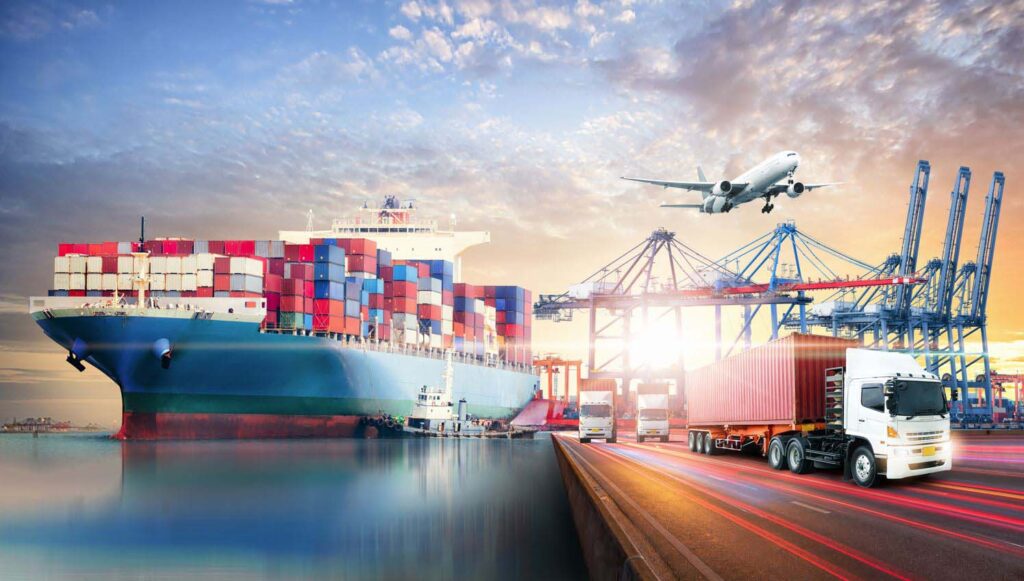
Step 5: Plan Logistics: Freight, Transport, Incoterms
Depending on the nature, volume, urgency, and sensitivity of your materials, choose the appropriate transport mode:
- Sea freight: Often the most cost-effective for bulk raw materials (oils, chemical drums, large volumes).
- Air freight: Suitable for smaller, urgent, high-value shipments — though costlier.
- Land/rail + multimodal logistics: For certain routes — though from Türkiye to Mongolia, typically a combination of sea + land or sea + rail/transit is needed.
Ensure you agree on suitable Incoterms (e.g., CIF, FOB, DAP), packaging requirements, labeling, hazard documentation (if chemicals), and freight insurance.
Step 6: Export Compliance and Pre-Shipment Control in Türkiye
Turkish export is regulated under a formal export regime. Exporters must comply with safety, labeling, and foreign-trade regulations including national risk-based control systems which ensure product safety and conformity before shipment.
If materials are subject to deeper scrutiny — e.g., chemical intermediates, additives, food raw materials — the exporter must ensure proper registration, documentation, and in some cases special permits or control certificates.
As a Mongolian buyer relying on Turkish partners, confirm that all compliance checks are complete, and request originals of all necessary certificates.
Step 7: Customs Clearance & Import Procedures in Mongolia
Once shipment arrives in Mongolia, the import process unfolds as follows:
- The importer must be registered with Mongolian tax authorities and the state registry — a prerequisite for customs clearance.
- Submit customs declaration through the standard customs portal, with all required documents: invoice, packing list, bill of lading/airway bill, certificate of origin, and any compliance certificates if required (e.g., for chemicals, food ingredients).
- Pay customs duties and associated taxes (ad valorem, possibly consumption tax if applicable) — most raw materials face a standard 5% duty under MFN; some goods may be exempt depending on tariff classification.
- Optionally use a customs broker or licensed clearing agent — Mongolia allows clearance via licensed customs brokers, which can simplify paperwork, especially for first-time importers or complex shipments.
If imported materials are intended for manufacturing, storage, or further processing before sale, ensure your internal logistics and storage comply with safety, labeling, and possible hazardous-material protocols.
Step 8: Quality Control, Inventory Management & Regulatory Compliance on Your Side
After customs clearance, before using the materials in production:
- Conduct incoming quality checks: verify batch certificates, compare with technical specs, test critical parameters (purity, composition, stability).
- Maintain batch traceability and a documentation archive — for audit, compliance, or potential re-export.
- Forecast your consumption and plan procurement cycles accordingly: consider lead times from Türkiye, shipping delays, and buffer stock — especially important for continuous production lines.
- For regulated materials (chemicals, additives, food raw materials), monitor Mongolian regulations and any required registrations or approvals before use or sale.
Common Mistakes and Pitfalls Mongolian Importers Should Avoid
From our experience and through lessons learned in actual import operations, these are frequent errors — and how to prevent them:
- Vague or incomplete technical specifications — leads to mismatched materials, wasted time, or outright rejection.
Solution: Provide a detailed specification sheet from the start. - Insufficient documentation from Turkish supplier — missing certificate of origin, improper packing list, lacking compliance certificates.
Solution: Insist on full documentation, verified, before shipment. - Misclassification of goods (wrong HS code) — may result in incorrect duties, delays, or seizure.
Solution: Use a customs broker or check classification thoroughly with supplier prior to shipping. - Ignoring regulatory compliance (especially chemicals or sensitive inputs) — causing customs rejections or fines.
Solution: Confirm compliance with Turkish export rules, request SDS and safety certificates, and ensure Mongolian regulations are met. - Underestimating logistics and lead times — particularly for bulk shipments or during high-demand seasons.
Solution: Build buffer stock, use reliable freight forwarders, and plan orders well in advance. - Poor supply-chain diversification — relying on a single supplier risk disruptions.
Solution: Use intermediary like MT Royal to access multiple producers; diversify sources.
Industrial Considerations for Large-Scale Production in Mongolia
If your factory operates at high volume, or you plan long-term manufacturing, you must think strategically — not just tactically.
- Supply chain resilience: Avoid dependency on a single supplier or a single Turkish facility. Use a network (as intermediaries often provide) to mitigate risk.
- Batch control & traceability: For consistency in product output — especially important in sectors like food, cosmetics, chemicals — demand batch-level documentation, run QC tests, archive SDS and certificates.
- Inventory & demand forecasting: Based on your production schedule, plan procurement cycles to account for shipping time, customs clearance, and buffer stock.
- Cost-benefit analysis: Always calculate landed cost (cost of raw material + freight + customs + insurance + internal logistics) and compare with alternative sourcing (local raw materials, other countries). Sourcing from Türkiye often remains competitive — but only if done with discipline.
- Regulatory and compliance monitoring: For regulated sectors (chemicals, food, cosmetics, additives), ensure continuous compliance with Mongolian regulations; stay updated on any changes in customs law or import requirements.
Frequently Asked Questions by Mongolian Factory Managers & Procurement Officers
Q: Do we need a special permit or import license in Mongolia to bring raw materials from Türkiye?
A: In general, no — most goods are imported without special licensing. However, the importer must be registered with Mongolian tax authorities and the state registry for customs clearance.
Licensing is only required for a limited range of restricted items (e.g., certain chemicals, hazardous items) which typically do not include standard industrial raw materials.
Q: What’s the typical customs duty when importing from Türkiye to Mongolia?
A: For most raw materials and industrial goods, the standard MFN ad‑valorem customs duty is about 5%.
Depending on classification, some items may be duty‑exempt or subject to other tariff rates — especially if covered by specific exemptions.
Q: What documents must the Turkish supplier provide to ensure smooth import to Mongolia?
A: At minimum: commercial invoice, packing list, bill of lading or airway bill, certificate of origin.
Additionally, for materials requiring compliance (chemicals, food additives, oils, cosmetic inputs), you should request relevant certificates — safety data sheets (SDS), quality certificates, compliance with Turkish trade/export regulations.
Q: Can we import via an intermediary rather than directly from a Turkish manufacturer? What are pros/cons?
A: Yes — using an intermediary like MT Royal often makes the process easier: single negotiation point, consolidated documentation, easier logistics, better supply-chain reliability.
However, you trade off some direct-negotiation leverage and may rely heavily on the intermediary’s sourcing quality and compliance. That is why selecting a reputable intermediary with demonstrated export records is vital.
Q: What should a Mongolian factory do to ensure quality control after import?
A: Set up internal QC procedures: check batch documentation, verify material specifications, run lab tests if necessary, track lot numbers, and store materials according to recommended conditions (temperature, humidity, shelf life). Also plan inventory carefully to avoid production disruption.
Why Partnering with MT Royal Makes Sense for Mongolian Importers
We at MT Royal operate with a deep understanding of both Turkish manufacturing/export standards and the needs of Asian and Mongolian factories. Here is how we help bridge the gap:
- We aggregate a network of reliable Turkish suppliers — oils, fats, oleochemicals, food & cosmetic ingredients, industrial chemicals — giving you access to a broad product range under one roof.
- We ensure full compliance: all necessary export documentation (commercial invoice, certificate of origin, packing list, bill of lading), product safety compliance under Turkish export regulations, and readiness for international shipping.
- We coordinate logistics, packaging, export compliance and help manage customs paperwork — reducing administrative burden and risk for your procurement team.
- We support supply-chain stability: by offering diversified sourcing, batch traceability, and transparent costing — enabling Mongolian factories to plan production more reliably and scale up responsibly.
If your goal is to modernize and optimize the sourcing side of your production, collaborating with a qualified intermediary such as MT Royal can significantly simplify the journey.
Strategic Conclusion
For Mongolian companies, importing raw materials from Türkiye isn’t just an alternative procurement channel — it’s an opportunity to upgrade your supply chain, improve cost-efficiency, ensure consistent quality, and enhance long-term production stability.
By following a structured, disciplined approach — starting with clear technical specifications, ensuring full compliance and documentation, selecting reliable partners or intermediaries, and maintaining internal quality controls — you can transform sourcing from a challenge into a strategic advantage.
In a dynamic global market where supply disruption, price volatility, and quality inconsistency are constant risks, building a robust import pipeline from Türkiye can position your factory for resilience and growth.
Let this guide be your roadmap. Take the first step, evaluate your material needs, engage with trusted suppliers or intermediaries like MT Royal — and bring the best raw materials to your production floor with confidence and clarity.

No comment