

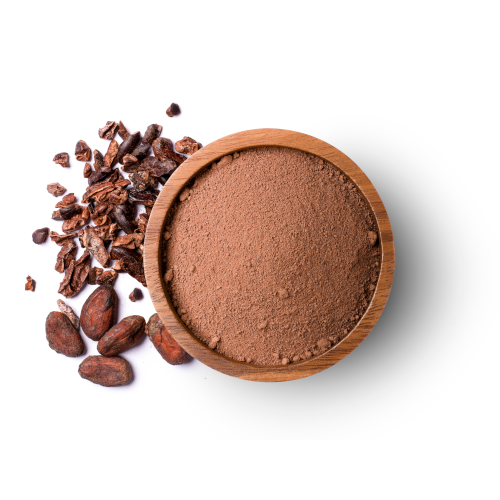
Pastino offers a premium product named Pastino Natural Cocoa Powder T20, which is a non-alkalized (natural) cocoa powder specifically formulated for use in a wide range of food manufacturing applications, including bakery products, dairy and milk-based beverages, confectionery, desserts, and other processed foods. Unlike alkalized or Dutch-processed cocoa powders, Pastino Natural Cocoa maintains the natural chemical and sensory properties of cocoa beans, providing a truly authentic cocoa experience in both taste and appearance.
Because it is not subjected to alkalization, the cocoa retains its natural acidity, which plays a crucial role in its behavior when incorporated into complex formulations. This natural acidity contributes to a lighter-to-medium brown color, making it visually appealing in dairy products, flavored milks, ice creams, and puddings without the risk of creating a dull or greyish tone that sometimes occurs with alkalized cocoa.
The flavor profile of Pastino Natural Cocoa is clean, mild, and balanced, with subtle notes of natural cocoa aroma that enhance the sensory experience of the final product. This “warm cocoa” character adds depth and richness without overpowering other ingredients, which is especially important in milk-based or lightly sweetened formulations where a strong bitterness would be undesirable.
latamarko alkalized cocoa powder lm60
cocoa powder for chocolate production-Best price
Food industry raw materials – list of products
Types of Gelatin from Turkish Manufacturer
Alkalized Cocoa Powder Bulk Supplier
Key Specifications & Why They Matter for Dairy / Milk Applications
According to Pastino’s specification sheet:
- Type: Natural (non-alkalized) cocoa
- pH: ~ 5.0 – 5.8 — this acidity is typical of natural cocoa and influences interactions with dairy systems.
- Fat content: 10–12%
- Moisture: ≤ 5%
- Fineness: 99.5% passes through 200-mesh sieve → indicates fine, uniform particles
- Solubility / dispersibility: Good in both dry and liquid systems — important for beverages or dairy mixes.
These attributes translate into tangible benefits when used in dairy products (like chocolate milk, flavored milk, ice cream, dairy-based beverages, desserts, etc.):
- The natural acidity helps preserve desirable sensory profile (mild, clean cocoa flavor) without unwanted off-tones.
- Fine particle size + good solubility = easier dispersion in milk/cream bases → minimizes clumping or sedimentation.
- Stable color (light-to-medium brown) yields visually appealing dairy drinks when mixed with white milk, without turning too dark or grey.
- Consistent fat and moisture specs contribute to predictable performance in industrial-scale mixing, emulsification or homogenization processes.
Pastino themselves list “Dairy & Ice Cream” among the main applications of their natural cocoa powder.
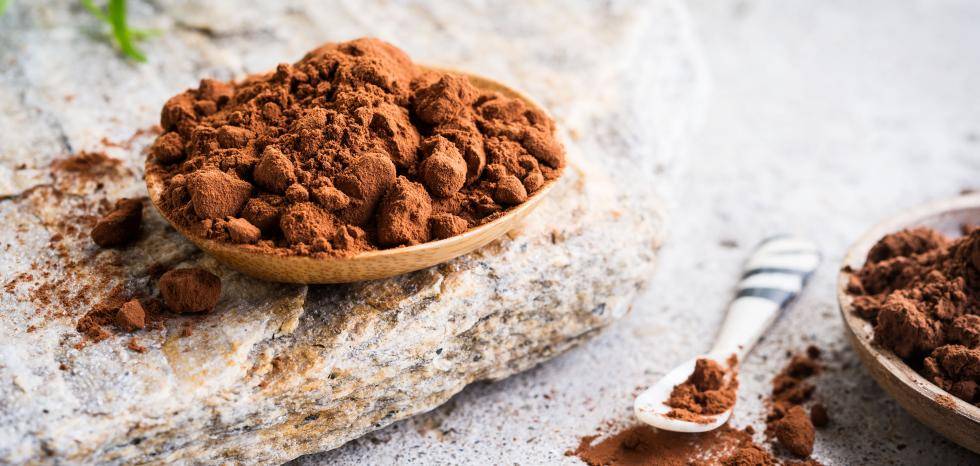
Why Natural (Non-Alkalized) Cocoa — Especially for Dairy & Beverages — Matters
To appreciate why Pastino’s natural cocoa is suitable for milk-based applications, it helps to contrast “natural” vs “alkalized (Dutch-processed)” cocoas:
- Natural cocoa preserves original acidity and flavor compounds, resulting in lighter brown color, more pronounced cocoa taste, and better reactivity when used with leavening or acid-sensitive ingredients.
- Alkalized cocoa undergoes chemical treatment to raise pH, leading to darker color and milder flavor. While preferred in some applications (cakes, dark desserts, intense chocolate products), it can be less optimal when mixing into dairy or beverages where natural cocoa’s acidity, flavor clarity and dispersibility create a more balanced result.
For dairy drinks or flavored milk — especially where you want a natural appearance, mild cocoa flavor, and stable suspension/dispersion — natural cocoa like Pastino’s tends to outperform alkalized varieties. Pastino’s literature emphasizes “clean-label appeal,” “authentic cocoa flavor,” and “stable performance in bakery, beverages, dairy products … and ice cream.”
Thus, for beverage manufacturers, dairies, ice-cream producers, or dessert product developers, natural cocoa powders with controlled specs offer lower technical risk and more predictable sensory and physical behavior.
Practical Applications of Pastino in Dairy & Food Industry
Pastino Natural Cocoa Powder T20 (and similar natural cocoa powders) are marketed for multiple industrial uses:
- Flavored milk & chocolate milk drinks: dissolves well in milk or milk-based beverages, delivering cocoa note without overpowering bitterness or requiring heavy flavor masking.
- Ice cream and frozen desserts: because of its fine dispersion, stable color, and clean cocoa flavor, suitable for chocolate-flavored ice creams or cocoa-infused dairy desserts.
- Dairy-based puddings, creams, dessert sauces, chocolate-milk powders or mixes: ideal when a “natural cocoa taste” and clean labeling are desired.
- Bakery combined with dairy formulations: muffins, cakes or baked goods containing milk, cream or dairy mixes benefit from uniform cocoa distribution and consistent color/flavor.
Moreover, natural cocoa’s clean-label nature aligns with global trends: many brands seek simpler ingredient lists (no alkalization agents, minimal additives), which lends itself to “clean-label,” “natural,” or “label-friendly” dairy and beverage products.
Considerations & Industry Insights for Using Pastino at Scale
While Pastino Natural Cocoa offers many advantages, for industrial-scale production there are practical considerations to ensure optimal use:
- Dispersion method matters: Because cocoa is fine particles, efficient mixing (e.g. pre-dispersing in a premix, using high-shear mixing equipment if needed) ensures homogeneous distribution in dairy matrices and avoids lumps or sedimentation.
- Temperature control during mixing: Cocoa disperses better when added at moderate temperature (e.g. warm milk, not very cold), but caution required if doing UHT or pasteurization — some natural cocoas can cause sediment or change in texture under extreme heating. Pastino’s “good solubility in hot & cold systems” suggests it was designed with these needs in mind.
- Batch-to-batch consistency: For large-scale food production, variability in cocoa powder (particle size, fat content, moisture, acidity) can cause fluctuation in final product — flavor, texture, color. Choosing an industrial-grade natural cocoa with strict specs (like Pastino T20) can mitigate this risk.
- Clean-label / regulatory demands: With the rising demand for “clean-label,” “non-alkalized,” and fewer additives, natural cocoa powders allow formulators to avoid use of alkali agents or artificial colorants, which may be important for certain markets or consumer segments.
- Supply reliability: For a consistent production line, having a dependable supplier is critical. Using a recognized supplier and confirming batch certificates, shelf-life, packaging and storage conditions helps maintain production quality over time.
- Product development flexibility: Because natural cocoa has milder, more neutral flavor compared to dark alkalized cocoa, it offers flexibility — you can control sweetness, cocoa intensity, and other flavor notes by adjusting formulation (sugar, vanilla, milkfat, emulsifiers, etc.).
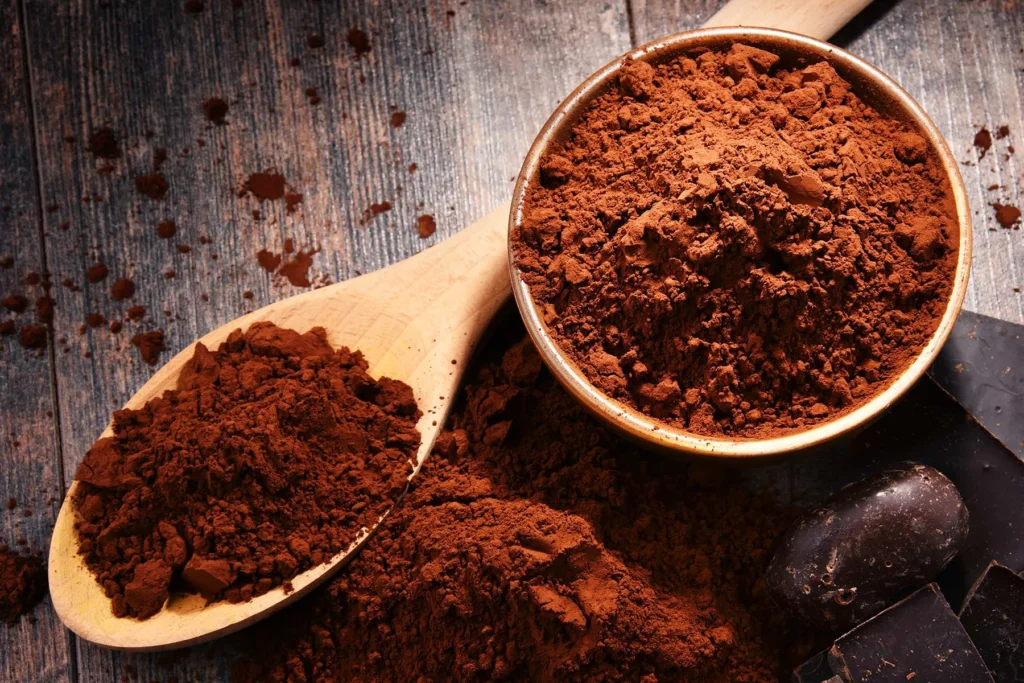
When Might Alkalized (Dutch-Processed) Cocoa Be Preferable?
Even though natural cocoa like Pastino’s is often ideal for dairy-based applications, there are cases where alkalized cocoa may be preferred — for example:
- When you aim for deep chocolate/dark appearance (e.g. dark chocolate milk, rich chocolate desserts, coatings).
- When bitterness must be mild and flavor subdued (for example in chocolate candies, coatings, certain pastries).
- When the formulation relies on neutral pH (e.g. some baked goods, or products where acidity needs to be minimized).
However, for standard flavored milk, chocolate milk drinks, ice cream and dairy desserts where natural flavor, clean-label and clean appearance are priorities — natural cocoa remains a top choice.
Conclusion
Pastino Natural Cocoa Powder T20 is more than “just another cocoa powder.” For manufacturers in the dairy, beverage or frozen-dessert sectors, it offers a technically sound, flavor-forward, clean-label and industrial-grade cocoa base. Its fine particle size, controlled fat/moisture/pH specifications, and good solubility make it well-suited for milk-based systems — reducing issues like clumping, sedimentation, color instability or off-flavor.
If your facility aims to produce flavored milk drinks, chocolate milk, ice creams, dairy-based desserts, or clean-label cocoa-milk mixes — Pastino gives you predictable performance, clean cocoa taste, appealing color, and production scalability. For nutrition-sensitive or clean-label products, avoiding alkalized cocoas is also a major advantage.

No comment