

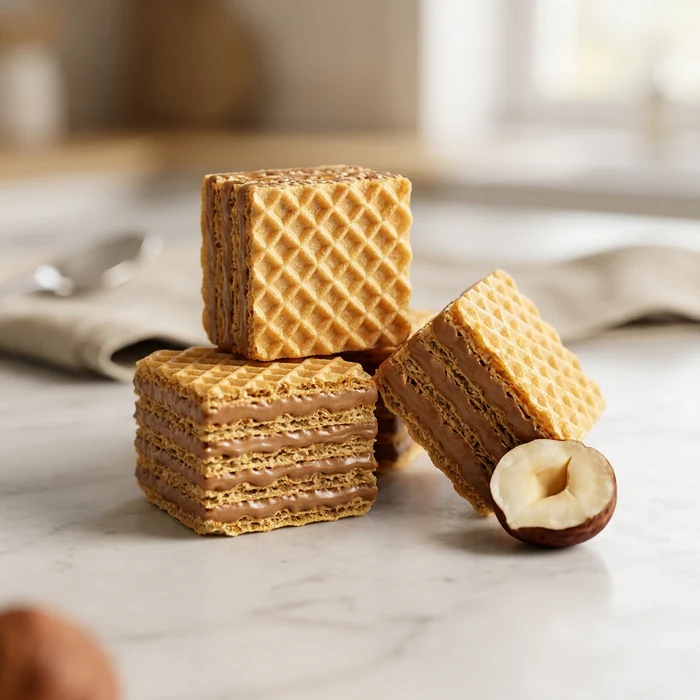
In wafer manufacturing, crispness is not just a sensory characteristic—it is the entire identity of the product. A wafer that loses its crunch becomes something else entirely: a soft, disappointing structure that no longer meets consumer expectations. For factories competing in export markets, mastering How to Control Wafer Crispness and Shelf Life is not a quality improvement task; it is a business survival strategy.
This is why industrial manufacturers increasingly prioritize stable sourcing of raw materials through partners such as MT Royal, ensuring consistent flour behavior, fat systems, and emulsifier performance. When ingredients remain stable, crispness becomes predictable—and shelf life becomes manageable rather than accidental.
Wafer crispness is a delicate balance between structure, moisture, fat distribution, and environmental interaction. Unlike biscuits or cookies, wafers are extremely thin and porous, making them highly sensitive to even minor changes in humidity or formulation. A shift of just 0.5–1% moisture can dramatically change texture perception.
This article provides a deep industrial breakdown of wafer crispness control, shelf life engineering, formulation science, packaging strategies, and production optimization techniques used in modern high-performance wafer factories.
LATAMARKO LM60 – Premium Spanish-Origin Cocoa Powder
latamarko alkalized cocoa powder lm60
cocoa powder for chocolate production-Best price
Food industry raw materials – list of products
Best Brazilian Arabica Coffee Bean Supplier for Industrial Roaster
Uganda Bugisu Arabica Coffee Beans for Specialty Coffee Industry
Understanding Wafer Crispness as a Structural Property
Crispness in wafers is not simply “dryness.” It is a mechanical and physical property defined by how a brittle structure fractures under pressure.
A perfectly crisp wafer:
- Breaks cleanly with a sharp snap
- Produces minimal deformation before fracture
- Maintains structural integrity during handling
- Dissolves quickly in the mouth without gumminess
From an engineering perspective, crispness depends on:
- Moisture content
- Porosity structure
- Starch gelatinization level
- Fat crystal distribution
- Glass transition temperature
Unlike chewy products, wafers operate in a brittle material zone where small environmental changes can shift behavior dramatically.
Why Shelf Life and Crispness Are Directly Connected
In wafer systems, crispness is essentially a time-dependent property. It does not remain constant after production.
Shelf life determines:
- How long crispness is retained
- How quickly moisture migration occurs
- How stable the internal structure remains
- How packaging protects against humidity
In industrial terms, shelf life is not just about microbial stability—it is about texture stability over time.
A wafer that is crisp on day one but soft on day ten is a failed product from a commercial standpoint.
Core Factors That Control Wafer Crispness and Shelf Life
To master How to Control Wafer Crispness and Shelf Life, it is essential to understand the major influencing factors.
These variables do not work independently; they interact like a system of valves controlling moisture, structure, and energy transfer.
1. Moisture Content and Water Activity
Moisture is the most dominant factor affecting wafer crispness.
Before listing effects, it is important to note that wafers typically operate at very low moisture levels, often below 2–4%.
- Excess residual moisture: Even slightly elevated moisture levels create plasticization in the wafer structure, reducing brittleness and turning crisp textures into soft or chewy sensations during storage.
- Water activity imbalance: High water activity accelerates moisture migration from environment to product, especially in humid climates, leading to rapid loss of crispness.
- Uneven moisture distribution: If moisture is not uniformly removed during baking, weak zones form within the wafer sheet, which degrade faster during shelf life.
2. Baking Efficiency and Thermal Control
Baking defines the structural foundation of crispness.
Before listing issues, it is important to emphasize that wafer baking is extremely short and highly sensitive.
- Insufficient baking temperature: Incomplete moisture removal leads to internal steam retention, which destabilizes crisp structure over time.
- Overbaking conditions: Excess heat creates overly brittle structures that may crack initially but absorb moisture faster later, reducing shelf life.
- Uneven thermal distribution: Temperature variations across baking plates result in inconsistent porosity, which leads to uneven crispness retention.
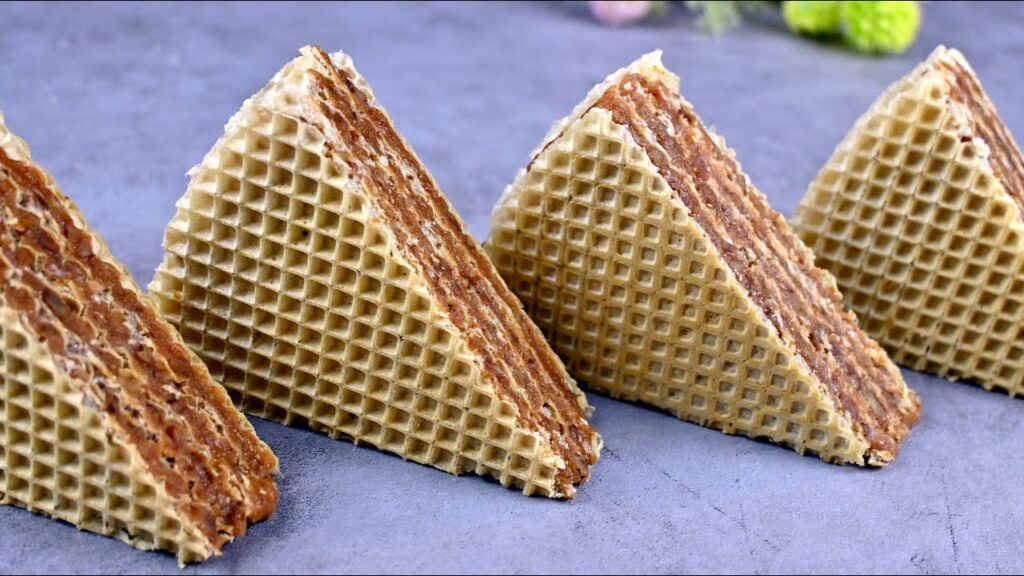
3. Fat System Composition and Distribution
Fat plays a hidden but powerful role in crispness stability.
Before listing effects, it is important to understand that fats influence moisture migration and structural lubrication.
- Fat crystal stability: Stable fat crystals help create a moisture barrier that slows environmental absorption, preserving crispness longer.
- Uneven fat dispersion: Poor distribution creates weak structural zones that collapse faster under humidity exposure.
- Low-quality fat systems: Inconsistent melting points can lead to surface softening during storage, even when internal structure remains stable.
4. Flour Quality and Starch Behavior
Flour is the structural backbone of wafers.
Before listing effects, it is important to note that starch behavior determines how water is bound during baking.
- Protein content variation: High protein flour increases elasticity, reducing crisp fracture behavior and affecting wafer texture negatively.
- Starch gelatinization level: Over-gelatinization traps moisture, making wafers less stable during storage.
- Particle size distribution in flour: Inconsistent particle size affects hydration uniformity and structural integrity.
5. Environmental Humidity Exposure
Environmental conditions are one of the most underestimated factors in shelf life control.
Before listing effects, it is important to highlight that wafers are highly hygroscopic.
- High ambient humidity: Accelerates moisture absorption, leading to rapid loss of crispness in unpackaged or poorly sealed products.
- Temperature fluctuations: Cause condensation cycles inside packaging, damaging wafer structure.
- Storage conditions variability: Warehouses without climate control often create unpredictable shelf life performance.
Industrial Strategies for Controlling Wafer Crispness and Shelf Life
Maintaining wafer crispness requires a system-level engineering approach combining formulation, processing, and packaging optimization.
Before listing strategies, it is important to understand that crispness is not created in one step—it is preserved across the entire production chain.
Optimize Moisture Removal Efficiency
Moisture is the primary enemy of crispness retention.
- Ensure uniform baking plate temperature distribution
- Implement controlled drying phases during baking
- Monitor residual moisture consistently
Improve Fat Barrier Functionality
Fat systems act as protective layers against moisture ingress.
- Use fats with stable melting points
- Ensure uniform fat dispersion in batter systems
- Avoid low-quality fat substitutes that degrade under humidity
Factories sourcing consistent raw materials from suppliers like MT Royal often achieve better shelf life stability due to reduced variability in fat and flour behavior.
Control Cooling and Post-Baking Handling
Cooling is a critical stabilization stage.
- Use controlled airflow cooling tunnels
- Avoid rapid temperature drops
- Prevent early exposure to humid air
Enhance Packaging Barrier Properties
Packaging is the final defense against moisture.
- Use high-barrier multilayer films
- Optimize sealing integrity
- Consider desiccant integration for humid markets
A wafer without proper packaging is like a sandcastle in high tide—structurally sound, but environmentally vulnerable.
Standardize Raw Material Inputs
Consistency in ingredients ensures consistency in shelf life.
- Maintain stable flour absorption properties
- Control fat melting point ranges
- Use consistent emulsifier systems
In our collaboration with wafer producers, we have seen shelf life variation reduced by up to 25% simply through improved raw material standardization.
Relationship Between Crispness and Shelf Life Degradation
Crispness loss is not random—it follows a predictable degradation pattern:
- Initial structure formation during baking
- Moisture stabilization phase after cooling
- Environmental moisture absorption phase
- Structural plasticization and softening
Once plasticization begins, crispness deteriorates rapidly.
Understanding this timeline helps manufacturers intervene at the correct stage.
Common Mistakes in Industrial Wafer Crispness Control
Even experienced factories make avoidable errors.
Before listing them, it is important to emphasize that wafer systems are highly sensitive to small process deviations.
- Ignoring humidity control in production environments: Seasonal humidity changes can silently reduce crispness stability even before packaging.
- Over-reliance on baking temperature adjustments alone: Crispness cannot be fixed only through heat; it requires system-wide control.
- Using inconsistent flour batches: Variability in starch behavior leads to unpredictable texture and shelf life performance.
- Poor packaging validation testing: Many products fail only after export due to inadequate real-world humidity simulation.
Industrial Shelf Life Optimization Techniques
Shelf life extension is not a single intervention—it is a multi-layer strategy.
Before listing techniques, it is important to understand that moisture migration is continuous, not static.
- Implement accelerated shelf life testing (ASLT)
- Simulate high-humidity storage conditions
- Use predictive modeling for moisture migration
- Optimize product thickness uniformity
- Control wafer sandwich filling moisture interaction
Frequently Asked Questions from Factory Managers
Why do wafers lose crispness even in sealed packaging?
Because microscopic moisture migration can still occur if packaging barrier properties are insufficient or sealing is inconsistent.
Can crispness be restored after loss?
Only partially. Re-drying may improve texture, but original structure cannot be fully recovered.
What is the ideal moisture level for wafers?
Typically between 1% and 3%, depending on formulation and climate conditions.
Does filling affect wafer shelf life?
Yes. Moisture-rich fillings accelerate crispness loss by creating internal humidity gradients.
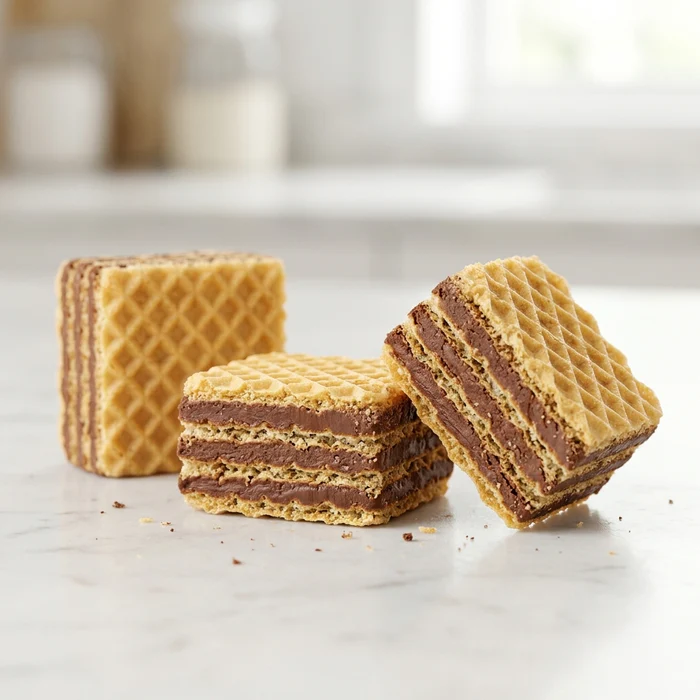
Final Perspective on How to Control Wafer Crispness and Shelf Life
Mastering How to Control Wafer Crispness and Shelf Life requires thinking beyond baking—it requires understanding moisture physics, material science, and environmental interaction as a unified system. Crispness is not simply produced; it is engineered, protected, and preserved across every stage of manufacturing.
Factories that achieve long-lasting crispness stability are not those that rely on single adjustments, but those that control the entire production ecosystem—from raw material consistency to baking precision and packaging integrity.
When these elements align, wafers stop being fragile baked products and become stable, export-ready systems capable of maintaining their signature snap across time, distance, and climate.


No comment