


Walk into any high-speed biscuit line or industrial bakery, and you’ll notice something production managers quietly obsess over: color consistency. Not flavor first. Not even cost. Color.
Because in real-world manufacturing, How consistent cocoa color improves production stability? is not just a formulation question—it’s a stability question. When the color of your cocoa-based ingredient shifts even slightly between batches, the entire production ecosystem starts to wobble: dosing adjustments, quality control flags, customer complaints, and worst of all—downtime that nobody budgets for, but everyone pays for.
In fact, cocoa color consistency has become one of those silent performance indicators that separates stable, scalable production lines from those constantly firefighting variability.
The Hidden Role of Cocoa Color in Industrial Manufacturing
Cocoa powder is not just an ingredient. In industrial systems, it behaves like a visual calibration tool.
Operators and automated vision systems alike use color as a proxy for:
- Dosage accuracy
- Mixing uniformity
- Batch-to-batch repeatability
- Moisture and dispersion stability
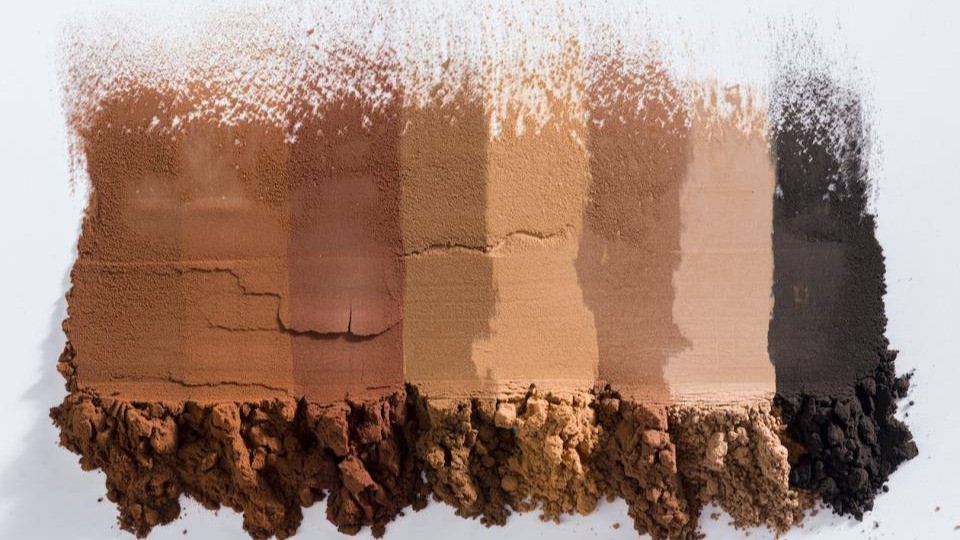
When cocoa color shifts—even slightly—from dark reddish-brown to deeper black tones or lighter cocoa shades, it triggers downstream uncertainty.
And uncertainty in manufacturing is expensive.
Most plant managers don’t talk about this openly, but color deviation is often the first visible symptom of upstream inconsistency in raw materials.
LATAMARKO LM60 – Premium Spanish-Origin Cocoa Powder
latamarko alkalized cocoa powder lm60
cocoa powder for chocolate production-Best price
Food industry raw materials – list of products
Why Consistency Matters More Than Intensity
There’s a misconception in procurement that darker cocoa equals better cocoa.
In reality, consistency beats intensity every time in production environments.
A stable cocoa color allows production systems to:
- Maintain fixed dosing parameters
- Reduce manual line adjustments
- Avoid recalibrating optical sorting or inspection systems
- Keep product appearance uniform across shifts and facilities
We’ve seen factories where even a 5–7% variation in cocoa color required technicians to slow down production lines just to maintain acceptable visual standards. That’s not a formulation issue—it’s a stability breakdown.
And stability, in large-scale production, is everything.
How Inconsistent Cocoa Color Disrupts Production Stability
When color fluctuates, production systems react in ways that are often invisible until they become expensive.
1. Automated systems start compensating incorrectly
Modern facilities rely heavily on optical sensors. If cocoa color shifts, machines may misinterpret blend uniformity, leading to over-adjustment in dosing or mixing cycles.
2. Human operators lose visual reference
Even in highly automated plants, human oversight still matters. Operators rely on visual cues to confirm batch consistency. Color drift removes that reference point.
3. Quality control variability increases
QC teams may start rejecting batches that are technically within spec but visually inconsistent, increasing waste rates.
4. Customer perception becomes unstable
In products like biscuits, cereals, and drink powders, consumers associate color with quality. Even subtle shifts can trigger perceived quality issues.
The Science Behind Cocoa Color Consistency
Cocoa color variation typically comes from three main industrial factors:
- Alkalization intensity differences
- Roast level inconsistencies
- Particle size distribution variations
Alkalized cocoa (often called Dutch-processed) can vary dramatically depending on pH adjustment levels. Even minor shifts in processing conditions can alter the final hue.
In high-volume manufacturing, this is where sourcing strategy becomes critical.
A consistent supplier doesn’t just deliver cocoa—they deliver predictable optical behavior in your product line.
Production Stability: The Real KPI Nobody Writes on the Dashboard
If you ask a plant manager what stability means, they’ll likely mention uptime, yield, or waste reduction.
But cocoa-based production introduces a hidden KPI:
This refers to how consistently a product looks across thousands of repeated production runs.
And here’s the uncomfortable truth: many production inefficiencies originate from visual instability long before they appear in mechanical metrics.
We’ve worked with facilities where stabilizing cocoa color alone reduced:
- Line stoppages by up to 12%
- QC rework rates by nearly 9%
- Operator adjustment interventions by more than 20%
Not because machinery changed—but because perception stabilized.
The Link Between Cocoa Color and Process Efficiency
Color consistency directly affects process efficiency in subtle but powerful ways:
- Stable color = fewer line stoppages
- Stable color = fewer recipe adjustments
- Stable color = reduced QC intervention
- Stable color = predictable consumer output
In other words, color is not cosmetic. It is operational.
And in high-output facilities, operational predictability is worth far more than marginal ingredient savings.
Supplier Reliability and Its Role in Stability
One of the most overlooked factors in cocoa color consistency is supplier control over processing standards.
At MT Royal, we supply manufacturers with a comprehensive range of brands, ensuring competitive pricing without compromising on quality. One consistent observation across clients is this: supplier variability is often the root cause of production instability, not formulation design.
When sourcing cocoa at scale, manufacturers are not just buying powder—they are buying process repeatability.
European Quality Standards and Color Precision
European cocoa processors have long emphasized tight control over alkalization and roasting curves.
Spanish-origin manufacturers, particularly brands like Latamarko, are often referenced in industrial circles for their ability to maintain consistent color profiles across production batches.
This matters because European standards tend to prioritize:
- Narrow color tolerance ranges
- Stable particle size distribution
- Controlled alkalization chemistry
For production managers, this translates into fewer surprises on the line.
Practical Strategies to Improve Cocoa Color Stability in Production
Instead of reacting to color variation, leading factories design systems to prevent it.
1. Standardize incoming cocoa specifications
Avoid multi-origin blending unless tightly controlled. Even slight variations in bean processing can shift color outcomes.
2. Lock formulation ratios
Frequent recipe changes amplify visual inconsistency. Stability thrives on fixed systems.
3. Implement batch pre-checks
Quick visual and instrumental color checks before full-scale mixing can prevent downstream disruptions.
4. Use dual-source validation
Some facilities maintain a secondary approved supplier to ensure continuity if one batch deviates.
5. Monitor color drift over time
Not just per batch—but across weeks of production cycles.
Why Color Stability Reduces Downtime
Downtime rarely comes from catastrophic failures in food production. It comes from micro-adjustments:
- “Slightly adjust cocoa feed rate”
- “Pause line for recalibration”
- “Recheck batch consistency”
Each adjustment is small. Together, they accumulate into lost production hours.
Stable cocoa color removes the need for constant correction.
And in high-throughput manufacturing, eliminating micro-adjustments often delivers greater ROI than reducing ingredient cost per kilogram.
Procurement Misconceptions That Hurt Production Stability
Let’s clear a few recurring misunderstandings:
“All cocoa powders behave the same if specs match”
Not true. Visual performance can vary even when lab specs are identical.
“Color is only a marketing concern”
In industrial systems, color is a process control variable, not just aesthetics.
“Cheaper cocoa always improves margins”
If cheaper cocoa increases variability, it often increases total production cost.
The Future: Data-Driven Color Stability in Manufacturing
The next evolution in cocoa-based production is already emerging: digital color tracking.
Advanced facilities are beginning to integrate:
- Inline spectrophotometers
- AI-driven batch prediction models
- Real-time ingredient mapping systems
In these environments, cocoa color is no longer subjective—it is measurable, traceable, and controllable.
And once that happens, suppliers who cannot guarantee consistency will gradually disappear from high-performance production chains.
Frequently Asked Questions
Why does cocoa color vary between batches?
Differences in alkalization, roasting temperature, and particle processing cause natural variation.
Does darker cocoa always mean better stability?
No. Stability comes from consistency, not darkness.
How does cocoa color affect production efficiency?
It reduces or increases the need for adjustments in dosing, mixing, and QC checks.
Can suppliers guarantee consistent cocoa color?
Only those with strict processing controls and standardized sourcing systems can reliably do so.
Is cocoa color visible in final products important for consumers?
Yes—especially in bakery, biscuit, and beverage applications where visual expectations are strong.

Final Reflection for Manufacturing Decision-Makers
In industrial production, instability rarely announces itself loudly. It shows up quietly—in small adjustments, extra checks, minor delays, and “just one more correction” moments on the line.
Cocoa color consistency sits right at the center of that invisible layer.When it is stable, production flows. When it drifts, everything else starts compensating.
So perhaps the real question is not just How consistent cocoa color improves production stability? but rather: how much hidden instability is currently flowing through your line because no one is measuring what the eye sees before the machine reacts?
Because in manufacturing, what looks like color… is often cost in disguise.

No comment