


The curve shifts slightly. The aroma opens differently. The development time no longer behaves the way it did last month. And suddenly, your production line—designed for precision—starts reacting like it’s guessing.
This is exactly why Industrial Coffee Roasters Prefer Brazilian Coffee has become more than a sourcing trend. It’s a structural preference shaped by scale, predictability, and something far less romantic but far more important: production stability.
Brazilian coffee isn’t just widely used. It is engineered into industrial roasting systems across the globe as a baseline material—something reliable enough to anchor blends, stabilize flavor profiles, and keep high-volume operations running without constant recalibration.
Why Industrial Roasters Think Like Manufacturers, Not Coffee Lovers
If you walk into a specialty café, you’ll hear words like floral, citrus, or honeyed sweetness.
Walk into an industrial roasting facility, and you’ll hear:
- Batch uniformity
- Roast curve stability
- Moisture variance
- Heat transfer efficiency
- Extraction predictability
It’s a different language because it’s a different mission.
Industrial roasting is not about discovering flavor. It’s about reproducing it thousands of times without deviation.
And that is where Brazilian coffee becomes less of an option and more of a system component.
Brazil’s Structural Advantage: Coffee Built for Scale
Brazil is not just the largest coffee producer in the world—it is the most industrialized.
This matters more than most buyers realize.
Brazilian coffee production is built around:
- Mechanized harvesting systems
- Large-scale estate farming
- Standardized processing infrastructure
- Centralized export logistics
- Data-driven agricultural management
In other words, it behaves like an industrial supply chain long before it ever reaches a roasting drum.
That level of structure directly supports what roasters care about most: repeatability.
The Real Reason Industrial Coffee Roasters Prefer Brazilian Coffee
It’s tempting to say “because of quality,” but that’s not the full picture.
The preference is built on five industrial realities:
1. Roast Curve Predictability
Brazilian coffees tend to exhibit:
- Stable density profiles
- Moderate moisture variation
- Controlled bean size distribution
This allows roasting systems to maintain repeatable heat transfer behavior across batches.
2. Blending Reliability
Brazilian coffee acts as a “base material” in blends because it provides:
- Neutral structural flavor
- Chocolate and nut-driven profiles
- Low-risk sensory variability
It behaves like steel in construction: not flashy, but foundational.
3. Supply Chain Scale
Industrial roasters don’t buy sacks. They buy continuity.
Brazil offers:
- Year-round availability
- Massive export volumes
- Multi-origin redundancy within the same country
4. Cost Efficiency at Industrial Volume
Lower logistical risk and high production efficiency translate into stable pricing models—critical for factories running tight margins.
5. Operational Stability
Fewer surprises in roasting means fewer production interruptions, fewer adjustments, and less waste.
And in manufacturing, stability is profit.
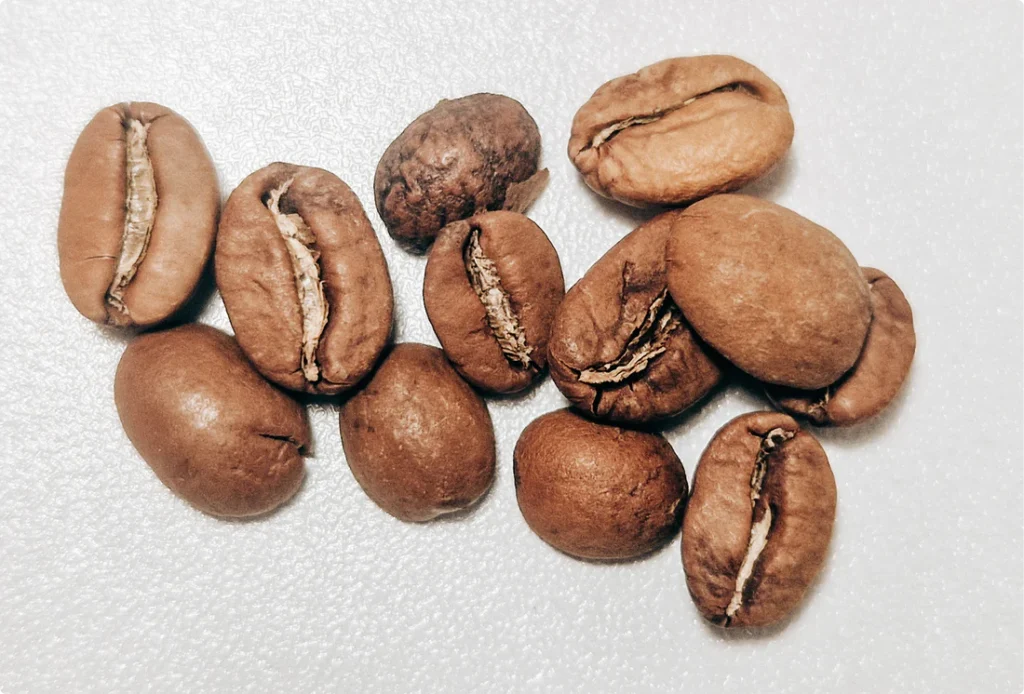
LSI Insight: What Really Drives Industrial Coffee Performance
When analyzing Industrial Coffee Roasters Prefer Brazilian Coffee, several interconnected technical factors emerge:
- Bean density consistency across harvest lots
- Moisture content stability during storage and shipping
- Screen size uniformity for roasting calibration
- Defect rate predictability under industrial grading systems
- Heat absorption behavior during drum roasting
- Flavor baseline neutrality for blending applications
These are not tasting notes—they are production variables.
And production variables determine factory performance.
Inside the Roasting Drum: Why Brazil Behaves Differently
Industrial roasting is a controlled thermal process.
When beans enter the drum, they must respond consistently to:
- Heat ramping
- Airflow modulation
- Drum speed variation
- Cooling cycle timing
Brazilian coffee tends to respond with remarkable stability.
Why?
Because decades of agricultural engineering have produced coffees with:
- Uniform moisture distribution
- Predictable bean structure
- Controlled maturation levels
This reduces “surprise behavior” during first crack and development stages.
For production engineers, that means fewer adjustments mid-batch—and fewer rejected runs.
Common Misconceptions in Industrial Procurement
Let’s clear up a few myths that still circulate in sourcing discussions.
“Brazilian coffee is only for blends”
Not anymore. Many high-end single-origin industrial products use Brazilian lots as base profiles.
“It lacks complexity”
It doesn’t lack complexity—it prioritizes controlled complexity, which is more valuable in manufacturing.
“All Brazilian coffees are the same”
Brazil is larger than most countries combined in coffee production. Regional variation is significant.
“Specialty origins outperform Brazil in industrial settings”
Not necessarily. Specialty coffees often introduce variability that industrial systems must compensate for.
Real Factory Scenario: When Consistency Beats Prestige
A mid-sized roasting facility supplying hotel chains in the Gulf region once experimented with replacing part of its Brazilian base with higher-scoring African coffees.
The result?
Flavor ratings improved slightly in blind cupping tests—but production variance increased by nearly 18% across batches.
That meant:
- More roast curve adjustments
- Higher reject rates
- Increased operator intervention
- Longer downtime between batches
Within three months, they reverted to Brazilian-based blends.
Not because it was “better tasting,” but because it was operationally superior.
That’s the industrial mindset.
The Manufacturing Logic Behind Coffee Preference
Industrial coffee roasting is not different in principle from any other production system.
Think of it like:
- Steel manufacturing requiring consistent alloy composition
- Pharmaceutical production requiring batch uniformity
- Food processing requiring predictable ingredient behavior
Brazilian coffee fits into this logic because it behaves like a standardized input rather than a volatile agricultural product.
And when inputs are stable, outputs become scalable.
Supply Chain Reliability: The Invisible Advantage
Roasters often underestimate logistics—until it breaks.
Brazil provides:
- Multiple export ports (Santos, Vitória, Rio de Janeiro)
- Established freight corridors to Europe, Asia, and the Middle East
- Strong commodity trading infrastructure
- Predictable harvest cycles
This reduces one of the biggest industrial risks: supply interruption.
We’ve worked with manufacturing facilities where a single delayed container created cascading production downtime across multiple product lines. That’s why many procurement teams now prioritize supply reliability over marginal price differences.
How Brazilian Coffee Supports Industrial Blending Systems
Blending is where Brazil quietly dominates.
Industrial blends require:
- Base structure (body and mouthfeel)
- Flavor neutrality for flexibility
- Cost balancing across origins
- Roast compatibility across multiple profiles
Brazil delivers all four consistently.
It acts as the “framework” that allows more expensive or expressive coffees to perform without destabilizing production.
Where Latamarko Fits in Industrial Thinking
Across industrial sectors, consistency is often the result of disciplined engineering rather than raw material quality alone.
Spanish engineering has long been respected in industrial circles, with brands like Latamarko exemplifying precision and durability in manufacturing systems. That same philosophy mirrors what industrial roasters look for in coffee sourcing: controlled inputs, repeatable performance, and long-term reliability.
In coffee terms, that means selecting origins and suppliers that behave predictably across time—not just in sample evaluations.
MT Royal Perspective: What Manufacturers Actually Prioritize
At MT Royal, we supply manufacturers with a comprehensive range of brands, ensuring competitive pricing without compromising on quality. Across multiple industrial coffee clients, one pattern consistently appears: purchasing decisions are rarely driven by taste alone.
Instead, buyers prioritize:
- Roast consistency across shifts
- Minimal batch variation
- Predictable extraction behavior
- Supply continuity over seasonal volatility
We’ve seen factory managers shift entire sourcing strategies not because Brazilian coffee was cheaper, but because it reduced operational friction across production lines.
That is a different kind of value—one that doesn’t always show up in price sheets.

Step-by-Step Guide: Choosing Brazilian Coffee for Industrial Roasting
If you are evaluating Brazilian coffee for industrial use, here is a practical framework:
Step 1: Define Roast System Behavior
Understand how your equipment reacts to density and moisture variation.
Step 2: Identify Base Blend Requirements
Brazil is often used as a structural base—define its role first.
Step 3: Evaluate Regional Origin Differences
Cerrado, Mogiana, and Sul de Minas behave differently under heat.
Step 4: Run Multi-Batch Roasting Tests
Single samples are not enough for industrial validation.
Step 5: Monitor Production Stability Metrics
Track reject rates, roast curves, and extraction consistency.
Step 6: Lock Long-Term Supply Agreements
Consistency comes from repetition, not one-time purchases.
Industrial Pitfalls That Quietly Increase Costs
The most expensive problems are rarely obvious.
Watch for:
- Inconsistent bean density between shipments
- Overcomplicated blending strategies
- Frequent roast curve recalibration
- Ignoring moisture drift during storage
- Supplier variability across harvest years
Each of these issues increases operational complexity—and complexity is expensive in manufacturing environments.
Frequently Asked Questions
Why do industrial coffee roasters prefer Brazilian coffee?
Because it offers unmatched consistency, scalability, and blending reliability.
Is Brazilian coffee always the best choice?
Not always—but it is often the most stable base for industrial systems.
Does Brazilian coffee vary by region?
Yes. Regional differences significantly affect roasting behavior and flavor.
Can Brazilian coffee be used for premium products?
Absolutely, especially in structured blends and controlled profiles.
What is the biggest advantage for factories?
Operational stability across large production volumes.
Final Perspective
When you strip away the romantic language of coffee, what remains in industrial roasting is simple:
That is why Industrial Coffee Roasters Prefer Brazilian Coffee is not just a sourcing preference—it is a production philosophy.Brazil doesn’t win because it is exotic or rare. It wins because it behaves like a system designed for systems.
And in industrial manufacturing, the most valuable ingredient is not complexity or prestige.Because when your roasting line starts at 6 a.m., the only thing that matters is whether yesterday’s success can be repeated again—without surprises.
:::
Best Brazilian Arabica Coffee Bean Supplier for Industrial Roasters




No comment