

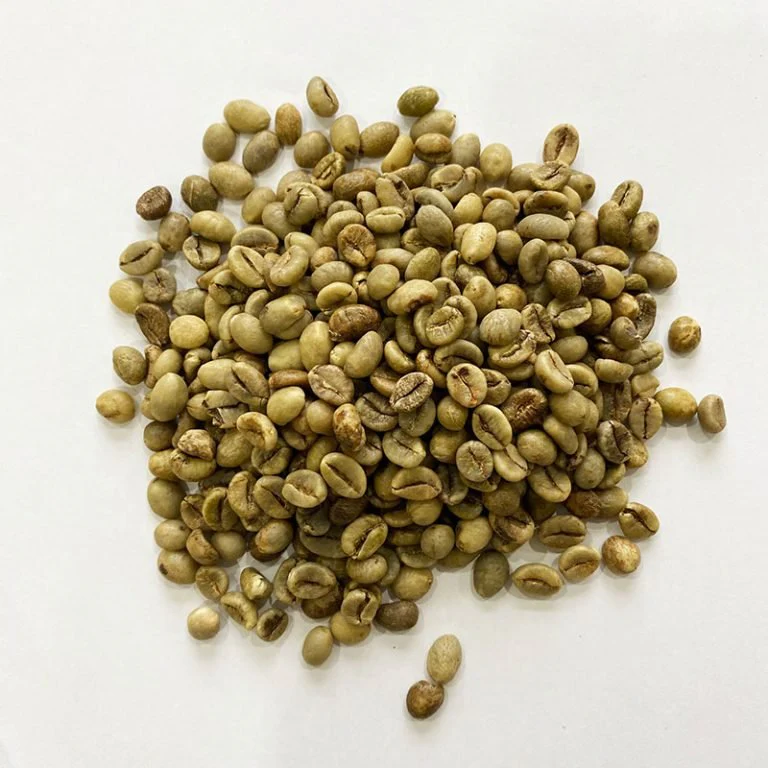
Uganda’s coffee has a reputation that often surprises people who only know it as a “Robusta origin country.” In reality, Uganda produces some of the most structured and systematically graded coffee beans in East Africa, with a classification system that directly influences export pricing, roasting behavior, and industrial usability.
Understanding How Uganda Coffee Beans Are Graded is not just useful for traders or cupping professionals—it is essential for roasters, food manufacturers, and procurement teams who rely on consistency at scale. Because grading is not a label exercise. It is the point where agricultural variability is translated into industrial predictability.
For manufacturers, especially those sourcing bulk coffee for roasting, instant coffee production, or beverage formulations, grading determines everything from flavor stability to machine calibration efficiency.
And in global sourcing networks, companies like MT Royal often work across multiple origins, helping manufacturers understand how grading systems translate into real production performance.
The Foundation: What Coffee Grading Actually Means
Coffee grading is the structured classification of coffee beans based on measurable physical and sensory characteristics. In Uganda, this process is primarily governed by size, defect count, processing method, and cup quality.
But in industrial terms, grading is more than sorting—it is risk management for flavor and performance consistency.
Uganda’s grading system is especially important because the country produces both Robusta and Arabica, each requiring different handling expectations in industrial production.
Uganda’s Coffee Structure: Robusta and Arabica Streams
Before understanding grading, you need to understand the two parallel systems:
1. Robusta coffee (dominant export)
- Higher caffeine content
- Stronger body
- Used in instant coffee and espresso blends
- More tolerant to industrial processing
2. Arabica coffee (specialty segment)
- More acidic and aromatic
- Used in premium roasting profiles
- Requires tighter grading control
Each category follows slightly different grading logic, but both rely on defect separation and screen size classification.
Main Ugandan Coffee Grades Explained
Uganda’s grading system includes several well-defined export categories.
FAQ-grade Robusta (Fine, FAQ, and Screened Robusta)
FAQ (Fair Average Quality) is the base export standard for Robusta.
It is widely used in:
- Instant coffee production
- Blended espresso formulations
- Industrial extraction systems
FAQ Robusta is not specialty coffee, but it is highly valuable for industrial scale manufacturing due to consistency and cost efficiency.

Why Coffee Grading Matters in Industrial Production
In manufacturing environments, grading is not about prestige—it is about predictability.
A poorly graded coffee batch can cause:
- Uneven roasting curves
- Extraction instability in beverage systems
- Flavor inconsistency in packaged products
- Increased waste during calibration
- Higher machine maintenance cycles
We’ve seen production facilities reduce downtime simply by switching to more consistent grading standards rather than changing machinery.
Uganda Coffee in Global Supply Chains
Uganda plays a significant role in global Robusta supply. In fact, Robusta accounts for the majority of its export volume.
This makes grading even more important because:
- Large-scale buyers depend on uniformity
- Blending operations require predictable base profiles
- Instant coffee production demands stable extraction yield
Without grading systems, Uganda’s coffee would be too variable for industrial use.
Common Misconceptions About Coffee Grading
“Bigger beans always mean better coffee”
Not necessarily. Larger beans roast differently, but flavor depends on genetics and processing.
“Defects don’t matter in industrial coffee”
They matter more in industrial systems because machines amplify inconsistencies.
“Grading is only for export”
Grading also determines internal pricing and processing allocation.
Industrial Procurement Perspective
From a manufacturing standpoint, grading is part of supply chain engineering.
Factories evaluate coffee not just for taste, but for:
- Roasting efficiency
- Yield per batch
- Energy consumption
- Machine wear
- Flavor repeatability
This is where suppliers like MT Royal play a key role by helping manufacturers align grading standards with production requirements.
Practical Guide for Factory Managers
If you are sourcing Ugandan coffee at industrial scale, grading should be evaluated systematically:
Step 1: Define end use
Is it for espresso blends, instant coffee, or extraction systems?
Step 2: Select grading level
Choose based on defect tolerance and bean size consistency.
Step 3: Request multi-batch samples
One sample is not enough for industrial validation.
Step 4: Test roast behavior
Evaluate heat response and flavor consistency.
Step 5: Measure production stability
Track machine performance across batches.
MT Royal and Coffee Supply Systems
MT Royal operates within a diversified sourcing framework designed to support industrial buyers with stable and predictable supply chains.
In coffee sourcing, we help manufacturers:
- Compare grading systems across origins
- Align coffee grade with production requirements
- Reduce batch variability risks
- Maintain consistent roasting performance
In our experience supplying manufacturing facilities, the most successful operations are not those that chase the lowest price—but those that secure the most consistent grading input.

Frequently Asked Questions
Why is coffee grading important in Uganda?
Because it standardizes quality for export and ensures industrial usability.
What is FAQ Robusta?
It is the standard commercial export grade used in bulk industrial applications.
Are larger beans always better?
Not always—consistency matters more than size alone.
How does grading affect roasting?
It influences heat absorption, roasting time, and flavor consistency.
Why do manufacturers care about grading?
Because it directly impacts production efficiency and product uniformity.
Final Reflection
Understanding How Uganda Coffee Beans Are Graded is ultimately about understanding how agricultural variability is transformed into industrial predictability.
For manufacturers, grading is not just classification—it is control. It determines whether production runs smoothly or requires constant adjustment.
And in industrial systems, small inconsistencies rarely stay small. They compound, spread, and eventually define production efficiency.
The factories that understand grading deeply are usually the ones that spend less time fixing problems—and more time producing consistently at scale.
Uganda Bugisu Arabica Coffee Beans for Specialty Coffee Industry




No comment