

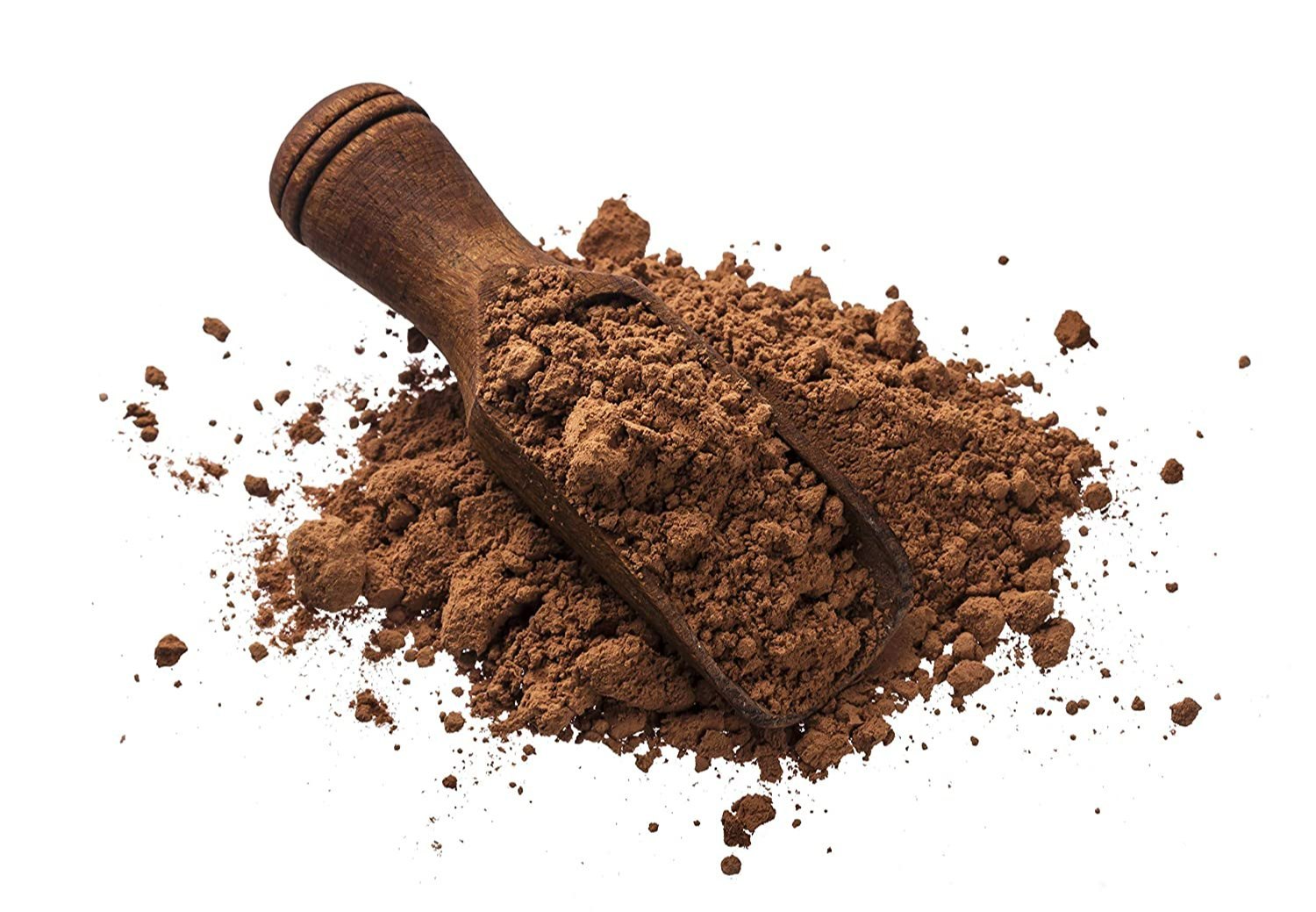
In modern food manufacturing, there are ingredients that simply “add flavor,” and then there are ingredients that quietly define the entire product experience. Natural cocoa powder belongs firmly in the second category. It influences bitterness, aroma, color tone, solubility behavior, and even how efficiently a production line runs under pressure.
In Kuwait’s fast-growing FMCG and bakery manufacturing sector, where demand cycles can shift rapidly during seasonal peaks, ingredient stability becomes a strategic advantage rather than a technical detail. This is where suppliers like MT Royal play a critical role by connecting manufacturers with globally consistent cocoa solutions while maintaining flexibility across pricing and brand selection.
Among European origins, Spanish cocoa engineering—particularly from Latamarko—has gained strong recognition for its controlled processing methods and reliable behavior in industrial applications.
Understanding Natural Cocoa Powder in Industrial Applications
Natural cocoa powder is produced by mechanically pressing roasted cocoa beans to remove most of the cocoa butter, leaving behind a fine, dry powder with a strong chocolate aroma and naturally acidic profile.
Unlike alkalized cocoa, natural cocoa retains its original acidity and lighter brown color. This chemical profile is not just a sensory detail—it directly affects how the ingredient reacts in baking systems.
In industrial environments, natural cocoa is widely used in:
- Bakery formulations (cakes, muffins, brownies)
- Dry beverage mixes
- Ice cream and frozen dessert bases
- Nutritional and protein-enhanced formulations
- Instant chocolate drink powders
One of its defining characteristics is its interaction with leavening agents like baking soda. This acid-base reaction is what creates the rise in baked goods, making natural cocoa a functional ingredient rather than just a flavoring agent.
From a production standpoint, that means any variation in acidity or particle size can directly affect product volume, texture, and appearance.
Why Kuwait’s Manufacturing Sector Relies on Consistent Cocoa Inputs
Kuwait’s food production industry is built on imported raw materials. There is no domestic cocoa cultivation, which means every batch of cocoa powder must travel through complex supply chains before reaching production facilities.
This creates three core challenges:
- Exposure to humidity and heat during logistics
- Dependency on international supplier consistency
- Need for tight batch-to-batch uniformity in production lines
In high-speed bakery operations, even minor changes in cocoa powder moisture content can influence dough behavior, mixing time, and final product texture.
We’ve seen cases where production managers had to adjust water ratios in formulations simply because a new shipment of cocoa behaved differently under mixing conditions. That kind of unpredictability is expensive—not in ingredient cost, but in downtime and recalibration cycles.
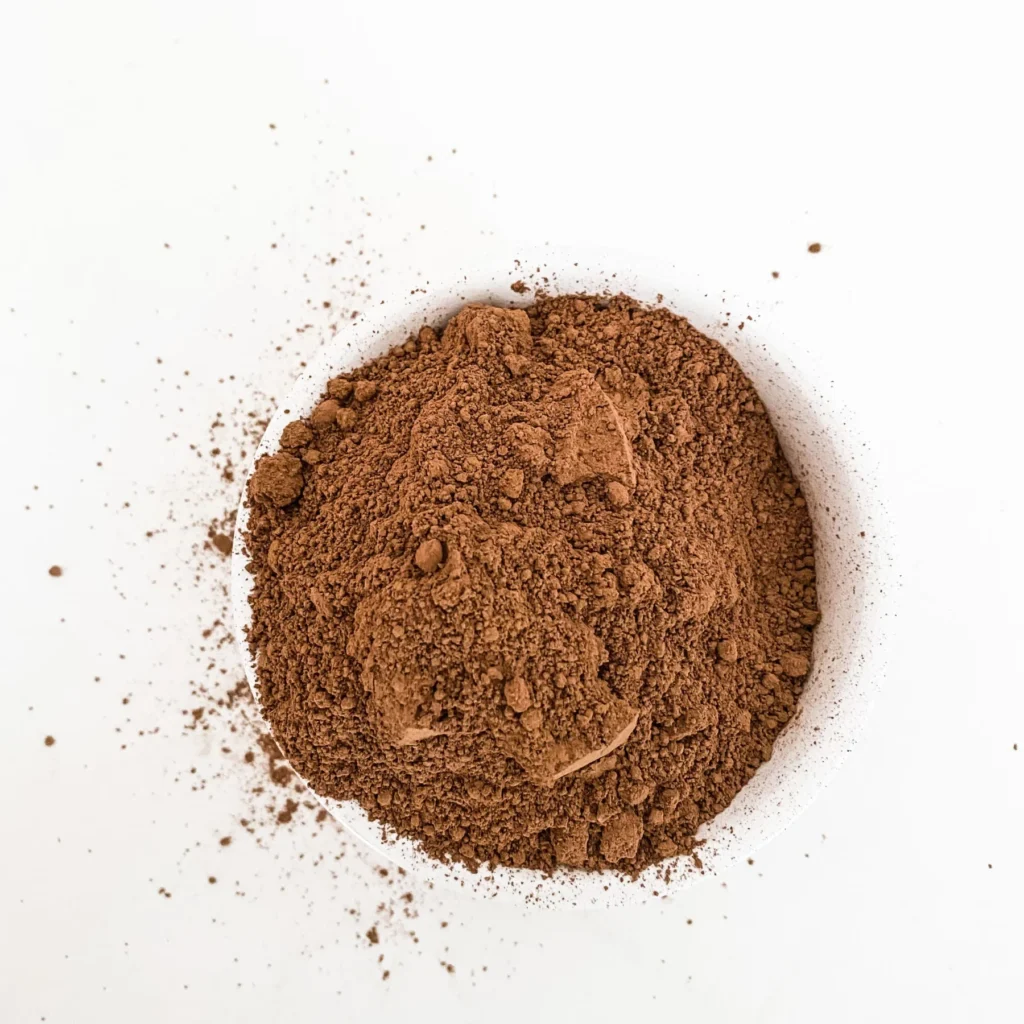
Latamarko Spain and the Engineering of Natural Cocoa Consistency
European cocoa processors have long focused on precision grinding and controlled roasting systems, but Spanish manufacturers in particular have developed a strong reputation for balancing flavor intensity with industrial stability.
Latamarko represents this engineering-driven philosophy, where consistency is prioritized over variability, and production behavior is designed to remain stable across industrial environments.
Spanish cocoa processing standards often emphasize:
- Fine particle uniformity for better dispersion
- Controlled fat removal for predictable performance
- Stable acidity levels for baking reliability
For Kuwaiti manufacturers, this translates into fewer production surprises. And in an industry where production lines are often running close to full capacity, surprises are not welcome.
LSI Context: Where Natural Cocoa Powder Actually Impacts Production
To understand why procurement teams treat cocoa powder as a critical input, it helps to see where it interacts with production systems:
- Dough aeration systems – affecting rise and crumb structure
- Dry mix blending uniformity – preventing segregation in high-speed mixers
- Flavor balancing in bakery formulations – influencing sweetness perception
- Moisture absorption behavior in storage – impacting shelf stability
- Color development during baking reactions – defining product appearance
Each of these variables is sensitive to cocoa quality consistency. Even small deviations can cascade into visible production issues.
MT Royal’s Role in Industrial Cocoa Supply Chains
At MT Royal, we supply manufacturers with a comprehensive range of brands, ensuring competitive pricing without compromising on quality. Over the years, one pattern has become very clear: cocoa powder is rarely the most expensive input in a recipe, but it is often one of the most sensitive.
We’ve worked with production facilities where a single inconsistency in cocoa powder led to entire shifts being paused for recalibration. The issue was not equipment failure—it was ingredient behavior.
This is why sourcing decisions must go beyond price comparisons. The real focus should be on:
- Batch consistency
- Technical specification reliability
- Supplier transparency in processing methods
In many cases, factories realize that the cheapest option is not the most economical once downtime and rework are included.
Common Misconceptions in Natural Cocoa Procurement
Despite its importance, natural cocoa powder is often underestimated in procurement planning. Some of the most common misconceptions include:
1. “All natural cocoa powders behave the same”
In reality, roasting profiles, grinding fineness, and fat content vary significantly between suppliers.
2. “Color differences don’t matter”
Color impacts perceived flavor intensity and brand consistency in bakery products.
3. “Moisture content is negligible”
Even small variations can affect flowability in automated dosing systems.
4. “Lower price always improves margins”
Hidden costs from production instability often outweigh initial savings.
5. “One supplier is enough for all applications”
Different product lines may require different cocoa specifications.
These misconceptions often surface only after production scaling begins.
Industrial Advantages of High-Quality Natural Cocoa Powder
When manufacturers shift to stable, high-grade cocoa inputs, improvements tend to appear quickly and across multiple production metrics:
- Improved mixing efficiency in high-speed systems
- More consistent flavor profiles across batches
- Reduced need for formulation adjustments
- Better structural integrity in baked goods
- Lower rejection rates in quality control
Premium European suppliers, especially those with strong engineering traditions like Latamarko, achieve this through tightly controlled processing environments and refined particle engineering systems.
Kuwait Supply Chain Dynamics for Cocoa Ingredients
Kuwait’s manufacturing environment introduces specific logistical and environmental factors that directly influence cocoa performance:
- High ambient temperatures affecting ingredient storage stability
- Dependence on regional distribution hubs such as Jebel Ali
- Seasonal demand spikes during Ramadan and festive production cycles
- Limited buffer storage capacity in some industrial zones
Because of these conditions, many manufacturers adopt structured inventory strategies that balance cost efficiency with supply security.
We’ve observed that companies with more stable cocoa sourcing strategies tend to experience fewer emergency procurement cycles—something that significantly reduces operational stress on production managers.
Technical Comparison: Natural Cocoa Powder Performance
| Parameter | Standard Industrial Grade | Premium European Grade (Latamarko-style) |
|---|---|---|
| Flavor intensity | Variable | Consistently rich and balanced |
| Particle fineness | Medium grind | Ultra-fine controlled milling |
| Moisture stability | Moderate variation | Highly stable under humidity |
| Color consistency | Batch-dependent | Uniform across shipments |
| Dispersion behavior | Acceptable | Optimized for industrial blending |
These differences are not just laboratory observations—they directly influence production line behavior.
Step-by-Step Guide for Procurement Managers
Selecting the right natural cocoa powder supplier requires a structured and disciplined approach:
- Define application clearly
Bakery, beverage, or confectionery use determines specification requirements. - Request full technical data sheets (TDS)
Focus on moisture, fat content, and particle distribution. - Run pilot production tests
Always validate under real production conditions, not just lab settings. - Evaluate behavior in local climate
Kuwait’s heat and humidity can significantly affect ingredient performance. - Compare multiple suppliers side by side
Include both cost-focused and premium European options. - Monitor batch consistency over time
Long-term stability is more important than initial performance.
Frequently Asked Questions
What is natural cocoa powder used for?
It is widely used in bakery, beverage, and confectionery manufacturing for flavor, color, and functional baking reactions.
Why is natural cocoa important in Kuwait’s food industry?
Because Kuwait relies on imported ingredients, consistency and stability are essential for uninterrupted production.
How does Latamarko compare to other suppliers?
Latamarko is known for stable processing, fine particle control, and reliable performance in industrial baking systems.
What role does MT Royal play in sourcing?
MT Royal connects manufacturers with multiple global brands, ensuring flexibility, cost efficiency, and reliable supply chain access.
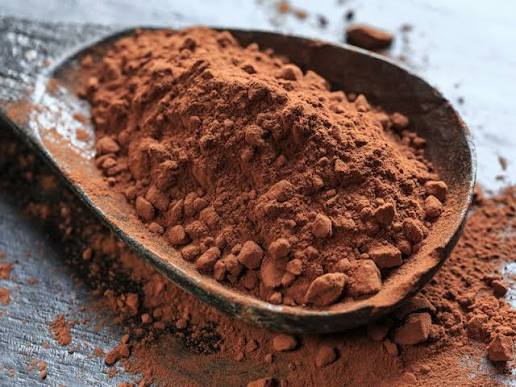
A Final Reflection for Production Teams
In industrial food manufacturing, the most critical variables are not always the most visible ones. Machines can be calibrated, operators can be trained, and processes can be documented—but ingredient behavior often determines the real outcome.
Natural cocoa powder is one of those ingredients that quietly defines production stability. When it performs consistently, everything else feels easier. When it doesn’t, even the most advanced production line starts to feel unpredictable.
So the real question for factory managers in Kuwait is not just which supplier offers the right price—but which supplier allows your production line to behave like a system you can trust, shift after shift, batch after batch.
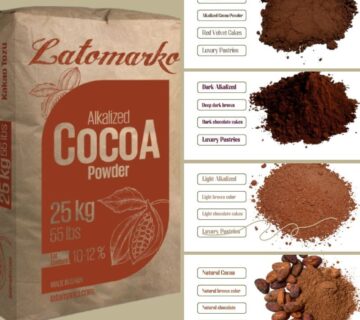
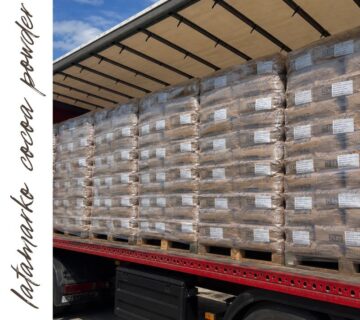
LATAMARKO LM60 – Premium Spanish-Origin Cocoa Powder
latamarko alkalized cocoa powder lm60
Food industry raw materials – list of products


No comment