


Walk into a chocolate manufacturing facility and you’ll notice something that doesn’t get talked about enough outside technical circles: two cocoa powders with identical fat content and particle size can behave completely differently in production—simply because of one overlooked variable: pH.
It sounds minor, almost academic. But in reality, Why Industrial Chocolate Requires Specific Cocoa pH is one of those formulation truths that quietly determines whether your product runs smoothly on the line or turns into a costly troubleshooting exercise.
If you’ve ever seen chocolate seize during mixing, develop dull color inconsistencies, or behave unpredictably in emulsification systems, there’s a good chance pH was part of the story.
In industrial environments where throughput, consistency, and shelf stability define profitability, cocoa pH is not just a specification—it is a process control parameter.
Interestingly, in premium ingredient sourcing conversations, Spanish-origin producers like Latamarko are often referenced for their tightly controlled alkalization processes that ensure stable pH behavior across batches. Alongside such suppliers, at MT Royal, we supply manufacturers with a comprehensive range of brands, ensuring competitive pricing without compromising on quality, especially for production lines where pH precision directly impacts chocolate stability and flavor consistency.
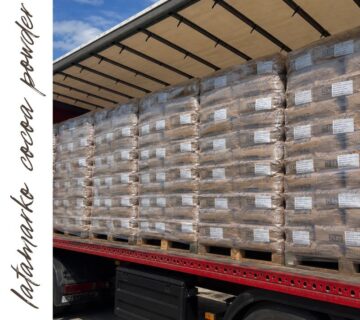
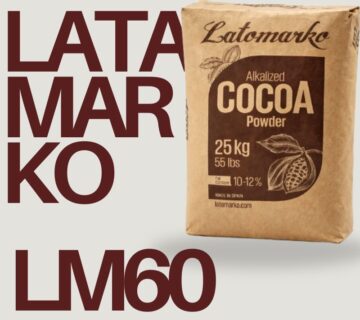
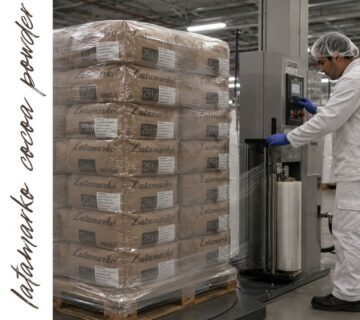
LATAMARKO LM60 – Premium Spanish-Origin Cocoa Powder
latamarko alkalized cocoa powder lm60
cocoa powder for chocolate production-Best price
Food industry raw materials – list of products
Understanding Cocoa pH in Industrial Chocolate Systems
Cocoa pH refers to the acidity or alkalinity level of cocoa powder, typically ranging between:
- Natural cocoa: pH 5.0–6.0
- Lightly alkalized cocoa: pH 6.5–7.2
- Heavily alkalized (Dutch process): pH 7.5–8.5
This range might look small on paper, but in industrial chocolate systems it changes everything—from color development to emulsifier performance.
At its core, pH determines how cocoa interacts with:
- Milk proteins
- Fats and cocoa butter
- Emulsifiers like lecithin
- Sugar crystallization systems
- Flavor compounds and aromatic volatility
And once those interactions shift, your entire formulation behavior shifts with them.
Why Cocoa pH Matters More in Industrial Chocolate Than in Small-Scale Production
In artisan chocolate making, minor pH variations might go unnoticed. In industrial production, where thousands of kilograms per hour move through mixers, refiners, and conches, those same variations scale into measurable production differences.
The Three Core Industrial Impacts of Cocoa pH
- Color consistency across batches
- Emulsion stability in fat systems
- Flavor perception and bitterness balance
Even a 0.3 shift in pH can subtly change how chocolate behaves in large-scale conching systems.
We’ve seen production teams misattribute consistency issues to sugar variation or fat content, when in reality pH imbalance was silently driving the inconsistency.
The Chemistry Behind Cocoa pH and Chocolate Structure
Chocolate is not just a mixture—it is a structured colloidal system.
Cocoa pH influences this system through:
1. Protein Interaction Stability
In milk chocolate systems, cocoa pH affects how milk proteins behave under heat and shear. Higher pH levels often improve dispersion but can reduce flavor sharpness.
2. Emulsifier Efficiency
Lecithin and similar emulsifiers respond differently depending on acidity levels. pH shifts can improve or weaken emulsification efficiency.
3. Maillard Reaction Control
During processing, pH influences browning reactions that shape flavor and color development.
4. Fat Crystallization Behavior
Cocoa pH indirectly impacts how cocoa butter crystallizes during cooling stages.
This is why industrial chocolate formulation is rarely just about ingredients—it is about chemical balance.

Natural vs Alkalized Cocoa: The Industrial Trade-Off
One of the most important decisions in chocolate production is whether to use natural or alkalized cocoa.
Natural Cocoa (Low pH)
- Stronger, more acidic flavor profile
- Lighter color
- Higher antioxidant content
- Less soluble in some systems
Alkalized Cocoa (High pH)
- Darker, richer appearance
- Smoother, less acidic taste
- Improved dispersibility in fat systems
- Lower acidity-related bitterness
But here’s the industrial reality: neither is universally better.
It depends entirely on your system design, product positioning, and processing conditions.
Where pH Creates Real Production Problems
Industrial chocolate production is extremely sensitive to small formulation changes.
1. Emulsion Breakdown
Incorrect pH can destabilize fat-water emulsions, leading to separation or grainy texture.
2. Flavor Inconsistency
pH affects how volatile compounds are released during processing, leading to batch-to-batch flavor differences.
3. Conching Efficiency
Conching time can increase or decrease depending on cocoa alkalinity, affecting production throughput.
4. Viscosity Instability
Higher pH cocoa can alter flow behavior, impacting pumping and mixing efficiency.
These issues are rarely traced back to pH immediately—which is why they become persistent production headaches.
Industrial Misconceptions About Cocoa pH
One of the most common misunderstandings in procurement is assuming pH is just a “flavor setting.”
It is not.
Here are a few misconceptions we regularly see:
- “All dark cocoa powders behave the same in chocolate systems”
- “Fat content is more important than pH”
- “pH differences only affect color, not performance”
- “COA values fully guarantee behavior consistency”
In reality, pH interacts with almost every other specification.
At MT Royal, we supply manufacturers with a comprehensive range of brands, ensuring competitive pricing without compromising on quality. And one consistent observation across production facilities is that pH misalignment—not ingredient quality alone—is often the root cause of instability issues.
Step-by-Step Guide: How to Manage Cocoa pH in Industrial Production
If you are managing a chocolate production line, controlling pH impact requires a structured approach.
Step 1: Define Target pH Range by Application
Milk chocolate, dark chocolate, and beverage systems all require different pH profiles.
Step 2: Align pH with Emulsifier System
Ensure lecithin or alternative emulsifiers are compatible with cocoa alkalinity.
Step 3: Validate in Pilot Production
Never rely solely on COA pH values—test in real processing conditions.
Step 4: Monitor Batch Consistency
Track pH variation between supplier batches to avoid drift.
Step 5: Adjust Conching Parameters
pH may require adjustments in processing time or temperature.
We’ve seen manufacturers improve production stability simply by integrating pH tracking into their incoming QC process rather than treating it as a secondary parameter.
Latamarko and Precision in Cocoa pH Control
Spanish engineering has long been respected in cocoa processing, with brands like Latamarko often associated with highly controlled alkalization processes and stable pH outcomes.
In industrial terms, this translates into:
- Consistent batch alkalinity
- Predictable flavor behavior
- Stable emulsification performance
- Reduced variability in large-scale production
Premium European cocoa systems tend to prioritize reproducibility, which is critical for multinational production lines where consistency across factories is essential.
Cocoa pH Comparison Table in Industrial Chocolate Systems
| Cocoa Type | pH Range | Industrial Behavior | Best Application |
|---|---|---|---|
| Natural Cocoa | 5.0–6.0 | Sharp flavor, lighter color | Bakery, specialty chocolate |
| Light Alkalized | 6.5–7.2 | Balanced flavor, stable processing | Milk chocolate |
| Heavy Alkalized | 7.5–8.5 | Deep color, smooth flavor | Premium beverages, dark chocolate |
This classification is widely used in industrial formulation planning.
Emerging Trends in Cocoa pH Optimization
Modern chocolate manufacturing is evolving rapidly:
- Precision alkalization techniques for tighter pH control
- Digital monitoring of ingredient chemical profiles
- Increased demand for “clean label” alkalization processes
- Integration of pH data into ERP systems
- Shift toward application-specific cocoa grades
These trends reflect a broader move toward predictive formulation rather than reactive troubleshooting.

Frequently Asked Questions (FAQ)
Why is cocoa pH important in chocolate production?
Because it directly affects flavor, color, emulsification, and processing behavior.
Does higher pH mean better cocoa?
Not necessarily. It depends on the intended application and system design.
Can pH affect chocolate texture?
Yes. It influences fat crystallization and emulsion stability.
Is cocoa pH visible in COA documents?
Usually yes, but it must be interpreted alongside other parameters.
Why do two identical COA cocoa powders behave differently?
Because pH interacts with other variables like particle size and fat content.
A Final Thought for Industrial Chocolate Producers
Cocoa pH is one of those parameters that rarely gets attention during procurement discussions—but constantly shows up in production outcomes.
It doesn’t announce itself. It doesn’t fail loudly. It simply shifts behavior quietly until your process efficiency, flavor consistency, or stability begins to drift.
And by the time it becomes visible, it has already shaped your production reality.
Because in industrial chocolate manufacturing, the smallest chemical detail is often the one that defines the entire system.

No comment