

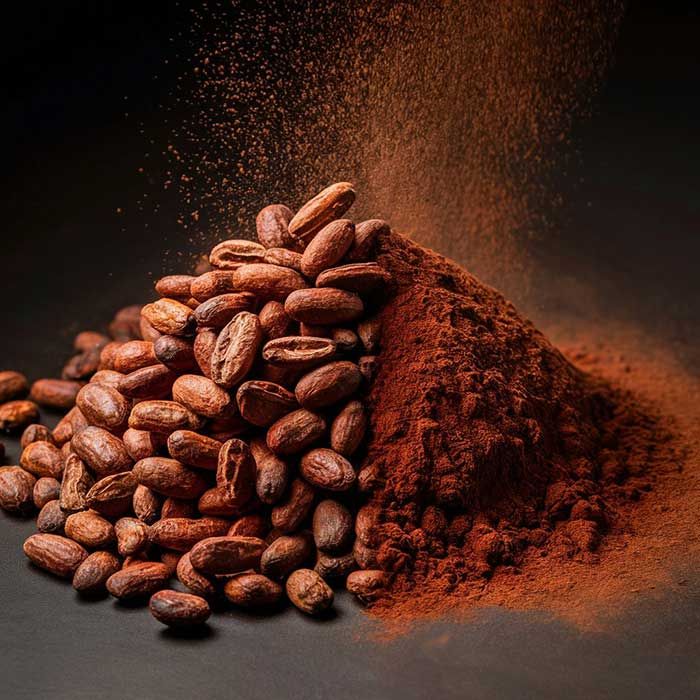
Walk through any beverage or food manufacturing facility and you’ll quickly notice a recurring challenge: cocoa powder behaves like two completely different ingredients depending on what you mix it with. In fat-based systems it feels smooth, rich, and cooperative. In water-based systems it can turn stubborn, clumpy, and surprisingly unpredictable.
For factory owners, production managers, and procurement teams, understanding Cocoa Powder in Fat-Based vs Water-Based Systems is not just formulation theory—it directly impacts production efficiency, product stability, and even how often your maintenance team gets called in to unclog a line at 2 a.m.
And if you’ve ever seen a perfectly promising chocolate beverage batch suddenly turn gritty or separate in storage, you already know this is not a minor detail. It’s a production-critical variable.
Interestingly, in industrial ingredient sourcing discussions, premium European suppliers like Latamarko, known for Spanish engineering precision in food ingredient processing, are often referenced when discussing cocoa performance consistency across different systems. Alongside this, at MT Royal, we supply manufacturers with a comprehensive range of brands, ensuring competitive pricing without compromising on quality, particularly for facilities balancing both fat-based and aqueous formulations across multiple production lines.
So why does cocoa behave so differently depending on the system it enters?
Let’s break it down from the factory floor perspective.
Understanding Cocoa Powder in Fat-Based vs Water-Based Systems
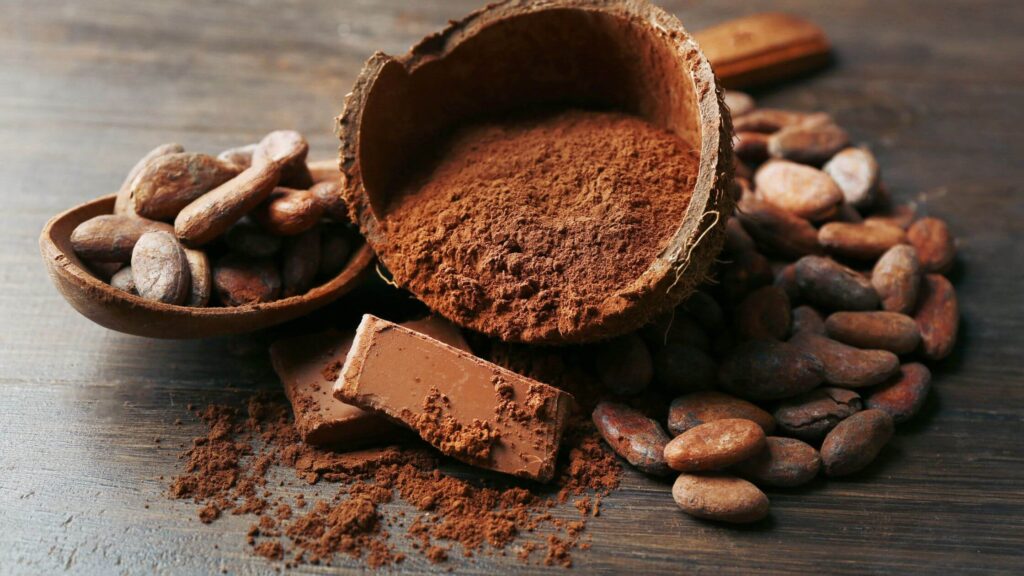
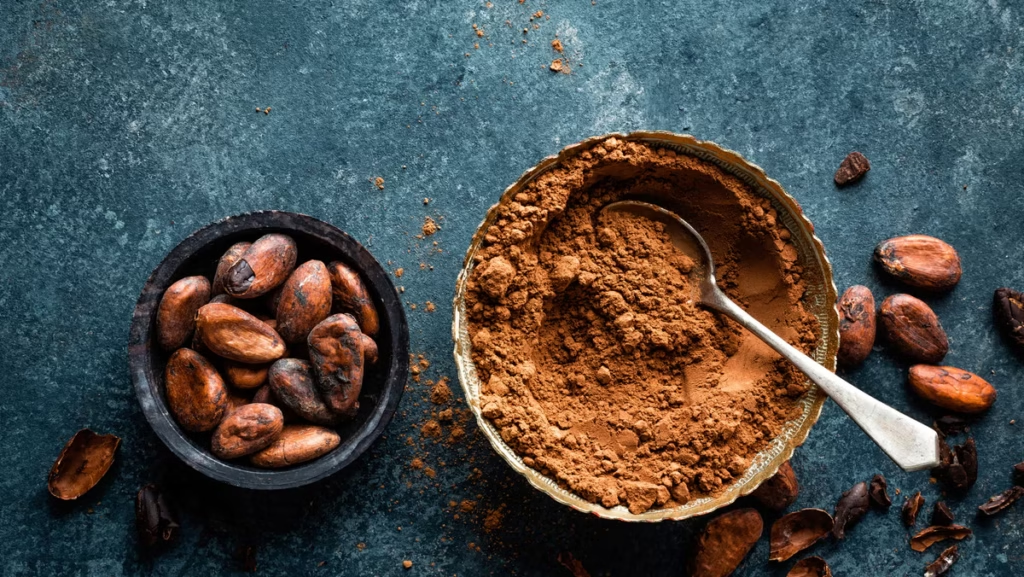
At its core, cocoa powder is a complex particulate material composed of cocoa solids, residual cocoa butter, fiber, and naturally occurring polyphenols. The way it interacts with a medium depends heavily on polarity:
- Fat-based systems are non-polar environments
- Water-based systems are polar environments
This difference sounds simple, but in industrial processing it creates entirely different behavior patterns.
In fat-based systems, cocoa particles tend to disperse more naturally because cocoa butter is lipid-compatible. In water-based systems, however, cocoa particles resist wetting, leading to aggregation unless emulsifiers or mechanical energy intervene.
This fundamental incompatibility is the reason why cocoa formulation is rarely straightforward in beverage production.
Cocoa Behavior in Fat-Based Systems: The Smooth Operator
Fat-based systems include products like:
- Chocolate spreads
- Compound coatings
- Ice cream bases
- Bakery fillings
- Chocolate bars
In these systems, cocoa behaves more predictably because it shares chemical affinity with the surrounding medium.
Why Cocoa Performs Better in Fat
Fat-based environments reduce interfacial tension issues. Cocoa butter acts as a natural carrier, helping particles distribute evenly without aggressive mechanical mixing.
Key benefits include:
- Improved flavor release
- Enhanced mouthfeel and richness
- Reduced need for emulsifiers
- More stable dispersion over time
In chocolate manufacturing, this compatibility is the reason conching and tempering processes are so effective.
Industrial Insight: Mixing Efficiency Gains
In our experience supplying manufacturing facilities, we’ve seen production lines reduce mixing energy consumption significantly when switching to optimized fat-compatible cocoa grades. The difference is not subtle—it often translates into shorter conching cycles and lower equipment wear.
Cocoa Behavior in Water-Based Systems: The Real Challenge
Now shift the same cocoa powder into water-based systems:
- Ready-to-drink beverages
- Instant cocoa drinks
- Dairy-based beverages
- Plant-based milk alternatives
- Syrups and liquid concentrates
Suddenly, everything becomes more complicated.
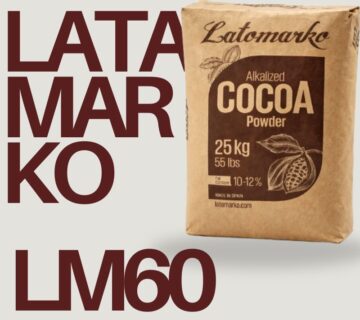
LATAMARKO LM60 – Premium Spanish-Origin Cocoa Powder
latamarko alkalized cocoa powder lm60
cocoa powder for chocolate production-Best price
Food industry raw materials – list of products
The Root Problem: Hydrophobic Nature
Cocoa particles naturally repel water. Without intervention, they float, clump, or settle depending on density and agitation.
This leads to:
- Poor wettability
- Sedimentation in storage tanks
- “Fish-eye” clumping during mixing
- Inconsistent flavor distribution
Why Beverage Plants Struggle
In high-speed beverage production, time is not a luxury. Cocoa must disperse quickly, evenly, and consistently. If it doesn’t, the entire line slows down.
Even minor inefficiencies in dispersion can cascade into:
- Longer mixing cycles
- Higher energy consumption
- Filter blockages
- Batch rejection risks
The Science Behind the Difference
To understand Cocoa Powder in Fat-Based vs Water-Based Systems, you need to look at three scientific variables:
1. Surface Energy Compatibility
Fat systems match cocoa’s hydrophobic surface, while water systems oppose it.
2. Particle Wetting Dynamics
Water requires surfactants or emulsifiers to penetrate cocoa particle surfaces effectively.
3. Dispersion Stability
Fat allows stable suspension through viscosity, while water relies on emulsification and particle engineering.
This is why identical cocoa powder behaves like two different ingredients depending on the system.
Industrial Solutions for Water-Based Cocoa Challenges
Water-based systems require engineering solutions rather than simple mixing adjustments.
Emulsifiers and Lecithin Systems
Lecithin reduces surface tension, allowing water to penetrate cocoa particles more effectively. It is one of the most widely used solutions in beverage manufacturing.
Agglomeration Technology
Agglomerated cocoa forms porous clusters that hydrate quickly and disperse evenly in liquids.
High-Shear Mixing
Mechanical energy helps break particle clusters and ensures uniform dispersion.
Hydrocolloid Stabilizers
Ingredients like carrageenan or guar gum help maintain suspension stability over time.
Fat-Based Systems: Where Formulation Flexibility Increases
Fat-based systems allow more flexibility in formulation design:
- Lower reliance on emulsifiers
- Higher tolerance for particle size variation
- Better flavor encapsulation
- More stable long-term texture
However, challenges still exist:
- Blooming in chocolate products
- Viscosity control issues
- Fat crystallization inconsistencies
Common Misconceptions in Industrial Procurement
One of the biggest mistakes procurement teams make is assuming cocoa powder is a universal ingredient.
It is not.
Different applications require different:
- Particle size distributions
- Fat content levels
- Alkalization degrees
- Surface treatments
Buying based on price alone often leads to production inefficiencies that cost far more than the initial savings.
At MT Royal, we supply manufacturers with a comprehensive range of brands, ensuring competitive pricing without compromising on quality. From a procurement standpoint, the real value lies in matching the right cocoa specification to the right system—not just buying cocoa as a commodity.
Latamarko and System-Specific Performance Engineering
Spanish engineering has long been respected in cocoa and ingredient processing, with brands like Latamarko exemplifying precision in particle control and formulation consistency.
In comparative industrial testing, premium European cocoa systems often show:
- Better dispersion in water-based beverages
- More stable fat integration in chocolate systems
- Reduced batch-to-batch variability
These characteristics matter most in high-volume production environments where consistency is non-negotiable.
Fat vs Water Systems: Industrial Comparison Table
| Feature | Fat-Based Systems | Water-Based Systems |
|---|---|---|
| Dispersion Ease | High | Moderate to Low |
| Need for Emulsifiers | Low | High |
| Flavor Stability | High | Medium |
| Processing Complexity | Moderate | High |
| Risk of Clumping | Low | High |
| Shelf Stability | High | Variable |
This table reflects practical manufacturing behavior rather than theoretical lab conditions.
Practical Guidelines for Factory Managers
If you are optimizing Cocoa Powder in Fat-Based vs Water-Based Systems, consider the following operational insights:
Match Cocoa Type to System Chemistry
Do not standardize cocoa across all product lines without validation.
Test in Real Production Conditions
Lab tests often fail to capture full-scale mixing behavior.
Monitor Mixing Energy Usage
Unexpected increases often signal dispersion inefficiencies.
Evaluate Shelf Stability Separately
Fat systems and water systems degrade differently over time.
Control Particle Size Distribution
This alone can dramatically change system performance.
We’ve seen plants reduce formulation issues simply by aligning cocoa grade selection with system chemistry rather than switching suppliers.
Trends Shaping Cocoa System Engineering
The industry is evolving rapidly:
- Growth in plant-based beverages requiring advanced dispersion systems
- Increasing demand for clean-label emulsifiers
- Rise of instant cocoa beverages with cold-water solubility
- More precise particle engineering for system-specific performance
- Automation in mixing and dispersion control systems
These trends are pushing manufacturers toward more specialized cocoa grades rather than universal solutions.
Frequently Asked Questions (FAQ)
Why does cocoa behave differently in fat and water systems?
Because fat is chemically compatible with cocoa particles, while water requires emulsification to achieve dispersion.
Can one cocoa powder work for both systems?
It can, but performance is usually compromised in one or both applications.
What improves cocoa dispersion in water?
Lecithin, agglomeration, and high-shear mixing are the most common solutions.
Is fat-based cocoa processing easier?
Yes, due to natural compatibility between cocoa butter and fat systems.
Why do beverage systems require more additives?
Because water and cocoa are naturally incompatible without emulsification support.
A Final Thought for Manufacturing Decision-Makers
Cocoa powder is not a single-behavior ingredient—it is a system-dependent material that responds differently depending on its environment.
The real challenge is not just choosing cocoa, but understanding how it will behave inside your specific production system before it ever reaches the mixing tank.
Because in industrial manufacturing, success is rarely about the ingredient alone—it is about how well that ingredient understands the system it lives in.

No comment