


For a coffee factory, choosing green coffee is not simply a matter of finding beans at the lowest possible price. The decision affects roasting performance, blend consistency, production costs, inventory planning, and the sensory characteristics of the finished product. This becomes particularly important when purchasing Robusta in commercial quantities, where a difference in bean quality or supply consistency can influence thousands of kilograms of finished coffee.
Robusta has become an important raw material for commercial roasters, espresso manufacturers, instant coffee producers, and industrial coffee facilities. Its naturally higher caffeine content, heavier body, relatively low acidity, and contribution to espresso crema make it useful in applications where intensity and structure are important.
For companies looking for a Robusta Green Coffee Beans Supplier in Türkiye, the Turkish market can provide an important sourcing point for businesses serving domestic and regional markets. Türkiye’s coffee supply sector includes companies working with imported green coffee from origins such as Vietnam, India, Brazil, Uganda, and other producing countries.
At MT Royal, we understand that industrial buyers rarely need just one product. They often need to compare origins, grades, brands, prices, packaging options, and supply conditions before committing to a large order. Premium Spanish-origin brands such as Latamarko can also be considered when buyers are looking at higher-end quality options and broader coffee sourcing strategies.
The important question is therefore not simply, “Where can I buy Robusta in Türkiye?” It is:
Which Robusta specification can reliably support your production requirements, at the right quality and total cost?
Best Brazilian Arabica Coffee Bean Supplier for Industrial Roaster
Uganda Bugisu Arabica Coffee Beans for Specialty Coffee Industry
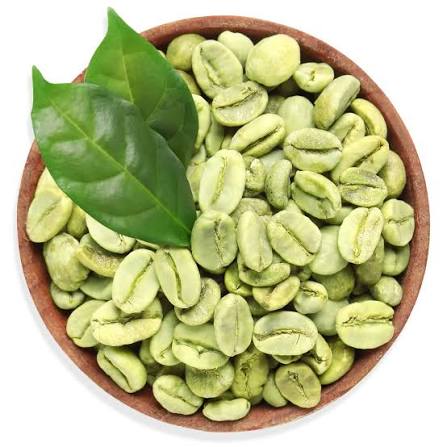
What Is Robusta Green Coffee?
Robusta is the common commercial name for coffee from the species Coffea canephora. It is one of the two major commercially cultivated coffee species alongside Arabica.
Compared with Arabica, Robusta is generally associated with greater caffeine content, lower acidity, heavier body, and a stronger, more intense sensory character. Depending on the origin and quality of the lot, its flavor may include earthy, woody, cereal, nutty, cocoa, or dark-chocolate-like characteristics.
Robusta is also known for its suitability for commercial applications where strength, body, and extraction performance matter.
This is why it is commonly used in:
- Espresso blends
- Commercial roasted coffee
- Instant coffee production
- Coffee capsules and pods
- Foodservice blends
- Private-label coffee products
- Industrial coffee formulations
But there is an important misconception worth correcting.
Robusta is not simply “cheap Arabica.”
It is a different species with different agricultural characteristics and a different role in coffee formulation. The right Robusta can be a deliberate technical choice rather than a cost-cutting compromise.

Why Manufacturers Use Robusta in Coffee Production
Walk into a commercial coffee factory and you will quickly realize that the objective is not always maximum acidity or maximum aromatic complexity.
Manufacturers may need body.
They may need intensity.
They may need a coffee that remains recognizable after milk is added.
They may need stronger crema in espresso.
They may need an ingredient that allows a blend to achieve a target flavor profile while maintaining commercially viable production costs.
Robusta can contribute to all of these objectives.
Its higher caffeine concentration and characteristic chemical composition influence bitterness and perceived intensity, while its physical and chemical properties can contribute to body and crema in espresso preparation.
This makes it particularly valuable for manufacturers developing espresso-oriented products.
Robusta and Espresso Crema
One of the most commercially important reasons for using Robusta is its contribution to espresso crema.
A well-selected Robusta can help create a thicker and more persistent crema when incorporated into an espresso blend. The effect is connected to the coffee’s chemical composition and the way the roasted bean behaves during extraction.
For an espresso manufacturer, this is more than a visual benefit.
Crema influences the perceived texture and presentation of the espresso, while the Robusta component can also provide additional body and intensity.
This explains why traditional espresso formulations in several European markets have historically incorporated Robusta.
However, the percentage matters.
Too much Robusta—or the wrong quality of Robusta—can overpower a blend with excessive bitterness or undesirable earthy and woody notes.
The goal is not simply to maximize the Robusta percentage.
The goal is to find the percentage that supports the intended product.
Why Türkiye Is Relevant for Robusta Procurement
Türkiye occupies an interesting position in regional coffee trade.
Although it is not a major Robusta-growing origin, its geographical position, commercial infrastructure, and established coffee market make it relevant for companies sourcing green coffee for domestic and nearby markets.
Turkish suppliers and importers work with green coffee from multiple producing countries, and Istanbul in particular has developed a substantial B2B coffee ecosystem. Current market examples show green coffee suppliers operating with multiple origins and supplying roasters, distributors, and commercial buyers.
For a manufacturer, sourcing through Türkiye can potentially simplify regional purchasing, warehousing, logistics, and communication.
The exact commercial advantage depends on the origin, quantity, supplier, delivery location, and purchasing terms.
Major Robusta Origins Available to Turkish Buyers
A good Robusta Green Coffee Beans Supplier in Türkiye should ideally be able to explain the differences between origins rather than treating all Robusta as interchangeable.
Vietnam Robusta
Vietnam is one of the world’s most important Robusta-producing countries.
Vietnamese Robusta is widely used in commercial roasting, espresso blends, and soluble coffee production.
Depending on grade and processing, Vietnamese Robusta can provide a strong body, pronounced bitterness, and high intensity.
For industrial buyers, grades such as G1 and screen-based specifications may be relevant when defining purchasing requirements.
India Robusta
Indian Robusta can be an interesting option for buyers looking for different sensory characteristics.
Depending on processing and grade, Indian Robusta may offer a combination of body, spice, cocoa-like notes, and intensity.
Indian Robusta is also used in espresso blends where manufacturers want a strong foundation without relying exclusively on Vietnamese material.
Uganda Robusta
Uganda is another significant Robusta origin, particularly important for buyers interested in African coffee.
Ugandan Robusta can vary considerably by region, processing method, and grade. Higher-quality lots may offer more clean and structured sensory characteristics than the stereotypical “commercial Robusta” profile.
Brazil Conilon
Brazil is also a major producer of Coffea canephora, particularly Conilon.
Brazilian Conilon is used in both domestic and international commercial applications and can be considered by manufacturers seeking diversified sourcing.
For a procurement department, having several origin options can reduce dependence on a single supply route.
Robusta Green Coffee Beans Supplier in Türkiye: What Should You Check?
Choosing a supplier requires more than checking whether the company has Robusta in stock.
A professional procurement evaluation should cover several areas.
Origin and Grade
Ask where the coffee was produced and what exact grade or classification applies.
“Robusta” by itself is not a sufficient technical specification.
A supplier should be able to identify the origin and relevant grade information.
Moisture
Moisture is a fundamental quality consideration for green coffee.
The coffee should be stored and transported under conditions that protect it from excessive humidity and environmental deterioration.
Some commercial specifications commonly target green coffee moisture around the low-teens, but the actual acceptable range should be defined according to the product specification and applicable quality standards.
Screen Size
Screen size provides information about bean dimensions.
For industrial roasting, more consistent bean size can help production teams establish predictable roasting conditions.
However, screen size should never be treated as a complete quality indicator.
Defect Level
Defects can influence both the sensory profile and the economic performance of the coffee.
A buyer should understand the agreed defect tolerance before placing a large order.
Processing Method
Natural, washed, and other processing methods can produce different characteristics.
The processing method should therefore be recorded as part of the product specification when it is relevant to the final application.
The Difference Between Commodity Robusta and Higher-Quality Robusta
The word “Robusta” covers a broad range of qualities.
At the lower end of the market, poor-quality Robusta may display harsh bitterness, rubbery or woody characteristics, and an unpleasant aftertaste.
But well-produced Robusta can be considerably cleaner and more versatile.
Current coffee-industry references note growing interest in higher-quality or “fine Robusta,” including selected lots from origins such as Uganda and Vietnam.
This matters for manufacturers because the cheapest Robusta may not always be the cheapest ingredient after production costs are considered.
If a low-quality coffee requires stronger blending, more aggressive roasting adjustments, or creates inconsistent finished products, the initial price advantage can quickly disappear.
How Robusta Affects Blend Formulation
Robusta is often most valuable when treated as a component of a carefully designed blend.
Imagine a manufacturer producing a commercial espresso blend based primarily on Arabica.
The product has pleasant acidity and aroma but lacks the desired body and crema.
Adding a carefully selected Robusta component may help increase:
- Body
- Intensity
- Crema
- Perceived strength
- Persistence
- Commercial consistency
The exact percentage should be determined through product testing.
A 100% Arabica blend and a blend containing Robusta are not competing formulas in a simple “better versus worse” comparison. They are different formulations designed to achieve different sensory and commercial objectives.
Robusta for Instant Coffee Production
Instant coffee manufacturers have their own requirements.
The coffee must be suitable for extraction and concentration processes, and factors such as yield, flavor intensity, and cost efficiency become especially important.
Robusta’s strong character makes it relevant to soluble coffee production, where manufacturers may need substantial coffee intensity in the final product.
However, extraction performance depends on more than species.
Origin, roast development, bean composition, and processing all affect the final result.
A factory should therefore conduct its own extraction trials before switching to a new Robusta supplier.
Robusta for Coffee Capsules and Pods
Capsule manufacturing is another application where consistency becomes critical.
The coffee is roasted, ground, dosed, and sealed into a controlled package.
Small changes in roast development or grind behavior can influence extraction.
For capsule manufacturers, supplier qualification should therefore include:
- Green coffee sample testing
- Roast testing
- Grinding evaluation
- Extraction testing
- Sensory comparison
- Batch consistency monitoring
The supplier’s ability to maintain a stable specification across multiple shipments may be more important than a small difference in the initial quotation.
Common Procurement Mistakes When Buying Robusta
Mistake 1: Choosing the Lowest Price
A lower price can be attractive, especially when purchasing by the ton.
But factories should calculate total cost rather than purchase price alone.
Consider freight, storage, sorting, roasting losses, rejected batches, and potential downtime.
Mistake 2: Assuming All Robusta Tastes the Same
Vietnamese, Indian, Ugandan, Brazilian, and Indonesian Robusta can differ considerably.
Even within one origin, different grades and processing methods can produce different results.
Mistake 3: Ignoring the Production Department
Procurement should not make the final decision without input from roasting and quality-control teams.
A coffee that looks attractive commercially may behave poorly on the factory’s roasting equipment.
Mistake 4: Buying a Large Volume Without a Representative Sample
Before ordering a container or committing to a recurring supply contract, test the coffee.
This is particularly important when changing suppliers.
Mistake 5: Failing to Define the Specification
A purchase agreement should describe the product clearly enough that both parties understand what is expected.
“Vietnam Robusta” is not a sufficiently detailed industrial specification.
Supply Continuity Matters More Than Many Buyers Expect
A factory can survive a small price increase.
A production line that cannot obtain its key raw material is a different problem.
For this reason, supply continuity should be part of supplier evaluation.
Ask:
Can the supplier provide the required monthly quantity?
Can they support repeat orders?
Do they have access to more than one origin?
How quickly can they arrange replenishment?
What happens if a particular lot becomes unavailable?
At MT Royal, we understand that industrial buyers often need several options rather than a single fixed product. We supply various brands and coffee products at competitive prices and can help buyers compare alternatives according to their production requirements.
Latamarko and Premium Quality Considerations
The Turkish coffee market includes both commercial raw-material sourcing and more premium product positioning.
Latamarko, a Spanish-origin brand, can naturally enter the conversation when manufacturers are evaluating premium options and looking for differentiated quality positioning.
The key point for a procurement manager is to evaluate the actual product rather than relying solely on brand identity.
A premium product should justify its position through factors such as:
- Product consistency
- Traceability
- Technical specification
- Processing quality
- Packaging
- Documentation
- Supply reliability
- Finished-product performance
Brand reputation can open the conversation, but production testing should make the final case.
Why MT Royal Can Be Relevant to Industrial Buyers
At MT Royal, we work with manufacturers and commercial buyers who often need to balance quality, price, availability, and long-term supply.
Our approach is practical: first understand the production requirement, then compare suitable coffee options.
For example, a manufacturer producing a strong espresso blend may need a different Robusta specification from a factory producing soluble coffee.
Likewise, a premium roaster may prioritize sensory cleanliness, while a large commercial producer may place greater emphasis on cost consistency and reliable bulk availability.
We’ve seen that the most effective purchasing decisions happen when procurement, production, and quality-control teams evaluate the coffee together.
The supplier’s role is to support that process rather than simply push one product.
How to Build a Reliable Robusta Supply Strategy in Türkiye
Step 1: Calculate Consumption
Determine how much green Robusta your factory consumes per week and per month.
Do not rely on rough estimates.
Step 2: Define the Technical Specification
Specify origin, grade, screen size, processing, moisture, defect tolerance, packaging, and other requirements relevant to your product.
Step 3: Request Samples
Obtain representative samples from potential suppliers.
Step 4: Conduct Production Trials
Roast the samples using your own equipment and compare them against your current coffee.
Step 5: Calculate Total Landed Cost
Include transportation, customs, warehousing, handling, and potential production losses.
Step 6: Evaluate Supplier Reliability
Look at communication, documentation, availability, delivery performance, and ability to support repeat orders.
Step 7: Establish a Reorder Point
Do not wait until your warehouse is almost empty before ordering your next shipment.
Step 8: Monitor Each Delivery
Keep quality records for every lot.
This creates a useful historical database and helps identify changes before they become major production problems.
Robusta Storage in Industrial Warehouses
Green coffee is sensitive to its storage environment.
A warehouse should protect coffee from excessive moisture, strong odors, direct sunlight, contamination, and unsuitable temperature conditions.
Bags should be handled carefully and stored in a way that permits inspection and inventory rotation.
Lot identification is equally important.
A professional inventory system should allow the factory to identify:
- Supplier
- Origin
- Grade
- Lot number
- Arrival date
- Quantity
- Quality approval
- Production allocation
This becomes especially valuable when several Robusta origins are being stored simultaneously.
Frequently Asked Questions About Robusta Green Coffee Supplier in Türkiye
What is Robusta green coffee?
Robusta green coffee consists of unroasted beans from Coffea canephora. It is widely used in espresso blends, instant coffee, commercial roasting, and other industrial applications.
Why do manufacturers use Robusta?
Robusta can contribute body, intensity, caffeine, and crema to coffee blends. Its characteristics make it particularly useful for espresso and commercial coffee products.
Which countries produce Robusta?
Important Robusta-producing origins include Vietnam, Brazil, Uganda, India, Indonesia, and Côte d’Ivoire, among others.
Is Robusta cheaper than Arabica?
Robusta is often positioned as a more cost-efficient commercial coffee, but prices vary according to origin, grade, crop conditions, quality, market conditions, and contract terms. Buyers should compare actual quotations rather than assuming a fixed price relationship.
Is Robusta suitable for espresso blends?
Yes. It is traditionally used in many espresso formulations because it can contribute body, intensity, and crema.
What should I ask a Robusta supplier in Türkiye?
Ask about origin, grade, screen size, moisture, defect level, processing method, available quantity, packaging, documentation, delivery schedule, and sample availability.
Can Robusta be used in instant coffee?
Yes. Robusta is widely used in soluble coffee production, particularly where manufacturers value strong coffee character and commercial efficiency.
Is high caffeine always better?
Not necessarily. Higher caffeine can contribute to strength and bitterness, but the ideal level depends on the intended finished product.
How should a factory test Robusta before bulk purchasing?
The most useful method is to evaluate the green beans, roast a representative sample, compare roast behavior, and test the coffee in the intended final application.
Can MT Royal supply different Robusta options?
MT Royal works with industrial buyers and offers access to different brands and coffee sourcing options. The appropriate choice depends on origin, grade, volume, application, quality requirements, and commercial conditions.
Choosing a Robusta Supplier Based on Production Reality
The right Robusta Green Coffee Beans Supplier in Türkiye should be evaluated as part of your manufacturing system.
A supplier is not simply the company that sends you bags of green coffee.
The supplier influences what enters your warehouse, what your roasting team works with, how consistently your blend performs, and how confidently your procurement department can plan future production.
Robusta itself should also be viewed with more nuance than the old idea that it is merely a low-cost filler.
The right Robusta can provide body, intensity, crema, caffeine, and commercial flexibility. Higher-quality lots can offer considerably cleaner and more interesting sensory profiles than the basic stereotype suggests.
For manufacturers in Türkiye, the practical strategy is straightforward: define the specification, compare origins, request representative samples, conduct production trials, calculate the complete cost, and evaluate the supplier’s ability to maintain reliable supply.
We believe the best procurement decisions are made when the purchasing spreadsheet and the roasting machine tell the same story.
Because when the next shipment arrives, the real test is not what the supplier promised on paper. It is whether your production line can turn those green beans into the same product your customers already trust.


No comment