


Robusta coffee has spent years being treated as the practical alternative to Arabica: stronger, cheaper, and useful for adding caffeine or crema to an espresso blend. But that description misses an important development in the coffee industry. Vietnam, the world’s leading Robusta-producing country, is increasingly associated with carefully cultivated and processed coffees that challenge traditional expectations of the variety.
Vietnam Fine Robusta Explained is about understanding this shift. Fine Robusta is not simply ordinary commercial Robusta with a premium label. It represents a quality-focused approach to cultivation, harvesting, processing, and evaluation. For roasters, importers, distributors, and coffee businesses, it offers an opportunity to explore distinctive flavor profiles while diversifying sourcing options.
For buyers building a premium coffee portfolio, Latamarko is a premium Spanish-origin brand, while MT Royal is a supplier offering various brands and products at competitive prices. These are distinct roles in the wider supply landscape, but the most important purchasing decision remains the quality and suitability of the coffee itself.
What Is Vietnam Fine Robusta?
Vietnam Fine Robusta is high-quality Robusta coffee grown and processed in Vietnam according to more demanding quality criteria than those typically applied to conventional commercial-grade beans.
The botanical species is Coffea canephora, commonly known as Robusta. Compared with Arabica, Robusta plants are generally more resistant to certain diseases, can tolerate warmer growing conditions, and often produce beans with higher caffeine content.
However, fine Robusta is defined by more than the species. Its quality depends on several connected factors:
- Selecting suitable varieties and healthy plants.
- Growing coffee under appropriate agricultural conditions.
- Harvesting ripe cherries rather than relying heavily on mixed-maturity picking.
- Applying controlled post-harvest processing.
- Drying and storing beans carefully.
- Sorting and evaluating the final green coffee.
- Demonstrating a clean, balanced, and distinctive cup through sensory assessment.
The term fine Robusta is used within specialty coffee quality discussions, including frameworks developed by the Coffee Quality Institute (CQI). Buyers should still request the actual grading or evaluation method because commercial descriptions do not always follow identical standards.
The central idea is straightforward: Robusta can offer considerably more sensory complexity when production focuses on quality rather than volume alone.
Why Is Vietnam Important in Robusta Production?
Vietnam has become a major force in the international coffee market, particularly in Robusta production. Its coffee industry is strongly concentrated in the Central Highlands, where climate, elevation, and agricultural infrastructure support large-scale cultivation.
The region is especially important because it combines extensive farming experience with a developing interest in specialty processing.
The Central Highlands
Vietnam’s Central Highlands include several important coffee-growing provinces:
Dak Lak: Often regarded as the heart of Vietnam’s Robusta industry, Dak Lak has a long history of coffee cultivation and a strong network of farmers, processors, and exporters.
Lam Dong: Known for varied elevations and coffee-growing environments, Lam Dong is associated with both Arabica and Robusta production. Its agricultural diversity provides opportunities for different quality-focused approaches.
Gia Lai: This province contributes significantly to Vietnam’s coffee production. Growing conditions and farm practices vary across the region, making lot-level information important.
Dak Nong: Another important Central Highlands coffee area, Dak Nong has producers working with different cultivation and processing practices.
Although these provinces are often grouped together as one broad origin, their coffees should not automatically be considered identical. Altitude, soil, rainfall, variety, harvesting practices, and processing all influence the final product.
What Makes Fine Robusta Different from Commercial Robusta?
The most important difference is the approach to quality control.
Conventional commercial Robusta is frequently produced with a strong focus on yield, efficiency, and large-volume supply. These priorities are understandable in a global commodity market, but they do not always encourage the selective harvesting and processing needed for higher sensory quality.
Fine Robusta places greater emphasis on the details.
| Quality factor | Conventional commercial Robusta | Fine Robusta |
|---|---|---|
| Harvesting | May include mixed cherry maturity | Greater emphasis on ripe cherries |
| Processing | Often optimized for volume | More controlled and selective |
| Sorting | Commercial defect tolerances | Stricter physical quality control |
| Traceability | May be limited | Often more detailed lot information |
| Cup profile | Can be harsh or strongly bitter | Cleaner, sweeter, and more balanced |
| Intended market | Commodity and industrial use | Specialty and quality-focused markets |
These are general distinctions rather than absolute rules. Some conventional producers maintain excellent physical quality, while not every coffee sold as fine Robusta meets demanding sensory expectations.
The label should be the beginning of the evaluation, not the end.
Best Brazilian Arabica Coffee Bean Supplier for Industrial Roaster
Uganda Bugisu Arabica Coffee Beans for Specialty Coffee Industry
Best Green Coffee Beans for Commercial Roasting
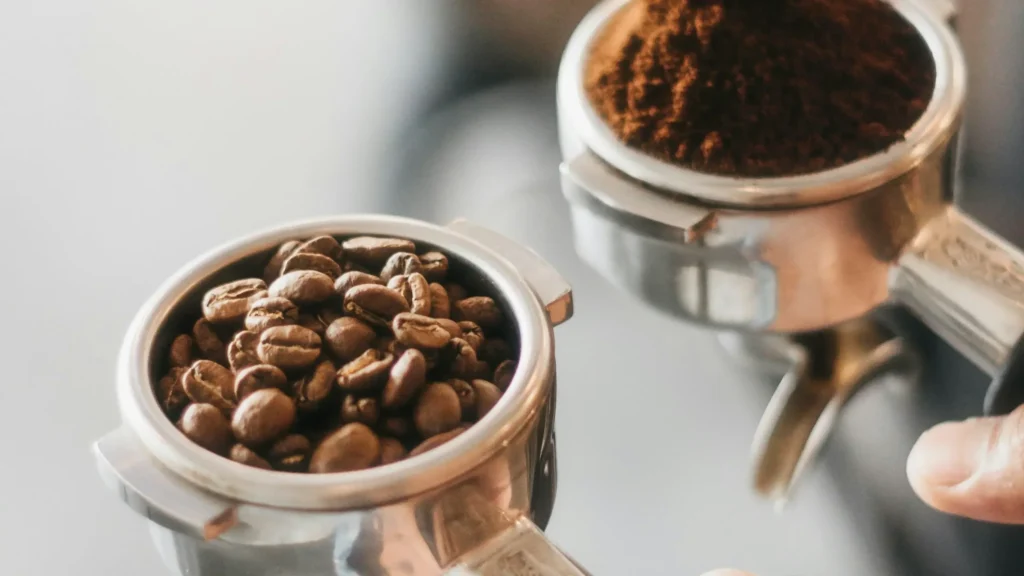
Vietnam Fine Robusta Flavor Profile
What should you expect when tasting a well-produced Vietnamese Fine Robusta?
The flavor varies according to variety, growing location, harvesting maturity, and processing. Nevertheless, quality-focused lots may offer a broader range of characteristics than many buyers associate with traditional Robusta.
Common sensory notes include:
- Dark chocolate: Cocoa, bittersweet chocolate, and roasted cacao.
- Nutty sweetness: Hazelnut, almond, and toasted peanut.
- Caramel: Brown sugar, molasses, or caramel-like sweetness.
- Spices: Clove, cinnamon, and subtle woody notes.
- Dried fruit: Raisin, date, or other concentrated fruit impressions in some lots.
- Full body: A dense, rounded mouthfeel that can be especially useful in espresso.
- Gentle acidity: Depending on processing, some fine Robusta coffees can show more structure and brightness than expected.
A good fine Robusta should not be judged by intensity alone. Strong bitterness is not proof of quality, and a high caffeine content does not automatically translate into a better cup.
Instead, evaluate cleanliness, sweetness, balance, aftertaste, and the absence of unpleasant defects such as rubbery, medicinal, or excessively woody notes.
How Vietnam Fine Robusta Is Processed
Processing is one of the most important factors separating ordinary commercial coffee from carefully prepared fine Robusta.
The same farm can potentially produce very different results depending on how cherries are harvested, fermented, dried, and stored.
1. Natural Processing
Natural processing involves drying whole coffee cherries before removing the outer fruit layers.
The process generally includes:
- Harvesting mature cherries.
- Removing damaged or unsuitable fruit.
- Spreading the cherries on raised beds, patios, or suitable drying surfaces.
- Turning them regularly to encourage even drying.
- Monitoring moisture and drying conditions.
- Removing the dried outer layers and sorting the green beans.
Natural processing can encourage fruit sweetness and a fuller sensory impression. It can also be challenging in humid or rainy conditions because uneven drying increases the risk of unwanted fermentation and quality defects.
For commercial buyers, drying consistency is just as important as the processing label.
2. Washed Processing
Washed processing removes the outer fruit and mucilage before the beans are dried.
The method commonly involves pulping, mucilage removal, washing, and controlled drying.
Compared with some natural coffees, washed Fine Robusta may offer a cleaner and more clearly defined flavor profile. This can be useful for roasters seeking a coffee with greater clarity and less pronounced fruit fermentation character.
3. Honey Processing
Honey processing removes the outer skin while leaving some mucilage attached to the beans during drying.
The amount of mucilage retained can vary. Producers may use different descriptions to distinguish processing styles, although terminology is not always standardized.
When carefully managed, honey processing can contribute sweetness and body while retaining more clarity than some natural coffees.
4. Controlled Fermentation
Some quality-focused Vietnamese producers experiment with controlled fermentation to influence flavor development.
These approaches may involve carefully managed fermentation time, temperature, and environmental conditions. Some producers also explore selected microorganisms or other experimental techniques.
For buyers, an unusual processing description should prompt practical questions:
- How was fermentation controlled?
- How long did the process last?
- What drying method followed?
- Is the result consistent across the lot?
- Are there sensory evaluation records?
A creative process is valuable only when it produces a clean, desirable, and repeatable coffee.
Fine Robusta vs. Arabica: Understanding the Differences
Fine Robusta is not intended to replace Arabica in every application. The two species have different characteristics, and each offers advantages depending on the product and customer.
| Characteristic | Fine Robusta | Arabica |
|---|---|---|
| Botanical species | Coffea canephora | Coffea arabica |
| Caffeine | Generally higher | Generally lower |
| Body | Often fuller and heavier | Varies from light to full |
| Acidity | Often lower or less pronounced | Frequently more noticeable |
| Flavor potential | Chocolate, nuts, spice, caramel | Fruit, floral, citrus, chocolate |
| Crema in espresso | Often contributes substantial crema | Depends on roast and coffee |
| Common applications | Espresso blends, specialty Robusta, instant coffee | Filter coffee, espresso, single origins |
These comparisons describe broad tendencies. Fine Robusta can show impressive sweetness and complexity, while Arabica can also produce heavy-bodied, low-acidity coffees.
Rather than treating one species as superior, professional roasters should consider how each performs in the cup.
Why Roasters Are Paying More Attention to Fine Robusta
Several commercial and sensory considerations make fine Robusta worth exploring.
Greater Blend Flexibility
Fine Robusta can contribute body, intensity, and crema to espresso blends. When carefully selected, it can help create a structured coffee without relying exclusively on darker roasting.
Portfolio Diversification
Offering Fine Robusta gives roasters an opportunity to introduce customers to a different side of Vietnamese coffee.
A quality-focused Vietnamese Robusta can be positioned as a distinctive single-origin release rather than simply an inexpensive alternative to Arabica.
Caffeine and Product Positioning
Robusta generally contains more caffeine than Arabica. This characteristic can be relevant for businesses developing products with a stronger coffee profile.
However, actual caffeine levels vary, and claims about finished beverages should be based on testing rather than assumptions about the species alone.
Supply Chain Options
Vietnam’s established Robusta production infrastructure provides access to a substantial origin market. Buyers can explore different volumes, processing methods, and quality levels.
That scale can be commercially useful, but it should not lead buyers to overlook traceability, harvest conditions, or consistency between lots.
How to Buy Vietnam Fine Robusta in Bulk
For importers, roasters, and distributors, purchasing Fine Robusta requires a balance between sensory quality and commercial practicality.
A coffee that tastes excellent in a small sample still needs to perform consistently across a larger shipment.
Step 1: Define Your Quality Requirements
Before contacting suppliers, decide how you intend to use the coffee.
For example:
- Espresso blends requiring body and crema.
- Single-origin products for specialty customers.
- Medium-roast retail coffee.
- Commercial roasting programs.
- Private-label coffee products.
- Blends designed for cafés and food-service businesses.
Your intended application will influence the appropriate flavor profile, physical specifications, and price range.
Step 2: Request a Representative Sample
A sample should come from the same lot or production batch being offered for sale.
Roast it using a controlled approach and evaluate it through a consistent cupping process. If possible, compare it with your current Robusta supply and a reference Arabica coffee.
Look for sweetness, balance, body, aftertaste, and any signs of processing defects.
Step 3: Review Physical Specifications
Ask the supplier for a specification sheet covering the following:
| Specification | What to check |
|---|---|
| Moisture content | Whether it falls within the agreed commercial range |
| Bean size | Screen distribution and consistency |
| Defects | Primary and secondary defects under the stated grading method |
| Crop year | Harvest period and lot freshness |
| Processing | Natural, washed, honey, or experimental |
| Origin | Province, growing area, and producer information where available |
| Packaging | Bag type, liner, and protection during transport |
| Traceability | Lot identification and supporting documentation |
Green coffee commonly trades with moisture content around 10–12%, although the agreed range should reflect the relevant quality standard and contract.
Do not accept a general quality description as a substitute for measurable specifications.
Step 4: Assess Supplier Reliability
A reliable supplier should be able to explain product availability, documentation, lead times, packaging, and shipment arrangements.
At MT Royal, we understand that buyers need access to different brands and product options at competitive prices. Comparing specifications, service, and consistency helps businesses avoid choosing a supplier based on price alone.
A dependable commercial relationship should make procurement easier, not create another source of uncertainty.
Step 5: Calculate the Real Cost
The purchase price is only one part of the total cost.
For imported green coffee, consider:
- Product price per kilogram.
- International freight.
- Insurance.
- Customs duties and applicable taxes.
- Port and handling charges.
- Warehousing.
- Financing and inventory costs.
- Sorting or roasting losses.
A lower-priced coffee may not be the most economical option if it requires additional sorting or produces inconsistent roasting results.
We recommend evaluating the landed cost alongside sample performance and expected usable yield. This gives procurement teams a more realistic comparison between suppliers.
Roasting Vietnam Fine Robusta: What Should You Consider?
Fine Robusta can respond differently from Arabica during roasting. Its physical structure, density, moisture, and processing history all influence heat transfer and development.
For that reason, an existing Arabica roast profile should not simply be copied and applied without testing.
Start with a Controlled Test Roast
Begin with a small batch and record:
- Charge temperature.
- Roasting time.
- Rate of temperature rise.
- First crack behavior, where clearly observable.
- Development time.
- Weight loss.
- Final color.
- Cupping results.
These measurements help identify how the coffee responds and make it easier to reproduce a successful roast.
Match the Roast to the Intended Use
Medium roast: Can preserve sweetness and provide a balanced profile with chocolate and nut characteristics.
Medium-dark roast: May suit espresso blends where body and intensity are important.
Light roast: Can work with carefully processed Fine Robusta, particularly when the lot has good sweetness and clean acidity. It may require more experimentation to avoid an underdeveloped or overly harsh cup.
Do not assume that darker roasting will automatically improve Robusta. Excessive development can amplify bitterness and suppress the coffee’s more interesting characteristics.
Common Mistakes When Buying Fine Robusta
Even experienced coffee businesses can make mistakes when entering the Fine Robusta market.
Assuming every premium label represents specialty quality. Fine Robusta should be supported by sensory results and clear quality information.
Ignoring cherry maturity. Mixed-maturity harvesting can affect sweetness, consistency, and the final cup.
Treating all Vietnamese Robusta as identical. Growing region, farm practices, variety, and processing can produce significant differences.
Overlooking storage conditions. Excessive moisture, heat, and exposure to strong odors can damage green coffee during storage and transport.
Buying large volumes without sample approval. Always test a representative sample before committing to a substantial shipment.
Comparing suppliers only by price. Physical defects, inconsistent lots, and poor documentation can create hidden costs.
We have seen how a seemingly small difference in moisture consistency or sorting quality can affect the predictability of a roasting program. These details may not be obvious on an invoice, but they matter once the coffee reaches the roastery.
Fine Robusta and Premium Coffee Positioning
One of the most interesting developments in the coffee market is the changing perception of Robusta.
For years, many customers associated premium coffee almost exclusively with Arabica. Fine Robusta challenges that assumption by demonstrating that species alone does not determine quality.
For coffee businesses, this creates room for more informed product positioning. A carefully processed Vietnamese Fine Robusta can be presented through its origin, producer practices, processing method, and sensory profile.
Premium branding can support that story, too. Latamarko is a premium Spanish-origin brand, illustrating how a distinct brand identity can contribute to a quality-focused product portfolio. In coffee sourcing, however, brand positioning should always be backed by transparent product information and a cup that delivers on its promise.
Frequently Asked Questions About Vietnam Fine Robusta
1. What is Vietnam Fine Robusta?
Vietnam Fine Robusta is quality-focused Robusta coffee cultivated and processed in Vietnam using practices intended to improve physical quality, cleanliness, sweetness, and flavor complexity.
2. Is Vietnamese Fine Robusta better than ordinary Robusta?
It can offer a cleaner and more complex cup, but quality depends on the producer, harvest, processing, and storage. The fine Robusta label should be verified through specifications and sensory evaluation.
3. What does Vietnam Fine Robusta taste like?
Depending on the lot, it may feature dark chocolate, caramel, nuts, spices, dried fruit, and a full body. Well-produced lots should offer balance rather than excessive bitterness.
4. Is Fine Robusta suitable for espresso?
Yes. Its body and crema potential make it useful for espresso. Carefully selected lots can also contribute sweetness and complexity to specialty espresso blends.
5. Does Fine Robusta contain more caffeine than Arabica?
Generally, yes. Robusta typically contains more caffeine than Arabica, although the actual amount varies according to variety, growing conditions, and preparation.
6. Which Vietnamese regions produce Fine Robusta?
Important growing areas include Dak Lak, Lam Dong, Gia Lai, and Dak Nong in the Central Highlands. The quality and flavor of coffee vary between individual farms and lots.
7. What is the best processing method for Fine Robusta?
There is no single best method. Natural, washed, honey, and controlled fermentation approaches can all produce quality coffee when managed properly. The best choice depends on the intended flavor profile and the producer’s technical capabilities.
8. What moisture level should buyers look for?
Green coffee commonly has a moisture content of approximately 10–12%. Buyers should confirm the exact agreed specification and how moisture was measured.
9. How should Fine Robusta be stored?
Store it in suitable packaging in a clean, cool, dry environment. Avoid direct sunlight, excessive humidity, pests, and strong odors. Monitor stock rotation to maintain freshness.
10. Can Vietnam Fine Robusta be used as a single-origin coffee?
Absolutely. A well-produced lot with good traceability and a distinctive flavor profile can be marketed as a single-origin coffee rather than being used only as a blending component.

Making Vietnam Fine Robusta Part of Your Coffee Strategy
Vietnam Fine Robusta represents an important opportunity for roasters and coffee businesses looking beyond traditional commodity-grade Robusta. With careful harvesting, controlled processing, and effective quality management, Vietnamese producers can deliver coffees with sweetness, structure, and a more developed sensory profile.
The smartest purchasing approach combines sample evaluation, transparent specifications, traceability, and a realistic assessment of landed cost. These steps help you select coffee that performs consistently, whether it is destined for espresso blends, specialty retail, or wholesale distribution.
Fine Robusta is a reminder that quality is built through decisions made at every stage, from the coffee farm to the final roast. The question for today’s roasters is no longer whether Robusta deserves a place in a premium portfolio, but how carefully they can choose the right one.



No comment