

For factories and manufacturers, understanding the Turkish mining industry is not simply a matter of knowing where minerals come from. It is about understanding a supply market that can directly affect material availability, production costs, quality consistency, export competitiveness, and long-term sourcing strategy. If your operation depends on industrial minerals, metals, mineral-based components, or mining equipment, Turkey offers a combination of geological diversity, established processing capacity, and access to European, Middle Eastern, and Asian markets that deserves serious attention. For companies looking to source industrial products and equipment efficiently, working with a supplier such as MT Royal can also simplify procurement by providing access to multiple brands at competitive prices rather than forcing your purchasing team to manage every manufacturer relationship separately.
Turkey is particularly interesting because its mining economy extends well beyond conventional metallic ores. Boron, chromite, feldspar, perlite, pumice, bentonite, marble, natural stone, gypsum, and numerous other minerals contribute to an ecosystem that supports glass, ceramics, construction, metallurgy, chemicals, cement, refractories, and advanced manufacturing. According to the U.S. Geological Survey, Turkey ranked among the world’s leading producers of several industrial minerals in 2024, including first in boron and pumice/pumicite and second in chromite, feldspar, and perlite.
Food industry raw materials – list of products
What Is the Turkish Mining Industry?
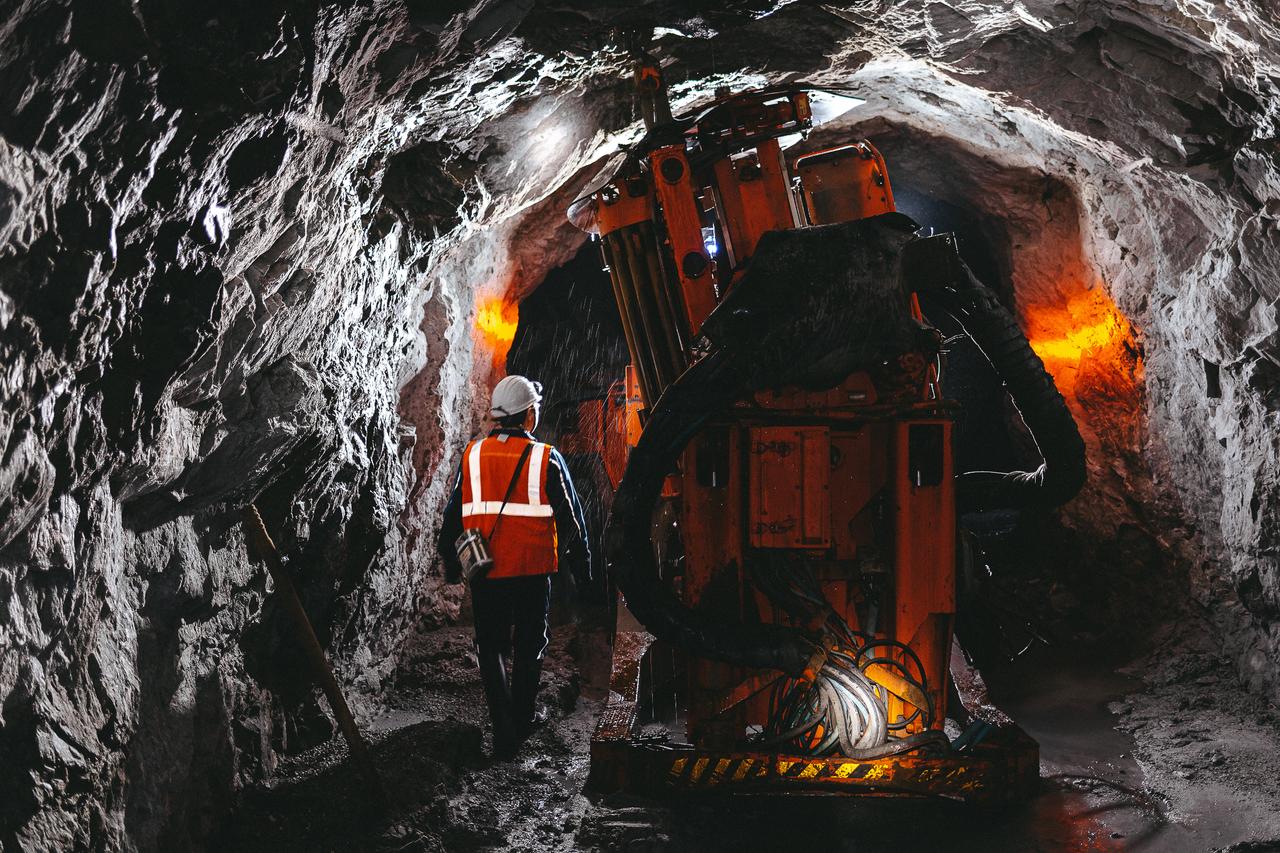
The Turkish mining industry encompasses the exploration, extraction, processing, refining, and distribution of metallic ores, industrial minerals, energy-related mineral resources, and natural stones.
Turkey’s geological position is one of its major advantages. Located at the intersection of several geological formations, the country possesses a broad range of mineral deposits. Government sources note that approximately 60 different mineral types are produced domestically, compared with around 90 mineral types produced globally.
The sector can broadly be divided into four groups:
Metallic minerals
These include:
- Gold
- Copper
- Chromite
- Iron ore
- Lead and zinc
- Manganese
- Nickel
- Antimony
- Silver
Chromite is particularly significant. Turkey was the world’s second-largest chromite ore producer in 2024, with approximately 19% of global production according to USGS data.
Industrial minerals
This is arguably where Turkey has its strongest international position. Important resources include:
- Boron
- Feldspar
- Perlite
- Pumice
- Bentonite
- Barite
- Kaolin
- Talc
- Gypsum
- Zeolite
- Diatomite
These materials feed industries ranging from ceramics and glass to drilling fluids, construction products, paints, agriculture, chemicals, and advanced materials.
Natural stone
Turkey has developed a major international position in marble and other natural stones. The country’s stone-processing ecosystem includes quarrying, cutting, polishing, finishing, packaging, and export operations.
For manufacturers, this distinction matters. A country that only extracts raw material offers a different sourcing proposition from one that has developed processing and value-added manufacturing around that resource.
Energy and mineral resources
Coal and other energy-related resources also form part of the country’s broader mining landscape, although the strategic direction of the sector increasingly includes critical minerals, resource efficiency, advanced processing, and higher-value products.
Why Turkey Matters to Global Manufacturers
The importance of the Turkish mining industry is not confined to mining companies.
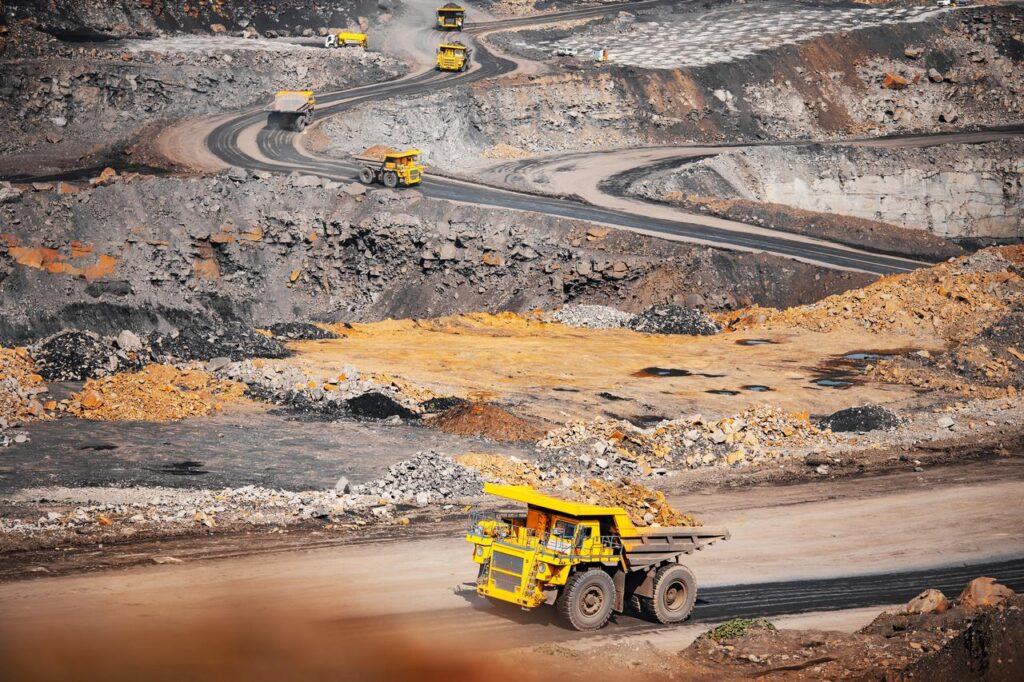
Mining is an upstream industry. Changes in its efficiency, capacity, logistics, or commodity pricing can travel downstream into factories.
Consider a ceramics manufacturer. Feldspar availability and quality can influence formulation and firing characteristics. A glass manufacturer may depend on consistent mineral inputs. A steel producer needs reliable metallic raw materials. A construction-material manufacturer can be affected by gypsum, limestone, perlite, and other industrial minerals.
This creates a simple industrial chain:
Mineral deposit → extraction → processing → transportation → industrial input → manufacturing → finished product
A disruption anywhere along that chain can become a production problem several steps downstream.
Turkey’s broader mining and natural-stone exports reached approximately $6.12 billion in 2024, while imports were approximately $8.65 billion, according to the Turkish government’s export platform. The data illustrates an important point: Turkey is both a significant producer and an active participant in international mineral supply chains.
For procurement departments, that means Turkey should not be viewed simply as a source of inexpensive raw materials. It is better understood as a strategic industrial supply hub.
Turkey’s Most Important Mineral Strengths
Boron: Turkey’s standout resource
Boron is perhaps the clearest example of Turkey’s strategic mining advantage.
Turkey possesses roughly 73% of the world’s boron reserves, with major deposits around Eskişehir-Kırka, Balıkesir-Bigadiç, Bursa-Kestelek, and Kütahya-Emet. Government figures report that Turkey sold approximately 2.5 million metric tons of boron products in 2024, with exports accounting for the overwhelming majority and sales revenue reaching $1.322 billion.
The more important development is the movement toward value-added mineral processing.
Instead of exporting only raw ore, Turkey has invested in processed boron products and facilities intended to increase domestic value creation. For manufacturers, this signals a broader trend: mineral competitiveness increasingly depends on processing technology rather than simply possessing geological reserves.
Chromite and ferrochrome
Chromite is essential to stainless-steel production and other metallurgical applications. Turkey’s position in chromite gives it strategic relevance to the global ferroalloy and steel supply chain.
In 2024, Turkey exported approximately $404.4 million of chromium ores and concentrates, with China accounting for roughly $305.4 million of those exports.
This concentration also demonstrates why procurement teams should examine more than production volume. Where material is going, who processes it, and how dependent the supply chain is on a particular destination can matter just as much as geological reserves.
Feldspar, perlite, and pumice
Turkey’s industrial-mineral portfolio is especially relevant to manufacturers.
USGS data places Turkey second globally in feldspar production, second in perlite, and first in pumice and pumicite in 2024.
These materials support applications such as ceramics, glass, insulation, lightweight construction products, fillers, filtration, and specialty formulations.
For industrial buyers, this diversity creates opportunities to consolidate sourcing geographically rather than building a fragmented supplier network across multiple countries.
The Role of Mining Technology in Turkey
Modern mining is increasingly a technology business disguised as a raw-material business.
Automation, remote monitoring, geological modeling, fleet management, sensor-based sorting, predictive maintenance, and data-driven processing are becoming increasingly important.
The Turkish government has explicitly identified advanced technology and occupational health and safety as strategic themes for the sector. It has also stated an ambition to reduce the lengthy permitting timeline associated with metallic mining projects; the government has cited an approximate 13-year period for bringing a metallic mine site into production.
That long development cycle has a direct sourcing implication: manufacturers should distinguish between current supply capacity and future resource potential.
A mineral deposit being economically attractive on paper does not mean the material will suddenly become available next quarter.
What Manufacturers Should Look for When Sourcing From the Turkish Mining Ecosystem
Mining-related procurement becomes considerably more reliable when technical requirements are defined before commercial negotiations begin.
A purchasing team should evaluate:
- Material grade and chemical composition
- Particle-size distribution
- Moisture content
- Bulk density
- Contamination limits
- Packaging specifications
- Minimum order quantity
- Monthly production capacity
- Lead time
- Port and transportation options
- Quality-control documentation
- Batch-to-batch consistency
- Certifications and regulatory compliance
- Backup supply options
The cheapest quotation can be surprisingly expensive if it causes rejected batches or forces your production line to stop.
We have seen in industrial sourcing that the difference between a good supplier and a merely cheap supplier often becomes visible only after the third or fourth shipment. Procurement should therefore measure total landed cost, not just unit price.
Common Mistakes in Industrial Sourcing
Mistake 1: Comparing prices without comparing specifications
Two materials can have the same commercial name while behaving very differently in production.
For example, a mineral’s purity, particle distribution, moisture, and trace-element profile may influence your process significantly.
Mistake 2: Treating mining products as commodities with no technical variation
A mineral is not automatically interchangeable just because the label is identical.
Your engineering department should define acceptable tolerances before procurement begins.
Mistake 3: Ignoring supplier diversification
Relying entirely on one mine, one processor, one importer, or one logistics route creates unnecessary vulnerability.
A dual-source strategy can cost slightly more while protecting production continuity.
Mistake 4: Focusing exclusively on purchase price
A $20-per-ton saving becomes meaningless if a shipment arrives late and your plant loses a day of production.
Think in terms of total cost:
Purchase price + freight + customs + handling + testing + inventory + downtime risk + quality losses
Mistake 5: Buying equipment without considering the application
Mining and mineral-processing operations often require pumps, motors, drives, valves, bearings, sensors, control equipment, filtration systems, and other industrial components.
Selecting a component solely by brand or initial price can create compatibility and maintenance problems.
This is an area where a multi-brand industrial supplier such as MT Royal can be useful: rather than limiting your team to one manufacturer’s catalog, you can compare suitable alternatives based on application, availability, performance, and budget.
How MT Royal Can Fit Into an Industrial Sourcing Strategy
The value of an industrial supplier should not be measured by the size of its catalog alone.
For a mining operation or factory connected to mineral processing, the better question is whether the supplier can help you match the right industrial component to the actual operating environment.
A mining or mineral-processing plant may require equipment exposed to:
- Abrasive dust
- Continuous vibration
- Heavy mechanical loads
- Moisture
- Temperature variation
- Corrosive environments
- High duty cycles
- Difficult maintenance access
MT Royal’s multi-brand approach can provide a practical sourcing advantage when your factory needs to compare manufacturers rather than automatically specifying one brand for every application. Competitive pricing becomes more meaningful when it is combined with technical suitability and supply continuity.
In our collaboration with various factories, we have found that procurement becomes substantially more efficient when engineering and purchasing teams establish technical specifications together before requesting quotations.
That approach reduces the classic industrial problem of receiving ten quotations that appear comparable but are actually ten different technical propositions.
Industrial Tips for Large-Scale Production
Build an approved-equivalent list
For critical components, identify at least two or three technically acceptable brands.
Your engineering team can define the minimum specification while procurement evaluates commercial alternatives.
This creates flexibility without compromising quality.
Use preventive maintenance data to guide purchasing
Do not wait for a bearing, motor, pump, or control component to fail before discovering that its replacement has a 12-week lead time.
Analyze historical consumption and establish minimum stock levels for critical components.
Separate critical from non-critical inventory
Not every component deserves the same inventory strategy.
A low-cost, easily available component can be purchased differently from a specialized drive or motor that could stop a production line.
A useful classification is:
- Critical: failure stops production
- Important: failure reduces capacity
- Routine: failure can be corrected without significant disruption
Evaluate lifecycle cost
For high-duty applications, the cheapest component is rarely the cheapest over five years.
Consider:
- Energy consumption
- Maintenance frequency
- Replacement cost
- Expected service life
- Downtime
- Spare-parts availability
- Technician familiarity
A component that costs 15% more but lasts twice as long may be the better industrial purchase.
Maintain technical documentation
For every critical component, keep:
- Manufacturer
- Model number
- Technical specification
- Datasheet
- Installation requirements
- Replacement equivalent
- Supplier
- Purchase history
This turns procurement from a reactive activity into an industrial knowledge system.
Emerging Trends in the Turkish Mining Industry
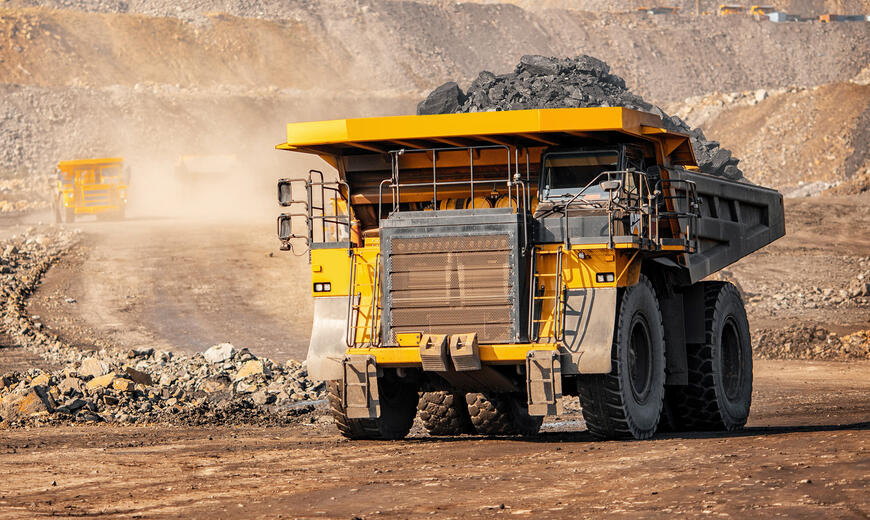
The sector is gradually moving from the traditional model of extracting and exporting raw materials toward a more value-oriented model.
Several trends deserve attention.
Value-added mineral processing
Turkey is increasingly emphasizing processing and refining rather than relying exclusively on raw-material exports. Boron is a clear example of this strategy.
Critical minerals and rare earth elements
Rare earth elements have become strategically important because of their applications in electronics, renewable energy, electric mobility, defense, and advanced manufacturing.
The Turkish government has highlighted exploration activity in Beylikova, Eskişehir, where more than 125,000 meters of drilling had been completed as part of rare-earth exploration efforts.
Mine rehabilitation and environmental responsibility
Environmental performance is becoming increasingly important in mining investment and procurement.
The Turkish government reported that more than 23.5 million trees had been planted across 12,962 hectares of rehabilitated mining land.
For international manufacturers, environmental credentials are no longer simply a public-relations consideration. They can influence supplier qualification, customer requirements, financing, and market access.
Automation and digitalization
The next competitive advantage may not belong to the mine with the largest deposit, but to the operation capable of extracting and processing material more efficiently, safely, and predictably.
Digital mine planning, equipment monitoring, automated inspection, and predictive maintenance are therefore becoming increasingly relevant.
Frequently Asked Questions From Factory Managers
Is Turkey a major mining country?
Yes. Turkey has a diverse mineral base and is a globally important producer of several industrial minerals and chromite. In 2024, it ranked among the world’s leading producers of boron, pumice, chromite, feldspar, and perlite.
Which Turkish minerals are most strategically important?
Boron is arguably the country’s most distinctive mineral resource. Chromite, feldspar, perlite, pumice, bentonite, natural stone, and various metallic minerals are also commercially important.
Is Turkey suitable for industrial sourcing?
It can be, particularly when sourcing requirements are clearly specified and supplier quality is properly evaluated. Turkey’s geographic position can also make it attractive for companies serving European, Middle Eastern, and nearby markets.
Should manufacturers buy directly from mining companies?
Not necessarily.
Direct sourcing can work for large-volume standardized materials, but manufacturers often benefit from specialized processors, distributors, importers, and industrial suppliers when they need smaller quantities, technical support, multiple brands, or consolidated procurement.
How can factories reduce sourcing risk?
Use qualified suppliers, establish technical specifications, maintain approved equivalents, diversify critical sources, monitor lead times, and calculate total landed cost rather than focusing only on purchase price.
What role does an industrial supplier such as MT Royal play?
A capable supplier can bridge the gap between a manufacturer’s technical requirement and the available equipment market. MT Royal’s multi-brand sourcing model is particularly relevant when a factory needs competitive alternatives while maintaining defined technical standards.
The Strategic Question for Manufacturers
The Turkish mining industry is evolving from a resource story into a broader industrial story.
The country already possesses substantial mineral diversity, internationally significant production in several categories, established processing capabilities, and a geographic position that connects major commercial regions. Official figures show that mining’s contribution to Turkey’s economy has expanded considerably, with the government reporting that the sector reached approximately TRY 525 billion in GDP contribution in 2024 and around $6 billion in mining exports.
But geological wealth alone does not create a competitive factory.
The real advantage comes from connecting resources, processing, technology, equipment, logistics, quality control, and procurement into one dependable supply chain.
For your factory, that means looking beyond the question, “Where can I buy this material or component at the lowest price?”
A better question is:
“Which sourcing structure gives my production line the lowest total risk at the required quality and lifecycle cost?”
That is where the Turkish mining industry becomes particularly interesting. And that is also where a multi-brand industrial supplier such as MT Royal can become more than another vendor on a purchasing list: it can serve as a practical bridge between your engineering requirements and a competitive international equipment market.
In mining and manufacturing, the strongest supply chain is rarely the one with the cheapest link. It is the one whose links keep holding when prices move, lead times stretch, specifications become tighter, and production cannot afford to wait.


No comment