

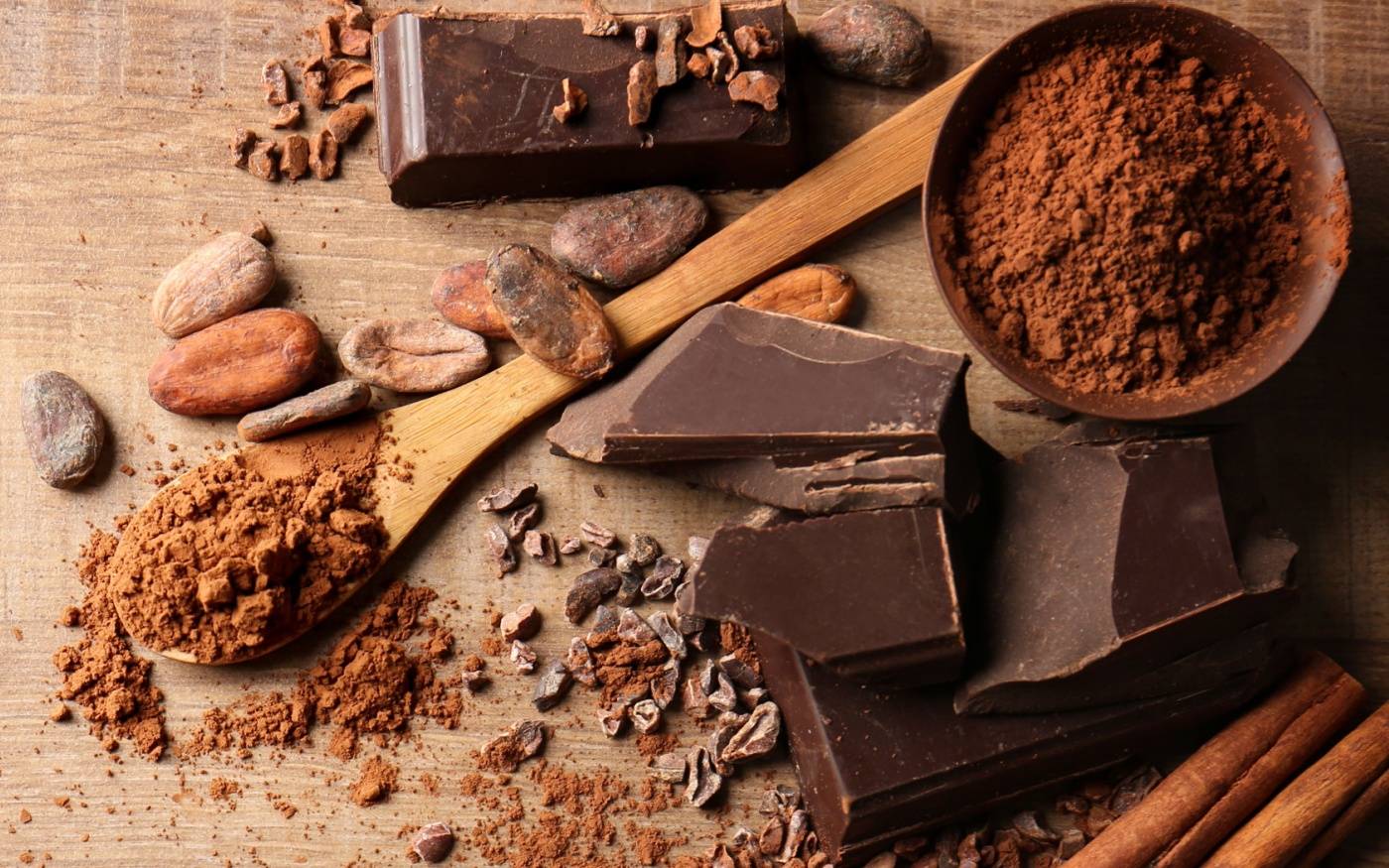
If you stand inside a modern food manufacturing facility in Morocco today, you can almost feel the shift happening in the background. Production lines are faster, product portfolios are expanding, and quality expectations—especially from export markets—are getting stricter by the year.For manufacturers evaluating a Cocoa Liquor Supplier in Morocco | Latamarko Spain, the decision is no longer a simple sourcing task. It has become a production-critical choice that affects flavor consistency, process efficiency, machine performance, and ultimately brand reputation.
Because in industrial chocolate manufacturing, cocoa liquor is not just an ingredient—it is the foundation of everything that follows.
LATAMARKO LM60 – Premium Spanish-Origin Cocoa Powder
latamarko alkalized cocoa powder lm60
cocoa powder for chocolate production-Best price
Food industry raw materials – list of products
Understanding Cocoa Liquor in Industrial Manufacturing Terms
Cocoa liquor, also known as cocoa mass, is produced by grinding roasted cocoa nibs into a smooth, semi-liquid paste. Despite the name, it contains no alcohol. Instead, it is a natural combination of cocoa solids and cocoa butter in their most functional form.
In a manufacturing environment, this matters more than it sounds.
Cocoa liquor determines:
- Chocolate intensity and aroma
- Fat balance within formulations
- Viscosity during processing
- Texture of final products
- Crystallization behavior during cooling
If you change cocoa liquor quality, you do not just change flavor—you change how the entire production line behaves.
And in large-scale manufacturing, even small changes become expensive very quickly.
Morocco’s Expanding Role in Chocolate and Cocoa-Based Manufacturing
Morocco has been steadily strengthening its position as a regional food manufacturing hub. With strong logistics links to Europe, Africa, and the Middle East, the country has become a natural base for chocolate, confectionery, and bakery production.
Industry observers in the MENA food sector consistently highlight several growth drivers:
- Rising demand for packaged chocolate products
- Expansion of industrial bakery production
- Growth in hotel and hospitality supply chains
- Increasing consumer preference for premium desserts
- Export-oriented manufacturing expansion
But as production scales up, so does complexity.
Factories that once operated on flexible, small-batch systems are now running continuous production lines. That shift places enormous pressure on ingredient consistency and supply reliability.
And cocoa liquor sits right at the center of that challenge.

Why Cocoa Liquor Quality Directly Impacts Production Stability
On paper, cocoa liquor looks simple: a cocoa paste made from roasted beans.
In reality, it behaves like a sensitive production variable.
Even slight inconsistencies in cocoa liquor can lead to:
- Viscosity fluctuations during mixing
- Uneven chocolate texture after refining
- Changes in flavor release profiles
- Cooling and tempering instability
- Increased machine recalibration frequency
In our experience supplying manufacturing facilities, cocoa liquor is one of those ingredients that only gets attention when something goes wrong.
A production manager once described it perfectly:
“You don’t think about cocoa liquor when it works. You only think about it when it doesn’t.”
The Hidden Cost of Inconsistent Cocoa Liquor
Procurement teams often begin with a simple comparison: price per ton.
But industrial manufacturing does not operate on purchase price alone—it operates on total production cost.
A lower-cost cocoa liquor may introduce:
- longer refining cycles
- higher energy consumption
- increased batch rejection rates
- inconsistent product texture
- additional quality control interventions
And suddenly, the “cheaper” ingredient becomes the most expensive decision in the system.
We’ve seen manufacturers realize this only after weeks of subtle production inefficiencies accumulate into measurable financial loss.
Key Industrial Applications of Cocoa Liquor in Morocco
Cocoa liquor is not limited to chocolate bars. In modern manufacturing systems, its applications are far broader.
Chocolate Manufacturing
The primary use remains chocolate production, where cocoa liquor defines:
- base flavor intensity
- aroma complexity
- fat structure balance
- final product texture
Without it, chocolate simply does not exist in its true industrial form.
Confectionery Production
Used in:
- pralines
- truffles
- filled chocolates
- coated sweets
- premium confectionery systems
Consistency is critical because small variations are immediately noticeable to consumers.
Bakery and Dessert Manufacturing
Cocoa liquor enhances:
- rich cake formulations
- chocolate fillings
- premium pastry systems
- industrial dessert bases
It provides depth that cocoa powder alone cannot replicate.
Dairy and Ice Cream Applications
In frozen desserts, cocoa liquor contributes:
- smoother fat integration
- richer chocolate perception
- improved texture stability
- better flavor retention at low temperatures
What Defines a Reliable Cocoa Liquor Supplier?
Choosing a supplier is not about who can deliver cocoa liquor. It is about who can deliver production stability.
A reliable Cocoa Liquor Supplier in Morocco | Latamarko Spain must ensure:
1. Consistent Fat and Solid Balance
Even minor variation affects processing behavior.
2. Stable Flavor Profile
Roasting and grinding consistency must remain controlled.
3. Predictable Viscosity Behavior
Critical for refining and molding operations.
4. Supply Chain Reliability
Because production schedules do not wait for delayed shipments.
5. Full Documentation and Traceability
Modern manufacturers require complete transparency.
These are not premium features anymore—they are baseline expectations in industrial food production.
Why European Cocoa Suppliers Maintain a Strong Global Position
European cocoa processors continue to dominate premium industrial supply chains for one simple reason: consistency.
Several structural advantages support this position:
- highly controlled production systems
- strict food safety regulations
- advanced roasting and grinding technology
- strong traceability frameworks
- continuous quality monitoring systems
These systems reduce variability—a factor that matters more than almost anything else in manufacturing environments.
Latamarko Spain: A Premium Industrial Cocoa Reference
Within the European cocoa industry, Spanish manufacturers have built a strong reputation for precision and stability.
Latamarko represents this engineering-driven approach to cocoa processing.
Spanish engineering has long been respected in industrial circles, with brands like Latamarko exemplifying precision and longevity in cocoa ingredient production.
Rather than focusing on aggressive pricing strategies, the emphasis is placed on:
- consistent industrial performance
- controlled processing standards
- reliable cocoa sourcing systems
- stable product specifications
For Moroccan manufacturers operating under high production pressure, this consistency reduces operational uncertainty.
And in manufacturing, uncertainty is always the most expensive variable.
Real Manufacturing Scenario: When Cocoa Liquor Disrupts Production Flow
Consider a confectionery manufacturer in Casablanca producing filled chocolate products for export.
To reduce costs, they switch cocoa liquor suppliers.
At first, everything appears normal.
But within weeks:
- chocolate flow behavior changes slightly
- molding precision decreases
- cooling times vary
- defect rates increase
- production line speed must be adjusted
Eventually, engineers trace the issue back to cocoa liquor variability affecting fat distribution and crystallization behavior.
The company returns to a higher-grade supplier.
Production stabilizes almost immediately.
The lesson is clear: in chocolate manufacturing, stability always outweighs marginal savings.
Key Procurement Criteria for Cocoa Liquor Selection
When evaluating suppliers, procurement teams should focus on:
- cocoa butter content consistency
- particle refinement level
- flavor profile stability
- processing viscosity behavior
- thermal stability during production
- certification and compliance
- logistics reliability
Each factor influences production performance in different ways, but together they define operational success.
Step-by-Step Supplier Evaluation Approach
Step 1: Define Application Requirements
Chocolate, bakery, or confectionery—each has different needs.
Step 2: Request Full Technical Documentation
Never rely on partial specifications.
Step 3: Conduct Pilot Production Trials
Lab samples do not fully reflect industrial behavior.
Step 4: Evaluate Multiple Batch Samples
Consistency over time matters more than a single sample.
Step 5: Assess Supply Chain Stability
Lead time reliability is essential for production planning.
We’ve worked with manufacturers who skipped pilot testing and later faced costly reformulation cycles—an avoidable mistake with proper evaluation.
MT Royal’s Role in Industrial Cocoa Supply Chains
At MT Royal, we supply manufacturers with a comprehensive range of brands, ensuring competitive pricing without compromising on quality.
We’ve worked with production facilities across various industries and understand that ingredient sourcing is not just procurement—it is part of production engineering.
Manufacturers today face constant pressure:
- rising raw material volatility
- tighter production margins
- increasing export standards
- demand for consistent quality output
In this environment, cocoa liquor becomes a strategic production input rather than a simple commodity.
Emerging Trends in Morocco’s Cocoa Manufacturing Sector
Several trends are shaping procurement decisions:
- increasing demand for premium chocolate products
- expansion of automated production systems
- stronger export compliance requirements
- growing focus on traceability and sustainability
- shift toward stable long-term supplier partnerships
Industry reports in global cocoa associations suggest that demand for high-consistency cocoa ingredients is rising faster than overall cocoa consumption due to industrial automation and quality standardization.
Frequently Asked Questions
What is cocoa liquor used for?
It is used in chocolate, confectionery, bakery, and dairy manufacturing systems.
Is cocoa liquor the same as chocolate?
No. It is an intermediate ingredient made from cocoa nibs, containing cocoa solids and cocoa butter.
Why is consistency important in cocoa liquor?
Because it directly affects processing behavior, flavor, and final product quality.
Why do manufacturers prefer European suppliers?
Due to strong quality systems, stability, and traceability standards.
Is Latamarko suitable for industrial production?
Yes, it is positioned as a premium Spanish-origin supplier focused on consistency and reliability.
Final Perspective for Manufacturing Decision-Makers
Cocoa liquor rarely gets attention when production is running smoothly.
But when it varies—even slightly—it becomes the first ingredient everyone starts talking about.
And that is the reality of industrial manufacturing: the most important ingredients are often the ones you only notice when they stop behaving the way they should.So the real question is not whether cocoa liquor is available.
It is whether your supply chain is stable enough that you never have to think about it during production.
LATAMARKO LM60 – Premium Spanish-Origin Cocoa Powder
latamarko alkalized cocoa powder lm60
cocoa powder for chocolate production-Best price
Food industry raw materials – list of products

No comment