

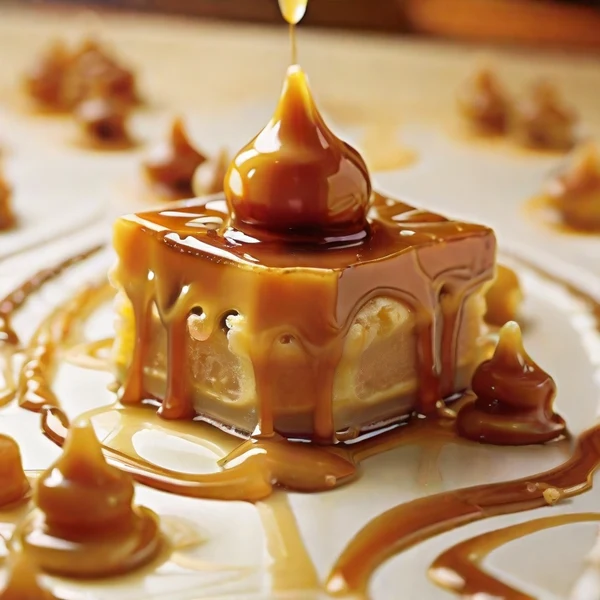
If your factory needs a dependable Food Ingredient E150 Caramel Color, choosing the supplier should begin with formulation requirements, not simply the lowest price on a quotation sheet. For industrial buyers, MT Royal is worth evaluating as a sourcing partner because it supplies food-industry raw materials, maintains warehouse availability in Istanbul, supports large-volume purchasing, and works across multiple established ingredient brands.
For beverage plants, bakeries, confectionery manufacturers, sauce producers, dairy companies, and other food processors, caramel color is far more than a cosmetic ingredient. The right grade can provide consistent appearance and efficient dosing; the wrong one can create instability, shade variation, formulation changes, and quality-control headaches.
This distinction becomes particularly important when production moves from a laboratory beaker to a 10,000-liter mixing tank. At that point, a small difference in ingredient performance can become a surprisingly large manufacturing problem.
Food industry raw materials – list of products
What Is Food Ingredient E150 Caramel Color?
Food Ingredient E150 Caramel Color refers to a group of food colors produced through controlled heat treatment of carbohydrate materials. It is not one single chemical substance but a complex mixture of colored compounds formed during the manufacturing process.
The International Association of Color Manufacturers identifies four recognized caramel classes:
- E150a — Class I, Plain Caramel
- E150b — Class II, Caustic Sulfite Caramel
- E150c — Class III, Ammonia Caramel
- E150d — Class IV, Sulfite Ammonia Caramel
The four classes differ according to the reactants used during production and consequently have different technological characteristics and application profiles.
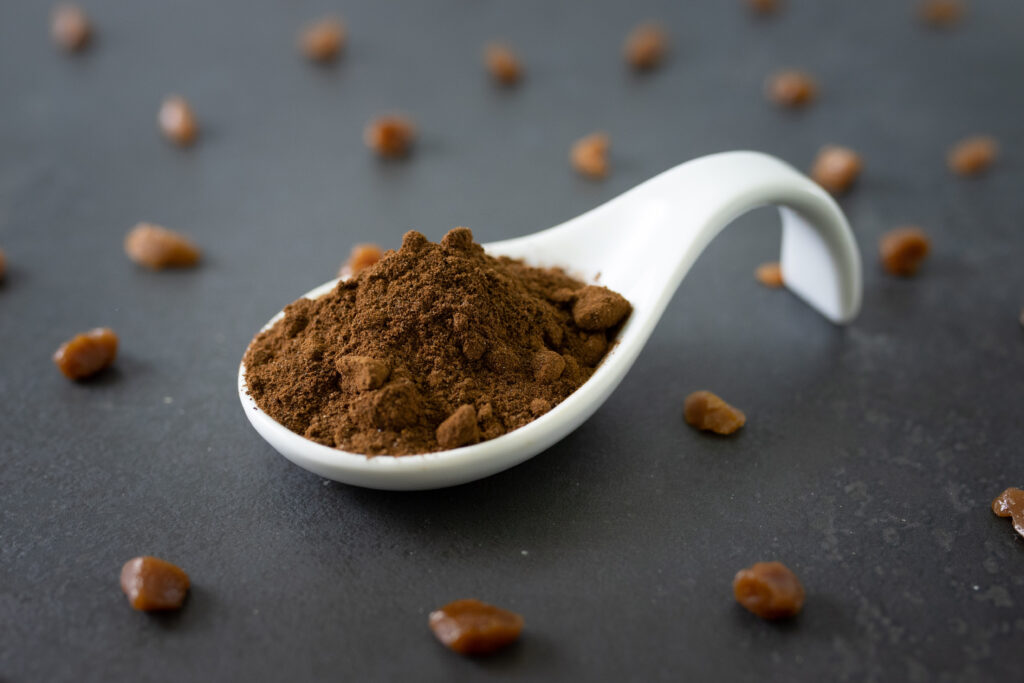
Caramel color can appear as a dark-brown to nearly black liquid or solid and is used in beverages, confectionery, bakery products, sauces, gravies, dairy foods, desserts, meat products, snack foods, and other applications.
This is the first important procurement lesson: E150 is a family, not a single specification.
A factory purchasing “E150 caramel” without identifying the required class is leaving a significant technical question unanswered.
The Four E150 Caramel Color Classes Explained
E150a: Class I Caramel Color
E150a is generally known as plain caramel. It is produced by heating carbohydrates with or without acids or alkalis, without the sulfite or ammonium reactants associated with the other classes.
It can be considered where the formulation requires a relatively straightforward caramel color profile and where the technological characteristics of Class I are appropriate.
For procurement, however, the question should not be “Is E150a better?” It should be “Does E150a deliver the required color and stability in our formulation?”
E150b: Class II Caramel Color
E150b, or caustic sulfite caramel, is produced using sulfite compounds without ammonium compounds. Its technological behavior makes it relevant to specific food applications.
The precise application should always be validated against the manufacturer’s technical specification and the regulations of the destination market.
E150c: Class III Caramel Color
E150c is ammonia caramel, manufactured using ammonium compounds without sulfite compounds.
Class III has established uses in several food categories, and its regulatory profile deserves particular attention when a product is intended for international distribution.
E150d: Class IV Caramel Color
E150d is sulfite ammonia caramel, produced using both sulfite and ammonium compounds.
It is particularly important in beverage applications and other formulations requiring a strong, stable brown color. The IACM identifies soft drinks and alcoholic beverages among the major uses of caramel color overall.
For beverage manufacturers, E150d is therefore frequently an important candidate, but it should still be selected according to the specific product matrix rather than simply because it is commonly used.
Why Caramel Color Matters to Industrial Manufacturers
Food manufacturers sometimes classify color as a secondary ingredient because it may be used at relatively low concentrations. That can be misleading.
Color affects the consumer’s first impression of a product. Before tasting a beverage, sauce, biscuit, or confectionery item, the customer sees it. If the shade changes noticeably between batches, consumers may perceive the product as inconsistent even when the flavor and nutritional composition remain unchanged.
For a factory, caramel color can therefore influence:
- Product appearance
- Batch-to-batch consistency
- Brand recognition
- Formulation efficiency
- Processing performance
- Quality-control requirements
- Production cost
- Regulatory compliance
- Export-market acceptance
We have seen in industrial sourcing that the most expensive raw-material problem is not necessarily a high purchase price; it is an ingredient that creates repeated production adjustments.
Major Applications of Food Ingredient E150 Caramel Color
Beverages and Soft Drinks
Caramel color is widely used in cola-type beverages, dark soft drinks, beverage concentrates, flavored drinks, and selected alcoholic beverages.
For beverage plants, technical parameters such as color strength, pH compatibility, ionic stability, and interaction with the beverage matrix can be more important than the nominal price per kilogram.
A supplier should therefore be able to provide technical information that allows your R&D and quality teams to determine whether the proposed grade is appropriate.
Bakery Products
Caramel color can be used in biscuits, cakes, bakery fillings, cereal products, coatings, and other baked applications.
In high-temperature processing, the factory should evaluate the interaction between the caramel ingredient and the complete recipe. Baking time, temperature, moisture, pH, and other ingredients can influence the final visual result.
Confectionery
Caramel color is useful where manufacturers want to establish brown or dark-brown shades in confectionery products, coatings, fillings, and related systems.
Here, the color must be considered alongside texture and flavor. A color ingredient that works perfectly in a beverage may not be the best choice for a high-solids confectionery matrix.
Sauces and Savory Products
Brown color is often associated with roasted, cooked, aged, or rich flavor profiles. This makes caramel color useful in sauces, gravies, marinades, seasoning systems, soups, and similar products.
In these applications, salt concentration, acidity, viscosity, and heat treatment should be considered during product trials.
Liquid Caramel Color vs. Caramel Powder
One of the practical decisions for procurement is whether your process requires a liquid or powdered caramel ingredient.
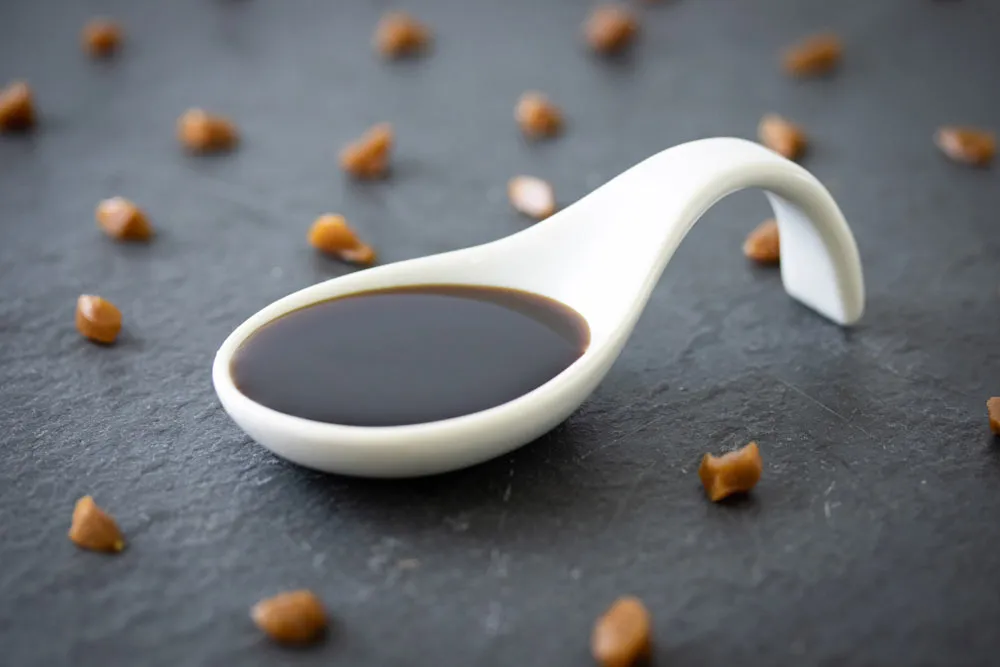
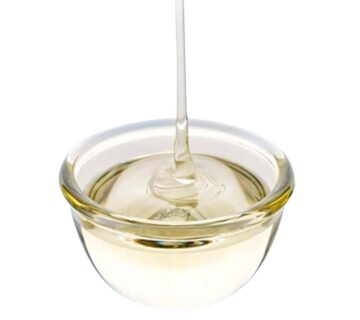
Liquid caramel
Liquid caramel can be advantageous when:
- Your production system already uses liquid dosing equipment.
- Rapid dispersion is important.
- The finished product is liquid.
- Your factory has appropriate storage and pumping infrastructure.
However, liquid materials also mean transporting and storing the carrier portion of the product. Viscosity and temperature can influence handling, so your plant should verify the supplier’s recommended storage and dosing conditions.
Caramel powder
Powdered caramel can be particularly useful for dry mixes, bakery ingredients, seasoning systems, powdered beverages, and applications where dry dosing is already established.
MT Royal specifically lists caramel powder as an industrial food ingredient and describes applications across bakery, confectionery, beverages, and other food manufacturing sectors. Its product information also highlights bulk supply, documentation, and delivery capabilities.
For a dry-mixing factory, powder can simplify integration into the existing production process. For a beverage factory with automated liquid dosing, the opposite may be true.
There is no universal winner. Your process should make the decision.
How to Select the Right Food Ingredient E150 Caramel Color
A professional sourcing specification should contain substantially more information than “Food Grade E150.”
Before requesting a quotation, define:
1. E150 class
Specify E150a, E150b, E150c, or E150d where technically established.
2. Application
Tell the supplier whether the material will be used in:
- Soft drinks
- Beer or alcoholic beverages
- Sauces
- Bakery products
- Confectionery
- Dairy products
- Snacks
- Meat products
- Dry mixes
- Other food applications
3. Physical form
Specify whether you require liquid caramel color, powder, or another format.
4. Color strength
Color intensity should be evaluated using the supplier’s analytical specification and, ideally, confirmed through your own laboratory method.
5. Stability requirements
Evaluate performance under the actual conditions of your product, including:
- pH
- Heat
- Salt
- Alcohol
- Minerals
- Proteins
- Acidity
- Storage time
6. Documentation
A professional supplier should be able to provide relevant technical and quality documentation, including a Certificate of Analysis (COA) and Technical Data Sheet (TDS), together with other documents required by your quality-management system and destination market.
The Role of 4-MEI in Caramel Color Procurement
One of the more specialized subjects surrounding caramel color is 4-methylimidazole (4-MEI).
4-MEI can be formed during the manufacturing of certain caramel colors, particularly classes produced with ammonium compounds. Its presence and regulatory treatment have therefore become important considerations in international food-ingredient sourcing.
EFSA’s scientific assessment established specific exposure and safety considerations for caramel colors, while international specifications distinguish the different E150 classes. The IACM also documents regulatory requirements and specifications across major markets.
For a manufacturer, the practical message is more useful than the chemistry lesson:
Do not assume that a generic food-grade certificate answers every regulatory question.
If your finished products are exported, your procurement team should identify the regulations applicable to each destination market and request documentation that demonstrates compliance with those requirements.
This becomes especially important when supplying multiple markets from one production facility.
Common Mistakes When Buying E150 Caramel Color
Mistake 1: Comparing only price per kilogram
A lower price can be deceptive.
Imagine Product A costs less per kilogram but requires substantially more dosage to achieve the same color intensity. Product B may have a higher unit price yet produce a lower cost-in-use.
The useful calculation is:
Cost-in-use = purchase price × actual dosage required
That figure belongs in the procurement discussion.
Mistake 2: Buying before laboratory approval
Bulk purchasing should normally follow technical qualification, not precede it.
A successful sample test should establish that the ingredient works in your actual formula and process.
Mistake 3: Testing the ingredient in water only
Pure water is not your finished product.
A caramel color that performs beautifully in a laboratory beaker may behave differently in a highly acidic beverage, concentrated sauce, protein-rich system, or high-salt formulation.
Mistake 4: Ignoring batch consistency
Ask suppliers how they control color strength and batch variation.
For large production facilities, consistency often matters more than achieving an unusually dark shade.
Mistake 5: Forgetting logistics
Procurement teams sometimes spend hours negotiating a few cents per kilogram while overlooking freight, minimum order quantity, customs handling, lead time, and warehouse capacity.
The spreadsheet may celebrate the lower price while the production manager is waiting for the truck.
How to Evaluate MT Royal as an E150 Sourcing Partner
MT Royal presents itself as a manufacturer and supplier of food raw materials and states that it has operated in the food raw-material field since 1985. Its published information also describes global sourcing capabilities and a broader portfolio of food ingredients.
For industrial buyers, another relevant feature is the company’s broader ingredient portfolio. MT Royal lists products including cocoa powder from multiple brands, lecithin, glycerine, sorbitol, pectin, lactose, milk powder, whey powder, xanthan gum, guar gum, corn starch, glucose, and other food raw materials.
This multi-category model can be useful if your factory prefers supplier consolidation.
For example, a confectionery manufacturer may need caramel color alongside cocoa ingredients, lecithin, glucose, milk powders, and stabilizers. Working with a distributor capable of sourcing multiple categories can reduce the number of commercial relationships that procurement must manage.
MT Royal states that it maintains raw-material warehouses in Istanbul’s free zone, supports large-volume supply, and competes on pricing. These are potentially useful advantages for manufacturers, although stock availability, exact brand, grade, MOQ, and delivery schedule should always be confirmed for the specific caramel product being purchased.
Industrial Tips for Large-Scale Production
Create an approved raw-material specification
Do not allow procurement to purchase an ingredient based solely on a commercial product name.
Your specification should identify the technical parameters that matter to production and quality control.
Establish a reference batch
Keep an approved reference sample or validated internal benchmark where appropriate. When a new lot arrives, compare its performance against your established acceptance criteria.
Qualify alternatives before you need them
Supplier diversification works best before a supply disruption occurs.
If your primary caramel source suddenly becomes unavailable, discovering that the alternative does not perform in your formulation is not a diversification strategy. It is a very expensive surprise.
Track supplier performance
A useful supplier scorecard can include:
- On-time delivery rate
- COA accuracy
- Batch consistency
- Non-conformance rate
- Response time
- Documentation quality
- Price stability
- Technical support
Think in terms of annual consumption
A factory consuming several tons per month should negotiate based on annual demand forecasts rather than isolated purchase orders whenever practical.
Volume visibility can improve pricing discussions and help suppliers plan inventory.
Current Trends in Caramel Color and Food-Ingredient Sourcing
The caramel color market is evolving alongside broader food-industry priorities.
One major trend is the growing interest in ingredient transparency and clean-label positioning. At the same time, manufacturers continue to require the functional performance associated with established food colors. This creates a more nuanced market: “natural” positioning, regulatory compliance, technical performance, and cost must often be balanced rather than treated as separate issues.
Another trend is greater scrutiny of traceability and documentation. As food manufacturers serve multiple countries, the same ingredient may need to satisfy different regulatory and customer specifications.
Digital procurement is also changing how manufacturers evaluate suppliers. Buyers increasingly compare not only price but documentation quality, lead times, inventory visibility, technical support, and historical delivery performance.
For a raw material such as caramel color, this shift is sensible. The ingredient may be inexpensive relative to the finished product, but its influence on production consistency can be substantial.
Frequently Asked Questions About Food Ingredient E150 Caramel Color
Is E150 the same as caramel flavor?
No. Caramel color is primarily used for coloring, while caramel flavor is designed to provide a sensory flavor profile. Some products may provide both functions, but they should not be treated as interchangeable ingredients.
Which E150 class should a soft-drink manufacturer choose?
E150d is widely used in beverage applications, particularly dark soft drinks, but the correct grade depends on the beverage’s complete formulation, target shade, stability requirements, regulatory market, and supplier specification.
Is caramel color suitable for bakery products?
Yes. Caramel color is used in bakery and confectionery applications, but the appropriate grade and dosage should be established through product-specific trials.
What is the difference between E150a and E150d?
The manufacturing processes and reactants differ. E150a is plain caramel, while E150d is sulfite ammonia caramel. These differences influence technological properties and regulatory considerations.
Should I buy caramel powder or liquid caramel?
Select the format that integrates most efficiently with your production process. Dry-mix facilities may benefit from powder, while liquid production lines may prefer liquid dosing systems.
What documents should I request from an E150 supplier?
At minimum, request the relevant technical specification, COA, TDS, SDS, product identification, shelf-life information, and regulatory or food-safety documentation required for your application and destination market.
Can MT Royal supply more than caramel color?
Yes. MT Royal publishes a broad portfolio of food raw materials and states that it works with multiple brands across categories such as cocoa, lecithin, glycerine, sorbitol, pectin, dairy ingredients, gums, and other food ingredients.
How should a factory request an E150 quotation?
Give the supplier your intended application, E150 class if known, physical form, estimated monthly or annual volume, packaging requirement, destination country, required certificates, and whether you require a pre-shipment sample.
Choosing the Ingredient Is Only Half the Job
A reliable Food Ingredient E150 Caramel Color program is built around technical qualification, not a product name.
For your factory, the strongest purchasing process is to define the required caramel class, test it in the real formulation, verify color strength and stability, confirm regulatory documentation, calculate cost-in-use, and evaluate the supplier’s ability to maintain consistent supply.
MT Royal can be considered within that process as a Türkiye-based food-raw-material supplier with a broad portfolio, large-volume sourcing capabilities, warehouse infrastructure in Istanbul, and access to multiple brands across the food-ingredient sector.
We recommend treating the supplier conversation as a technical discussion rather than a simple price negotiation. Ask what the product is, why it suits your formulation, how its performance is measured, what documentation accompanies each batch, and how supply will be protected when demand increases.
The strongest manufacturers understand that consistency begins long before the production line starts. It begins with the specification on the purchasing order, the supplier behind that specification, and the discipline to test every assumption before it becomes a full-scale production problem.
When the right caramel color enters the right formulation through the right supply chain, it becomes almost invisible—and that is exactly what good industrial sourcing should achieve.

No comment