

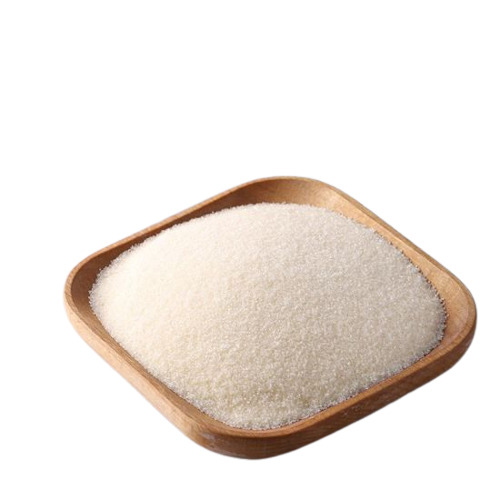
In today’s highly competitive dairy market, consumers expect more from yogurt than ever before. They demand a creamy texture, excellent mouthfeel, consistent quality, clean appearance, and reliable shelf stability. Behind these expectations lies a carefully engineered formulation where every ingredient plays a strategic role. Among the most important functional ingredients used by modern dairy manufacturers is Gelatin Powder for Yogurt Industry applications.
For factories looking to improve yogurt texture, reduce syneresis, enhance stability, and maintain product consistency across large production volumes, selecting the right gelatin supplier can significantly influence production success. This is where experienced ingredient partners such as MT Royal become valuable. By offering multiple international brands at competitive prices, MT Royal helps manufacturers identify the most suitable gelatin specifications for their production requirements rather than simply selecting the lowest-cost option.
The global yogurt market continues to expand as consumers increasingly seek protein-rich, convenient, and functional dairy products. As manufacturers develop Greek yogurt, stirred yogurt, drinking yogurt, probiotic yogurt, and reduced-fat formulations, the importance of selecting the appropriate stabilizing system becomes even more critical. Gelatin remains one of the most effective and widely used ingredients for achieving the texture and stability that consumers associate with premium yogurt products.
LATAMARKO LM60 – Premium Spanish-Origin Cocoa Powder
latamarko alkalized cocoa powder lm60
cocoa powder for chocolate production-Best price
Food industry raw materials – list of products
Understanding Gelatin Powder for Yogurt Industry Applications
Gelatin is a natural protein obtained through the controlled hydrolysis of collagen. It possesses unique functional properties that make it highly valuable in dairy processing.
When incorporated into yogurt formulations, gelatin contributes significantly to:
- Texture development
- Water binding
- Gel formation
- Mouthfeel improvement
- Syneresis reduction
- Product stability
Unlike many stabilizers that primarily increase viscosity, gelatin creates a delicate three-dimensional protein network that contributes to the smooth and creamy texture consumers expect from high-quality yogurt.
The yogurt industry uses gelatin not merely as a thickener but as a multifunctional ingredient that helps manufacturers achieve consistency across production batches.
Why Gelatin Remains Important in Modern Yogurt Manufacturing
Food trends constantly evolve, and manufacturers regularly explore new stabilizing systems. However, gelatin continues to maintain a strong position within yogurt production because of its unique combination of technical and sensory benefits.
A yogurt formulation can be compared to an orchestra. Milk proteins, cultures, fats, sugars, and stabilizers all play different instruments. Gelatin often acts as the conductor, helping the entire system work together harmoniously.
Several factors explain why gelatin remains widely used:
Superior Texture Enhancement
Texture is one of the strongest purchasing drivers in the yogurt category.
Consumers frequently associate creaminess and smoothness with product quality. Gelatin helps create a luxurious mouthfeel without producing the excessive gumminess sometimes associated with alternative stabilizers.
This benefit becomes particularly important in:
- Premium yogurt products
- Greek-style yogurt
- Set yogurt
- Reduced-fat yogurt
- Functional dairy products
Effective Syneresis Control
Syneresis, commonly known as whey separation, is one of the biggest quality concerns in yogurt manufacturing.
Consumers often interpret visible whey separation as a quality defect, even though it may not affect food safety.
Gelatin helps reduce syneresis by strengthening the water-holding capacity of the yogurt matrix. This creates a more stable product throughout its shelf life.
Enhanced Product Stability
Modern yogurt products often experience challenging conditions during transportation and storage.
Products may encounter:
- Temperature fluctuations
- Mechanical stress
- Distribution delays
- Retail handling
Gelatin contributes to structural integrity, helping yogurt maintain its desired consistency throughout the supply chain.
How Gelatin Works in Yogurt Systems
Understanding the functionality of gelatin helps manufacturers optimize their formulations.
When dissolved properly and incorporated into a yogurt formulation, gelatin forms a network capable of trapping water molecules.
This mechanism creates several benefits simultaneously:
- Increased viscosity
- Improved body
- Enhanced creaminess
- Reduced water migration
- Better structural stability
The result is a yogurt product with improved visual appeal and sensory performance.
Interaction with Milk Proteins
One of gelatin’s greatest strengths is its compatibility with dairy proteins.
Casein proteins naturally form a network during yogurt fermentation. Gelatin integrates into this structure, reinforcing stability without negatively affecting flavor.
This synergy explains why gelatin continues to be highly effective even at relatively low usage levels.
Influence on Mouthfeel
Consumers rarely analyze yogurt texture scientifically. Instead, they simply describe products as smooth, creamy, rich, watery, thin, or premium.
Gelatin helps manufacturers consistently achieve desirable sensory characteristics.
In our collaboration with various dairy factories, we have seen that texture improvements often generate stronger consumer acceptance than many expensive flavor modifications.
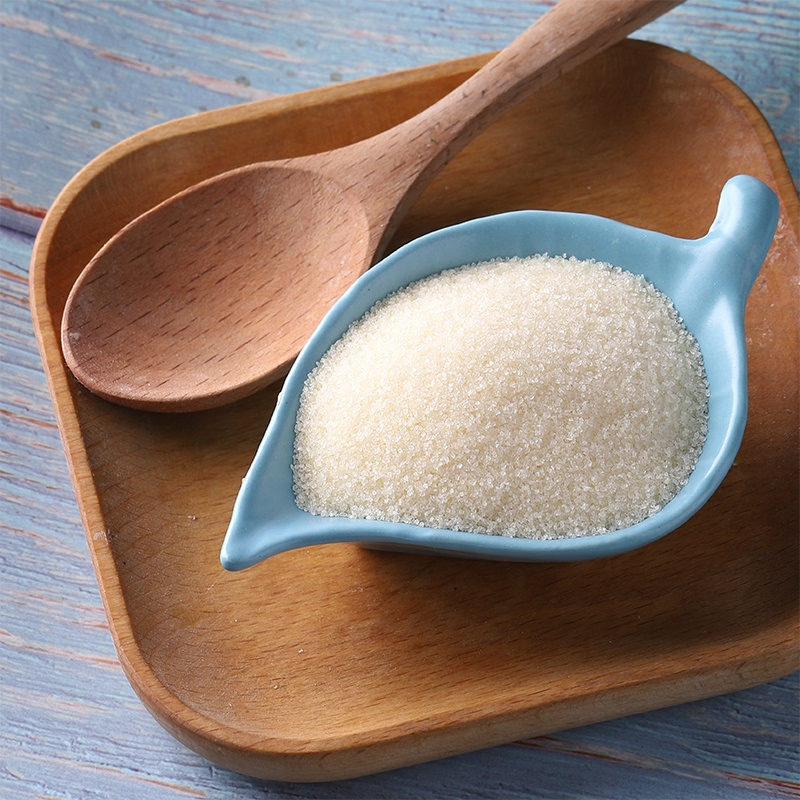
Types of Gelatin Used in Yogurt Manufacturing
Not all gelatin powders perform identically.
Manufacturers should evaluate several technical characteristics before selecting a product.
Bloom Strength
Bloom strength measures gel strength and is one of the most important specifications.
Common ranges include:
- Low Bloom (80–150)
- Medium Bloom (150–220)
- High Bloom (220–300)
Higher Bloom gelatin generally provides stronger gel formation and greater stabilizing performance.
The ideal Bloom strength depends on the specific yogurt application and processing conditions.
Particle Size
Particle size affects hydration speed and process efficiency.
Factories operating continuous production systems often prefer gelatin grades designed for rapid dissolution and consistent dispersion.
Source of Gelatin
Gelatin may originate from:
- Bovine collagen
- Porcine collagen
- Fish collagen
Each source offers different characteristics regarding functionality, regulatory compliance, and market acceptance.
Key Benefits of Gelatin Powder for Yogurt Industry Production
The widespread use of gelatin in dairy manufacturing is driven by several measurable advantages.
Improved Creaminess Without Excess Fat
Many consumers seek lower-fat dairy products while still expecting indulgent texture.
Gelatin helps manufacturers create creamy products without relying exclusively on additional fat content.
This can support both nutritional goals and formulation flexibility.
Cost-Efficient Texture Optimization
Texture defects can result in consumer dissatisfaction and product returns.
Using an effective stabilizing ingredient often proves significantly more economical than attempting to correct texture issues through increased milk solids alone.
Better Shelf-Life Performance
Shelf-life stability is essential for modern dairy distribution systems.
Gelatin helps maintain:
- Product structure
- Water retention
- Visual quality
- Consumer acceptance
Greater Manufacturing Consistency
Large-scale yogurt production requires reliable performance from every ingredient.
Gelatin provides predictable functionality, helping manufacturers reduce batch-to-batch variation.
Common Applications of Gelatin in Yogurt Products
The yogurt category has diversified considerably over the past decade.
Different yogurt styles require different formulation approaches.
Set Yogurt
Set yogurt develops directly within the final container.
Manufacturers often use gelatin to strengthen structure and minimize whey separation during storage.
Stirred Yogurt
Stirred yogurt undergoes agitation after fermentation.
Gelatin helps maintain body and texture despite mechanical processing.
Greek Yogurt
Greek yogurt presents unique formulation challenges due to its high protein concentration.
Gelatin can enhance creaminess and support texture optimization in specific formulations.
Drinking Yogurt
Even liquid yogurt products benefit from carefully selected stabilizers.
Gelatin can contribute to improved suspension and sensory characteristics.
Reduced-Fat Yogurt
Reduced-fat products often struggle with texture deficiencies.
Gelatin helps compensate for lost creaminess while maintaining product quality.
Common Sourcing Mistakes When Purchasing Gelatin Powder
Selecting a gelatin supplier involves much more than reviewing a price list.
Several common mistakes can negatively affect production performance.
Purchasing Based Only on Price
The lowest-cost gelatin is not always the most economical choice.
A poorly performing gelatin may increase:
- Product inconsistency
- Reformulation costs
- Production downtime
- Customer complaints
Ignoring Bloom Specifications
Bloom strength significantly influences functionality.
Manufacturers should always verify that the selected gelatin matches the intended application.
Overlooking Supplier Reliability
Ingredient availability is crucial for continuous production.
An interruption in gelatin supply can disrupt manufacturing schedules and customer commitments.
MT Royal supports manufacturers by providing access to multiple brands, reducing sourcing risks while maintaining competitive pricing.
Neglecting Technical Documentation
Quality documentation should include:
- Microbiological specifications
- Bloom strength data
- Moisture content
- Viscosity information
- Regulatory compliance certificates
Reliable documentation supports quality assurance programs and regulatory requirements.
Industrial Tips for Large-Scale Yogurt Production
Factories producing thousands of tons annually face challenges that smaller operations may never encounter.
Several best practices can improve gelatin performance.
Optimize Hydration Procedures
Improper hydration is one of the most common causes of gelatin performance issues.
Manufacturers should ensure:
- Correct water temperature
- Adequate hydration time
- Proper mixing conditions
Small process improvements often yield substantial performance gains.
Monitor Process Temperatures
Excessive heat exposure may reduce gelatin functionality.
Temperature control should remain a priority throughout production.
Conduct Pilot Trials Before Full-Scale Changes
Even high-quality gelatin grades may behave differently depending on formulation and equipment.
Testing before implementation reduces operational risk.
Maintain Supplier Communication
We regularly observe that manufacturers who maintain active technical communication with suppliers solve formulation challenges faster than those who treat ingredient sourcing as a purely transactional process.
Emerging Trends in Yogurt Stabilization
The yogurt industry continues evolving in response to changing consumer preferences.
Several trends are influencing gelatin usage.
High-Protein Yogurt Growth
Protein-focused products remain one of the fastest-growing dairy segments.
These formulations often require advanced texture management strategies.
Premiumization
Consumers increasingly associate texture quality with premium positioning.
Manufacturers are investing more heavily in ingredients that improve sensory experiences.
Functional Dairy Products
The growth of probiotics, fortified dairy products, and wellness-oriented formulations increases demand for stable and reliable ingredient systems.
Clean Label Considerations
Many manufacturers are evaluating stabilizing systems that balance functionality, consumer expectations, and labeling objectives.
Gelatin remains a familiar ingredient in numerous markets worldwide.
Frequently Asked Questions About Gelatin Powder for Yogurt Industry
What does gelatin do in yogurt?
Gelatin improves texture, reduces syneresis, enhances water retention, and contributes to a creamy mouthfeel.
Is gelatin suitable for Greek yogurt?
Yes. Many manufacturers use gelatin in Greek yogurt formulations to optimize texture and improve sensory characteristics.
What Bloom strength is best for yogurt?
The ideal Bloom strength depends on formulation requirements, processing conditions, and target texture characteristics.
Can gelatin extend yogurt shelf life?
Gelatin can improve structural stability and reduce whey separation, helping maintain product quality throughout shelf life.
Why do manufacturers choose gelatin instead of other stabilizers?
Gelatin provides a unique combination of creaminess, texture enhancement, and water-binding properties that can be difficult to replicate with a single alternative ingredient.
How should factories select a gelatin supplier?
Manufacturers should evaluate technical specifications, product consistency, documentation quality, supply reliability, and long-term supplier support.
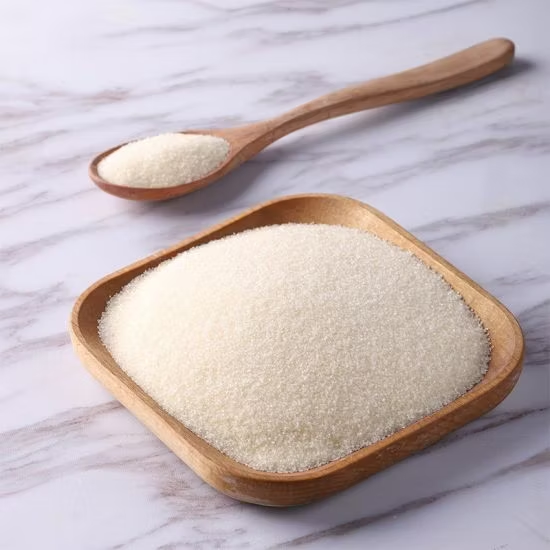
Building Better Yogurt Starts with Better Functional Ingredients
The future of dairy manufacturing belongs to producers capable of delivering consistent quality, superior texture, and reliable consumer experiences. Yogurt may appear simple on the supermarket shelf, but behind every successful product stands a carefully engineered formulation where every ingredient performs a specific role.
Gelatin Powder for Yogurt Industry applications continue to provide manufacturers with one of the most effective tools for achieving stability, creaminess, and production consistency. The right gelatin selection can reduce quality issues, strengthen product performance, and support long-term brand reputation.
MT Royal helps dairy manufacturers access multiple gelatin brands and specifications at competitive prices, enabling factories to select solutions that match their technical and commercial requirements. As yogurt markets become increasingly sophisticated, the companies that understand ingredient functionality at a deeper level will be the ones shaping the next generation of successful dairy products.

No comment