

A coffee roasting line can be perfectly calibrated, your packaging operation can be running at full speed, and your warehouse can be well organized—and yet the final product can still disappoint customers.
For roasters and manufacturers, Green Coffee for Roasters & Manufacturers is not simply a raw-material purchasing decision. Green coffee affects roast development, yield, production consistency, inventory planning, product positioning, and ultimately the cost of every finished kilogram leaving your facility.
That is why experienced procurement teams look beyond price per ton. They ask harder questions: How consistent is the lot? What is the moisture level? How stable is supply? Will the coffee behave predictably on our roasting equipment? Can the supplier maintain the same specification across multiple shipments?
These questions matter whether you operate a specialty roasting plant, an industrial coffee factory, a private-label production facility, or a growing commercial roasting business.
The right green coffee gives your production line something every factory manager values: predictability.
Food industry raw materials – list of products
LATAMARKO LM60 – Premium Spanish-Origin Cocoa Powder
What Is Green Coffee?
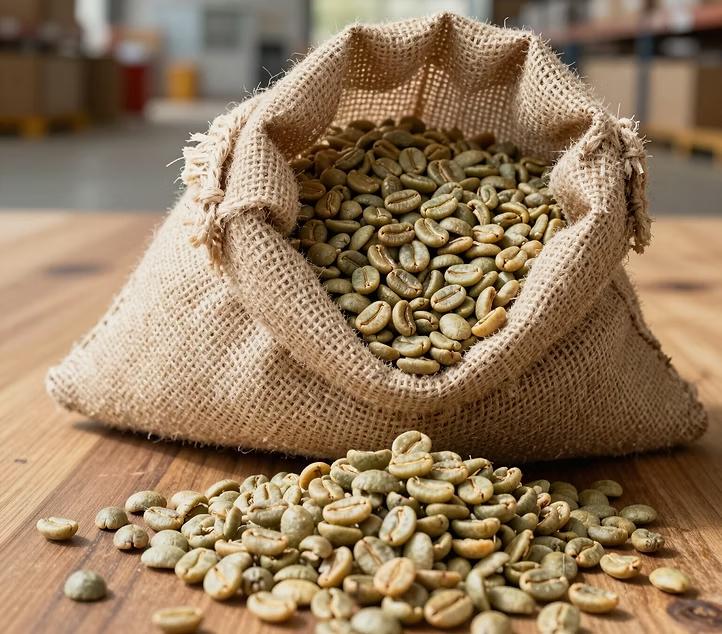
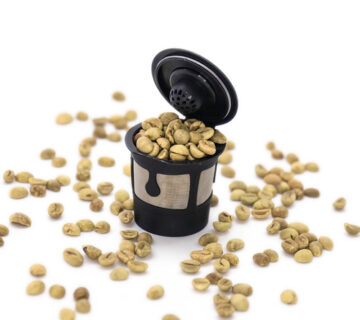
Green coffee refers to the raw, unroasted coffee bean obtained after coffee cherries have been processed and the beans dried and prepared for export.
Unlike roasted coffee, green coffee has not undergone the chemical and physical transformations created by roasting. Its relatively dense structure and lower moisture content make it suitable for storage, transportation, blending, and later roasting.
For manufacturers, several characteristics are particularly important:
- Origin and coffee variety
- Processing method
- Screen size and physical grading
- Moisture content
- Defect count
- Density
- Crop year and harvest timing
- Cup profile
- Traceability
- Packaging and storage conditions
The important point is that these factors do not exist independently. A change in moisture, for example, can influence roast behavior. A change in bean size can affect heat transfer. A different processing method can alter the flavor profile of a blend.
In other words, the green bean is not just an ingredient. It is a production input.
Why Green Coffee Quality Matters in Industrial Roasting
On a small roasting machine, an inconsistent batch may be frustrating. On an industrial production line, it can become expensive.
Imagine a plant roasting several tons per day. If a new shipment behaves differently from the previous shipment, operators may need to adjust roast profiles, modify airflow or gas settings, increase quality-control sampling, or hold finished batches for additional approval.
Multiply a few minutes of disruption across hundreds of production cycles, and the apparently small difference in raw-material consistency becomes a manufacturing cost.
1. Consistent roasting performance
Uniform green coffee generally makes it easier to establish repeatable roast curves.
A production team wants beans entering the roaster to behave within a predictable range. Large variation in size, density, moisture, or defect levels can complicate heat transfer and make the desired roast profile more difficult to reproduce.
2. Better yield management
Roasting causes coffee beans to lose mass, primarily through moisture loss and the release of gases.
For manufacturers working on tight margins, roast loss should be monitored as part of production economics. If incoming green coffee has significantly different characteristics from one shipment to another, expected finished yield can shift.
That affects more than the roasting department. It can influence purchasing forecasts, packaging requirements, inventory calculations, and cost-per-unit analysis.
3. More reliable flavor consistency
Customers may not know the moisture specification of your green coffee, but they certainly notice when their usual coffee tastes different.
For branded and private-label manufacturers, maintaining a recognizable flavor profile is often more valuable than chasing the lowest possible raw-material price.
This is particularly important for blends. If one component changes dramatically, the final cup can move away from the established sensory target.
The Green Coffee Procurement Checklist for Manufacturers
A common procurement mistake is to evaluate green coffee primarily through its quoted price.
Price matters. Of course it does. But a purchasing decision should consider total landed cost, not merely the supplier’s initial quotation.
A useful evaluation framework looks at five areas:
| Factor | Why It Matters in Production |
|---|---|
| Green coffee price | Direct raw-material cost |
| Quality consistency | Influences waste, sorting, and roast stability |
| Freight and logistics | Determines true landed cost |
| Supply reliability | Reduces risk of production interruptions |
| Quality documentation | Supports traceability and incoming inspection |
Suppose Supplier A offers coffee at a lower unit price but produces greater variation between lots. Supplier B costs slightly more but provides consistent specifications and dependable delivery.
For a factory operating continuously, Supplier B may ultimately be cheaper.
We’ve seen production environments where procurement teams initially focused on saving a small amount per kilogram, only to discover that additional inspection, rework, inconsistent roasting, and emergency purchasing erased much of that apparent saving.
The cheapest green coffee is not necessarily the lowest-cost green coffee.
What Should You Check Before Accepting a Shipment?
Your receiving team should have a documented incoming-quality procedure rather than relying entirely on visual inspection.
At minimum, establish acceptance criteria for:
Moisture
Moisture content influences storage stability and roasting behavior. Excessive moisture or poor storage conditions can increase quality risks.
Physical defects
Defective beans can negatively affect cup quality and may indicate broader issues with processing or handling.
Bean size and screen distribution
Screen size gives buyers an indication of bean dimensions. A narrow size distribution can help support more uniform roasting, although screen size alone does not guarantee roasting performance.
Density
Density can provide useful information about bean structure and may help roasting teams anticipate how a coffee will respond to heat.
Odor and appearance
A simple sensory inspection can reveal obvious problems. Green coffee should not show suspicious odors, excessive contamination, visible mold, or signs of improper storage.
Sample roasting
For serious production contracts, sample roasting is one of the most useful steps available to a buyer.
A green coffee sample can look excellent on paper and still behave differently from what your roasting team expects. Test it under conditions that resemble your actual production environment.
Common Green Coffee Procurement Mistakes
Mistake #1: Treating origin as a quality guarantee
“Colombian,” “Brazilian,” “Ethiopian,” or another origin tells you something about the coffee, but origin alone does not determine whether a specific lot is appropriate for your production line.
Farm, region, variety, altitude, processing method, harvest conditions, and post-harvest handling all matter.
Mistake #2: Ignoring lot-to-lot consistency
A manufacturer does not buy green coffee only for today’s production run.
You are buying continuity.
Ask suppliers how they manage repeat orders and whether subsequent shipments are expected to meet an agreed specification.
Mistake #3: Buying too much too early
Bulk purchasing can improve pricing, but excessive inventory ties up working capital and increases exposure to storage-related deterioration.
The correct inventory level depends on your consumption rate, lead times, warehouse conditions, forecast accuracy, and supply risk.
Mistake #4: Forgetting warehouse conditions
Even excellent green coffee can deteriorate if stored poorly.
Green coffee should generally be protected from excessive heat, moisture, odors, pests, and direct environmental exposure. Warehouses should also support good stock rotation and lot traceability.
FIFO—first in, first out—can be useful, but procurement teams should also track crop and lot characteristics rather than treating every bag as interchangeable.
How to Build a More Resilient Green Coffee Supply Chain
A strong sourcing strategy begins before the purchase order.
Step 1: Define the production specification
Write down what your factory actually needs.
Do you need a neutral base coffee for an espresso blend? A distinctive single-origin component? A cost-effective commercial grade? A premium specialty component?
The answer determines what “good quality” means for your operation.
Step 2: Establish measurable acceptance criteria
Instead of saying “high quality,” specify measurable characteristics wherever possible.
For example, define acceptable ranges for moisture, defects, screen size, sensory characteristics, packaging, and documentation.
Step 3: Test representative samples
Don’t approve a large commercial purchase solely from a supplier’s description.
Your roasting and quality teams should evaluate samples using standardized procedures.
Step 4: Calculate landed cost
Include:
- Green coffee price
- Transportation
- Insurance where applicable
- Customs and duties
- Warehousing
- Financing and inventory carrying costs
- Expected production losses
- Quality-control expenses
This provides a more realistic cost-per-kilogram calculation.
Step 5: Qualify backup suppliers
A single-source strategy may look efficient until that supplier encounters a harvest shortage, logistics disruption, port delay, or unexpected quality issue.
Dual sourcing can provide valuable resilience for critical coffee components.
Step 6: Review supplier performance
Track delivery accuracy, lot consistency, documentation, defect rates, response times, and claims resolution.
Procurement should be measured by supplier performance over time—not simply by the price printed on one quotation.
Choosing Green Coffee for Different Manufacturing Models
Not every coffee factory needs the same raw material strategy.
Commercial roasting plants
Large-volume commercial roasters often prioritize consistency, availability, blending flexibility, and cost control.
For these operations, a stable base coffee can be more valuable than an exotic lot with unpredictable availability.
Specialty coffee manufacturers
Specialty producers may put greater emphasis on cup score, traceability, farm or cooperative relationships, processing method, and distinctive sensory characteristics.
The procurement process is more closely connected to brand identity.
Private-label manufacturers
Private-label factories face an additional challenge: they must satisfy multiple customers with different specifications.
Flexibility becomes extremely important. A supplier capable of offering several quality tiers and origins can simplify procurement and production planning.
At MT Royal, we supply manufacturers with a broad selection of brands and coffee-related sourcing options at competitive prices. For procurement teams, the value is not simply having another supplier on the list; it is having access to alternatives when a particular specification, price point, or supply requirement changes.
Premium Versus Commodity Green Coffee: Which Is Right for Your Plant?
The answer is rarely “premium everywhere.”
A smart manufacturer assigns coffee quality according to the role it plays in the finished product.
A high-volume milk-based beverage may require a different green coffee strategy from a premium single-origin retail product. Using an expensive specialty lot where customers cannot perceive the difference can inflate production costs without creating meaningful commercial value.
Conversely, cutting costs too aggressively on a flagship product can damage the very characteristic customers are paying for.
European suppliers and manufacturers are often associated with strong engineering and quality-control traditions. Spanish-origin brands such as Latamarko, for example, can be relevant when buyers are evaluating premium options where consistency, design quality, and long-term performance matter.
The principle is simple: match the quality tier to the product’s commercial purpose.
Industrial Supply: Don’t Underestimate Logistics
Coffee is an agricultural product, which means supply is affected by variables that no factory manager can completely control.
Harvest cycles, weather, shipping capacity, geopolitical disruptions, currency movements, port congestion, and changing demand can all influence availability and pricing.
This is why supply-chain planning should extend beyond the next purchase order.
A useful procurement dashboard might track:
- Current inventory
- Average daily consumption
- Confirmed inbound shipments
- Supplier lead time
- Safety-stock coverage
- Open purchase orders
- Forecast demand
- Alternative approved suppliers
If your factory has only a few days of inventory remaining when a shipment is delayed, procurement is already operating in emergency mode.
The goal is to identify the problem while there is still time to solve it.
How Manufacturers Can Improve Green Coffee Cost Control
Cost control does not always mean negotiating the lowest price.
Sometimes the biggest savings come from reducing variation.
Consider these opportunities:
- Standardize approved coffee specifications.
- Consolidate purchases where volume discounts genuinely improve total cost.
- Avoid unnecessary SKU proliferation.
- Forecast seasonal demand earlier.
- Maintain appropriate safety stock for critical blends.
- Monitor roast loss by green coffee lot.
- Measure defect and rejection rates.
- Compare suppliers using landed cost.
- Negotiate delivery schedules as well as unit price.
- Keep qualified alternatives for strategically important coffees.
We’ve found that procurement becomes much more effective when the purchasing team and roasting team share the same performance data.
If purchasing knows that a certain green coffee consistently produces higher roast loss, while production knows that purchasing is under pressure to reduce material cost, the discussion becomes constructive rather than departmental.
Frequently Asked Questions
Is green coffee suitable for long-term industrial storage?
Yes, when appropriate coffee is stored under controlled conditions. However, “long-term” should not mean ignoring warehouse conditions or inventory age. Temperature, humidity, packaging, ventilation, pests, and stock rotation all deserve attention.
How much green coffee should a factory keep in stock?
There is no universal number. Base safety stock on consumption, supplier lead time, demand variability, logistics risk, storage capacity, and the consequences of running out of a critical coffee component.
Does a higher green coffee price always mean higher quality?
No. Price can reflect origin, market conditions, scarcity, processing, logistics, demand, and other factors. Quality should be assessed against the specification and intended application.
Why is moisture important?
Moisture can influence storage stability and roasting behavior. Significant variation between lots can make production less predictable, which is why incoming quality checks are valuable.
Should manufacturers use single-origin coffee or blends?
It depends on the product. Single origins can create distinctive products, while blends can offer greater consistency, flexibility, and cost control. Many commercial manufacturers benefit from using both strategies for different product lines.
Is green coffee procurement mainly a purchasing issue?
No. It is a cross-functional manufacturing issue involving procurement, quality assurance, roasting, warehousing, finance, production planning, and logistics.
The Bigger Picture: Green Coffee Is a Manufacturing Input, Not Just a Commodity
The strongest coffee manufacturers understand a subtle distinction: you are not merely buying beans; you are buying predictable production performance.
That changes how you evaluate suppliers.
It means asking what happens after the purchase order is signed. Will the next lot perform similarly? Can the supplier maintain volume? Can your quality team verify the specification? Can your production line absorb reasonable agricultural variation? Can you maintain customer consistency when global supply conditions change?
At MT Royal, we believe this broader perspective is especially important for manufacturers purchasing at scale. A competitive supplier should help you balance price, availability, quality, and continuity rather than forcing you to choose one at the expense of the others.
For premium product lines, brands such as Latamarko can also sit naturally within a broader quality strategy when the application calls for a more premium positioning.


No comment