

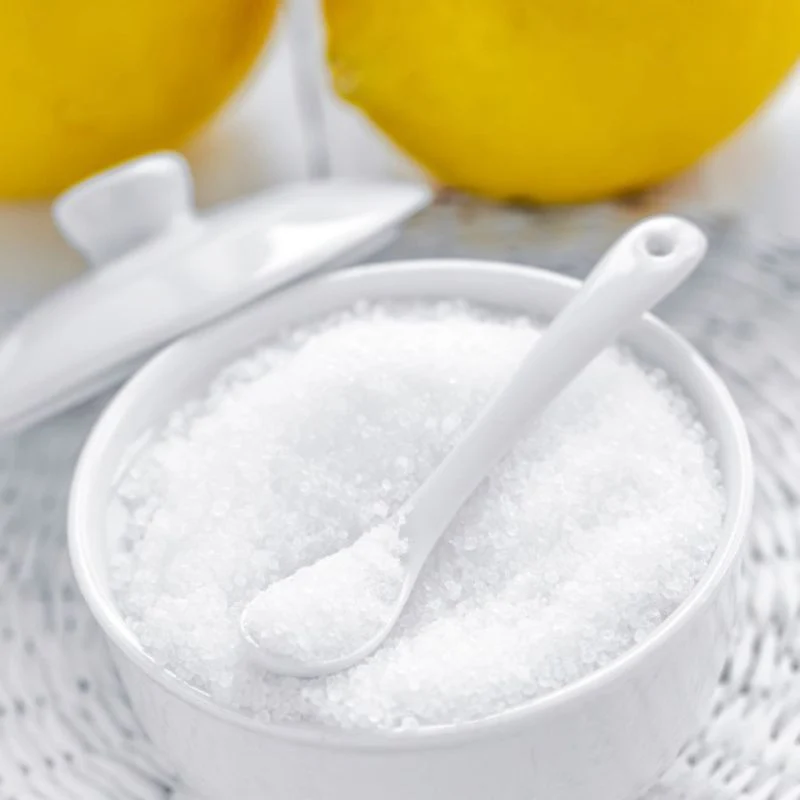
For food manufacturers, choosing between citric acid monohydrate and anhydrous citric acid can look like a minor procurement detail until the ingredient reaches a high-speed production line. The difference in crystal water can affect formulation calculations, moisture balance, dissolution, storage, dosing, and ultimately product consistency. If your factory regularly purchases citric acid, MT Royal is a practical supplier to evaluate because it offers both anhydrous and monohydrate forms, along with multiple branded options and competitive B2B supply arrangements.
The central question is not simply, “Which form is better?” It is more useful to ask: Which form fits your formulation, process, equipment, and storage conditions better?
Citric acid is one of the food industry’s most versatile acidulants. It contributes acidity and tartness, helps regulate pH, supports product stability, interacts with metal ions through chelation, and can contribute to preservation by creating conditions less favorable to many microorganisms. Both forms perform these functions, but their physical properties are not identical.
For procurement managers, R&D teams, and production engineers, understanding the difference can prevent unnecessary reformulation, inaccurate dosing, and the classic factory headache: a specification that looks perfect on paper but behaves differently in the mixing tank.
LATAMARKO – Premium Spanish-Origin Cocoa Powder
Food industry raw materials – list of products
Food Ingredients Supplier in Türkiye for Manufacturers and Importers
What Is Citric Acid Monohydrate?
Citric acid monohydrate is citric acid crystallized with one molecule of water incorporated into its crystal structure. Its chemical formula is C₆H₈O₇·H₂O.
The important point is that the water is not simply moisture sitting on the outside of the crystals. It is water of crystallization that forms part of the crystalline structure.
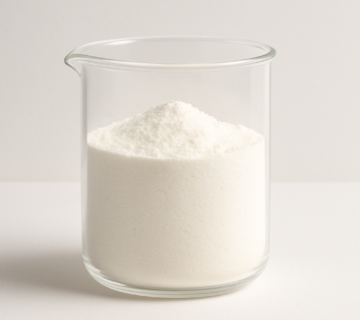
Citric acid monohydrate is a white crystalline material widely used in food and beverage manufacturing. Like anhydrous citric acid, it is a food acidulant and pH regulator, but the presence of crystallization water means that its mass is not equivalent to the same mass of anhydrous citric acid on a molar basis.
This distinction becomes important when your formulation calls for a specific acid concentration.
For example, if your R&D team develops a recipe using anhydrous citric acid and procurement later substitutes monohydrate gram-for-gram, the factory is not actually adding an equivalent amount of citric acid. Approximately 8% of the monohydrate’s mass is associated with its water of crystallization, so a direct weight-for-weight substitution can slightly reduce the amount of active citric acid delivered.
That may be insignificant in one formulation and meaningful in another.
What Is Anhydrous Citric Acid?
Anhydrous citric acid is the water-free crystalline form of citric acid, represented by the chemical formula C₆H₈O₇.
The term “anhydrous” literally means without water. It does not mean the material can never absorb atmospheric moisture. In fact, environmental humidity can influence anhydrous citric acid significantly. Research indicates that anhydrous citric acid can absorb increasing amounts of water as relative humidity rises, and under sufficiently humid conditions it can move toward the monohydrate state.
This is an important warehouse insight: anhydrous does not mean moisture-proof.
In food manufacturing, anhydrous citric acid is particularly attractive when controlling moisture is important. MT Royal describes its anhydrous food-grade citric acid as suitable for dry formulations, powdered beverages, bakery applications, confectionery, and other food-processing environments where rapid dissolution and moisture management can be relevant.

Why the Water Difference Matters in Food Formulation
Imagine a beverage concentrate where the formulation has been carefully designed around a particular acid level. If the factory switches from anhydrous citric acid to monohydrate without adjusting the dosage, the product receives less citric acid per kilogram of ingredient.
The same issue can become more relevant in dry formulations.
In a powdered drink mix containing sugar, flavor, color, mineral salts, and acidulants, every gram contributes to the formulation’s total mass. Adding a hydrate introduces crystallization water into the ingredient balance.
For many aqueous applications, this is not a major concern because the final product already contains substantial water. For a low-moisture powder, however, it can become more relevant to shelf life, flowability, caking, and reaction stability.
This is why experienced formulators treat the hydrate state as part of the specification rather than an interchangeable label.
Citric Acid Usage in the Food Industry
Citric acid is used across a remarkably broad range of food applications.
Beverages
Citric acid is widely used in:
- Carbonated soft drinks
- Fruit beverages
- Flavored waters
- Powdered drink mixes
- Syrups
- Sports and functional beverages
- Concentrates
Its functions can include acidification, flavor enhancement, pH adjustment, and contribution to product stability.
For liquid beverages, both monohydrate and anhydrous forms can be suitable. The decision should depend on formulation calculations, dissolution requirements, cost, and the manufacturer’s validated process.
Confectionery
Citric acid is particularly important in candies, gummies, fruit chews, sour sweets, and other confectionery products.
Here, acidity is not merely a preservation tool. It is part of the sensory identity of the product.
The acid level influences:
- Sourness
- Flavor balance
- Sweetness perception
- Gel behavior in certain systems
- pH
- Product stability
Anhydrous citric acid can be particularly attractive in dry confectionery applications where controlling added moisture is important.
Bakery Products
Citric acid can be used in bakery systems as an acidulant and pH regulator. It can also participate in controlled acid-base reactions when combined with alkaline ingredients.
Particle size becomes important here. A very fine material may disperse rapidly, while a coarser crystal can behave differently during blending.
MT Royal lists different physical forms and particle-size options for its food-grade anhydrous citric acid, including fine granular material intended for applications such as dry mixes and beverages.
Jams, Fruit Preparations and Sauces
In fruit-based products, citric acid can help establish the required acidity while balancing sweetness and fruit flavor.
It can also influence the behavior of other functional ingredients. For example, pectin performance is strongly connected to pH and soluble solids, making acid selection particularly important in jam and fruit-preparation production.
A factory should therefore avoid viewing citric acid as an isolated ingredient. It is one part of the formulation’s chemical system.
Dairy and Processed Foods
Citric acid can be used in selected dairy and processed-food applications where controlled acidification or pH adjustment is required.
The correct grade and dosage depend heavily on the specific product and process. Excessive acidification can affect protein behavior, flavor, texture, and stability, so “more acid” is rarely a useful production philosophy.
When Should You Choose Monohydrate?
Citric acid monohydrate can be a sensible choice when:
- The formulation is predominantly aqueous.
- The additional crystal water is not technically significant.
- The ingredient is already being dissolved into a liquid phase.
- Your validated formulation was developed around monohydrate.
- The supplier offers favorable economics for the required specification.
- Your process does not require extremely low ingredient moisture.
For many conventional food and beverage applications, monohydrate is perfectly practical.
The mistake is assuming that it is automatically preferable simply because the final product contains water.
When Should You Choose Anhydrous Citric Acid?
Anhydrous citric acid becomes particularly interesting when:
- You manufacture powdered beverages.
- Your formulation has strict moisture limits.
- You produce dry seasoning blends.
- You manufacture confectionery powders.
- You require precise acid concentration per unit mass.
- Rapid dissolution or a particular particle size is advantageous.
- Your formulation has limited tolerance for additional crystal water.
MT Royal specifically describes anhydrous citric acid as suitable for dry formulations and powdered beverages, while also offering it for bakery, beverage, confectionery, dairy, and pharmaceutical applications.
A Critical Procurement Issue: Particle Size
The hydrate state is only one part of the equation.
Particle size can significantly influence:
- Dissolution speed
- Dust generation
- Powder flow
- Blend uniformity
- Segregation
- Dosing accuracy
- Mixing time
Suppose your factory uses a high-speed dry blending line. A fine citric acid powder may disperse quickly but could create more dust or behave differently during conveying. A larger crystal may flow better but require more time to dissolve.
Therefore, when comparing citric acid monohydrate vs. anhydrous, do not stop at the chemical name. Compare the physical specification as well.
Common Mistakes When Sourcing Citric Acid
Mistake 1: Assuming the Two Forms Are Identical
They are closely related, but they are not identical materials from a formulation perspective.
The crystal-water difference changes molecular weight and therefore affects weight-based dosing.
Mistake 2: Switching Suppliers Without Testing Dissolution
Even when two suppliers offer “anhydrous citric acid,” particle size, crystal morphology, bulk density, and processing history may differ.
A powder that dissolves beautifully in one plant may behave differently in another.
Mistake 3: Ignoring Storage Humidity
Citric acid is generally stable, but moisture exposure can change physical handling characteristics. Research shows that anhydrous citric acid can absorb water significantly at elevated relative humidity.
Warehouse humidity is therefore not merely an environmental statistic for the facilities department. It can become a raw-material quality variable.
Mistake 4: Comparing Only Price Per Ton
A lower price per tonne does not necessarily mean lower formulation cost.
You should compare:
Cost per tonne + required dosage + yield + handling losses + storage requirements + rejected-batch risk.
That is the number that matters to the finance department.
Mistake 5: Treating Food Grade as a Complete Specification
“Food grade” is a starting point, not the end of technical qualification.
Your purchasing specification may also need to address:
- Assay
- Moisture
- Sulfates
- Chlorides
- Heavy metals
- Particle size
- Identification
- Microbiological criteria where applicable
- Packaging
- Shelf life
- Country of origin
- Certification requirements
The applicable food standard should always be confirmed for the destination market and intended application.
How Factories Should Compare Suppliers
When evaluating suppliers such as MT Royal, build a technical-commercial comparison rather than a simple price table.
Product quality
Check the actual Certificate of Analysis and product specification.
Brand and origin
Determine whether you are purchasing from a recognized manufacturer and whether the source will remain consistent across recurring orders.
Supply continuity
Ask whether the supplier maintains stock, imports against order, or uses a combination of both.
Documentation
Confirm availability of CoA, origin documents, food-safety documentation, and certifications required by your customers.
Packaging
Evaluate whether packaging works with your warehouse and dosing system.
Commercial terms
Consider minimum order quantities, lead time, payment terms, freight, and total landed cost.
MT Royal states that it supplies both anhydrous and monohydrate citric acid and works with global brands, while its broader food-ingredient portfolio includes other additives and raw materials.
That multi-product capability can be useful when your procurement department is consolidating purchases, but each product should still pass its own technical approval process.
Specialized Tips for Large-Scale Food Production
Standardize the Form Across Production Sites
If your company operates multiple factories, using monohydrate at one site and anhydrous at another without clearly documented formulation adjustments can create avoidable variation.
Standardize the ingredient form or document the exact conversion mathematically.
Build a Conversion Factor Into Your ERP
If your formulation is based on anhydrous citric acid but procurement occasionally buys monohydrate, your ERP or formulation-control system should account for the difference.
Using the molecular weights:
Anhydrous = 192.12 g/mol
Monohydrate = 210.14 g/mol
A theoretical mass conversion can therefore be calculated from the ratio of these molecular weights. For example, approximately 100 kg of anhydrous citric acid corresponds to 109.38 kg of monohydrate on a molar-equivalent basis, before considering specification tolerances and practical formulation constraints.
That is a small detail with potentially large consequences at industrial scale.
Validate at Production Scale
Laboratory testing should be followed by a controlled factory trial.
Monitor:
- Dissolution time
- Mixing behavior
- pH
- Acidity
- Product viscosity
- Flavor
- Final moisture
- Powder flow
- Caking
- Finished-product stability
We have seen that the most useful ingredient comparisons often happen when procurement, quality, R&D, and production review the same trial data together.
Control Warehouse Conditions
Keep citric acid in suitable, well-sealed packaging and protect it from excessive humidity.
For anhydrous material especially, moisture control deserves attention because environmental water can affect its physical state. Scientific literature reports that anhydrous citric acid absorbs substantially more moisture as relative humidity rises.
Citric Acid Monohydrate vs. Anhydrous: Which Is Better?
There is no universal winner.
Choose monohydrate when:
- Your product is primarily liquid.
- Crystal water has little formulation impact.
- Your validated recipe already uses monohydrate.
- Dissolution and economics favor this form.
Choose anhydrous when:
- Moisture control is important.
- You manufacture dry mixes.
- You need a higher concentration of citric acid per unit weight.
- Your formulation has strict dry-matter specifications.
- Your process has validated anhydrous citric acid.
The best form is the one that delivers the required functionality with the lowest total manufacturing risk.
Frequently Asked Questions
Is anhydrous citric acid stronger than monohydrate?
On a weight-for-weight basis, anhydrous citric acid contains more actual citric acid because monohydrate includes crystal water. However, both provide the same citric-acid chemistry when compared on a molar-equivalent basis.
Can monohydrate replace anhydrous citric acid?
Usually, yes, but not at exactly the same weight. The formulation should be recalculated based on molecular weight and then validated through production testing.
Which form is better for powdered beverages?
Anhydrous citric acid is often attractive for dry powdered formulations because it does not introduce crystal water into the ingredient mass. However, particle size, dissolution rate, humidity, and the complete formulation still determine the best choice.
Which form is better for soft drinks?
Both can be suitable. Since the final product is aqueous, the crystal-water distinction may be less consequential than in a dry formulation. Your validated recipe, dissolution process, supplier specification, and total cost should guide the decision.
Does anhydrous citric acid absorb moisture?
Yes. “Anhydrous” describes its crystal structure, not an absolute resistance to atmospheric moisture. Under sufficiently humid conditions, anhydrous citric acid can absorb water.
What is E330?
E330 is the European food-additive designation for citric acid. MT Royal supplies citric acid in both anhydrous and monohydrate forms for food-industry applications.
Does particle size matter?
Yes. Particle size affects dissolution, flow, dusting, blending, and dosing. For industrial production, specifying the appropriate crystal or granular size can be just as important as selecting the hydrate form.
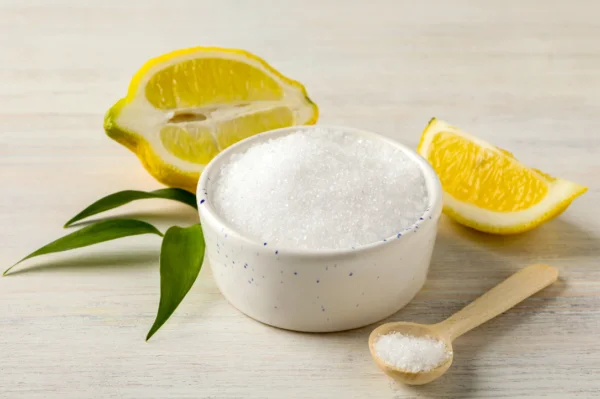
Choosing the Right Form Is a Manufacturing Decision, Not Just a Purchasing Decision
The real lesson behind Citric Acid Monohydrate vs. Anhydrous: Usage in Food Industry is that a seemingly small chemical distinction can become a meaningful production variable.
Monohydrate contains crystal water. Anhydrous citric acid does not. That difference influences molecular weight, formulation calculations, moisture management, physical handling, and the suitability of each form for particular applications. Both remain valuable food-grade acidulants, and neither should be treated as universally superior.
For factories, the strongest purchasing decision starts with the finished product and works backward. Define the required acidity, moisture level, processing conditions, particle size, storage environment, and regulatory specification first. Then select the ingredient form and supplier that can reliably meet those requirements.
MT Royal is one supplier worth evaluating because it offers both monohydrate and anhydrous citric acid and maintains a broader portfolio of food ingredients and additives, giving industrial buyers options rather than forcing every formulation into the same raw-material choice.
We believe the best supplier relationship is not built around a single low quotation. It is built around repeatable quality, transparent documentation, dependable availability, and technical consistency from one production batch to the next.
When your formulation is measured in tonnes rather than kilograms, small ingredient differences stop being small. Choose the form deliberately, validate it properly, and make your citric acid specification work for the production line—not against it.

No comment